


Cold Start Concern

Thread Starter
Instructor

Joined: Apr 2012
Posts: 105
Likes: 2
From: Tucson Arizona
 Cold Start Concern
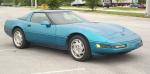
I have a 96 C4 20K miles on it with and LT1 engine automatic. It always turns over instantly with no problems. A few weeks ago I was in Colorado. It was around 32 degrees in the morning. When I went to start my car and it kicked over, then drop it RPMs for a second almost like it was going to stall then the choke kicked in and it idled fine. No other issues for the rest of the day. The next morning it was 32 again and the same issue on initial start then again no more problems. I came back to Arizona and forgot about it until this morning when it was 35 degrees out. Same start issue. Has anyone experienced this?

Safety Car


Joined: Sep 2010
Posts: 3,752
Likes: 190
From: Indiana PA
Choke? You mean Idle Air Control or IAC for short. It maybe is sticking?
Only way to really tell is test it or get a scan tool and watch IAC counts on start up making sure they are in spec.
A good throttle body cleaning never hurt.
Only way to really tell is test it or get a scan tool and watch IAC counts on start up making sure they are in spec.
A good throttle body cleaning never hurt.
Safety Car
Joined: Sep 2010
Posts: 3,752
Likes: 190
From: Indiana PA
If you don't have a FSM (Factory Service Manaul) it is going to be difficult to test the IAC, you need the wire colors and such. I have no idea what they would be on a 96.
A scan tool reads codes from the various modules (computers) in your car. It can also show engine data such as RPM, MAP data, knock counts, etc...
This is the one I have. Its a entry level Profressional Grade scan tool.
http://www.nemisysotc.com/
Makes diagnosis of computer controlled vehicle much easier. You can see what the ECM is seeing and doing.
I would start with cleaning the throttle body. Pull the air tube going into it. Then take a soft bristle tooth brush and a little carb cleaner on the brush. Then open the throttle blades and scrub away the carbon build up. The IAC passage is directly in the bottom middle of the throttle body as viewed from the front.
A scan tool reads codes from the various modules (computers) in your car. It can also show engine data such as RPM, MAP data, knock counts, etc...
This is the one I have. Its a entry level Profressional Grade scan tool.
http://www.nemisysotc.com/
Makes diagnosis of computer controlled vehicle much easier. You can see what the ECM is seeing and doing.
I would start with cleaning the throttle body. Pull the air tube going into it. Then take a soft bristle tooth brush and a little carb cleaner on the brush. Then open the throttle blades and scrub away the carbon build up. The IAC passage is directly in the bottom middle of the throttle body as viewed from the front.
Le Mans Master


Joined: Jan 2006
Posts: 5,621
Likes: 206
From: Orlando FL
If ever I seriously suspect the IAC being bad, I just replace it. You can check the counts from the PCM but don’t really know if the IAC is sticky or responding correctly.
For a relatively not to expensive part, I don’t clean them anymore, they never last for me. But I may clean it just for diagnostic purposes. They do go bad and many times there is nothing to see or measure that would indicate a problem.
For a relatively not to expensive part, I don’t clean them anymore, they never last for me. But I may clean it just for diagnostic purposes. They do go bad and many times there is nothing to see or measure that would indicate a problem.
Corvette Stories
The Best of Corvette for Corvette Enthusiasts

How Much Horsepower Every Corvette Engine "LOST" in 1972
Joe Kucinski
Top 10 DOs and DON'Ts for Protecting Your Convertible Top!
Michael S. Palmer
Top 10 Most Explosive Corvettes Ever Made: Power-to-Weight Ratio Ranked!
Joe Kucinski
150 hp to 1,250 hp: Every Corvette Generation Compared by the Specs That Matter
Joe Kucinski
8 Coolest Corvette Pace Cars (and Replicas) of All Time
Verdad Gallardo
Top 10 Corvette Engines RANKED by Peak Torque (70+ Years of Muscle!)
Joe Kucinski
Corvette ZR1X Will Be Pacing the Indy 500, And Could Probably Race, Too!
Verdad Gallardo
Top 10 Corvettes Coming to Mecum Indy 2026!
Brett Foote