When you click on links to various merchants on this site and make a purchase, this can result in this site earning a commission. Affiliate programs and affiliations include, but are not limited to, the eBay Partner Network.
I modified my fog lamp relay circuit about 5 years ago to make my fogs operate normally when I converted from Halogens to HID's. You need to remove the knee bolster from the passenger side of the dash and locate the fog lamp relay (it should be the far right relay in the relay bracket). . Cut the lt grn wire from pin #5 (relay pin 86) about 2" from the relay base and add a 6" jumper of at least 18 Gauge wire with a ring terminal. Find a convenient screw and ground this new jumper wire to the frame of the dash. I used a small piece of heat-shrink tubing to insulate the end of the .5mm lt grn wire that comes from the dimmer switch.
Now, turn on your parking lights and test your fog lamps, they should light and your high beam indicator should be off (unless you have your high beams on).
Page 8A-100-1 shows the circuit in my 1990 FSM.
To undo this mod, just remove the jumper wire and re-connect the original lt grn wire to the relay pin #5.
Mick
Thanks for your input Mick! While this modification will also work, and I had originally planned to go this route myself, I've come up with something a little different that does not cut and jumper any factory wiring, which some may get skeeved about.
My modification entails splicing a #168 lamp in parallel with the high beam wire of the new LED light; this precludes the need to cut any factory wiring and disassemble anything inside the car.
My modification entails splicing a #168 lamp in parallel with the high beam wire of the new LED light; this precludes the need to cut any factory wiring and disassemble anything inside the car.
Kevin,
Your mod may work too. I don't ever plan on selling my Vette and I document all my changes in the FSM that will go with the car when I'm gone.
Do you plan on installing a #168-style socket or just soldering the bulb
leads?
Kevin,
Your mod may work too. I don't ever plan on selling my Vette and I document all my changes in the FSM that will go with the car when I'm gone.
Do you plan on installing a #168-style socket or just soldering the bulb
leads?
Mick
It works great! I installed a socket with a 168 lamp in parallel with the wires of the new headlight.
Here's a technical explanation for those interested:
Starting on the top of page "8A-100-1", and ending on page "8A-100-0" (Current path is highlighted in yellow, and the arrows indicate current flow direction). The current into the relay coil originates at the headlight switch, then travels through the foglight switch when desired. The current then travels through the coil of the relay, into node "A" and onto page 8A-100-0. From node "A", the current travels into "S208", into the high beam filament, and finally returns to ground. Since the resistance of the new LED headlights' high beam input is so high, there is not enough current flow through the relay coil to pull it hard to ground, thus rendering it inoperative. Additionally, the new LED highlights' high beam wire can act as a control signal which simply "tells" the high beam to turn on - the coil of the relay provides this current path from the battery since it has a relatively low resistance in contrast to the high resistance of the high beam input. The solution is to:
A) Provide a low resistance from the relay coil to ground by wiring a #168 lamp in parallel with the high beam wire into the new LED headlight to ground. This, in turn, will restore the original functionality. This also will pull the voltage of node "A" much closer to ground potential, which will no longer cause the high beams to switch on when the foglight switch is turned on.
-or-
B) Disconnect the "ground" side of the foglight relay's coil from S208, and ground it directly to chassis.
Clear as mud??
Last edited by Circuit Doctor; Apr 5, 2015 at 02:07 PM.
Before performing this procedure, please be aware of the following:
You are performing this procedure at your own risk. I am not in any way liable, either express or implied, for any damages caused by this procedure, either deliberate, accidental, incidental, or circumstantial including, but not limited to; damage to vehicle, injury, fire, death, invasion by aliens, or snide remarks from friends. If performing this procedure, having basic electrical knowledge is a plus, as is good hand-eye coordination. The steps outlined below using the tools and materials below will ensure optimum performance and reliability and has been tested with successful results; by deviating, you may be unknowingly compromising the aforementioned parameters. It's a good idea to disconnect the battery before starting this.
Tools:
- #2 screwdriver with tip in good condition
- Wire cutters/strippers
- Soldering iron (optional)
- 7mm socket and socket handle (recommend 1/4" drive) or 7mm nutdriver
- Pencil
- Xacto knife
STEP 1:
Raise the hood and rotate the headlight manual adjustment **** until the light is positioned like this. Remove the two Phillips head screws fastening the shroud. Make sure the screwdriver is like new, these screws will strip out very easily with a worn tip!
(Note: You can install this modification on the driver or passenger side, it doesn't matter. I installed on the driver side)
STEP 2:
Remove the remaining two 7mm bolts fastening the shroud, and remove the shroud as well.
STEP 3:
With the shroud removed, remove the four Phillips head screws holding the headlight retaining ring ONLY. Do not touch any other screws, or the alignment of the headlight capsule will be altered! Then remove the headlight and unplug the electrical connector.
STEP 4:
A) With the headlight now removed from the vehicle (or out of the box if you're installing the new light for the first time), look at the connector attached to the light. Orient the connector so the 3 pins create the letter "U"; it will look like there are pins at the "East", "South", and "West" locations, and there will be no pin at the "North" location. What will needs to be done is expose and splice into the wires which connect to the "East" and "West" pins. This H4 pinout diagram should help clarify (this is shown as if the male pins face the observer):
On my GE light, these wires were red and white.
B) Using the xacto knife, carefully, and GENTLY cut the insulation around the entire diameter of the wire in two locations about 1/4" apart from each other. Then, join the cuts together, creating an "H" shape. Repeat this on the wire facing opposite the one that was just stripped. NOTE: Be very careful doing this, when the blade feels like it has hit metal (you'll know), don't cut any farther. Avoid cutting into any of the wire strands.
C) Once the insulation has been cut off the two wires, peel the insulation off to expose the copper strands. Using the pencil, "part" the strands in half.
STEP 5:
A) Prepare the #168 socket by shortening the wires to approximately 2" long each. Any additional length is unnecessary. Next, strip approximately 1/2" of insulation off each wire of the #168 socket.
B) Wrap each wire from the #168 socket through the middle of the strands, so it looks like this.
C) (Optional, but highly recommended) Gently push the strands all back together and solder the #168 socket wires to the headlight wires. I highly recommend the use of solder flux in order to achieve the best solder joint possible; this is recommended because these connections will be subject to frequent shock and vibration. At this point, the splices are finished.
D) Wrap each wire with electrical tape.
STEP 6:
Tuck the wiring back into the split loom tubing, and fasten the socket to the tubing with two wire ties, like in this photo. Don't forget to install the 168 bulb into the socket!
From here, the reassembly is the reverse of the removal steps.
Once all this is finished, your foglights and highbeams will function as originally intended!
Here's a technical explanation for those interested:
Starting on the top of page "8A-100-1", and ending on page "8A-100-0" (Current path is highlighted in yellow, and the arrows indicate current flow direction). The current into the relay coil originates at the headlight switch, then travels through the foglight switch when desired. The current then travels through the coil of the relay, into node "A" and onto page 8A-100-0. From node "A", the current travels into "S208", into the high beam filament, and finally returns to ground. Since the resistance of the new LED headlights' high beam input is so high, there is not enough current flow through the relay coil to pull it hard to ground, thus rendering it inoperative. Additionally, the new LED highlights' high beam wire can act as a control signal which simply "tells" the high beam to turn on - the coil of the relay provides this current path from the battery since it has a relatively low resistance in contrast to the high resistance of the high beam input. The solution is to:
A) Provide a low resistance from the relay coil to ground by wiring a #168 lamp in parallel with the high beam wire into the new LED headlight to ground. This, in turn, will restore the original functionality. This also will pull the voltage of node "A" much closer to ground potential, which will no longer cause the high beams to switch on when the foglight switch is turned on.
-or-
B) Disconnect the "ground" side of the foglight relay's coil from S208, and ground it directly to chassis.
Clear as mud??
Last edited by Circuit Doctor; Apr 5, 2015 at 02:00 PM.
Worked like a charm. I ended up using a 194 bulb instead of the 168 because that was the bulb socket my local auto parts store had available. After researching the bulbs it turns out the 194 may be a better choice anyway. The 194 is 2 candle power vs. 3 for the 168 so it should produce less heat and last longer.
Worked like a charm. I ended up using a 194 bulb instead of the 168 because that was the bulb socket my local auto parts store had available. After researching the bulbs it turns out the 194 may be a better choice anyway. The 194 is 2 candle power vs. 3 for the 168 so it should produce less heat and last longer.
I suppose a 194 would also work, and I had originally entertained this idea. The reason I used a 168 instead, is due specifically to the fact that it is a higher power lamp, and thus, has a lower resistance. The reason for using the lowest resistance light possible was to provide the best chance of a current path to ground for the relay coil. While a 194 will probably work, I was concerned of the possibility of the relay chattering on and off, particularly during cold weather, due to the coil of the relay being higher above ground as a result of the higher resistance of the 194 bulb versus a 168.
From an electrical standpoint, you need not be concerned using a higher candlepower bulb for two reasons:
A) All the bulb is doing, is providing a low resistance path to ground for the relay coil, and preventing the highbeam input of the LED from being "tickled on". Since the relay coil has a much, much higher resistance than the bulb, it won't illuminate at all under circumstances where the highbeams are off. In fact, if you were to measure the voltage across the added bulb, I bet it would be in the neighborhood of about 1 volt. The only time the bulb will illuminate at full intensity is when you switch your highbeams on, since you've now bypassed the high resistance of the relay coil with the highbeam switch.
B) Normally, you don't drive with your highbeams on anyway, but, the socket is more than thermally capable of the additional wattage of the 168 bulb. There is almost no chance of melting it or causing any other thermally induced damage.
Let me know how it works, though I bet it'll probably be fine. You're a particularly good tester of this since you live in a far colder environment than I. I can see why you'd be concerned about the higher candlepower though - I hope this helps quell that.
Thanks for your positive feedback!
Last edited by Circuit Doctor; Apr 6, 2015 at 12:36 PM.
Interesting, I'll keep an eye on it and report back if there are any issues. On the heat output, I was more concerned about that bare bulb coming in contact with other wiring. I have the Truck-Lite LEDs and they don't have the plastic wrap around the wires like your GEs do. We're coming out of the cold season now so it'll likely be several months before I can give any feedback on the effect of cold, if there should be any issue I'll just swap in a 168 bulb.
Hi Guys!
I just picked up a beautiful 1996 LT4 Collector Edition over the weekend. What an awesome car! That LT4 just pulls hard throughout the entire RPM range.
As C4 owners are certainly aware, the headlights are very lacking. I decided I wanted to purchase the GE Nighthawk LED headlights for the car. I installed them, and I am blown away by their performance. However, like everyone else who bought them, my foglights no longer function properly and cause the high beams to switch on.
Since my background is in electrical engineering, I reviewed the schematic of the headlight system and observed the foglight relay's coil gets its ground through the high beam filament. The purpose of this is to disable the foglights while the high beams are on. Due to the higher impedance nature as well as internal circuitry of the LED headlight assemblies, the foglight relay's coil is acting as a psuedo pull up resistor for the high beam input terminal, thus illuminating the high beams when hitting the foglight switch. In fact, if you were to open your hood and switch on the parking and foglights only, you'd see the high beams flicker lightly as a result of this. The solution is to disable the high beam feed to the relay's coil, and ground the relay's coil directly, or provide a low resistance path to ground for the relay's coil.
Anyway...I'm going to put together a write-up with detailed pictures to outline this when I'm not stuck working 7 days a week. The beauty of my plan is that you will not need to hack any of the factory wiring, and add one jumper wire. Would you guys be interested in this?
Before performing this procedure, please be aware of the following:
You are performing this procedure at your own risk. I am not in any way liable, either express or implied, for any damages caused by this procedure, either deliberate, accidental, incidental, or circumstantial including, but not limited to; damage to vehicle, injury, fire, death, invasion by aliens, or snide remarks from friends. If performing this procedure, having basic electrical knowledge is a plus, as is good hand-eye coordination. The steps outlined below using the tools and materials below will ensure optimum performance and reliability and has been tested with successful results; by deviating, you may be unknowingly compromising the aforementioned parameters. It's a good idea to disconnect the battery before starting this.
Tools:
- #2 screwdriver with tip in good condition
- Wire cutters/strippers
- Soldering iron (optional)
- 7mm socket and socket handle (recommend 1/4" drive) or 7mm nutdriver
- Pencil
- Xacto knife
STEP 1:
Raise the hood and rotate the headlight manual adjustment **** until the light is positioned like this. Remove the two Phillips head screws fastening the shroud. Make sure the screwdriver is like new, these screws will strip out very easily with a worn tip!
(Note: You can install this modification on the driver or passenger side, it doesn't matter. I installed on the driver side)
STEP 2:
Remove the remaining two 7mm bolts fastening the shroud, and remove the shroud as well.
STEP 3:
With the shroud removed, remove the four Phillips head screws holding the headlight retaining ring ONLY. Do not touch any other screws, or the alignment of the headlight capsule will be altered! Then remove the headlight and unplug the electrical connector.
STEP 4:
A) With the headlight now removed from the vehicle (or out of the box if you're installing the new light for the first time), look at the connector attached to the light. Orient the connector so the 3 pins create the letter "U"; it will look like there are pins at the "East", "South", and "West" locations, and there will be no pin at the "North" location. What will needs to be done is expose and splice into the wires which connect to the "East" and "West" pins. This H4 pinout diagram should help clarify (this is shown as if the male pins face the observer):
On my GE light, these wires were red and white.
B) Using the xacto knife, carefully, and GENTLY cut the insulation around the entire diameter of the wire in two locations about 1/4" apart from each other. Then, join the cuts together, creating an "H" shape. Repeat this on the wire facing opposite the one that was just stripped. NOTE: Be very careful doing this, when the blade feels like it has hit metal (you'll know), don't cut any farther. Avoid cutting into any of the wire strands.
C) Once the insulation has been cut off the two wires, peel the insulation off to expose the copper strands. Using the pencil, "part" the strands in half.
STEP 5:
A) Prepare the #168 socket by shortening the wires to approximately 2" long each. Any additional length is unnecessary. Next, strip approximately 1/2" of insulation off each wire of the #168 socket.
B) Wrap each wire from the #168 socket through the middle of the strands, so it looks like this.
C) (Optional, but highly recommended) Gently push the strands all back together and solder the #168 socket wires to the headlight wires. I highly recommend the use of solder flux in order to achieve the best solder joint possible; this is recommended because these connections will be subject to frequent shock and vibration. At this point, the splices are finished.
D) Wrap each wire with electrical tape.
STEP 6:
Tuck the wiring back into the split loom tubing, and fasten the socket to the tubing with two wire ties, like in this photo. Don't forget to install the 168 bulb into the socket!
From here, the reassembly is the reverse of the removal steps.
Once all this is finished, your foglights and highbeams will function as originally intended!
Here's a technical explanation for those interested:
Starting on the top of page "8A-100-1", and ending on page "8A-100-0" (Current path is highlighted in yellow, and the arrows indicate current flow direction). The current into the relay coil originates at the headlight switch, then travels through the foglight switch when desired. The current then travels through the coil of the relay, into node "A" and onto page 8A-100-0. From node "A", the current travels into "S208", into the high beam filament, and finally returns to ground. Since the resistance of the new LED headlights' high beam input is so high, there is not enough current flow through the relay coil to pull it hard to ground, thus rendering it inoperative. Additionally, the new LED highlights' high beam wire can act as a control signal which simply "tells" the high beam to turn on - the coil of the relay provides this current path from the battery since it has a relatively low resistance in contrast to the high resistance of the high beam input.
The solution is to:
A) Provide a low resistance from the relay coil to ground by wiring a #168 lamp in parallel with the high beam wire into the new LED headlight to ground. This, in turn, will restore the original functionality. This also will pull the voltage of node "A" much closer to ground potential, which will no longer cause the high beams to switch on when the foglight switch is turned on.
-or-
B) Disconnect the "ground" side of the foglight relay's coil from S208, and ground it directly to chassis.
Clear as mud??
Thanks for the writeup. Although this may work on all '90~'96 C4's, (that's seems too be the wiring schematic you have posted), I think there is an easier way to do this with my '89 which grounds the fogs a little differently than the newer C4's. ('90 ~'96 C4's)
I suggested running an independent chassis ground from the S126 node shown in post #40 of that thread. Running this "new" ground won't involve cutting any OEM wiring and would be the simplest solution to "fix' this LED headlight/foglight issue. (On my '89)
Wouldn't that be easier than tapping into the OEM wiring harness to power a new bulb providing the path to ground necessary for the fogs to work properly??
That node (S126) ties together the two green wires running from the OEM fogs on my '89 C4. The schematic referenced in that thread, (post#40) is for an '89 that doesn't appear to have direct foglight grounds as do the '90~'96 C4's.
This might be the simple solution, again for my '89, I was searching for but I haven't had a chance to try it yet. I'm looking to place that ground without hacking into the OEM foglight wiring harness keeping it intact. Stay tuned.
If you have any input please do elaborate.
And thanks again for taking the time to share what you've done!
I modified my fog lamp relay circuit about 5 years ago to make my fogs operate normally when I converted from Halogens to HID's. You need to remove the knee bolster from the passenger side of the dash and locate the fog lamp relay (it should be the far right relay in the relay bracket). . Cut the lt grn wire from pin #5 (relay pin 86) about 2" from the relay base and add a 6" jumper of at least 18 Gauge wire with a ring terminal. Find a convenient screw and ground this new jumper wire to the frame of the dash. I used a small piece of heat-shrink tubing to insulate the end of the .5mm lt grn wire that comes from the dimmer switch.
Now, turn on your parking lights and test your fog lamps, they should light and your high beam indicator should be off (unless you have your high beams on).
Page 8A-100-1 shows the circuit in my 1990 FSM.
To undo this mod, just remove the jumper wire and re-connect the original lt grn wire to the relay pin #5.
Mick
I wish I had a '90 on up C4 to do this for my fogs to work properly.
It's quick, simple, and effective. Nice Job!!
For those of you who don't want to cut the OEM harness do this, just remove the light green wire from pin #5 with the proper pick and go from there.
Again thanks for the incite, and for posting. Good job!
Thanks for the writeup. Although this may work on all '90~'96 C4's, (that's seems too be the wiring schematic you have posted), I think there is an easier way to do this with my '89 which grounds the fogs a little differwently than the newer C4's. ('90 ~'96 C4's)
I suggested running an independent chassis ground from the S126 node shown in post #40 of that thread. Running this "new" ground won't involve cutting any OEM wiring and would be the simplest solution to "fix' this LED headlight/foglight issue. (On my '89)
Wouldn't that be easier than tapping into the OEM wiring harness to power a new bulb providing the path to ground necessary for the fogs to work properly??
That node (S126) ties together the two green wires running from the OEM fogs on my '89 C4. The schematic referenced in that thread, (post#40) is for an '89 that doesn't appear to have direct foglight grounds as do the '90~'96 C4's.
This might be the simple solution, again for my '89, I was searching for but I haven't had a chance to try it yet. I'm looking to place that ground without hacking into the OEM foglight wiring harness keeping it intact. Stay tuned.
If you have any input please do elaborate.
And thanks again for taking the time to share what you've done!
Mako -
For the most part, what you said would work just fine, with one caveat; You have to disconnect s126 and then ground the foglights (green wires) directly, then the foglights would work again. DO NOT ground the s126 junction, or you will blow a fuse when you switch on the highbeams since you would have effectively shorted a battery feed to ground.
Also, I concur, if you added a 168 bulb in parallel with the highbeam, it wouldn't even work anyway since the foglights have a much lower resistance than a 168 bulb. The result would be the 168 bulb would light up and the foglights wouldn't at all. This method is only effective on later C4s from 1990 to 1996.
The only change resulting from your method would be the foglights would stay on when you switch the highbeams on; not a downside in my opinion, but a difference nonetheless. If you manage to find s126, you're my hero!
Sorry for editing this post so many times. I didn't really read it correctly the first two times I looked at it, and ergo, misunderstood what you were trying to say.
Last edited by Circuit Doctor; Apr 6, 2015 at 10:56 PM.
Interesting, I'll keep an eye on it and report back if there are any issues. On the heat output, I was more concerned about that bare bulb coming in contact with other wiring. I have the Truck-Lite LEDs and they don't have the plastic wrap around the wires like your GEs do. We're coming out of the cold season now so it'll likely be several months before I can give any feedback on the effect of cold, if there should be any issue I'll just swap in a 168 bulb.
Thanks again for your time and effort on this.
Not a problem! Glad to hear it worked for you, thanks for the positive feedback.
Did your lights have red and white wires too? The GE and Truck lites look identical.
As an aside, I work for GE, so, I had to support my company by buying the GE lights.
Last edited by Circuit Doctor; Apr 6, 2015 at 07:43 PM.
Not a problem! Glad to hear it worked for you, thanks for the positive feedback.
Did your lights have red and white wires too? The GE and Truck lites look identical.
As an aside, I work for GE, so, I had to support my company by buying the GE lights.
Yes, the TruckLites also had red and white wires, the low beam wire is green. Comparing these to the GE lights I always had a suspicion they may be made by the same company.
Mako -
For the most part, what you said would work just fine, with one caveat; You have to disconnect s126 and then ground the foglights (green wires) directly, then the foglights would work again. DO NOT ground the s126 junction, or you will blow a fuse when you switch on the highbeams since you would have effectively shorted a battery feed to ground.
Also, I concur, if you added a 168 bulb in parallel with the highbeam, it wouldn't even work anyway since the foglights have a much lower resistance than a 168 bulb. The result would be the 168 bulb would light up and the foglights wouldn't at all. This method is only effective on later C4s from 1990 to 1996.
The only change resulting from your method would be the foglights would stay on when you switch the highbeams on; not a downside in my opinion, but a difference nonetheless. If you manage to find s126, you're my hero!
Sorry for editing this post so many times. I didn't really read it correctly the first two times I looked at it, and ergo, misunderstood what you were trying to say.
Thanks for your input, it's very much appreciated.
I'm glad someone took the time to scan the schematic for an '89 and give an opinion on my relatively simple solution to solve this issue.
I'll try this out when the weather gets a little warmer & let you all know if it works for my '89 fogs with LED headlights. I'm pretty confidant it's will work out great.
Awesome, I've been looking at these headlights for when I can afford them.
Since the small bulbs will eventually be subject to burn out as well, maybe these load resistors
(https://www.superbrightleds.com/more...ion/2175/5075/) could be used instead? I'm sure the connectors aren't correct, but they could be soldered in per these instructions.
I measured a 194 bulb I had and it showed 4.7 ohms, so 6 on the load resistors should be close to the 168 bulb.



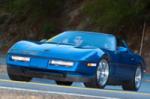












 What an awesome car! That LT4 just pulls hard throughout the entire RPM range.