


1985 burning oil

Drifting


Joined: Nov 2015
Posts: 1,710
Likes: 330
Finalist 2020 C4 of the Year - Unmodified

Bfenty, your issue sounds why too similar to an issue I'm chasing on my '87. Same problem 800+ miles, 1 qt of oil, gone. No smoke, runs great. I spent later winter doing the typical items mentioned, all the way down to removing the heads and taking to a machinist. He thought the heads looked good and clean, after he cleaned and checked them, he replaced three valves. After re-assembly, started and ran great, same as before, no smoke except at start, mostly due to the outdoor temp. But, no change for the oil loss, qt per thousand of so. Still in the same boat as yourself.
Extra piece to check. First, check oil at cold every day and note level and mileage. Try two different drives, one day do city type driving, 40 or lower around town for the day, 20 miles or more, couple three days fine, just below 45. Another day, take a single drive out and back at highway speed, 30 miles or something. Compare results. I noted mine was losing a quart in 120 miles at highway speed, versus not much, maybe an 1/8th 60 miles around town driving (spent several days of driving in town). On, yeah, mine has gotten worse also.
I found an article mentioning a notorious problem with Chevy 350's, the EGR valve. If the gasket or valve goes bad, it sucks oil into the crankcase. A small leak could be the cause, the EGR valve activates at cruise speed (45+), so the high loss at highway speeds makes this a likely problem. I'm replacing mine this winter, kicking myself for not doing last winter. Hoping it actually does something!
Another note, someone mentioned waiting until ADD level on the dipstick before refilling with a quart, that is certainly not a good idea in my opinion. The engine is actually designed such that an extra quart over FULL would not be a problem, even some more until it becomes an issue, generating foam somewhere I forget. Letting oil level drop to not quite ADD could also catch you if an oil loss problem starts, you might end up below ADD, which is NOT a good thing, any distance will cause damage.
Extra piece to check. First, check oil at cold every day and note level and mileage. Try two different drives, one day do city type driving, 40 or lower around town for the day, 20 miles or more, couple three days fine, just below 45. Another day, take a single drive out and back at highway speed, 30 miles or something. Compare results. I noted mine was losing a quart in 120 miles at highway speed, versus not much, maybe an 1/8th 60 miles around town driving (spent several days of driving in town). On, yeah, mine has gotten worse also.
I found an article mentioning a notorious problem with Chevy 350's, the EGR valve. If the gasket or valve goes bad, it sucks oil into the crankcase. A small leak could be the cause, the EGR valve activates at cruise speed (45+), so the high loss at highway speeds makes this a likely problem. I'm replacing mine this winter, kicking myself for not doing last winter. Hoping it actually does something!
Another note, someone mentioned waiting until ADD level on the dipstick before refilling with a quart, that is certainly not a good idea in my opinion. The engine is actually designed such that an extra quart over FULL would not be a problem, even some more until it becomes an issue, generating foam somewhere I forget. Letting oil level drop to not quite ADD could also catch you if an oil loss problem starts, you might end up below ADD, which is NOT a good thing, any distance will cause damage.

Thread Starter
Drifting
Joined: Mar 2017
Posts: 1,897
Likes: 164
From: Nashville TN
2017 C4 of Year Finalist
Bfenty, your issue sounds why too similar to an issue I'm chasing on my '87. Same problem 800+ miles, 1 qt of oil, gone. No smoke, runs great. I spent later winter doing the typical items mentioned, all the way down to removing the heads and taking to a machinist. He thought the heads looked good and clean, after he cleaned and checked them, he replaced three valves. After re-assembly, started and ran great, same as before, no smoke except at start, mostly due to the outdoor temp. But, no change for the oil loss, qt per thousand of so. Still in the same boat as yourself.
Extra piece to check. First, check oil at cold every day and note level and mileage. Try two different drives, one day do city type driving, 40 or lower around town for the day, 20 miles or more, couple three days fine, just below 45. Another day, take a single drive out and back at highway speed, 30 miles or something. Compare results. I noted mine was losing a quart in 120 miles at highway speed, versus not much, maybe an 1/8th 60 miles around town driving (spent several days of driving in town). On, yeah, mine has gotten worse also.
I found an article mentioning a notorious problem with Chevy 350's, the EGR valve. If the gasket or valve goes bad, it sucks oil into the crankcase. A small leak could be the cause, the EGR valve activates at cruise speed (45+), so the high loss at highway speeds makes this a likely problem. I'm replacing mine this winter, kicking myself for not doing last winter. Hoping it actually does something!
Another note, someone mentioned waiting until ADD level on the dipstick before refilling with a quart, that is certainly not a good idea in my opinion. The engine is actually designed such that an extra quart over FULL would not be a problem, even some more until it becomes an issue, generating foam somewhere I forget. Letting oil level drop to not quite ADD could also catch you if an oil loss problem starts, you might end up below ADD, which is NOT a good thing, any distance will cause damage.
Extra piece to check. First, check oil at cold every day and note level and mileage. Try two different drives, one day do city type driving, 40 or lower around town for the day, 20 miles or more, couple three days fine, just below 45. Another day, take a single drive out and back at highway speed, 30 miles or something. Compare results. I noted mine was losing a quart in 120 miles at highway speed, versus not much, maybe an 1/8th 60 miles around town driving (spent several days of driving in town). On, yeah, mine has gotten worse also.
I found an article mentioning a notorious problem with Chevy 350's, the EGR valve. If the gasket or valve goes bad, it sucks oil into the crankcase. A small leak could be the cause, the EGR valve activates at cruise speed (45+), so the high loss at highway speeds makes this a likely problem. I'm replacing mine this winter, kicking myself for not doing last winter. Hoping it actually does something!
Another note, someone mentioned waiting until ADD level on the dipstick before refilling with a quart, that is certainly not a good idea in my opinion. The engine is actually designed such that an extra quart over FULL would not be a problem, even some more until it becomes an issue, generating foam somewhere I forget. Letting oil level drop to not quite ADD could also catch you if an oil loss problem starts, you might end up below ADD, which is NOT a good thing, any distance will cause damage.

Oil Producer


Joined: Apr 2014
Posts: 9,368
Likes: 2,735
Bfenty, your issue sounds why too similar to an issue I'm chasing on my '87. Same problem 800+ miles, 1 qt of oil, gone. No smoke, runs great. I spent later winter doing the typical items mentioned, all the way down to removing the heads and taking to a machinist. He thought the heads looked good and clean, after he cleaned and checked them, he replaced three valves. After re-assembly, started and ran great, same as before, no smoke except at start, mostly due to the outdoor temp. But, no change for the oil loss, qt per thousand of so. Still in the same boat as yourself.
Extra piece to check. First, check oil at cold every day and note level and mileage. Try two different drives, one day do city type driving, 40 or lower around town for the day, 20 miles or more, couple three days fine, just below 45. Another day, take a single drive out and back at highway speed, 30 miles or something. Compare results. I noted mine was losing a quart in 120 miles at highway speed, versus not much, maybe an 1/8th 60 miles around town driving (spent several days of driving in town). On, yeah, mine has gotten worse also.
I found an article mentioning a notorious problem with Chevy 350's, the EGR valve. If the gasket or valve goes bad, it sucks oil into the crankcase. A small leak could be the cause, the EGR valve activates at cruise speed (45+), so the high loss at highway speeds makes this a likely problem. I'm replacing mine this winter, kicking myself for not doing last winter. Hoping it actually does something!
Another note, someone mentioned waiting until ADD level on the dipstick before refilling with a quart, that is certainly not a good idea in my opinion. The engine is actually designed such that an extra quart over FULL would not be a problem, even some more until it becomes an issue, generating foam somewhere I forget. Letting oil level drop to not quite ADD could also catch you if an oil loss problem starts, you might end up below ADD, which is NOT a good thing, any distance will cause damage.
Extra piece to check. First, check oil at cold every day and note level and mileage. Try two different drives, one day do city type driving, 40 or lower around town for the day, 20 miles or more, couple three days fine, just below 45. Another day, take a single drive out and back at highway speed, 30 miles or something. Compare results. I noted mine was losing a quart in 120 miles at highway speed, versus not much, maybe an 1/8th 60 miles around town driving (spent several days of driving in town). On, yeah, mine has gotten worse also.
I found an article mentioning a notorious problem with Chevy 350's, the EGR valve. If the gasket or valve goes bad, it sucks oil into the crankcase. A small leak could be the cause, the EGR valve activates at cruise speed (45+), so the high loss at highway speeds makes this a likely problem. I'm replacing mine this winter, kicking myself for not doing last winter. Hoping it actually does something!
Another note, someone mentioned waiting until ADD level on the dipstick before refilling with a quart, that is certainly not a good idea in my opinion. The engine is actually designed such that an extra quart over FULL would not be a problem, even some more until it becomes an issue, generating foam somewhere I forget. Letting oil level drop to not quite ADD could also catch you if an oil loss problem starts, you might end up below ADD, which is NOT a good thing, any distance will cause damage.
wrt running oil overfull vs underfull, this one also confuses me as i was always told overfulling causes whipping and frothing of the oil and decreased lubricity

Drifting


Joined: Mar 2011
Posts: 1,693
Likes: 144
From: on Barnegat Bay Joisey
If your burning a quart every 1000 miles and the plugs aren't fouling, just drive and enjoy the car. Back in my C1/C2 days 500 miles per quart right out of the factory was considered acceptable by GM. My new '62 got 200 miles per qt and all GM did was put umbrellas on the valve stems which increased oil mileage to about 500 as I remember. Thats all they would do. Traded it in after a year and 25K miles for a S/W.LOL
Thread Starter
Drifting
Joined: Mar 2017
Posts: 1,897
Likes: 164
From: Nashville TN
2017 C4 of Year Finalist
If your burning a quart every 1000 miles and the plugs aren't fouling, just drive and enjoy the car. Back in my C1/C2 days 500 miles per quart right out of the factory was considered acceptable by GM. My new '62 got 200 miles per qt and all GM did was put umbrellas on the valve stems which increased oil mileage to about 500 as I remember. Thats all they would do. Traded it in after a year and 25K miles for a S/W.LOL
I'll have to pull the plugs and see how they look.
Drifting
Joined: Mar 2011
Posts: 1,693
Likes: 144
From: on Barnegat Bay Joisey
Take closeup pics when you pull them and share them with us. Also note the mileage since you pulled them last (and replaced them?)
Back in the '60s there were plugs that were designed to fire when fouled. If only a couple are fouled note the location and only replace them when they start to miss. Its cheaper than reworking the heads. I'd rather drive it than spend time and dollars with repairs.
Back in the '60s there were plugs that were designed to fire when fouled. If only a couple are fouled note the location and only replace them when they start to miss. Its cheaper than reworking the heads. I'd rather drive it than spend time and dollars with repairs.
Thread Starter
Drifting
Joined: Mar 2017
Posts: 1,897
Likes: 164
From: Nashville TN
2017 C4 of Year Finalist
Take closeup pics when you pull them and share them with us. Also note the mileage since you pulled them last (and replaced them?)
Back in the '60s there were plugs that were designed to fire when fouled. If only a couple are fouled note the location and only replace them when they start to miss. Its cheaper than reworking the heads. I'd rather drive it than spend time and dollars with repairs.
Back in the '60s there were plugs that were designed to fire when fouled. If only a couple are fouled note the location and only replace them when they start to miss. Its cheaper than reworking the heads. I'd rather drive it than spend time and dollars with repairs.
Is it a problem with the heads that would cause the oil to get onto the spark plugs? I'm a backyard mechanic and have 0 experience on the inner workings of an engine and I'm struggling to see it in my head.
Drifting
Joined: Mar 2011
Posts: 1,693
Likes: 144
From: on Barnegat Bay Joisey
Worn valve guides and seals are probably the most common oil consumption Problem on older motors with under 100K miles. getting over 150K would be a general degradation of whole unit.
Abuse and lack of maintenance would shorten life. Regardless of mileage age will deteriorate rubber/plastic parts like seals and gaskets.
Just to mention, if you don't aggressively push the limits of a 30 year old car regularly you can get several years of enjoyment out it without hurting it or throwing money at it. Oil and spark plugs are cheap and easy to change. Just sayin
Abuse and lack of maintenance would shorten life. Regardless of mileage age will deteriorate rubber/plastic parts like seals and gaskets.
Just to mention, if you don't aggressively push the limits of a 30 year old car regularly you can get several years of enjoyment out it without hurting it or throwing money at it. Oil and spark plugs are cheap and easy to change. Just sayin
Corvette Stories
The Best of Corvette for Corvette Enthusiasts

How Much Horsepower Every Corvette Engine "LOST" in 1972
Joe Kucinski
Top 10 DOs and DON'Ts for Protecting Your Convertible Top!
Michael S. Palmer
Top 10 Most Explosive Corvettes Ever Made: Power-to-Weight Ratio Ranked!
Joe Kucinski
150 hp to 1,250 hp: Every Corvette Generation Compared by the Specs That Matter
Joe Kucinski
8 Coolest Corvette Pace Cars (and Replicas) of All Time
Verdad Gallardo
Top 10 Corvette Engines RANKED by Peak Torque (70+ Years of Muscle!)
Joe Kucinski
Corvette ZR1X Will Be Pacing the Indy 500, And Could Probably Race, Too!
Verdad Gallardo
Top 10 Corvettes Coming to Mecum Indy 2026!
Brett Foote
Top 10 C9 Corvette MUST-HAVES to Fix These C8 Generation Flaws!
Michael S. Palmer
Thread Starter
Drifting
Joined: Mar 2017
Posts: 1,897
Likes: 164
From: Nashville TN
2017 C4 of Year Finalist
Worn valve guides and seals are probably the most common oil consumption Problem on older motors with under 100K miles. getting over 150K would be a general degradation of whole unit.
Abuse and lack of maintenance would shorten life. Regardless of mileage age will deteriorate rubber/plastic parts like seals and gaskets.
Just to mention, if you don't aggressively push the limits of a 30 year old car regularly you can get several years of enjoyment out it without hurting it or throwing money at it. Oil and spark plugs are cheap and easy to change. Just sayin
Abuse and lack of maintenance would shorten life. Regardless of mileage age will deteriorate rubber/plastic parts like seals and gaskets.
Just to mention, if you don't aggressively push the limits of a 30 year old car regularly you can get several years of enjoyment out it without hurting it or throwing money at it. Oil and spark plugs are cheap and easy to change. Just sayin

Racer

Joined: Dec 2012
Posts: 347
Likes: 25
From: Rockford Illinois
I have an 1985 also and did the seals, which stopped the puff of smoke on startup. Judging by the picture of your oil on the ground it's probable that your intake manifold is leaking oil in the back corner driver side. Someone on here posted a while ago about the intake manifold bolts backing out and getting loose and to check and tighten them up. Problem is most are blocked by the plenum. When I did my fuel injectors and everything was off the top I found that very same issue and could spin the back one out by hand. When I torqued them to spec I have never had a drop of oil leak out on the floor again. The seals worked perfect too. When I did my seals I also replaced the springs, the pushrods and converted to full 1.6 stainless roller rockers which reduced the friction from the stamped rockers. My oil/engine temperature stays low even on the hottest days now. If you are starting the work it's just a great opportunity to get some other things done. Opinions on here differ and it may not work for some but it worked great for me and part of the reason I enjoy driving the car on the hottest days of the summer.
Drifting
Joined: Nov 2015
Posts: 1,710
Likes: 330
Finalist 2020 C4 of the Year - Unmodified
Running a quart below ADD on the other hand, it won't kill the engine right away either...but will reduce it's life quite a bit.

Thread Starter
Drifting
Joined: Mar 2017
Posts: 1,897
Likes: 164
From: Nashville TN
2017 C4 of Year Finalist
I have an 1985 also and did the seals, which stopped the puff of smoke on startup. Judging by the picture of your oil on the ground it's probable that your intake manifold is leaking oil in the back corner driver side. Someone on here posted a while ago about the intake manifold bolts backing out and getting loose and to check and tighten them up. Problem is most are blocked by the plenum. When I did my fuel injectors and everything was off the top I found that very same issue and could spin the back one out by hand. When I torqued them to spec I have never had a drop of oil leak out on the floor again. The seals worked perfect too. When I did my seals I also replaced the springs, the pushrods and converted to full 1.6 stainless roller rockers which reduced the friction from the stamped rockers. My oil/engine temperature stays low even on the hottest days now. If you are starting the work it's just a great opportunity to get some other things done. Opinions on here differ and it may not work for some but it worked great for me and part of the reason I enjoy driving the car on the hottest days of the summer.
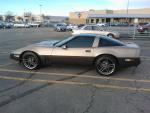
Pic just because I'm proud of how shiny the plenum is!


Instructor
Joined: Jun 2014
Posts: 133
Likes: 6
From: Minnesota
If you still have a functioning cat, you'd have to be burning s ton of oil before you'll see it.
Factory small block valve seals and forged pistons are both notorious for burning oil, but not really significant. Without a cat, you'd just kind of see a little gray smoke for a couple seconds at startup and that's it.
I'm not sure about the corvette block, but some blocks in the 80's still had the boss for a mechanical fuel pump. There is a bolt hole on the lower front passenger side that goes all the way through into the fuel pump pushrod area. If that hole isn't plugged, oil slung off the timing chain will find it's way out, and it can be a significant amount. If this is the case, the front of the engine will be caked in gook. Almost like a leaking front main seal, but favoring the passenger side.
Factory small block valve seals and forged pistons are both notorious for burning oil, but not really significant. Without a cat, you'd just kind of see a little gray smoke for a couple seconds at startup and that's it.
I'm not sure about the corvette block, but some blocks in the 80's still had the boss for a mechanical fuel pump. There is a bolt hole on the lower front passenger side that goes all the way through into the fuel pump pushrod area. If that hole isn't plugged, oil slung off the timing chain will find it's way out, and it can be a significant amount. If this is the case, the front of the engine will be caked in gook. Almost like a leaking front main seal, but favoring the passenger side.
Thread Starter
Drifting
Joined: Mar 2017
Posts: 1,897
Likes: 164
From: Nashville TN
2017 C4 of Year Finalist
If you still have a functioning cat, you'd have to be burning s ton of oil before you'll see it.
Factory small block valve seals and forged pistons are both notorious for burning oil, but not really significant. Without a cat, you'd just kind of see a little gray smoke for a couple seconds at startup and that's it.
I'm not sure about the corvette block, but some blocks in the 80's still had the boss for a mechanical fuel pump. There is a bolt hole on the lower front passenger side that goes all the way through into the fuel pump pushrod area. If that hole isn't plugged, oil slung off the timing chain will find it's way out, and it can be a significant amount. If this is the case, the front of the engine will be caked in gook. Almost like a leaking front main seal, but favoring the passenger side.
Factory small block valve seals and forged pistons are both notorious for burning oil, but not really significant. Without a cat, you'd just kind of see a little gray smoke for a couple seconds at startup and that's it.
I'm not sure about the corvette block, but some blocks in the 80's still had the boss for a mechanical fuel pump. There is a bolt hole on the lower front passenger side that goes all the way through into the fuel pump pushrod area. If that hole isn't plugged, oil slung off the timing chain will find it's way out, and it can be a significant amount. If this is the case, the front of the engine will be caked in gook. Almost like a leaking front main seal, but favoring the passenger side.

Burning Brakes


Joined: Nov 2015
Posts: 762
Likes: 94
From: Airdrie Alberta
Bfenty, curious if your car has been sitting for awhile from those pictures? I would bet if the car has been sitting more now (mostly because of this awful winter), your going to see oil dripping onto the garage floor vs on the road, or on the bottom of the car.
My car just decided to leak transmission oil last weekend. Its been sitting for three months. I have to service the transmission soon anyways.
My PVC tubes drip oil if I do any spirited driving
My car just decided to leak transmission oil last weekend. Its been sitting for three months.
I have to service the transmission soon anyways.My PVC tubes drip oil if I do any spirited driving
Thread Starter
Drifting
Joined: Mar 2017
Posts: 1,897
Likes: 164
From: Nashville TN
2017 C4 of Year Finalist
Bfenty, curious if your car has been sitting for awhile from those pictures? I would bet if the car has been sitting more now (mostly because of this awful winter), your going to see oil dripping onto the garage floor vs on the road, or on the bottom of the car.
My car just decided to leak transmission oil last weekend. Its been sitting for three months. I have to service the transmission soon anyways.
My PVC tubes drip oil if I do any spirited driving
My car just decided to leak transmission oil last weekend. Its been sitting for three months.
I have to service the transmission soon anyways.My PVC tubes drip oil if I do any spirited driving
Burning Brakes
Joined: Nov 2015
Posts: 762
Likes: 94
From: Airdrie Alberta
Lucky for you, we have a foot of snow on the ground and this morning it was -22 deg's F here this morning. Been that cold for the last four weeks. Makes me wonder if spring is ever gonna come.
Good news for me is that I'm almost done installing my C6 Z51 brakes onto my 85 vette. Its taken longer than I hate to omit. I made my own caliper brakes for the caliper abutments.
Good news for me is that I'm almost done installing my C6 Z51 brakes onto my 85 vette.
Its taken longer than I hate to omit. I made my own caliper brakes for the caliper abutments.
Thread Starter
Drifting
Joined: Mar 2017
Posts: 1,897
Likes: 164
From: Nashville TN
2017 C4 of Year Finalist
Lucky for you, we have a foot of snow on the ground and this morning it was -22 deg's F here this morning. Been that cold for the last four weeks. Makes me wonder if spring is ever gonna come.
Good news for me is that I'm almost done installing my C6 Z51 brakes onto my 85 vette. Its taken longer than I hate to omit. I made my own caliper brakes for the caliper abutments.
Good news for me is that I'm almost done installing my C6 Z51 brakes onto my 85 vette.
Its taken longer than I hate to omit. I made my own caliper brakes for the caliper abutments.
Burning Brakes
Joined: Nov 2015
Posts: 762
Likes: 94
From: Airdrie Alberta
Yea I'm want to see how well that they work. Honestly the 11.5in front/rears worked pretty decent (I had brand new C4 standard brakes). Now the front are 13.4in and 13in at the rear. I'm running C6 brake calipers, drilled/slotted rotors. I probably have around $1000 into the brakes. You have to run larger wheels. I found a set of really nice C6 Z06 rims with decent rubber cheap. nitto 285/35/R18 and 325/30/R19 tires

Safety Car


Joined: May 2001
Posts: 4,752
Likes: 1,642
From: Fairfax Virginia
Hello again Bfenty,
This has been an interesting post to catch up on. I have a couple things I would like to suggest if I may.
Before anything else is done have a "Leak down Test" done on your Corvette. You need to "know" what is going on down there BEFORE you can fix it. If done properly the "Leak Down" test is probably the most important way to check an engine. It is what they do to piston engine aircraft every day. When done you will have two numbers for each cylinder, one is the air pressure and the second number is the pressure the cylinder will hold with both valves closed and the piston at TDC. If there is any leakage around your pistons you will hear it coming out of the crankcase oil fill, if the exhaust valve is bad, noise comes out exhaust system, intake valve issue and you will hear air coming out of carburetor.
This is the only test can truly identify where the problem is and usually what is causing it. I learned this working on my Cessna 172 with my A&P mechanic. My Cessna used to be fairly constant at 100-85 psi which showed it to be okay just a bit worn.
Second, The valve springs. You suggest replacing them due to the low initial cost of the part. Have you ever been involved with or rebuilt a cylinder head before?
When I had my heads for my 427 being rebuilt I was there most of the time. First they went to a shop and all of the valve guides were replaced and then I had hardened seats put in for the unleaded gasoline, then we got the heads back for re-assembly. My mechanic used to build Road Racing engines for Porche and he was a detail man.
Each spring has to be "set" properly to install springs "correctly". My mechanic installed each spring multiple times to get the correct seat pressure and for consistency. He removed the springs and put shims in to get all the springs set the same pressure unloaded. Then he would fully load the spring and measure it again so he knew he was not binding anything.
After watching a man with the proper tools doing it I now know that this is not something I would do myself without the necessary tools, and probably not on the car.
If I was doing something that was not important to me then a spring is a spring. But this is YOUR Corvette and you should do it the right way. Get the proper tools and verify your setup as you go along. I would get a book on how to assemble a cylinder head and learn as much as you can before tackling this job.
You have heard a lot of opinions here on the forum, now find out what is really going on. I suspect the reason for your oil consumption will show its ugly face during the leak down test. I have seen a bad PCV valve force the engine to leak oil by maintaining pressure inside the block while the engine is running. My Mom's Volvo's PCV valve went bad and she bought a new engine.
I hope that it is something simple that is making issues for you!
This has been an interesting post to catch up on. I have a couple things I would like to suggest if I may.
Before anything else is done have a "Leak down Test" done on your Corvette. You need to "know" what is going on down there BEFORE you can fix it. If done properly the "Leak Down" test is probably the most important way to check an engine. It is what they do to piston engine aircraft every day. When done you will have two numbers for each cylinder, one is the air pressure and the second number is the pressure the cylinder will hold with both valves closed and the piston at TDC. If there is any leakage around your pistons you will hear it coming out of the crankcase oil fill, if the exhaust valve is bad, noise comes out exhaust system, intake valve issue and you will hear air coming out of carburetor.
This is the only test can truly identify where the problem is and usually what is causing it. I learned this working on my Cessna 172 with my A&P mechanic. My Cessna used to be fairly constant at 100-85 psi which showed it to be okay just a bit worn.
Second, The valve springs. You suggest replacing them due to the low initial cost of the part. Have you ever been involved with or rebuilt a cylinder head before?
When I had my heads for my 427 being rebuilt I was there most of the time. First they went to a shop and all of the valve guides were replaced and then I had hardened seats put in for the unleaded gasoline, then we got the heads back for re-assembly. My mechanic used to build Road Racing engines for Porche and he was a detail man.
Each spring has to be "set" properly to install springs "correctly". My mechanic installed each spring multiple times to get the correct seat pressure and for consistency. He removed the springs and put shims in to get all the springs set the same pressure unloaded. Then he would fully load the spring and measure it again so he knew he was not binding anything.
After watching a man with the proper tools doing it I now know that this is not something I would do myself without the necessary tools, and probably not on the car.
If I was doing something that was not important to me then a spring is a spring. But this is YOUR Corvette and you should do it the right way. Get the proper tools and verify your setup as you go along. I would get a book on how to assemble a cylinder head and learn as much as you can before tackling this job.
You have heard a lot of opinions here on the forum, now find out what is really going on. I suspect the reason for your oil consumption will show its ugly face during the leak down test. I have seen a bad PCV valve force the engine to leak oil by maintaining pressure inside the block while the engine is running. My Mom's Volvo's PCV valve went bad and she bought a new engine.
I hope that it is something simple that is making issues for you!