






1985 bleeding the coolant

Thread Starter
Intermediate

Joined: Nov 2019
Posts: 27
Likes: 0
From: Norwich, UK
 1985 bleeding the coolant
Right I’m hoping I can get some help. I have flushed the heater core out this evening after reading a few posts from people previously flushing them but now I can’t get the air out of the system. The car is driven up some ramps so the radiator is high I left a funnel in the radiator keeping an eye on the coolant but soon as it gets warm it is spitting it out ( assuming that’s the thermostat opening?) thanks in advance

Safety Car


Joined: Mar 2003
Posts: 3,583
Likes: 504
From: Indianapolis IN
Finalist 2020 C4 of the Year - Unmodified
C4 of Year Finalist (stock) 2019
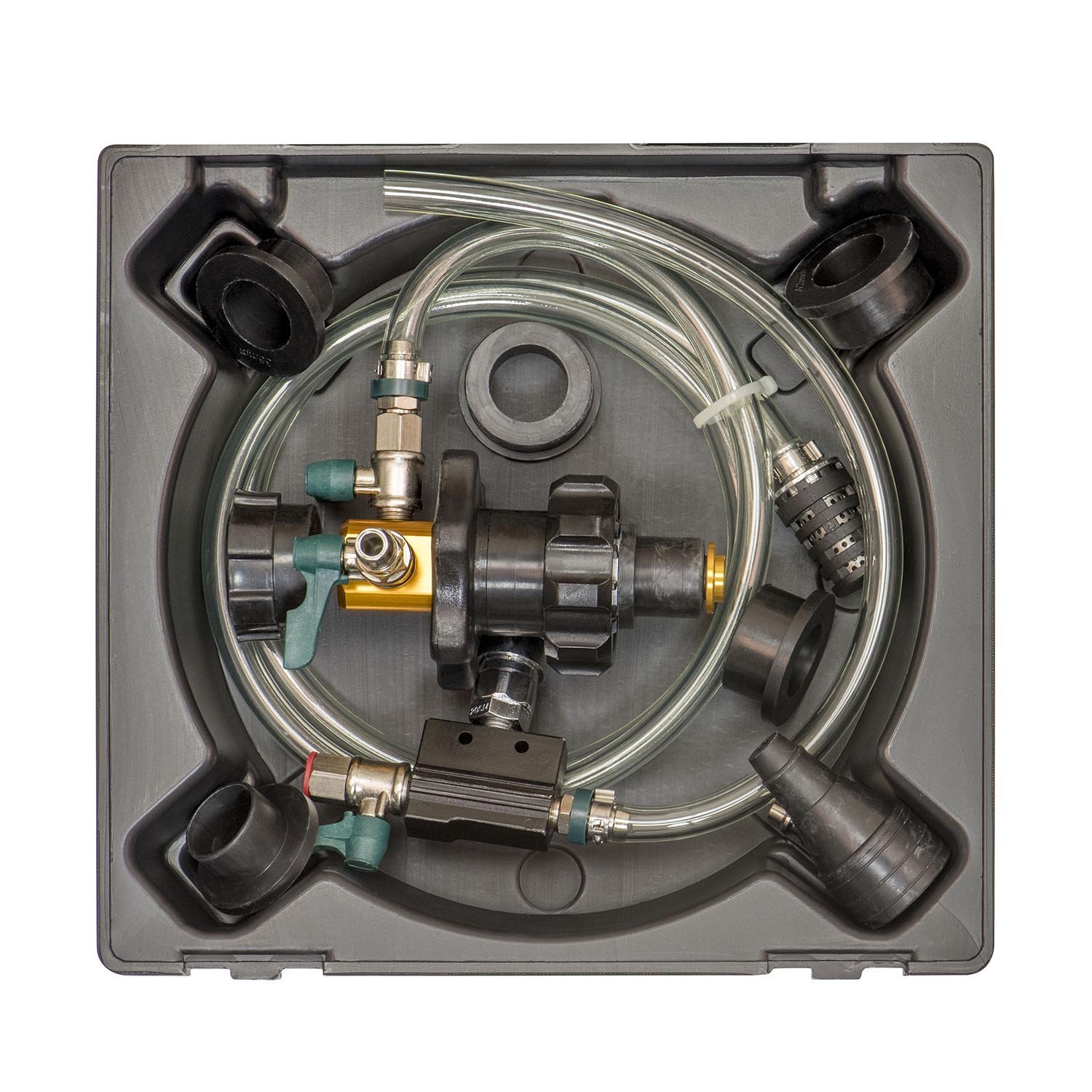
I use this for filling my coolant on all of my cars including my '86 and have ZERO issues with trapped air....ever. The RIGHT tool for the job is invaluable.
Link -- >
Link -- >

Team Owner


Joined: Aug 2004
Posts: 21,543
Likes: 3,216
From: Park City Utah
Those tools^^^ are sweet. I have one too.....but when you don't have one, they aren't that sweet. What you need is a way to effectively eliminate the air. If the car is positioned such that the radiator cap is the highest point in the cooling system, then it will self bleed. Any air that may be left (whether you raise the front of car or not) will also self bleed into the over flow tank after a couple cooling cycles.

Team Owner

Joined: Sep 2001
Posts: 62,153
Likes: 1,731
From: Athens AL
C7 of the Year - Unmodified Finalist 2021
C4 of Year Finalist (performance mods) 2019
If you have the tool above that's great, I don't. When you see the coolant start bubbling out at t-stat opening of 195F, pull the throttle back. It will suck it down as the engine revs up. You shouldn't need to take it more than about 2000-3000 rpm. Once it sucks it down, fill it to the brim, and put the cap back on. You should be done. Kinda hard to do just by yourself but I do it, just gotta be quick with getting that cap back on because once you let go of the throttle blades it'll start back to coming out.
Last edited by vader86; Dec 5, 2019 at 06:37 PM.

Safety Car

Joined: Sep 2004
Posts: 3,953
Likes: 550
From: Mission Viejo CA
What you need is a way to effectively eliminate the air. If the car is positioned such that the radiator cap is the highest point in the cooling system, then it will self bleed. Any air that may be left (whether you raise the front of car or not) will also self bleed into the over flow tank after a couple cooling cycles.

Have some patience. After you fill the radiator, let the car sit there on the ramps (engine off). You should hear bubbles coming into the radiator from the engine (thermostat). You'll probably need to fill the radiator several times before the radiator stays full. Install the cap. Be sure there is sufficient coolant in the reservoir, then drive the car. Move the temp control lever off of the COOL position for a short time. Any air bubbles will be forced into the reservoir, and when the engine cools off, coolant will flow from the reservoir into the radiator (if the cap is good). Check the coolant level in the radiator after the engine cools. If it's low, fill the radiator and drive the car again. Be sure the reservoir maintains adequate coolant in it.

Melting Slicks


Joined: Jun 2011
Posts: 2,383
Likes: 385
From: Leland , North Carolina

Safety Car


Joined: May 2001
Posts: 4,757
Likes: 1,647
From: Fairfax Virginia
I have never had any problem getting the air out with the C4 on all four wheels. The L98 is a fairly straightforward Engine and unlike it's successors it is fairly easy to flush and fill the coolant. I have changed my coolant every five years on the L98 in my 1988 C4 and never had any issues with air being trapped inside the engine.
What makes the C4 need pressurized coolant to get all the air out? I did my C4 on ramps and saw no difference. I still have my old Prestone "Flush and Fill" Kit which has a hose barb Tee on one of the coolant lines and makes it really easy to clean out the coolant system. I introduce the water through the heater core supply lines (I think) and run it until the water through the systems for a while with the engine running. Then I close the system up and try to drain out the water in the coolant system. After this I make up a 70% Distilled Water and 30% anti-freeze and fill the car and let it run until it opens the thermostat. I do empty the overflow container and fill it with fresh 70/30 mixture I am using in the engine.
I live in Northern Virginia and we don't get extreme cold here so that is why I only use 30% anti-freeze, AF does not help the car "cool" so using too much will make the engine run hotter as AF does not transfer heat as well as water does. If I could I would fill the engine with one bottle of Water Wetter and fill it up the rest of the way with distilled water and with a 16 lb radiator cap you would be protected up to 260 degrees before boil over. This works great during the summer but not so good in the winter so I use 70/30. If I was in South Florida I would be at 90/10 with even less AF in the mixture. I had a customer with an overheating car and it turned out that they filled it with pure anti-freeze using no water at all. If a little works okay then a Lot will work better, right? NOT....
Back to maintenance of your cooling system. I recommend to folks to replace their radiator cap and coolant every five years or 100,000 miles. When the radiator cap fails the car will boil over at a much lower point. Radiator caps on most cars are like 16 pound pressure caps and they loose the ability to maintain the pressure over time. I also like to replace the thermostat every 10 years no matter the mileage. No matter what kind of (Conventional) Anti-Freeze you use it still needs to be replaced every five years. Some anti-freeze will turn acidic and eat the heater core and other copper, brass and even aluminum if left in the engine to long. I had one specific brand eat up my head gaskets and turned them to mush all because the coolant turned acidic. I now monitor the Ph of the coolant and watch for any changes....
The radiator overflow tank is an integral part of the cooling system and is often forgotten. The tube going to the overflow tank should be checked and replaced every few years as needed. If the tube has a hole in it you can loose a little coolant, it will also stop the overflow from re-filling the radiator as Vacuum is needed. There should always be coolant in the overflow container to the "min" mark or you risk pulling in air. I check and if needed replace this piece of hose and verify it is on tight and working properly every five years when I do the coolant flush.
When the engine gets hot and the coolant expands it pushes through the radiator cap and goes to the overflow container. If the radiator cap is worn out or defective this might not happen. The excess coolant from the overflow container will be drawn back into the radiator as the engine cools down. If the overflow is not functioning properly it will help keep air inside the cooling systems. I have seen a lot of C4's with near empty overflow containers while at Corvette@Carlisle and they were all being driven on the roads.
Best regards,
Chris
What makes the C4 need pressurized coolant to get all the air out? I did my C4 on ramps and saw no difference. I still have my old Prestone "Flush and Fill" Kit which has a hose barb Tee on one of the coolant lines and makes it really easy to clean out the coolant system. I introduce the water through the heater core supply lines (I think) and run it until the water through the systems for a while with the engine running. Then I close the system up and try to drain out the water in the coolant system. After this I make up a 70% Distilled Water and 30% anti-freeze and fill the car and let it run until it opens the thermostat. I do empty the overflow container and fill it with fresh 70/30 mixture I am using in the engine.
I live in Northern Virginia and we don't get extreme cold here so that is why I only use 30% anti-freeze, AF does not help the car "cool" so using too much will make the engine run hotter as AF does not transfer heat as well as water does. If I could I would fill the engine with one bottle of Water Wetter and fill it up the rest of the way with distilled water and with a 16 lb radiator cap you would be protected up to 260 degrees before boil over. This works great during the summer but not so good in the winter so I use 70/30. If I was in South Florida I would be at 90/10 with even less AF in the mixture. I had a customer with an overheating car and it turned out that they filled it with pure anti-freeze using no water at all. If a little works okay then a Lot will work better, right? NOT....
Back to maintenance of your cooling system. I recommend to folks to replace their radiator cap and coolant every five years or 100,000 miles. When the radiator cap fails the car will boil over at a much lower point. Radiator caps on most cars are like 16 pound pressure caps and they loose the ability to maintain the pressure over time. I also like to replace the thermostat every 10 years no matter the mileage. No matter what kind of (Conventional) Anti-Freeze you use it still needs to be replaced every five years. Some anti-freeze will turn acidic and eat the heater core and other copper, brass and even aluminum if left in the engine to long. I had one specific brand eat up my head gaskets and turned them to mush all because the coolant turned acidic. I now monitor the Ph of the coolant and watch for any changes....
The radiator overflow tank is an integral part of the cooling system and is often forgotten. The tube going to the overflow tank should be checked and replaced every few years as needed. If the tube has a hole in it you can loose a little coolant, it will also stop the overflow from re-filling the radiator as Vacuum is needed. There should always be coolant in the overflow container to the "min" mark or you risk pulling in air. I check and if needed replace this piece of hose and verify it is on tight and working properly every five years when I do the coolant flush.
When the engine gets hot and the coolant expands it pushes through the radiator cap and goes to the overflow container. If the radiator cap is worn out or defective this might not happen. The excess coolant from the overflow container will be drawn back into the radiator as the engine cools down. If the overflow is not functioning properly it will help keep air inside the cooling systems. I have seen a lot of C4's with near empty overflow containers while at Corvette@Carlisle and they were all being driven on the roads.
Best regards,
Chris
Corvette Stories
The Best of Corvette for Corvette Enthusiasts

Top 10 Most Expensive Corvettes Ever Sold on Bring A Trailer
Brett Foote
10 Things Every Corvette Owner Needs (2026 Edition)
Michael S. Palmer
8 Most "Only Corvette Owners Understand" Quirks and Problems
Pouria Savadkouei
10 Reasons the C6 Z06 is Still A Performance Benchmark After 20 Years
Joe Kucinski
How Much Horsepower Every Corvette Engine "LOST" in 1972
Joe Kucinski
Top 10 DOs and DON'Ts for Protecting Your Convertible Top!
Michael S. Palmer
Top 10 Most Explosive Corvettes Ever Made: Power-to-Weight Ratio Ranked!
Joe Kucinski
150 hp to 1,250 hp: Every Corvette Generation Compared by the Specs That Matter
Joe Kucinski
8 Coolest Corvette Pace Cars (and Replicas) of All Time
Verdad Gallardo
Team Owner
Joined: Aug 2004
Posts: 21,543
Likes: 3,216
From: Park City Utah

People like to make this stuff (and other stuff) a lot more complicated than it is and needs to be.

Drifting


Joined: Nov 2015
Posts: 1,712
Likes: 331
Finalist 2020 C4 of the Year - Unmodified
Helpful bit many do, when replacing the thermostat, drill a small hole in it, as in 1/16 or so. This allows air to bubble through while the thermostat is still closed.
One of the more difficult pieces for refilling the coolant on the L98 is that the radiator top hose is lower than the engine coolant output. Air can build up there, hard to pull out. That's why some put the front on ramps or similar when filling.
One of the more difficult pieces for refilling the coolant on the L98 is that the radiator top hose is lower than the engine coolant output. Air can build up there, hard to pull out. That's why some put the front on ramps or similar when filling.

Safety Car
Joined: Aug 2013
Posts: 4,429
Likes: 605
From: Minneapolis Mn
I did similar to what belairbrian did except I used an old antifreeze jug. I cut the bottom out to act as a funnel and wrapped the area between the jug and radiator neck with some duct tape to reduce any potential mess. Start the engine and wait till the thermostat opened and the coolant level dropped. Topped off the coolant and with the engine still running pulled the jug and put on the radiator cap - job done.
Be sure to set the heater to max heat so any air in the heater core can pass out also.
Be sure to set the heater to max heat so any air in the heater core can pass out also.
Last edited by hcbph; Dec 13, 2019 at 06:46 AM.

Drifting
Joined: Mar 2013
Posts: 1,952
Likes: 239
From: Venice Cali.
After working on cooling system I fill the radiator , wait for the thermostat to open, you can see the flow start.
It will open at your thermos temp. When the level goes down just put more distilled water in and put the cap on.
Go for a drive and let it cool down. Top off once more and make sure you overflow is not full but to the level.
Never has to do any bleeding or lifting front when system is working properly.
Good Luck!
It will open at your thermos temp. When the level goes down just put more distilled water in and put the cap on.
Go for a drive and let it cool down. Top off once more and make sure you overflow is not full but to the level.
Never has to do any bleeding or lifting front when system is working properly.
Good Luck!

Burning Brakes

Joined: Nov 2014
Posts: 936
Likes: 51
From: Post Falls ID
I have a tiny seep somewhere in my cooling system I can't locate (yet). I know it will rear its head at some point. Meanwhile, I occasionally get the "low coolant" light on. I just fill the burp tank and drive away. Tonight when the engine cools down in the garage, since my rad cap is good, it'll draw coolant back into the radiator like it's designed to do. Never had to bleed it in 15 years' operation, even after a flush/fill.
Last edited by 86C4Z51; Dec 13, 2019 at 04:10 PM.
Safety Car
Joined: Aug 2013
Posts: 4,429
Likes: 605
From: Minneapolis Mn
I have a tiny seep somewhere in my cooling system I can't locate (yet). I know it will rear its head at some point. Meanwhile, I occasionally get the "low coolant" light on. I just fill the burp tank and drive away. Tonight when the engine cools down in the garage, since my rad cap is good, it'll draw coolant back into the radiator like it's designed to do. Never had to bleed it in 15 years' operation, even after a flush/fill.
I had a hard leak to find, it turned out to be the curved hose between the block and TPI, had a small crack in it and till I used a black light and pressurized the cooling system it was hard to see let alone find. I knew there was a leak but couldn't find it till I did that.
Last edited by hcbph; Dec 15, 2019 at 02:13 PM.