When you click on links to various merchants on this site and make a purchase, this can result in this site earning a commission. Affiliate programs and affiliations include, but are not limited to, the eBay Partner Network.
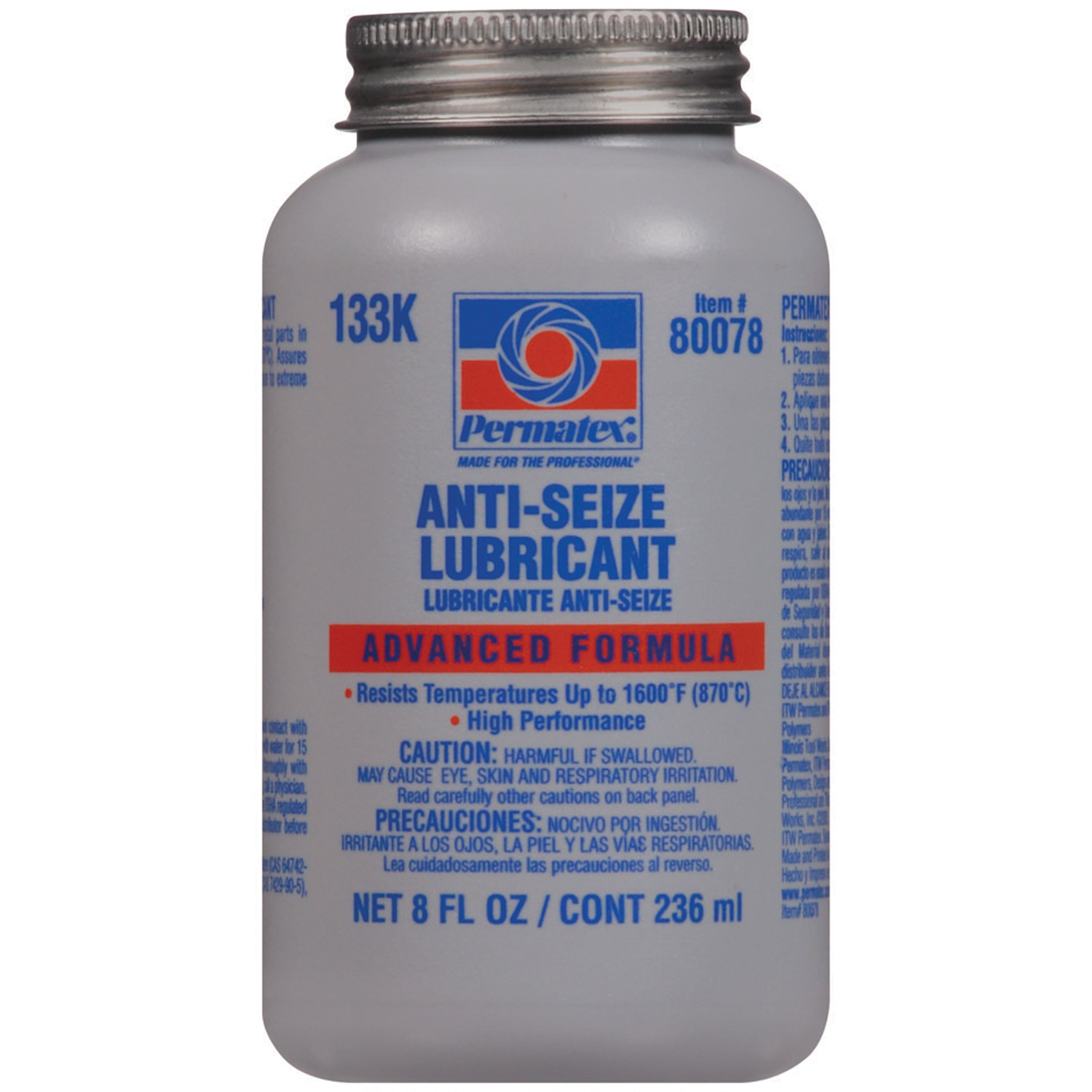
This stuff seems to be OK? Says "Suggested Applications: For easy removal of spark plugs, ...." Described as "A highly refined blend of aluminum, copper and graphite lubricants." No mention of avoiding aluminum and most likely they would say so if its use was limited.
This stuff seems to be OK? Says "Suggested Applications: For easy removal of spark plugs, ...." Described as "A highly refined blend of aluminum, copper and graphite lubricants." No mention of avoiding aluminum and most likely they would say so if its use was limited.
Yes that’s the stuff I use too. It’s silver in color aluminum based with other elements like copper and graphite. The ones that are copper or brown in color are not suitable in this situation.
You dont need anti-seize on most modern spark plugs. The housings are plated with nickel or zinc coatings that will not corrode.
More likely to strip your heads with anti seize on the plugs than have them seize.
What would make it more likely to strip the heads? I mean, if you put them on a 3 foot pry bar and jumped on it, sure. Proper torque SHOULD be ok. I have had them come out hard and squeak without and not so much with anti seize so I am not clear how it is more likely to strip out the head.
Did he say why or was it just his belief? I have heard a lot of people complain that the factory plugs are hard to take out when they do the 100K service. They are stiff when removing, squeak like hell on the first few turns. A couple have broken off too. With these newer plugs, it is harder to check the plugs. I have personally gained a high of a mile and some change of gas mileage by just changing plugs when they are higher mileage like north of say 70 although the standard was 100K. I can't believe that it is perfect till 100K then falls apart. Only question I have is what the change interval should be before we lose too much gas mileage.
My usual treatment is changing them at 50K for a 100K plug with anti seize simply for ease of removal, more than anything else. On my turbo diesel MB, I used to take the glow plugs out once a year and bore brush the chamber and anti-seize the threads since I have had a couple of plug breaks. l Seems to work so I can remove it easily the next time instead of praying to the automotive gods for a no break removal when a plug went bad.
Did he say why or was it just his belief? I have heard a lot of people complain that the factory plugs are hard to take out when they do the 100K service. They are stiff when removing, squeak like hell on the first few turns. A couple have broken off too. With these newer plugs, it is harder to check the plugs. I have personally gained a high of a mile and some change of gas mileage by just changing plugs when they are higher mileage like north of say 70 although the standard was 100K. I can't believe that it is perfect till 100K then falls apart. Only question I have is what the change interval should be before we lose too much gas mileage.
FWIW, just pulled the OE plugs on my son's 2011 camaro 3.6L V6 w/ 180K on the clock - plugs came out without problems - no real issues with the old plugs - very little noticeable improvement with new plugs. just saying....
FWIW, just pulled the OE plugs on my son's 2011 camaro 3.6L V6 w/ 180K on the clock - plugs came out without problems - no real issues with the old plugs - very little noticeable improvement with new plugs. just saying....
Interesting to note. The used cars I have gotten have usually been stiff and squeak when the are turned. I get so nervous that it will break
Interesting to note. The used cars I have gotten have usually been stiff and squeak when the are turned. I get so nervous that it will break
just a side note, it is important to use a spark plug socket, and not a plain old socket when removing plugs. plug sockets are designed to grip the metal hex while isolating and cushioning the porcelain, thus minimizing the risk of breakage. I probably have over a half dozen specialty sockets (sizes, various lengths, built-in universals, etc.) just for plugs. most are six point, at least one 12. to date - knock on wood, haven't broken a plug yet.
just a side note, it is important to use a spark plug socket, and not a plain old socket when removing plugs. plug sockets are designed to grip the metal hex while isolating and cushioning the porcelain, thus minimizing the risk of breakage. I probably have over a half dozen specialty sockets (sizes, various lengths, built-in universals, etc.) just for plugs. most are six point, couple 12's. to date - knock on wood, haven't broken a plug yet.
I don't have that. I have a wobble and straight plug socket is all. Maybe someday, if I need them, I will. I just hate to be buying one off tools.
What would make it more likely to strip the heads? I mean, if you put them on a 3 foot pry bar and jumped on it, sure. Proper torque SHOULD be ok. I have had them come out hard and squeak without and not so much with anti seize so I am not clear how it is more likely to strip out the head.
Anti-seize changes torque values (ie. friction), therefore its much easier to over-torque. This could strip aluminum heads if torqued too much, but can also stretch the plug housing. In the later case, the internal crimp/seal inside the plug could be damaged resulting in internal combustion leakage.
Anti-seize changes torque values (ie. friction), therefore its much easier to over-torque. This could strip aluminum heads if torqued too much, but can also stretch the plug housing. In the later case, the internal crimp/seal inside the plug could be damaged resulting in internal combustion leakage.
IIRC, for "wet" torque values, you drop the number by 10 or 15 percent? My lug nuts or bolts would be at 85 in the spec calls for 100 simply because I have salty roads and wanted to get them out easily when I needed to.
I don't have that. I have a wobble and straight plug socket is all. Maybe someday, if I need them, I will. I just hate to be buying one off tools.
have many "one-off" tools. one of my many bad habits - i'm a tool junkie. personally, been collecting for 50+ years -- inherited my dad's set, and he inherited his dads. i'm sure my tool collection goes back, well over 100 years.
IIRC, for "wet" torque values, you drop the number by 10 or 15 percent? My lug nuts or bolts would be at 85 in the spec calls for 100 simply because I have salty roads and wanted to get them out easily when I needed to.
Absolutely you could do that. General rule of thumb with spark plug is 20%. Most people are not smart enough to consider that, they lube em' up and give it the old un-calibrated forearm wrench. That's when problems happen.
Absolutely you could do that. General rule of thumb with spark plug is 20%. Most people are not smart enough to consider that, they lube em' up and give it the old un-calibrated forearm wrench. That's when problems happen.
So in this case, the lack of lube is a buffer for stupidity? Fair enough. I really don't like to use German torque techniques, Guten Tite.
So in this case, the lack of lube is a buffer for stupidity? Fair enough. I really don't like to use German torque techniques, Guten Tite.
LOL.
yea that’s one way to look at it. The other is Ni/Zn plating on the housing will prevent seizing. Brazil market vehicles that run E100 through their plug service intervals don’t even use anti seize.
Did he say why or was it just his belief? I have heard a lot of people complain that the factory plugs are hard to take out when they do the 100K service. They are stiff when removing, squeak like hell on the first few turns. A couple have broken off too. With these newer plugs, it is harder to check the plugs. I have personally gained a high of a mile and some change of gas mileage by just changing plugs when they are higher mileage like north of say 70 although the standard was 100K. I can't believe that it is perfect till 100K then falls apart. Only question I have is what the change interval should be before we lose too much gas mileage.
My usual treatment is changing them at 50K for a 100K plug with anti seize simply for ease of removal, more than anything else. On my turbo diesel MB, I used to take the glow plugs out once a year and bore brush the chamber and anti-seize the threads since I have had a couple of plug breaks. l Seems to work so I can remove it easily the next time instead of praying to the automotive gods for a no break removal when a plug went bad.
He said it will help them to bond. Recommend to just lube with synthetic oil.
To me, the biggest obstacle is trying to torque them with all the assorted braces, brackets, pipes etc. Can't get the wrench on them, or can't swing the wrench enough to get more than a click at a time. A universal is SOME help, but not always. Not to mention the notorious #8!
To me, the biggest obstacle is trying to torque them with all the assorted braces, brackets, pipes etc. Can't get the wrench on them, or can't swing the wrench enough to get more than a click at a time. A universal is SOME help, but not always. Not to mention the notorious #8!
You just have to get rid of all the excess garbage.














 . try this for a little light reading - https://www.rideapart.com/articles/357239/ask-rideapart-crossthreaded-spark-plug/