






'89 Cranks, No start

Thread Starter
Heel & Toe

Joined: May 2021
Posts: 22
Likes: 3
From: Marietta, GA
 '89 Cranks, No start
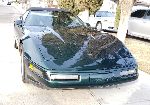
Hi, I'm restoring my late grandmothers 1989 6 speed and I'm having issues getting it to start (left in a garage for the past 7-8 years). I have the car hooked up to an external battery and it will crank, but wont start. I had someone crank the car while I sprayed starting spray into the intake to see if it would begin to turn over and it gave a few little sputters, but ultimately couldn't hand on. I think its something with the fuel system. I can confirm the fuel pump is at least sending fuel (not sure if its enough pressure as I don't have the gauge/kit to test the pressure in the fuel rail). I tried to test the pressure by pushing on the schrader valve with the end of a screw driver. Fuel came out, but it was closer to just drooling out more than anything. I replaced the filter and checked that again and it definitely increased the pressure coming out. Still cranks but no start. I'm not sure what it could be (maybe fuel injectors?) and would greatly appreciate guidance.
Thanks,
Brian
Thanks,
Brian

Melting Slicks


Joined: May 2014
Posts: 2,894
Likes: 592
From: New Port Richey FL
Did you clean out the tank before you even turned the key 7 year's is a fine load of dead wet gas. Next the push the valve test already tells me you don't have enough pressure, with valve pushed and cranking the fuel should be hitting roof but get the gauge to prove it 35 PSI is a good base pressure.

Melting Slicks


Joined: Jul 2005
Posts: 2,649
Likes: 863
So - IMHO - Start by completely draining the gas tank. Put at least 4 gallons of fresh fuel in.
Then buy / borrow a fuel pressure gauge - hook it up to the schrader valve on the fuel log - run the pump a few times and measure pressure. Do you have decent fuel pressure ?
Then Check for spark at a few of the plugs while cranking.
Then assuming that you have decent fuel pressure and spark - try to start it again.
If it still won't start - pull a few plugs and see if they have and gasoline on them - your old gas may have clogged up things in the fuel system.
Then buy / borrow a fuel pressure gauge - hook it up to the schrader valve on the fuel log - run the pump a few times and measure pressure. Do you have decent fuel pressure ?
Then Check for spark at a few of the plugs while cranking.
Then assuming that you have decent fuel pressure and spark - try to start it again.
If it still won't start - pull a few plugs and see if they have and gasoline on them - your old gas may have clogged up things in the fuel system.
Thread Starter
Heel & Toe
Joined: May 2021
Posts: 22
Likes: 3
From: Marietta, GA
Update: I drained the tank and sucked as much sediment out as I could. Checked pressure at the valve and there was hardly any. I went ahead and replaced the fuel pump. Initially it still didn't start, but with some help of starting spray it fired up and stayed running. There were some issues with the clutch, but it worked enough to get it on the trailer. Thanks for the help guys!

Safety Car


Joined: May 2001
Posts: 4,759
Likes: 1,647
From: Fairfax Virginia
Take a moment and verify that you have proper voltages in the right places.
Cleaning out your tank is critical! I drained out everything with siphon hose and then filled it with water. I then used an old shop vac to pump it dry and remove everything inside the fuel tank.
When a Corvette like my 1988 sits for any period of time it can develop corrosion on the post where the fusible links are powered. This led to a low voltage situation which meant I was getting 10 volts at the fuel pump not the 12 volts it needs. On the 1988 the post is behind the cover near the battery. It can be found by tracing the extra Red wire that comes off the positive terminal and goes toward the drivers door hinges. The BIG red Wire goes to your Starter and the little red wire feeds the 7 fusible links that power (almost) everything inside your Corvette or under the hood.
An easy way to see if you have this problem is to measure the voltage at the fuel pump wiring harness itself. It can also be checked by verifying that every fuse has close to full battery power going to it. On my fuse block there was 0 volts and that was evidence that I had a corroded Post where the fusible links got their power. After a good cleaning the voltage was back to close to battery voltage and everything worked better. Even the fuel pump ran faster...
When you replaced the fuel pump did you re-use the pulse dampener? It is the strange little device mounted on the fuel line between the fuel pump and the fuel lines going up front. A lot of us have not re-used this device and replaced it with a small piece of Fuel Injection Fuel Hose rated for submersion in fuel. The Dampeners do go bad and can cause the fuel pressure to leak down. The rubber Hose is a simple way to avoid tracking down a dampener.
Before you go very far be sure to replace the fuel filter, if possible I would even blow out the fuel supply and return hoses with Gum-out to clean them. On my 1988 the fuel supply line had rusted shut INTERNALLY and that was even more challenging to solve. I had to run a test line to verify the volume of fuel was correct, it was pathetic at first and the car would not run very well and accelerate even worse. Oxygenated gasoline absorbs moisture just like brake fluid does. Flush the brakes on this Corvette before you take it out driving. Check all of your battery connections for cleanliness as they are critical.
Good luck and let us know how it progresses!
Cleaning out your tank is critical! I drained out everything with siphon hose and then filled it with water. I then used an old shop vac to pump it dry and remove everything inside the fuel tank.
When a Corvette like my 1988 sits for any period of time it can develop corrosion on the post where the fusible links are powered. This led to a low voltage situation which meant I was getting 10 volts at the fuel pump not the 12 volts it needs. On the 1988 the post is behind the cover near the battery. It can be found by tracing the extra Red wire that comes off the positive terminal and goes toward the drivers door hinges. The BIG red Wire goes to your Starter and the little red wire feeds the 7 fusible links that power (almost) everything inside your Corvette or under the hood.
An easy way to see if you have this problem is to measure the voltage at the fuel pump wiring harness itself. It can also be checked by verifying that every fuse has close to full battery power going to it. On my fuse block there was 0 volts and that was evidence that I had a corroded Post where the fusible links got their power. After a good cleaning the voltage was back to close to battery voltage and everything worked better. Even the fuel pump ran faster...
When you replaced the fuel pump did you re-use the pulse dampener? It is the strange little device mounted on the fuel line between the fuel pump and the fuel lines going up front. A lot of us have not re-used this device and replaced it with a small piece of Fuel Injection Fuel Hose rated for submersion in fuel. The Dampeners do go bad and can cause the fuel pressure to leak down. The rubber Hose is a simple way to avoid tracking down a dampener.
Before you go very far be sure to replace the fuel filter, if possible I would even blow out the fuel supply and return hoses with Gum-out to clean them. On my 1988 the fuel supply line had rusted shut INTERNALLY and that was even more challenging to solve. I had to run a test line to verify the volume of fuel was correct, it was pathetic at first and the car would not run very well and accelerate even worse. Oxygenated gasoline absorbs moisture just like brake fluid does. Flush the brakes on this Corvette before you take it out driving. Check all of your battery connections for cleanliness as they are critical.
Good luck and let us know how it progresses!
Thread Starter
Heel & Toe
Joined: May 2021
Posts: 22
Likes: 3
From: Marietta, GA
Thanks for the in depth response,
I sucked out as much as the gunk in the tank as I could see/get to. I replaced the filter too. I'll definitely check out the voltages. Thanks for the specifics on where everything is. I did reuse the pulse dampener, but it definitely sounds like a better idea to use a hose instead; I'll replace that next time I'm in there.
Thanks for the super helpful replies!
I sucked out as much as the gunk in the tank as I could see/get to. I replaced the filter too. I'll definitely check out the voltages. Thanks for the specifics on where everything is. I did reuse the pulse dampener, but it definitely sounds like a better idea to use a hose instead; I'll replace that next time I'm in there.
Thanks for the super helpful replies!
Instructor

Joined: Feb 2021
Posts: 165
Likes: 3
From: Bakersfield California
Hi, I'm restoring my late grandmothers 1989 6 speed and I'm having issues getting it to start (left in a garage for the past 7-8 years). I have the car hooked up to an external battery and it will crank, but wont start. I had someone crank the car while I sprayed starting spray into the intake to see if it would begin to turn over and it gave a few little sputters, but ultimately couldn't hand on. I think its something with the fuel system. I can confirm the fuel pump is at least sending fuel (not sure if its enough pressure as I don't have the gauge/kit to test the pressure in the fuel rail). I tried to test the pressure by pushing on the schrader valve with the end of a screw driver. Fuel came out, but it was closer to just drooling out more than anything. I replaced the filter and checked that again and it definitely increased the pressure coming out. Still cranks but no start. I'm not sure what it could be (maybe fuel injectors?) and would greatly appreciate guidance.
Thanks,
Brian
Thanks,
Brian
Corvette Stories
The Best of Corvette for Corvette Enthusiasts

Top 10 Most Expensive Corvettes Ever Sold on Bring A Trailer
Brett Foote
10 Things Every Corvette Owner Needs (2026 Edition)
Michael S. Palmer
8 Most "Only Corvette Owners Understand" Quirks and Problems
Pouria Savadkouei
10 Reasons the C6 Z06 is Still A Performance Benchmark After 20 Years
Joe Kucinski
How Much Horsepower Every Corvette Engine "LOST" in 1972
Joe Kucinski
Top 10 DOs and DON'Ts for Protecting Your Convertible Top!
Michael S. Palmer
Top 10 Most Explosive Corvettes Ever Made: Power-to-Weight Ratio Ranked!
Joe Kucinski
150 hp to 1,250 hp: Every Corvette Generation Compared by the Specs That Matter
Joe Kucinski
8 Coolest Corvette Pace Cars (and Replicas) of All Time
Verdad Gallardo
Safety Car
Joined: May 2001
Posts: 4,759
Likes: 1,647
From: Fairfax Virginia
Hello again Brian,
Before you start working on your Corvette you might want to invest in a couple things. First and foremost the Factory Service Manuals, then a Fuel Pressure Gauge with long hose. You "could" borrow a fuel pressure gauge from Advanced Auto or somebody but if you plan on keeping your Grandmothers Corvette and driving it I would consider buying one.
One more place to clean out junk in the fuel lines is done by disconnecting the two hoses (Fuel Supply and Fuel Return) up near the front of the engine. this allows you to flush out the return and supply line without getting the junk into your injectors.
The Corvette should "Prime" the fuel system and pressurize it within a second or two after ignition is turned "on". The fuel pump can run for a few seconds while it brings the fuel system up to "operating pressure". On a working Corvette it should be a very quick prime of the fuel pump.
I am not sure where you live so I assume that you are going to drive this Corvette. I don't know but would guess that your engine has a Mass Air Flow Sensor that connects inline with the throttle body. MAF's have a tendency to get develop crud on the wire that is heated and measures the air flow. My 1988 C4 has 2 relays for the MAF system. One drives the power to the MAF and the second relay is to activate the "Burn-Off" of the MAF's sensor wire. The second one will heat the wire up until it glows burning the crud off in the process. They are BOTH very important and need to be checked every once in a while. A dirty MAF can't measure the airflow accurately and this causes drive-ability problems for the Engine.
The EGR valve is another emissions equipment that needs to be maintained especially if you want to pass emissions (if needed). A faulty EGR will make the engine ping and it will produce more Nox which causes it to fail the emissions test. You should see the (Vertical) shaft move up and down a bit changing the RPM's a bit. The EGR is operated by the ECM talking to the EGR through the "EGR Vacuum Solenoid". A Pulse Width Modulation signal is what is used to control the EGR Solenoid. It should also have a good source of Vacuum available to it. These devices are known to stick or freeze up after sitting for a while.
Your Fuel Pressure regulator has a rubber Diaphragm in it that will fail with age and will fail sooner exposed to Oxygenated gasoline. I would suggest replacing every inch of vacuum lines as they bare probably the original and can crumble in your fingers. Since this Corvette has sat for a while I would replace every fluid in the Corvette and all the hoses. Whenever I get a car that is new to me I replace a lot of parts just to be sure that everything will work when I need it to.
Your Dampener should be okay until you see a very fast drop in fuel pressure after shutdown of the engine. When they fail the fuel pump will be unable to keep up with the demand as the gasoline would be released into the fuel tank. The rubber hose is cheap insurance IF it is designed for Fuel Injection and to be submersed in gasoline long term.
I would flush the brakes out and flush the power steering fluid as well to ensure that you have the best experience with your Grandmother's Corvette!
Before you start working on your Corvette you might want to invest in a couple things. First and foremost the Factory Service Manuals, then a Fuel Pressure Gauge with long hose. You "could" borrow a fuel pressure gauge from Advanced Auto or somebody but if you plan on keeping your Grandmothers Corvette and driving it I would consider buying one.
One more place to clean out junk in the fuel lines is done by disconnecting the two hoses (Fuel Supply and Fuel Return) up near the front of the engine. this allows you to flush out the return and supply line without getting the junk into your injectors.
The Corvette should "Prime" the fuel system and pressurize it within a second or two after ignition is turned "on". The fuel pump can run for a few seconds while it brings the fuel system up to "operating pressure". On a working Corvette it should be a very quick prime of the fuel pump.
I am not sure where you live so I assume that you are going to drive this Corvette. I don't know but would guess that your engine has a Mass Air Flow Sensor that connects inline with the throttle body. MAF's have a tendency to get develop crud on the wire that is heated and measures the air flow. My 1988 C4 has 2 relays for the MAF system. One drives the power to the MAF and the second relay is to activate the "Burn-Off" of the MAF's sensor wire. The second one will heat the wire up until it glows burning the crud off in the process. They are BOTH very important and need to be checked every once in a while. A dirty MAF can't measure the airflow accurately and this causes drive-ability problems for the Engine.
The EGR valve is another emissions equipment that needs to be maintained especially if you want to pass emissions (if needed). A faulty EGR will make the engine ping and it will produce more Nox which causes it to fail the emissions test. You should see the (Vertical) shaft move up and down a bit changing the RPM's a bit. The EGR is operated by the ECM talking to the EGR through the "EGR Vacuum Solenoid". A Pulse Width Modulation signal is what is used to control the EGR Solenoid. It should also have a good source of Vacuum available to it. These devices are known to stick or freeze up after sitting for a while.
Your Fuel Pressure regulator has a rubber Diaphragm in it that will fail with age and will fail sooner exposed to Oxygenated gasoline. I would suggest replacing every inch of vacuum lines as they bare probably the original and can crumble in your fingers. Since this Corvette has sat for a while I would replace every fluid in the Corvette and all the hoses. Whenever I get a car that is new to me I replace a lot of parts just to be sure that everything will work when I need it to.
Your Dampener should be okay until you see a very fast drop in fuel pressure after shutdown of the engine. When they fail the fuel pump will be unable to keep up with the demand as the gasoline would be released into the fuel tank. The rubber hose is cheap insurance IF it is designed for Fuel Injection and to be submersed in gasoline long term.
I would flush the brakes out and flush the power steering fluid as well to ensure that you have the best experience with your Grandmother's Corvette!
Instructor
Joined: Feb 2021
Posts: 165
Likes: 3
From: Bakersfield California
Hi, I'm restoring my late grandmothers 1989 6 speed and I'm having issues getting it to start (left in a garage for the past 7-8 years). I have the car hooked up to an external battery and it will crank, but wont start. I had someone crank the car while I sprayed starting spray into the intake to see if it would begin to turn over and it gave a few little sputters, but ultimately couldn't hand on. I think its something with the fuel system. I can confirm the fuel pump is at least sending fuel (not sure if its enough pressure as I don't have the gauge/kit to test the pressure in the fuel rail). I tried to test the pressure by pushing on the schrader valve with the end of a screw driver. Fuel came out, but it was closer to just drooling out more than anything. I replaced the filter and checked that again and it definitely increased the pressure coming out. Still cranks but no start. I'm not sure what it could be (maybe fuel injectors?) and would greatly appreciate guidance.
Thanks,
Brian
Thanks,
Brian