When you click on links to various merchants on this site and make a purchase, this can result in this site earning a commission. Affiliate programs and affiliations include, but are not limited to, the eBay Partner Network.
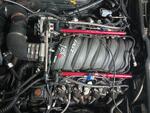
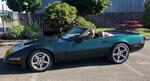
For those of You who followed my 1990 has been siting for a Looong time thread thank you for the help. Once I got it started it was quite obvious why the car had sat for so long. The Motor was stuck and I soaked the cylinders with marvel mistory oil and a compression test showed one cylinder way down. Optimistically I thought once started a stuck valve or rings would loosen up and all would be fine. When the grand moment of having it come alive happened it was overshadowed by having the Dip Stick blow out and Oil pumping onto the Hood. I knew somebody previously had over filled the base and getting it down to the correct level helped enough to warrant a trip around the block. Once the initial drive was done examining the Engine proved that the PCV and Oil Filler Cap had blown out and that this Motor was done. The Fork had already been stuck in it a Looong time ago. Being a lifetime, Hot Rodder I perceived this as the most logistical reason to build yet another Engine I have ever had. I picked up a Vortec 4 bolt std bore block ready to go. I plan on putting a 383 assembly some AFR's and a First Intake. This will suit my needs very well. However, my original owner LQ4 in my Silverado just turned 180k with hardly a hiccup. Its currently in style to do LS conversions. This would also make sense. I understand the advantages of the more modern LS engines I would probably use an LQ9. I can wrench well, and I have fabrication skills and the tools to make just about anything. With possibly the mating to the ZF 6 speed I am not concerned about the mechanical install whatsoever.
My concern is Electronics, both with running the Engine and running the Car. I Kring at the idea of unplugging 35-year-old plugs and adapting different era ECMs together. A Whiz Kid I am not. Go with the OEM ECM or a Holley and keep the Factory Dash and Speedo going etc. After a few frustrating days I figure I would end up taking to someone else to deal with it.
I fully understand the merits of each 6-liter Engine new and old and I don't intend this thread to be another war of which one is better. I have already made up my mind that going old school. But if there is a Plug and Play solution to making the Modern work let's hear it. I just might be swayed. I know a lot of You have done it.
Well my LS is carbed, so that solved a lot of problems.
I'm sure the more well informed will be on their way in - meanwhile the funniest piece of advice I saw recently (I wont mention any names!) was - "don't listen to the Boomers when it comes to LS conversion electronics !)
So the electronics aren't too bad. Well I'm a nerd so maybe I'm biasd. But if you want it as close to plug n play as you can get then get the Holley Terminator X Max. Also ditch the 700r4 if that's what you have. A 2wd 4L60e will fit right in and the Holley ECU will run it. Also no TV cable then. And you can re-use the factory driveshaft. You just have to make a C beam adapter. There are tons of threads here showing how to do this. The thread I made was for a 4L80e adapter but it's the same process.
Also think long and hard about the factory gauges. Yes you can keep them. But this is the major roadblock most people find when considering this swap. I sold my factory gauges and used the money to take my family out to dinner and bought a set of Intellitronix gauges. You could go Autometer or VDO if you prefer. Even though I feel Autometer quality is pretty bad anymore.
Either way with the modern LS swap systems that are out there they make it fairly straight forward. Best part of the Holley vs factory PCM is the self learn function.
I would highly recommend the Holley Terminator X for ease of install and cost.
The features that most of the modern LS ECUs have make older fuel injection stuff look like it was programmed by a child.
One drawback to the Holley Terminator ECU's is they make it difficult to use the factory speedo. The Holley can output a speed signal but it's -PWM instead of +PWM. So most (not all) GM speedometers won't work with that signal. There are some very low cost solutions that use a transistor to convert the signal. But I decided to just use an aftermarket speedometer that can be calibrated from raw VSS signal instead. Doing it this way also freed up one of the outputs on my Holley ECU to be used for nirtous control.
This is only an issue with the Holley Terminator or HP series of ECU's. The Dominator ECU can send +PWM or -PWM.
You could also use a GPS sender that will feed a speed signal to your factory speedo but they can be a little expensive. Also GPS speedometers (in my experience) aren't very accurate.
I use MS3Pro. It can read the factory ABS sensors to be used for speed with no extra hardware at all. No resistors or anything. I read both front/rear for traction/launch control. Can also output multiple signal types.
The Holley is a lot more user friendly though.
I use MS3Pro. It can read the factory ABS sensors to be used for speed with no extra hardware at all. No resistors or anything. I read both front/rear for traction/launch control. Can also output multiple signal types.
The Holley is a lot more user friendly though.
The Holley can do the same thing with the wheel speed sensors. But the output capability is really limited unless you get there better ECU. The only outputs you can do are either NPN or -PWM. It can't switch anything PNP or +PWM. This works fine for relays and basic on/off stuff but some things (like speedometers) need a (+) voltage. And most Holley ECU's just can't do that. One of these days I'm going to try an MS3. I always wanted to mess with one.
The Holley can do the same thing with the wheel speed sensors. But the output capability is really limited unless you get there better ECU. The only outputs you can do are either NPN or -PWM. It can't switch anything PNP or +PWM. This works fine for relays and basic on/off stuff but some things (like speedometers) need a (+) voltage. And most Holley ECU's just can't do that. One of these days I'm going to try an MS3. I always wanted to mess with one.
The Terminator X and HP ECUs cannot directly read variable reluctance inputs from wheel speed sensors, only the Dominator can.
1) How to control the engine
2) How to run the dash
3) How to integrate other things. This depends on how your car is set up, but AC, and ABS/TC can be issues.
I have done swaps with both GM 0411 ECUs with HP tuners, and with Holley Terminator X. Holley is far easier for the DIY guy, especially learning how to tune.
FOr controlling your engine, you mostly rip out the old and label everything. Get rid of what isn't needed anymore. Mine was a 1992 LT1. The new ECU to engine is mostly stand-alone, you plug in the plugs to the ECU and engine as needed. You'll be hooking up fixed power, ground, starter, hot in start/run, etc. This can usually be reused from your old ECU. You'll usually need to run a wire to enable your fuel pump relay (possibly bypassing VATS at this time), and getting a brake light/cruise switch signal (this depends on which ECU you have). You want to get some kind of speed sensor signal. I get mine from my 4L60e. You can usually get a converter from Dakota Digital to convert most things into the correct input for your ECU, if needed, and also to the 2kppm or 4kppm for your cluster. In my case, I have the 40 tooth vss going into my Holley, and the Holley outputs the 4kppm to drive my digital speedo.
For your dashboard/gauges, mainly its is easy, but you can't get the instant fuel economy/mileage calc to work. Fuel will work no issue. Volts will also. Coolant temp, you can use your original temp sender, and find a place to put it into the LS engine. I have seen many put them into the water pump (there's usually a flat spot you can drill and tap). I have used a brass threaded adapter on the passenger side of the block on my LQ4 swap, this goes into the block off plug where the optional block heater would be on trucks. On my LS2/stroker swap, I took the LT1 sender, turned it to 11.5mm on the lathe, threaded it with a 12mm die, and its in the passenger head, by cyl 8. Its a bit tight to install it and get the harness on, but its find, once its in place. Oil pressure and oil temp can go into various available oil block-off adapters available everywhere for $20. Exactly configuration may depend on your header/exhaust setup. My long tubes are very close in this area, so I use a 1/8 NPT extension braided hose to remote mount the pressure sensor. Tach.. I drive directly fromt he Holley, this works fine. Other ECUs might need an adapter (again, check dakota digital) as some (i.e. OEM GM LS ecu's) output a 1/2 speed tach output.
Other things:
AC, depends on your setup. automatic temp controls have been an issue for many. standard/manual AC is pretty straight forward. I don't have it set up yet, but I will get it running this year. Mostly its stand-alone, except the Holley will provide an input, to kick up the idle when AC turns on, and will run the fans.
ABS / TC.. On mine, I just yanked it all out (the traction control stuff). I have ABS/Traction warning lights. I need to pull the bulbs out of these warning spots. The LT1 had a very complicated setup of cables to do traction control. It doesn't affect me, personally. I don't know if the ABS still works or not. I haven't tried to test it.
These engines have great potential.
My 1992 is running a stroked LS2 (403") and a 4L60e. Its a mid-high 10 second car. Running Holley Terminator X Maxx to control both the Engine and trans.
My other swap has an LQ4 with a small cam, intake, headers, etc. That is in a 4500lb 1971 GMC Jimmy on 33" tires. It runs neck/neck with a friends lightly modded LS1 C5 up to 80+ mph. Probably would run high 11s in the C4.
The Holley can do the same thing with the wheel speed sensors. But the output capability is really limited unless you get there better ECU. The only outputs you can do are either NPN or -PWM. It can't switch anything PNP or +PWM. This works fine for relays and basic on/off stuff but some things (like speedometers) need a (+) voltage. And most Holley ECU's just can't do that. One of these days I'm going to try an MS3. I always wanted to mess with one.
For the Holley, you just need to determine what level you need, and add the correct pull up resistor.
In my 92, I have a 1k pull up to 12 volts on the speedo output from the terminator to the speedo input to the CCM. Works fine. I do the same on my Jimmy, which has VDO aftermarket gauges.
(Note: I designed instrument clusters for 14 years for GM and Chrysler, including 5th gen camaros and all the hellcats).. This is how its done in the OEM clusters. *When* we use a hard input for speed or tach, the ECU pulses the ground, and the cluster input is pulled to battery via a resistor, usually in the 680 ohm to 1000 ohm range.
So the electronics aren't too bad. Well I'm a nerd so maybe I'm biasd. But if you want it as close to plug n play as you can get then get the Holley Terminator X Max. Also ditch the 700r4 if that's what you have. A 2wd 4L60e will fit right in and the Holley ECU will run it. Also no TV cable then. And you can re-use the factory driveshaft. You just have to make a C beam adapter. There are tons of threads here showing how to do this. The thread I made was for a 4L80e adapter but it's the same process.
Also think long and hard about the factory gauges. Yes you can keep them. But this is the major roadblock most people find when considering this swap. I sold my factory gauges and used the money to take my family out to dinner and bought a set of Intellitronix gauges. You could go Autometer or VDO if you prefer. Even though I feel Autometer quality is pretty bad anymore.
Either way with the modern LS swap systems that are out there they make it fairly straight forward. Best part of the Holley vs factory PCM is the self learn function.
I started with a 1989 project car that was an auto. I have built a 4L60 for that car and just bolted the 700r4 Tailhousing on. Would that not be the easy way to do it ? However I have abandoned that car and I am concentrating on my new to me 1990 ZF 6 Speed Z51, J55 . Its got the parts I want and they are already installed.
For the Holley, you just need to determine what level you need, and add the correct pull up resistor.
In my 92, I have a 1k pull up to 12 volts on the speedo output from the terminator to the speedo input to the CCM. Works fine. I do the same on my Jimmy, which has VDO aftermarket gauges.
(Note: I designed instrument clusters for 14 years for GM and Chrysler, including 5th gen camaros and all the hellcats).. This is how its done in the OEM clusters. *When* we use a hard input for speed or tach, the ECU pulses the ground, and the cluster input is pulled to battery via a resistor, usually in the 680 ohm to 1000 ohm range.
To OP Sorry to Hi Jack
Stupid question--Is your 92 a Corvette? Are you using a stand alone with the 1992? With your experience you are more advance than most (especially me LOL).
I have an LS3 in my 1992 Convertible and with long tube headers and a good tune it is faster than my 2019 and in a street race beat a high dollar BMW and a Challenger Demon. The only problem I had was getting the gauges all to read correctly so I used a Classic Instruments set and made a faceplate to mount them on. I am 78 years old so not smart in these new electronics so if I can make it work anyone can. I know Holly is recommended but I have had good luck with Painless. I had to make an aluminum faceplate and cut out the back of the cluster but everything fit
I have an LS3 in my 1992 Convertible and with long tube headers and a good tune it is faster than my 2019 and in a street race beat a high dollar BMW and a Challenger Demon. The only problem I had was getting the gauges all to read correctly so I used a Classic Instruments set and made a faceplate to mount them on. I am 78 years old so not smart in these new electronics so if I can make it work anyone can. I know Holly is recommended but I have had good luck with Painless. I had to make an aluminum faceplate and cut out the back of the cluster but everything fit
Very cool! Is it a Painless wiring harness? What is running the engine?
Stupid question--Is your 92 a Corvette? Are you using a stand alone with the 1992? With your experience you are more advance than most (especially me LOL).
Yes, this swap is my 1992 Corvette. It's something of a base model, base options, manual seats, etc. I am running a 403 inch LS2 at 11.8:1 , built 4L60e, yank 3600, Dana 44 with 3.33 gears, and 315 drag radials on the A mold rims. It is violently fast. Got a couple hundred miles kn it last year, need to make some tweaks this year. My Jimmy has a couple thousand miles on its swap. Completely trouble free.Both are Holley term x maxx
Tuning A holley is t too bad. Lots of good videos available. It's conceptuallly like a carb. You have fuel curves you want to hit, and a spark advance. Then tuning things like tip in fuel, idle spark, etc. Most mild engine setupsdon't need too much work. Trans tuning takes a bit more work. Using a HP tuners setup on a GM ecu is probably beyond most people. It's not the same depending in which ecu you have, and navigating the OEM ecu and modes is not intuitive. There area lot of other benefits to the Holley, in my case.
The Holley can do the same thing with the wheel speed sensors. But the output capability is really limited unless you get there better ECU. The only outputs you can do are either NPN or -PWM. It can't switch anything PNP or +PWM. This works fine for relays and basic on/off stuff but some things (like speedometers) need a (+) voltage. And most Holley ECU's just can't do that. One of these days I'm going to try an MS3. I always wanted to mess with one.
Megasquirt isn't too bad but its definitely not as easy as Holley. I had one in a 280z and my dad has one in his E type.
If I ever modify my 85 I'll probably just convert it to MS2/3 rather than try and tune the stock computer.
Yes, this swap is my 1992 Corvette. It's something of a base model, base options, manual seats, etc. I am running a 403 inch LS2 at 11.8:1 , built 4L60e, yank 3600, Dana 44 with 3.33 gears, and 315 drag radials on the A mold rims. It is violently fast. Got a couple hundred miles kn it last year, need to make some tweaks this year. My Jimmy has a couple thousand miles on its swap. Completely trouble free.Both are Holley term x maxx
Tuning A holley is t too bad. Lots of good videos available. It's conceptuallly like a carb. You have fuel curves you want to hit, and a spark advance. Then tuning things like tip in fuel, idle spark, etc. Most mild engine setupsdon't need too much work. Trans tuning takes a bit more work. Using a HP tuners setup on a GM ecu is probably beyond most people. It's not the same depending in which ecu you have, and navigating the OEM ecu and modes is not intuitive. There area lot of other benefits to the Holley, in my case.
Edit-Just re-read your post #10 Looks like my questions are addressed.
I think a detailed thread would be helpful for 92-93 cars as they seem to be a challenge.
This is great information. Sounds like a nice combination. Systems like the heat, turn signals, defroster, fans, fuel pump, etc. Are they controlled with the stock ecm? What are you using for gauges? How did you address the CCM?
Hope the OP is okay with these questions I think it contributes to the thread.
Thank you,
Steve
Last edited by STEVEN13; Jan 22, 2022 at 09:03 AM.
Reason: added in bold
It can read Hall-Effect (digital) "F" Type sensors. But not reluctance. So the Terminator will work but it has to be a 3 wire sensor not a 2.
Aren't all of the OEM C4 ABS wheel speed sensors 2 wire VR sensors though, or did they swap to hall effect in a later year?
I wired mine directly into the MS3Pro, put in 47 teeth for the wheel count and inserted the tire height. It auto-corrected the tire height for me after a quick drive and now I can monitor wheel speeds front/rear individually.
Aren't all of the OEM C4 ABS wheel speed sensors 2 wire VR sensors though, or did they swap to hall effect in a later year?
I wired mine directly into the MS3Pro, put in 47 teeth for the wheel count and inserted the tire height. It auto-corrected the tire height for me after a quick drive and now I can monitor wheel speeds front/rear individually.
You're probably right that the stock Vette wheel speed sensors are all 2 wire. I don't know for sure though. I don't have them on my car yet. I just know it can be done with 3 wire sensors using a Terminator or HP ECU. This is something I want to look into next year after I get the progressive nitrous figured out. I just want it to cut the nitrous off if there is too much wheel spin.
Of course I might upgrade to the Dominator and not worry about it. That $2k price tag keeps seeming more and more like a bargain every time I read more about what that thing can do.






 LS conversion Electronics