



‘95 LT1 Miss at Idle
Thread Starter
Burning Brakes


Joined: Jun 2021
Posts: 1,199
Likes: 449
From: NJ
 ‘95 LT1 Miss at Idle
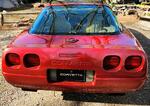
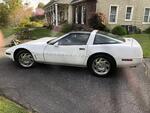
I have a ‘95 LT1 4AT coupe, just hit 73k miles. It starts, runs, and drives flawlessly except at idle. When the coolant temp is cold and idling around 700-750 you have to be really paying attention and seated in the car to feel the slightest rough spot in the idle. When the car is at full operating temp it is much much more pronounced. This is especially true when it is in gear, even more so with the A/C on, and even more so yet when the fans come on. One issue I think I have right off the bat is that when it’s at full operating temp, it idles around 600 RPM. When in gear, it’s more like 500-550. This is based on the tach, not on a scanner so I don’t have exact numbers. When it’s hot and in gear, there is a very noticeable burble at the exhaust tip when it misses, no black puffs of smoke, but I think it smells pretty rich for a stock car with original cats in place. I’m not sure how these should smell normally as it’s my first vette and I haven’t owned a 90’s era car since I was a teenager. The miss at full temp and in gear is quite concerning, like 2 steps from me thinking it’s just going to sputter out and die. No CEL on and I do not have a scanner that will work for this car. I will be taking it to have my friend scan it at his garage. Without any diagnostics, here’s what I’m thinking: Opti (especially since I believe I’ve got the oily sludge up front in that area), fuel injector(s) (rich exhaust odor), IACV (idle below spec), needs a tune up, or it’s a combination. Basically the way I’m thinking to treat this is to just do it all and forget about it since they all should be done along with a water pump and all the seals anyway. What are your thoughts?

Melting Slicks


Joined: Mar 2008
Posts: 2,989
Likes: 198
From: Meriden CT
OK, I'm anyone. One thing you can do without a scantool to start diagnosis is pretty easy, you can disconnect one spark plug wire at a time and observe the change in the idle. If you remove a wire and there's no change reconnect it and move on to another till you find the one that makes no change to the idle, that's the problem cylinder. Read that plug to get an idea of whats going on. If it's wet with fuel I'd suspect the plugs not firing so I guess that could be the opti. But the color and gap should be taken into consideration. While you're at it a compression test or better yet a leakdown test can tell you more.
Thread Starter
Burning Brakes
Joined: Jun 2021
Posts: 1,199
Likes: 449
From: NJ
Ok thank you. Hope to get some time to work on this thing soon. Would getting and learning how to use a scan tool be helpful? If so, any recommendations on brand/ model, and other things I’d need? You’d think I would have grown up with this but this is my first non carbureted performance car.
Melting Slicks
Joined: Mar 2008
Posts: 2,989
Likes: 198
From: Meriden CT
Ok thank you. Hope to get some time to work on this thing soon. Would getting and learning how to use a scan tool be helpful? If so, any recommendations on brand/ model, and other things I’d need? You’d think I would have grown up with this but this is my first non carbureted performance car.

Burning Brakes

Joined: Apr 2014
Posts: 829
Likes: 192
I just had a similar issue on a 94 LT1 and it turned out to be bad plug wires. They were doing fine until really warmed up good. After getting good and hot, they started shorting out to the block and through the boots to the outer portion of the spark plugs. It would miss pretty bad. The issue did not set the CEL.
Burning Brakes
Joined: Apr 2014
Posts: 829
Likes: 192
Get it good and hot. Set the parking brake. Block the wheels. Start the engine and put it in gear. Get out and look closely and all the ignition wires for arching. Do it at night and if they're leaking its much easier to see. Probably cant see it in the day.
Corvette Stories
The Best of Corvette for Corvette Enthusiasts

Top 10 Most Expensive Corvettes Ever Sold on Bring A Trailer
Brett Foote
10 Things Every Corvette Owner Needs (2026 Edition)
Michael S. Palmer
8 Most "Only Corvette Owners Understand" Quirks and Problems
Pouria Savadkouei
10 Reasons the C6 Z06 is Still A Performance Benchmark After 20 Years
Joe Kucinski
How Much Horsepower Every Corvette Engine "LOST" in 1972
Joe Kucinski
Top 10 DOs and DON'Ts for Protecting Your Convertible Top!
Michael S. Palmer
Top 10 Most Explosive Corvettes Ever Made: Power-to-Weight Ratio Ranked!
Joe Kucinski
150 hp to 1,250 hp: Every Corvette Generation Compared by the Specs That Matter
Joe Kucinski
8 Coolest Corvette Pace Cars (and Replicas) of All Time
Verdad Gallardo
Thread Starter
Burning Brakes
Joined: Jun 2021
Posts: 1,199
Likes: 449
From: NJ
thanks, I’ll give this a shot first since it’s easiest to do and will eliminate the plug wires or show a problem. Then I’ll move on to pulling boots. That’s going to be tough when it’s hot which is when the condition is present. Not much room in there for these sausage link fingers.
Burning Brakes
Joined: Apr 2014
Posts: 829
Likes: 192
Sometimes it can be caused by carbon tracing on the plug insulators. You can see the arching where the boots attach. A spark plug change and a proper application of dielectric grease in the plug boots can sometimes fix it, meaning that the wires may still be ok.
Burning Brakes
Joined: Apr 2014
Posts: 829
Likes: 192
BTW, when I changed plugs I used OEM AC Delco because they have lower resistance then the popular NGK plug. The Delcos average 1500 ohm and the NGK 4500 ohm. In my book, lower plug resistance would reduce ignition wire shorting out to block or whatnot.
Burning Brakes
Joined: Apr 2014
Posts: 829
Likes: 192
If you have the stock cast iron manifolds on the car, it's a good idea to keep and use all of the factory wire looms for securing the wires. So, whatever ignition wires you get, they need to be the diameter that fit the factory looms. I've heard of people enlarging the loom holes to accept thicker aftermarket wires but that is adding alot of work to the process I suppose.

Heel & Toe

Joined: Jul 2020
Posts: 15
Likes: 2
From: NC
Just replaced the original wires on my 1994 LT1 automatic. Chasing a similar misfire on my car. Things I have learned fro this experience.
1) Changing the drivers side wires is no fun at all. Be prepared to spend considerable time on this side of the car.
2) The AC Delco "Professional Series" wires I used as replacements ohm'd out at a higher resistance that the original 27 year old wires I took off.
3) Save your money on a scanner and pull the codes if any with the paper clip method (https://www.corvetteforum.com/forums...ps-w-pics.html) see post #18. I think the 95 is also an ODB I system that uses an ODB II connector.
I would be looking at the injectors. Take it our for a beating and then pull and read your plugs. Try to ID the cylinder that has the miss and narrow down the problem.
If you do decide to change the wires.. https://www.corvetteforum.com/forums...lug-wires.html
Good luck..
1) Changing the drivers side wires is no fun at all. Be prepared to spend considerable time on this side of the car.
2) The AC Delco "Professional Series" wires I used as replacements ohm'd out at a higher resistance that the original 27 year old wires I took off.
3) Save your money on a scanner and pull the codes if any with the paper clip method (https://www.corvetteforum.com/forums...ps-w-pics.html) see post #18. I think the 95 is also an ODB I system that uses an ODB II connector.
I would be looking at the injectors. Take it our for a beating and then pull and read your plugs. Try to ID the cylinder that has the miss and narrow down the problem.
If you do decide to change the wires.. https://www.corvetteforum.com/forums...lug-wires.html
Good luck..
Thread Starter
Burning Brakes
Joined: Jun 2021
Posts: 1,199
Likes: 449
From: NJ
Just replaced the original wires on my 1994 LT1 automatic. Chasing a similar misfire on my car. Things I have learned fro this experience.
1) Changing the drivers side wires is no fun at all. Be prepared to spend considerable time on this side of the car.
2) The AC Delco "Professional Series" wires I used as replacements ohm'd out at a higher resistance that the original 27 year old wires I took off.
3) Save your money on a scanner and pull the codes if any with the paper clip method (https://www.corvetteforum.com/forums...ps-w-pics.html) see post #18. I think the 95 is also an ODB I system that uses an ODB II connector.
I would be looking at the injectors. Take it our for a beating and then pull and read your plugs. Try to ID the cylinder that has the miss and narrow down the problem.
If you do decide to change the wires.. https://www.corvetteforum.com/forums...lug-wires.html
Good luck..
1) Changing the drivers side wires is no fun at all. Be prepared to spend considerable time on this side of the car.
2) The AC Delco "Professional Series" wires I used as replacements ohm'd out at a higher resistance that the original 27 year old wires I took off.
3) Save your money on a scanner and pull the codes if any with the paper clip method (https://www.corvetteforum.com/forums...ps-w-pics.html) see post #18. I think the 95 is also an ODB I system that uses an ODB II connector.
I would be looking at the injectors. Take it our for a beating and then pull and read your plugs. Try to ID the cylinder that has the miss and narrow down the problem.
If you do decide to change the wires.. https://www.corvetteforum.com/forums...lug-wires.html
Good luck..
Heel & Toe
Joined: Jul 2020
Posts: 15
Likes: 2
From: NC
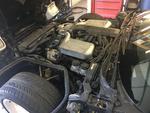
I used a standard spark plug socket but depending on who's it is, you might need a deep 6 pt socket to get at some of the plugs.
I went the full monty on the left side plugs..took off the belt tensioner, belt, alternator and rolled the AC compressor back out of the way and unbolted the power steering pump so I could remove the idler roller that needed to be replace while i was in there. Seemed like the easiest way to get to the 4 plugs on that side of the Opti....
Let's call it a learning experience..:-)
I went the full monty on the left side plugs..took off the belt tensioner, belt, alternator and rolled the AC compressor back out of the way and unbolted the power steering pump so I could remove the idler roller that needed to be replace while i was in there. Seemed like the easiest way to get to the 4 plugs on that side of the Opti....
Let's call it a learning experience..:-)
Thread Starter
Burning Brakes
Joined: Jun 2021
Posts: 1,199
Likes: 449
From: NJ
I could see myself going down the rabbit hole with this. Might as well do the opti, all the seals, water pump. Sure would be easier to get to the plugs if the manifolds were off and I installed headers lol. I think tonight I’ll start with the arching experiment after I go out for a drive.
Drifting


Joined: Nov 2018
Posts: 1,796
Likes: 579
From: Mays Landing, NJ
I could see myself going down the rabbit hole with this. Might as well do the opti, all the seals, water pump. Sure would be easier to get to the plugs if the manifolds were off and I installed headers lol. I think tonight I’ll start with the arching experiment after I go out for a drive.
For some repairs, if they ain't broke don't fix them. That is the way I'd feel about the opti. From many posts you'll see here the original opti which was improved by adding a vent is very reliable and replacement opti's are inferior for the most part.
Thread Starter
Burning Brakes
Joined: Jun 2021
Posts: 1,199
Likes: 449
From: NJ
Finally got around to it
Ok guys, thanks for all the help so far. Tonight, I finally got the car out and went for a drive to get it good and hot. I shut off the outside lights, started it up and held the hood open just enough to stick my head down by the valve covers while keeping the under hood lights off. I noticed a very slight arc every once in a while on the driver’s side on one spark plug wire. On the passenger side, the display was like 4th of July. Several spots on several wires arcing against various metal brackets, etc. I’m guessing the insulation on the wires rubbed against those metal parts. I also noticed some of the wires were not in the looms which might have contributed to some rubbing. Anyway, next step is plugs and wires. We will see if that’s the whole issue.
Thread Starter
Burning Brakes
Joined: Jun 2021
Posts: 1,199
Likes: 449
From: NJ
One more request… Does anyone have photos of how their wires and looms are supposed to be? I’ve discovered burn holes where they rubbing on hot engine bolts and half my loom clips are missing. Just trying to see how these are SUPPOSED to be routed and organized since my clips failed or someone was sloppy