


Unknown Plug 87 Roadster

Thread Starter
Racer

Joined: Apr 2002
Posts: 466
Likes: 0
From: Payson AZ
 Unknown Plug 87 Roadster
Hi Everybody, been gone for a while....
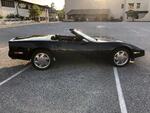
Anybody have a clue what this plug is for, much less where it goes? I did some work to the intake and found it stuffed under the plenum and the repair mauals, etc. - I can't find what it is. I hope this picture comes out.
 :confused:
It's pink/black and the other one is gray..I'll have to recheck which one is hot and the plug is broken and was taped-up. It comes out of the left side where all the injector wires run and is only @ 6 inches long.
[Modified by BCinPhx, 7:08 PM 5/6/2003]
[Modified by BCinPhx, 7:23 PM 5/6/2003]
Anybody have a clue what this plug is for, much less where it goes? I did some work to the intake and found it stuffed under the plenum and the repair mauals, etc. - I can't find what it is. I hope this picture comes out.
:confused: It's pink/black and the other one is gray..I'll have to recheck which one is hot and the plug is broken and was taped-up. It comes out of the left side where all the injector wires run and is only @ 6 inches long.
[Modified by BCinPhx, 7:08 PM 5/6/2003]
[Modified by BCinPhx, 7:23 PM 5/6/2003]
Drifting


Joined: Aug 2002
Posts: 1,775
Likes: 125
From: Birmingham AL
Re: Unknown Plug 87 Roadster (BCinPhx)
My guess is that it's for the EGR control solenoid which seems to be missing on your car. The control solenoid should be located under your thermostat bolt in the picture. I also noticed that the vacuum lines for that solenoid seem to be bypassed or something in your picture. So, is your EGR disabled? That is my theory, anyone else have any idea?
Thread Starter
Racer
Joined: Apr 2002
Posts: 466
Likes: 0
From: Payson AZ
Re: Unknown Plug 87 Roadster (Siveck)
I will check out the EGR valve and see if anything is in the manuals I have. I wonder if the fact that it's maybe missing (assuming that my model year had one) might just be the cause of at steady throttle on the freeway/interstate, the car varies constantly in RPM. I thought it might be caused by the rebuilt tranny and the associated pressure adjustment linkage,,,,,hmmmmm

Team Owner


Joined: Mar 2000
Posts: 83,383
Likes: 87
From: Boston, MA
Re: Unknown Plug 87 Roadster (BCinPhx)
Hmm... lemme see if I can find it on mine. Yup, EGR valve solenoid. If you still have it, it should be on a bracket held in place by the rear thermostat neck bolt.
[Modified by scorp508, 9:54 PM 5/6/2003]
[Modified by scorp508, 9:54 PM 5/6/2003]
Drifting
Joined: Aug 2002
Posts: 1,775
Likes: 125
From: Birmingham AL
Re: Unknown Plug 87 Roadster (BCinPhx)
You don't need the egr as long as all vacuum ports are sealed and exhaust is blocked off unless you have smog testing. Some will argue about this, but egr just dumps dirty and crappy exhaust back into your clean intake. As far as the surging on the highway, that should be unrelated to the egr. If your car is an automatic, I would suspect that the torque converter is not locking up as it should on the highway.
Corvette Stories
The Best of Corvette for Corvette Enthusiasts

Every 2027 Corvette Engine Explained
Joe Kucinski
Designer Imagines A Corvette That Looks More Like a Corvette Than the Corvette
Verdad Gallardo
10 Ugly Corvettes That We Still Kinda Love
Joe Kucinski
Top 10 Most Expensive Corvettes Ever Sold on Bring A Trailer
Brett Foote
10 Things Every Corvette Owner Needs (2026 Edition)
Michael S. Palmer
8 Most "Only Corvette Owners Understand" Quirks and Problems
Pouria Savadkouei
10 Reasons the C6 Z06 is Still A Performance Benchmark After 20 Years
Joe Kucinski
How Much Horsepower Every Corvette Engine "LOST" in 1972
Joe Kucinski
Top 10 DOs and DON'Ts for Protecting Your Convertible Top!
Michael S. Palmer
Le Mans Master

Joined: Jan 2002
Posts: 5,320
Likes: 4
From: Kyle TX (Because Mojo Made me fill it in)
Re: Unknown Plug 87 Roadster (BCinPhx)
Wat they said. Mine was unplugged too when I got the car, I just semi-pushed it back on the solenoid, but I have no emissions so I dont think it is serving any purpose at this point. Plus I had the EGR programmed out of my ECM (no more code 32).

Le Mans Master

Joined: Dec 2000
Posts: 7,839
Likes: 22
From: San Diego, Ca
Re: Unknown Plug 87 Roadster (Siveck)
You don't need the egr as long as all vacuum ports are sealed and exhaust is blocked off unless you have smog testing. Some will argue about this, but egr just dumps dirty and crappy exhaust back into your clean intake. As far as the surging on the highway, that should be unrelated to the egr. If your car is an automatic, I would suspect that the torque converter is not locking up as it should on the highway.

Melting Slicks

Joined: Jun 2002
Posts: 2,168
Likes: 16
From: Phoenix AZ
Re: Unknown Plug 87 Roadster (SunCr)
That dirty crappy exhaust lowers combustion temps by about 500 degrees helping to prevent detonation. If you're running stock or have questionable gas, keep it hooked up.
Le Mans Master
Joined: Dec 2000
Posts: 7,839
Likes: 22
From: San Diego, Ca
Re: Unknown Plug 87 Roadster (vetracer)
With the fuel & air gone, the exhaust is inert and acts as a heat sink, at least that's the engineering behind it. You can accomplish the same thing with a little more overlap in the cam, which is what later model hi-po engines do, eliminating egr. You have to be careful regardless of what system is used. Too much exhaust, you'll put out the fire.