


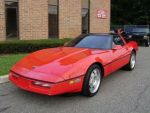





 yup, that would be me!


Roll your own dyno

Thread Starter
Drifting


Joined: Apr 2003
Posts: 1,292
Likes: 2
 Roll your own dyno
Found this, thought you all might find it interesting.
http://yarchive.net/car/horsepower_measure.html
http://yarchive.net/car/horsepower_measure.html
Thread Starter
Drifting
Joined: Apr 2003
Posts: 1,292
Likes: 2
Brad - you're a rascal you are, to much listening to that nasty loud guitar music.
JCD - estimate your timing error, do the math(s) for the lowest and highest numbers - there's your possible error.
From what I have read about different brands of dyno, you probably will be just as accurate, plus you can calculate right down to tickover(ish) revs if you want
JCD - estimate your timing error, do the math(s) for the lowest and highest numbers - there's your possible error.
From what I have read about different brands of dyno, you probably will be just as accurate, plus you can calculate right down to tickover(ish) revs if you want

Burning Brakes

Joined: Jul 2003
Posts: 1,098
Likes: 0
From: Plantation Fl
It is mathematically sound. I don't think timing varations will effect too much on the calculations. Unless your reaction time is really poor. But even then, if you do several runs it should average out pretty close.

Team Owner


Joined: Dec 2000
Posts: 90,675
Likes: 304
From: SE NY
Cruise-In II Veteran
The best you could hope for is about a .25sec reaction time, so accuracy on a 5sec time measurement would be about 5%.
For a peak CHP measurement I prefer to use trap speed and launch weight. So long as you can get consistent launches, this will work fine and you can even normalize results for weather conditions (you realy can't compare data from week to week without normalization). I think this method will be good to 1% or better. I've compared this method to chassis dyno data taken 15min apart and, assuming 17% DT loss (with my A4) the numbers for peak HP were dead on.
If you want a torque curve a chassis dyno would be the next best thing, though it will only give around 1/2 the curve if you have an A4.
For a peak CHP measurement I prefer to use trap speed and launch weight. So long as you can get consistent launches, this will work fine and you can even normalize results for weather conditions (you realy can't compare data from week to week without normalization). I think this method will be good to 1% or better. I've compared this method to chassis dyno data taken 15min apart and, assuming 17% DT loss (with my A4) the numbers for peak HP were dead on.
If you want a torque curve a chassis dyno would be the next best thing, though it will only give around 1/2 the curve if you have an A4.
Corvette Stories
The Best of Corvette for Corvette Enthusiasts

Top 10 Most Expensive Corvettes Ever Sold on Bring A Trailer
Brett Foote
10 Things Every Corvette Owner Needs (2026 Edition)
Michael S. Palmer
8 Most "Only Corvette Owners Understand" Quirks and Problems
Pouria Savadkouei
10 Reasons the C6 Z06 is Still A Performance Benchmark After 20 Years
Joe Kucinski
How Much Horsepower Every Corvette Engine "LOST" in 1972
Joe Kucinski
Top 10 DOs and DON'Ts for Protecting Your Convertible Top!
Michael S. Palmer
Top 10 Most Explosive Corvettes Ever Made: Power-to-Weight Ratio Ranked!
Joe Kucinski
150 hp to 1,250 hp: Every Corvette Generation Compared by the Specs That Matter
Joe Kucinski