





MAF vs SD

Le Mans Master


Joined: Sep 2001
Posts: 8,840
Likes: 43
From: State of Confusion.

This is just my VERY Uneducated thoughts on the bigger MAF (and maybe RJW or Arun will correct me if I'm wrong). If the PCM says that the max airflow that it can register is 512 grams/second, then a bigger MAF will flow more air, but the PCM won't see it because it's not the MAF reading the airflow, it's the PCM. The MAF is just an instrument that supplies the data/measurement for the PCM to interpret. Like I said, just thinking out loud! It makes sense to me, but that doesn't mean that it's right! 

Safety Car


Joined: Jun 2004
Posts: 4,353
Likes: 22
From: Bella Vista Ca
This is just my VERY Uneducated thoughts on the bigger MAF (and maybe RJW or Arun will correct me if I'm wrong). If the PCM says that the max airflow that it can register is 512 grams/second, then a bigger MAF will flow more air, but the PCM won't see it because it's not the MAF reading the airflow, it's the PCM. The MAF is just an instrument that supplies the data/measurement for the PCM to interpret. Like I said, just thinking out loud! It makes sense to me, but that doesn't mean that it's right!

The larger MAF will flow air easier (less restriction). The MAF will still max at the same amount of airflow as the stock unit. I looked at this MAF before, SD is a better idea


Racer

Joined: Oct 2007
Posts: 275
Likes: 0
Hi Guys,
This is a very good thread and since it sounds like there are a few of you that want to get into this but are lacking some equipment. Most of the guys posting have purchased equipment from me so once again I want to help everyone out in some way... With that being said....
AEM Uego Wide Band's w/o2 sensor: $289 Shipped Ground 48 States...
Plenty IN STOCK
Paypal: sales@icsperformance.com
or PM me a contact number for MC/Visa orders.
Brian
This is a very good thread and since it sounds like there are a few of you that want to get into this but are lacking some equipment. Most of the guys posting have purchased equipment from me so once again I want to help everyone out in some way... With that being said....
AEM Uego Wide Band's w/o2 sensor: $289 Shipped Ground 48 States...
Plenty IN STOCK
Paypal: sales@icsperformance.com
or PM me a contact number for MC/Visa orders.
Brian
I thought is was an either/or situation.
Do the MAP and MAF work together to give the optimal realworld tune ?
Racer
Joined: Oct 2007
Posts: 275
Likes: 0
Guys - Here's an interesting read from our brethern over @ LS1Tech.com. 
I didn't read all 7 pages but from what I DID scan over, it seems like the LS1 guys over there like the flexibility of the MAF system over the more precise tuning of SD. Ya'll can decide for yourselves.

http://www.ls1tech.com/forums/showthread.php?t=509481
I didn't read all 7 pages but from what I DID scan over, it seems like the LS1 guys over there like the flexibility of the MAF system over the more precise tuning of SD. Ya'll can decide for yourselves.
http://www.ls1tech.com/forums/showthread.php?t=509481
Ask yourselves this .... why does GM use MAF rather than SD ?
Also ... looks like MAF came along after SD. So, its the newer / more versatile tune. Not knocking SD ... just its not the final word on tuning it would seem from what these 'experts' say on tech forum.
One word of caution ... most of these LS1 tech guys appear to be running cammed cars, not FI ones. However, one guy said he runs 13 lbs boost on MAF ... w/o any problems.
Just playing devils advocate here .... cause I don't know Jack about topic. Still the more I read about SD ... the more I'm hearing its not the 'end all' solution to the tuning story.

Le Mans Master
Joined: Apr 2005
Posts: 8,077
Likes: 4
From: Scarborough ONTARIO
I had put this out in another thread and didnt get much response, but at least with this one it shouldnt blow apart...
http://www.lingenfelter.com/store/ln4232.html
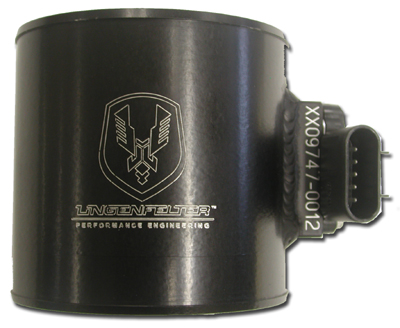
http://www.lingenfelter.com/store/ln4232.html

Instructor

Joined: Sep 2006
Posts: 214
Likes: 1
From: OR
Stay with MAF if your bigger than 400 cubes. The SD 2 and 3 bar OS have issues. I had to go back to MAF because of the bugs. There is no power difference between MAF or SD-the 85mm MAF is not as big of a restriction as everyone makes it out to be. The benefit of SD is that your car see's boost and it can fuel it based on boost-not just from as PE table that thinks your WOT.
Thanks in advance...

Burning Brakes


Joined: Oct 2000
Posts: 1,134
Likes: 17
From: NJ
It seems like MAF is the way to go for factory GM no SC vehicles but SD is the way they go for SC cars.
Corvette Stories
The Best of Corvette for Corvette Enthusiasts

Top 10 Most Explosive Corvettes Ever Made: Power-to-Weight Ratio Ranked!
Joe Kucinski
150 hp to 1,250 hp: Every Corvette Generation Compared by the Specs That Matter
Joe Kucinski
8 Coolest Corvette Pace Cars (and Replicas) of All Time
Verdad Gallardo
Top 10 Corvette Engines RANKED by Peak Torque (70+ Years of Muscle!)
Joe Kucinski
Corvette ZR1X Will Be Pacing the Indy 500, And Could Probably Race, Too!
Verdad Gallardo
Top 10 Corvettes Coming to Mecum Indy 2026!
Brett Foote
Top 10 C9 Corvette MUST-HAVES to Fix These C8 Generation Flaws!
Michael S. Palmer
10 Revolutionary 'Corvette Firsts' Most People Don't Know
Joe Kucinski
5 Reasons to Upgrade to an LS6-Powered Corvette; 5 Reasons to Stay LT2
Michael S. Palmer
Le Mans Master
Joined: Sep 2001
Posts: 8,840
Likes: 43
From: State of Confusion.
I read the first 5 of the 7 pages. Interesting opinions on both sides of issue.
Ask yourselves this .... why does GM use MAF rather than SD ?
Also ... looks like MAF came along after SD. So, its the newer / more versatile tune. Not knocking SD ... just its not the final word on tuning it would seem from what these 'experts' say on tech forum.
One word of caution ... most of these LS1 tech guys appear to be running cammed cars, not FI ones. However, one guy said he runs 13 lbs boost on MAF ... w/o any problems.
Just playing devils advocate here .... cause I don't know Jack about topic. Still the more I read about SD ... the more I'm hearing its not the 'end all' solution to the tuning story.
Ask yourselves this .... why does GM use MAF rather than SD ?
Also ... looks like MAF came along after SD. So, its the newer / more versatile tune. Not knocking SD ... just its not the final word on tuning it would seem from what these 'experts' say on tech forum.
One word of caution ... most of these LS1 tech guys appear to be running cammed cars, not FI ones. However, one guy said he runs 13 lbs boost on MAF ... w/o any problems.
Just playing devils advocate here .... cause I don't know Jack about topic. Still the more I read about SD ... the more I'm hearing its not the 'end all' solution to the tuning story.
The way that I'm learning to tune is that I shut the MAF off and am tuning in OLSD (Open Loop Speed Density), which reads the sensors (IAT,MAP,etc.) not the NB02's. Of course, a wideband is ABSOLUTELY necessary for proper fueling! If you get the VE (Volumetric Efficiency table, which tells your engine how much air it's moving and how much fuel to give it) dialed in, then that's half the battle. Then you play with your MAF if you plan on using it. The bad thing with the MAF is that it can cover up a bad tune, but that can also be a good thing in that it can adjust for varying weather/operating conditions. That's why you tune without it to dial in the fueling. It's one less thing to fight with when getting the fuel right.
Is an SD tune magical as some peeps would like to think, No! Both tunes have their advantages and disadvantages and that article gives some good/bad points to both. You just have to figure out what's right for you.
Good Luck!

P.S. Sorry that I rambled!

Supporting Vendor
Joined: Jul 2003
Posts: 6,486
Likes: 2
From: http://www.mphparts.com 800-364-1975
Here's my take on the subject --
The MAF is not accurate during throttle transients and not accurate at lower RPMs. If you can visualize the nearly exponential curve of the MAF table inside the PCM you can understand this statement/why GM also included a VE table. At lower rates of airflow, the data coming from the MAF doesn't differ very much, but once airflow starts getting into the upper ranges of what the MAF can signal, the signals start changing quickly. The algorithms inside the PCM switch between and evaluate both the VE table and the data coming from the MAF to make fueling decisions.
So, why do SD over a MAF tune? For turbo guys it makes more sense than for centrifugally supercharged guys, IMHO. The MAF can take care of most variations in boost (e.g., a turbo can provide more than one level of boost at a given RPM depending on fueling, spark, throttle position, etc.) but it definitely runs out of airflow at relatively mild levels of boost on the LS1. Most stock bottom end guys should stick with the MAF but there are some advantages for non stock bottom end guys using SD. Throttle crispness is one thing I have personally experienced on my car and have heard from others as a reason why they prefer SD. And of course for the turbo guys, the ability to use a boost controller to vary boost and not have to worry about retuning. Don't be fooled though, it is a lot of work, IMHO quite a bit more than a MAF tune. Again, it depends on how you do the tuning.
One advantage the novice tuner has in their court is the ability to use an LC-1 with EFILive to automatically calibrate the VE table. I have used this method several times and ended up with stellar, crisp, nearly dead-on results in the VE table. Basically, you plug in/configure the wideband, connect it to the EFILive cable, and EFILive evaluates commanded air/fuel vs. observed/actual air/fuel and uses that data to recalibrate your VE.
You can also use other widebands like the UEGO (which we don't carry, definitely get them from ICS ) but you do need to have some knowledge of how to program the right voltages for the right air fuel ratios for that particular setup.
If you guys have any questions about the AutoVE process or just want to chat about SD vs. MAF feel free to give us a call. I will not profess to be a professional tuner since I do not do tuning "professionally" (e.g., I have never accepted money for tuning, and frankly I refer customers who are looking for tuning to either local shops if they are a local customer or to other shops that support this forum if they are near them). I have tuned my own TT car using MAF tuning and SD tuning to over 800 to the wheels though, and helped other people out with their own tunes, so I might have learned a couple of things along the way.
We also support the EFILive products and will likely be picking up HPTuners sales/support as well.
Tony
800-364-1975
The MAF is not accurate during throttle transients and not accurate at lower RPMs. If you can visualize the nearly exponential curve of the MAF table inside the PCM you can understand this statement/why GM also included a VE table. At lower rates of airflow, the data coming from the MAF doesn't differ very much, but once airflow starts getting into the upper ranges of what the MAF can signal, the signals start changing quickly. The algorithms inside the PCM switch between and evaluate both the VE table and the data coming from the MAF to make fueling decisions.
So, why do SD over a MAF tune? For turbo guys it makes more sense than for centrifugally supercharged guys, IMHO. The MAF can take care of most variations in boost (e.g., a turbo can provide more than one level of boost at a given RPM depending on fueling, spark, throttle position, etc.) but it definitely runs out of airflow at relatively mild levels of boost on the LS1. Most stock bottom end guys should stick with the MAF but there are some advantages for non stock bottom end guys using SD. Throttle crispness is one thing I have personally experienced on my car and have heard from others as a reason why they prefer SD. And of course for the turbo guys, the ability to use a boost controller to vary boost and not have to worry about retuning. Don't be fooled though, it is a lot of work, IMHO quite a bit more than a MAF tune. Again, it depends on how you do the tuning.
One advantage the novice tuner has in their court is the ability to use an LC-1 with EFILive to automatically calibrate the VE table. I have used this method several times and ended up with stellar, crisp, nearly dead-on results in the VE table. Basically, you plug in/configure the wideband, connect it to the EFILive cable, and EFILive evaluates commanded air/fuel vs. observed/actual air/fuel and uses that data to recalibrate your VE.
You can also use other widebands like the UEGO (which we don't carry, definitely get them from ICS
) but you do need to have some knowledge of how to program the right voltages for the right air fuel ratios for that particular setup.If you guys have any questions about the AutoVE process or just want to chat about SD vs. MAF feel free to give us a call. I will not profess to be a professional tuner since I do not do tuning "professionally" (e.g., I have never accepted money for tuning, and frankly I refer customers who are looking for tuning to either local shops if they are a local customer or to other shops that support this forum if they are near them). I have tuned my own TT car using MAF tuning and SD tuning to over 800 to the wheels though, and helped other people out with their own tunes, so I might have learned a couple of things along the way.
We also support the EFILive products and will likely be picking up HPTuners sales/support as well.
Tony
800-364-1975

Drifting

Joined: Oct 2003
Posts: 1,923
Likes: 5
From: San Antonio TX
IMO
if tuned correctly the MAF system has only 2 problems.
1. on high airflow (FI ls1's above 550rwhp) the 85mm maf will restrict airflow but this is only important in the draw thru systems such as the maggie, and the KB systems.
2. the maf calculation in the VCM will only calculate up to 512gm/cyl (again on FI ls1's about 550 rwhp), this leaves you in a no mans land where the stock MAP has maxed out at 1 bar and then the MAF has maxed out leaving the tuner to guess at what the engine is doing and compensation with the PE table.
other wise IMO the MAF system is more robust and better suited for daily drivers and anyone who is not going to stay on top of thier tune. in the end either system can and will deliver the same power.
the stock VCM has the best of both worlds in that it uses a MAF for most of the calcs and the map in areas where the MAF is inaccurate.
it is important to note that there are no MAF only systems due to the fact that MAF do not work well for at idle and durring transiants.
JMO
More Than Zero
if tuned correctly the MAF system has only 2 problems.
1. on high airflow (FI ls1's above 550rwhp) the 85mm maf will restrict airflow but this is only important in the draw thru systems such as the maggie, and the KB systems.
2. the maf calculation in the VCM will only calculate up to 512gm/cyl (again on FI ls1's about 550 rwhp), this leaves you in a no mans land where the stock MAP has maxed out at 1 bar and then the MAF has maxed out leaving the tuner to guess at what the engine is doing and compensation with the PE table.
other wise IMO the MAF system is more robust and better suited for daily drivers and anyone who is not going to stay on top of thier tune. in the end either system can and will deliver the same power.
the stock VCM has the best of both worlds in that it uses a MAF for most of the calcs and the map in areas where the MAF is inaccurate.
it is important to note that there are no MAF only systems due to the fact that MAF do not work well for at idle and durring transiants.
JMO
More Than Zero
Supporting Vendor
Joined: Jul 2003
Posts: 6,486
Likes: 2
From: http://www.mphparts.com 800-364-1975
Keep in mind in the Ford crowd some people do conversions in the OPPOSITE direction we do them (e.g., they go from SD to MAF). There are good reasons for this, just as there are good reasons for the Corvette crowd to go SD. The SD->MAF guys want more precise fueling during hot starts, the ability to make other mods to the car and not have to tinker with fueling tables (e.g., let the MAF take care of it), and perhaps deal with other little gremlins that really aggrivate them because an SD tune without a MAF connected will not automatically compensate for some types of changes. The MAF->SD guys are probably 9 times out of 10 running out of MAF to compensate for changes in boost or frankly may just be tired of dealing with gremlins in the tune attributed to the MAF table calibration. Or they just want to tinker with something that other guys have had good success with, and are seeing or feeling a more crisp throttle response (again, remember that the MAF is a little bit sloppy in transients).
I have easily spent at least 10 hours playing with the VE table on my SD tuned car, and could easily spend more time on it. It all depends on how precise you want your tune to be. Different tuners have different philosophies on where fueling changes should occur (some do both VE and MAF, some do only MAF, for example) so depending on what work has been done to your car already, you may notice big changes in drivability or tiny changes in drivability.
Hopefully all of this isn't too ambiguous, I am trying to share what I've learned in the process of tuning as a hobby while also respecting different peoples' perspectives on what should be done to a car to tune it.
Supporting Vendor
Joined: Jul 2003
Posts: 6,486
Likes: 2
From: http://www.mphparts.com 800-364-1975
IMO
if tuned correctly the MAF system has only 2 problems.
1. on high airflow (FI ls1's above 550rwhp) the 85mm maf will restrict airflow but this is only important in the draw thru systems such as the maggie, and the KB systems.
2. the maf calculation in the VCM will only calculate up to 512gm/cyl (again on FI ls1's about 550 rwhp), this leaves you in a no mans land where the stock MAP has maxed out at 1 bar and then the MAF has maxed out leaving the tuner to guess at what the engine is doing and compensation with the PE table.
other wise IMO the MAF system is more robust and better suited for daily drivers and anyone who is not going to stay on top of thier tune. in the end either system can and will deliver the same power.
the stock VCM has the best of both worlds in that it uses a MAF for most of the calcs and the map in areas where the MAF is inaccurate.
it is important to note that there are no MAF only systems due to the fact that MAF do not work well for at idle and durring transiants.
JMO
More Than Zero
if tuned correctly the MAF system has only 2 problems.
1. on high airflow (FI ls1's above 550rwhp) the 85mm maf will restrict airflow but this is only important in the draw thru systems such as the maggie, and the KB systems.
2. the maf calculation in the VCM will only calculate up to 512gm/cyl (again on FI ls1's about 550 rwhp), this leaves you in a no mans land where the stock MAP has maxed out at 1 bar and then the MAF has maxed out leaving the tuner to guess at what the engine is doing and compensation with the PE table.
other wise IMO the MAF system is more robust and better suited for daily drivers and anyone who is not going to stay on top of thier tune. in the end either system can and will deliver the same power.
the stock VCM has the best of both worlds in that it uses a MAF for most of the calcs and the map in areas where the MAF is inaccurate.
it is important to note that there are no MAF only systems due to the fact that MAF do not work well for at idle and durring transiants.
JMO
More Than Zero
I do not personally believe the MAF itself is a big airflow restriction, I have made over 800ft/lb of torque on my car with the MAF in place. I am still tinkering with the SD tune and figuring out which changes attributed to the power change but I would say the MAF delete is a very small part of it all. The cars that can take advantage of SD are already going to make so much power that you should not be worried about picking up 10, 20, even 30hp from a MAF delete. At those power levels more power simply is not going to help virtually all of us, other than for bragging rights.
Again, I think the big advantage to SD comes into play with turbo cars that can and regularly do see variations in boost pressure that centrifugal guys ordinarily would not.
Last edited by Tony @ MPH; Dec 12, 2007 at 05:44 PM.
Le Mans Master
Joined: Sep 2001
Posts: 8,840
Likes: 43
From: State of Confusion.
Here's my take on the subject --
The MAF is not accurate during throttle transients and not accurate at lower RPMs. If you can visualize the nearly exponential curve of the MAF table inside the PCM you can understand this statement/why GM also included a VE table. At lower rates of airflow, the data coming from the MAF doesn't differ very much, but once airflow starts getting into the upper ranges of what the MAF can signal, the signals start changing quickly. The algorithms inside the PCM switch between and evaluate both the VE table and the data coming from the MAF to make fueling decisions.
So, why do SD over a MAF tune? For turbo guys it makes more sense than for centrifugally supercharged guys, IMHO. The MAF can take care of most variations in boost (e.g., a turbo can provide more than one level of boost at a given RPM depending on fueling, spark, throttle position, etc.) but it definitely runs out of airflow at relatively mild levels of boost on the LS1. Most stock bottom end guys should stick with the MAF but there are some advantages for non stock bottom end guys using SD. Throttle crispness is one thing I have personally experienced on my car and have heard from others as a reason why they prefer SD. And of course for the turbo guys, the ability to use a boost controller to vary boost and not have to worry about retuning. Don't be fooled though, it is a lot of work, IMHO quite a bit more than a MAF tune. Again, it depends on how you do the tuning.
One advantage the novice tuner has in their court is the ability to use an LC-1 with EFILive to automatically calibrate the VE table. I have used this method several times and ended up with stellar, crisp, nearly dead-on results in the VE table. Basically, you plug in/configure the wideband, connect it to the EFILive cable, and EFILive evaluates commanded air/fuel vs. observed/actual air/fuel and uses that data to recalibrate your VE.
You can also use other widebands like the UEGO (which we don't carry, definitely get them from ICS ) but you do need to have some knowledge of how to program the right voltages for the right air fuel ratios for that particular setup.
If you guys have any questions about the AutoVE process or just want to chat about SD vs. MAF feel free to give us a call. I will not profess to be a professional tuner since I do not do tuning "professionally" (e.g., I have never accepted money for tuning, and frankly I refer customers who are looking for tuning to either local shops if they are a local customer or to other shops that support this forum if they are near them). I have tuned my own TT car using MAF tuning and SD tuning to over 800 to the wheels though, and helped other people out with their own tunes, so I might have learned a couple of things along the way.
We also support the EFILive products and will likely be picking up HPTuners sales/support as well.
Tony
800-364-1975
The MAF is not accurate during throttle transients and not accurate at lower RPMs. If you can visualize the nearly exponential curve of the MAF table inside the PCM you can understand this statement/why GM also included a VE table. At lower rates of airflow, the data coming from the MAF doesn't differ very much, but once airflow starts getting into the upper ranges of what the MAF can signal, the signals start changing quickly. The algorithms inside the PCM switch between and evaluate both the VE table and the data coming from the MAF to make fueling decisions.
So, why do SD over a MAF tune? For turbo guys it makes more sense than for centrifugally supercharged guys, IMHO. The MAF can take care of most variations in boost (e.g., a turbo can provide more than one level of boost at a given RPM depending on fueling, spark, throttle position, etc.) but it definitely runs out of airflow at relatively mild levels of boost on the LS1. Most stock bottom end guys should stick with the MAF but there are some advantages for non stock bottom end guys using SD. Throttle crispness is one thing I have personally experienced on my car and have heard from others as a reason why they prefer SD. And of course for the turbo guys, the ability to use a boost controller to vary boost and not have to worry about retuning. Don't be fooled though, it is a lot of work, IMHO quite a bit more than a MAF tune. Again, it depends on how you do the tuning.
One advantage the novice tuner has in their court is the ability to use an LC-1 with EFILive to automatically calibrate the VE table. I have used this method several times and ended up with stellar, crisp, nearly dead-on results in the VE table. Basically, you plug in/configure the wideband, connect it to the EFILive cable, and EFILive evaluates commanded air/fuel vs. observed/actual air/fuel and uses that data to recalibrate your VE.
You can also use other widebands like the UEGO (which we don't carry, definitely get them from ICS
) but you do need to have some knowledge of how to program the right voltages for the right air fuel ratios for that particular setup.If you guys have any questions about the AutoVE process or just want to chat about SD vs. MAF feel free to give us a call. I will not profess to be a professional tuner since I do not do tuning "professionally" (e.g., I have never accepted money for tuning, and frankly I refer customers who are looking for tuning to either local shops if they are a local customer or to other shops that support this forum if they are near them). I have tuned my own TT car using MAF tuning and SD tuning to over 800 to the wheels though, and helped other people out with their own tunes, so I might have learned a couple of things along the way.
We also support the EFILive products and will likely be picking up HPTuners sales/support as well.
Tony
800-364-1975
So you're saying that with an LC-1, I don't have to transfer data from the scan tool to the tuning tool, in that it automatically does this? I That sounds Very Road Runner like in theory. If this is the case, I might just sell my PLX WB02 and get one of the LC-1's.
Can you Please explain how you do that?
Supporting Vendor
Joined: Jul 2003
Posts: 6,486
Likes: 2
From: http://www.mphparts.com 800-364-1975
Thanks for the info Tony! It was Very Informative and I Appreciate you sharing your knowledge!
So you're saying that with an LC-1, I don't have to transfer data from the scan tool to the tuning tool, in that it automatically does this? I That sounds Very Road Runner like in theory. If this is the case, I might just sell my PLX WB02 and get one of the LC-1's.
Can you Please explain how you do that?
So you're saying that with an LC-1, I don't have to transfer data from the scan tool to the tuning tool, in that it automatically does this? I That sounds Very Road Runner like in theory. If this is the case, I might just sell my PLX WB02 and get one of the LC-1's.
Can you Please explain how you do that?
Regarding AutoVE, you do not have to transfer data per se. EFILive allows you to setup a calculated PID called the BEN factor (base efficiency numerator). Essentially this PID is a value greater than one where fuel needs to be increased and less than one where fuel needs to be decreased.
Essentially you setup a map that mimics the VE table and has RPM and MAP as axis, and EFILive automatically plots the BEN factor in each cell according to how much that cell needs to be changed.
To make a long story short, at the end of driving and collecting enough samples, you right-click, then click copy, then go over to the tuning tool and click paste and multiply. The transfer is handled automatically and EFILive increases the right cells and decreases the right cells.
This same practice has been applied to other tables as well. With very little effort you can fully dial in your MAF tables and PE tables as well.
It's about the closest thing that the LS1 market has to automatic tuning. With a RoadRunner you could make these changes in real-time, but I'm not yet convinced that it's worth the time and effort (and money!) when you can end up with incredible results without the RoadRunner.
Le Mans Master
Joined: Sep 2001
Posts: 8,840
Likes: 43
From: State of Confusion.
No problem.
Regarding AutoVE, you do not have to transfer data per se. EFILive allows you to setup a calculated PID called the BEN factor (base efficiency numerator). Essentially this PID is a value greater than one where fuel needs to be increased and less than one where fuel needs to be decreased.
Essentially you setup a map that mimics the VE table and has RPM and MAP as axis, and EFILive automatically plots the BEN factor in each cell according to how much that cell needs to be changed.
To make a long story short, at the end of driving and collecting enough samples, you right-click, then click copy, then go over to the tuning tool and click paste and multiply. The transfer is handled automatically and EFILive increases the right cells and decreases the right cells.
This same practice has been applied to other tables as well. With very little effort you can fully dial in your MAF tables and PE tables as well.
It's about the closest thing that the LS1 market has to automatic tuning. With a RoadRunner you could make these changes in real-time, but I'm not yet convinced that it's worth the time and effort (and money!) when you can end up with incredible results without the RoadRunner.
Regarding AutoVE, you do not have to transfer data per se. EFILive allows you to setup a calculated PID called the BEN factor (base efficiency numerator). Essentially this PID is a value greater than one where fuel needs to be increased and less than one where fuel needs to be decreased.
Essentially you setup a map that mimics the VE table and has RPM and MAP as axis, and EFILive automatically plots the BEN factor in each cell according to how much that cell needs to be changed.
To make a long story short, at the end of driving and collecting enough samples, you right-click, then click copy, then go over to the tuning tool and click paste and multiply. The transfer is handled automatically and EFILive increases the right cells and decreases the right cells.
This same practice has been applied to other tables as well. With very little effort you can fully dial in your MAF tables and PE tables as well.
It's about the closest thing that the LS1 market has to automatic tuning. With a RoadRunner you could make these changes in real-time, but I'm not yet convinced that it's worth the time and effort (and money!) when you can end up with incredible results without the RoadRunner.
I've been doing that, but I thought that you figured out a way to do it automatically without doing the copy/paste/multiply scenario. I agree that you can do it without a RoadRunner, but if you tune for a living (which I don't), it'll save a bunch of time, therefore saving money too! Besides, it's just a Really neat tool to have! I'm still trying to talk my wife into letting me get one (I know, I'm whooped, but I'll admit it)!
The one nice thing about the RoadRunner that Wait4Me (Jesse) figured out is that if you mod your "sae_generic.txt" file, it can do one better than "real time", in that it'll change your fuel trims (VE table) as you drive! I might look into it just for that reason by itself!
Supporting Vendor
Joined: Jul 2003
Posts: 6,486
Likes: 2
From: http://www.mphparts.com 800-364-1975
If it saves you that much time, definitely let us know. There is no doubt, the RoadRunner is a very cool gadget.
Nonetheless, to me the 60 seconds I spend turning off the car, clicking paste/multiply, and then uploading my new tune would seem to go by much faster than getting the car up in the air and swapping the PCM Plus, I think that the average BEN factor across the period of time that you are driving is much more important than an instantaneous value. I have seen instantaneous values that are at least 20% higher or lower than the average value ends up being. You can end up chasing your tail on this one if you are tuning "too quickly" without enough averaging data.
I am definitely not knocking the RoadRunner, I'm just saying that for at least 98% of the cars out there or more that need tuning, a RoadRunner will take more time to install and setup than it saves.
The only large exception I could foresee is if you are starting with a VE table that is too lean. In that case, especially for a 2bar/3bar tune, you'd want to run lean as little as possible frequently shutting down and retuning. But it's not really that hard to throw together a rich set of VE tables so you can just drive through it and only upload a tune once or twice .
Nonetheless, to me the 60 seconds I spend turning off the car, clicking paste/multiply, and then uploading my new tune would seem to go by much faster than getting the car up in the air and swapping the PCM
Plus, I think that the average BEN factor across the period of time that you are driving is much more important than an instantaneous value. I have seen instantaneous values that are at least 20% higher or lower than the average value ends up being. You can end up chasing your tail on this one if you are tuning "too quickly" without enough averaging data.I am definitely not knocking the RoadRunner, I'm just saying that for at least 98% of the cars out there or more that need tuning, a RoadRunner will take more time to install and setup than it saves.
The only large exception I could foresee is if you are starting with a VE table that is too lean. In that case, especially for a 2bar/3bar tune, you'd want to run lean as little as possible frequently shutting down and retuning. But it's not really that hard to throw together a rich set of VE tables so you can just drive through it and only upload a tune once or twice
.
Drifting
Joined: Oct 2003
Posts: 1,923
Likes: 5
From: San Antonio TX
Well said, especially regarding the fact that there are no MAF-only tunes. The MAF is there to offer flexibility but unfortunately it runs out of airflow range quickly on many FI LSx cars. I also fully agree that for 95% or more of the daily drivers out there/hobbyist guys a MAF tune makes more sense -- especially when you consider the time investment required to dial in an SD tune.
I do not personally believe the MAF itself is a big airflow restriction, I have made over 800ft/lb of torque on my car with the MAF in place. I am still tinkering with the SD tune and figuring out which changes attributed to the power change but I would say the MAF delete is a very small part of it all. The cars that can take advantage of SD are already going to make so much power that you should not be worried about picking up 10, 20, even 30hp from a MAF delete. At those power levels more power simply is not going to help virtually all of us, other than for bragging rights.
Again, I think the big advantage to SD comes into play with turbo cars that can and regularly do see variations in boost pressure that centrifugal guys ordinarily would not.
I do not personally believe the MAF itself is a big airflow restriction, I have made over 800ft/lb of torque on my car with the MAF in place. I am still tinkering with the SD tune and figuring out which changes attributed to the power change but I would say the MAF delete is a very small part of it all. The cars that can take advantage of SD are already going to make so much power that you should not be worried about picking up 10, 20, even 30hp from a MAF delete. At those power levels more power simply is not going to help virtually all of us, other than for bragging rights.
Again, I think the big advantage to SD comes into play with turbo cars that can and regularly do see variations in boost pressure that centrifugal guys ordinarily would not.
when you are running a 1.8 PR (12psi of boost) and you lose 1psi on the intake that equates to 1.8 psi of boost. on your TT you are most likely sensing boost for your wasegate after the MAF, so your system automaticly compensates for a small amount of restriction in the intake and you will most likely never see the loss at your engine. also most of the cent's are making more and more boost as the RPM's increase, which is where the air flow induced loss come into play and will most likely never notice the loss.
More Than Zero
PS does EFIlive let you keep the MAF functional with the 2 bar OS?
Drifting
Joined: Oct 2003
Posts: 1,923
Likes: 5
From: San Antonio TX
IMO
The best of both worlds would be an OS that would extend the 512gm/sec limmit on the MAF and allow the use of a 2 or 3 bar MAP. so far HPtuners has been unwilling to look into it but if EFI live is doing some of this (using the MAF up to the 512 limmit and then reading the 2 or 3 bar map) I would be very tempted to sell my HPtuners and buy EFIlive.
Anyone want a serial HPtuners cable with unlimited 99 and 02 C5's?
More Than Zero
The best of both worlds would be an OS that would extend the 512gm/sec limmit on the MAF and allow the use of a 2 or 3 bar MAP. so far HPtuners has been unwilling to look into it but if EFI live is doing some of this (using the MAF up to the 512 limmit and then reading the 2 or 3 bar map) I would be very tempted to sell my HPtuners and buy EFIlive.
Anyone want a serial HPtuners cable with unlimited 99 and 02 C5's?
More Than Zero
Le Mans Master
Joined: Sep 2001
Posts: 8,840
Likes: 43
From: State of Confusion.
If it saves you that much time, definitely let us know. There is no doubt, the RoadRunner is a very cool gadget.
Nonetheless, to me the 60 seconds I spend turning off the car, clicking paste/multiply, and then uploading my new tune would seem to go by much faster than getting the car up in the air and swapping the PCM Plus, I think that the average BEN factor across the period of time that you are driving is much more important than an instantaneous value. I have seen instantaneous values that are at least 20% higher or lower than the average value ends up being. You can end up chasing your tail on this one if you are tuning "too quickly" without enough averaging data.
I am definitely not knocking the RoadRunner, I'm just saying that for at least 98% of the cars out there or more that need tuning, a RoadRunner will take more time to install and setup than it saves.
The only large exception I could foresee is if you are starting with a VE table that is too lean. In that case, especially for a 2bar/3bar tune, you'd want to run lean as little as possible frequently shutting down and retuning. But it's not really that hard to throw together a rich set of VE tables so you can just drive through it and only upload a tune once or twice .
Nonetheless, to me the 60 seconds I spend turning off the car, clicking paste/multiply, and then uploading my new tune would seem to go by much faster than getting the car up in the air and swapping the PCM
Plus, I think that the average BEN factor across the period of time that you are driving is much more important than an instantaneous value. I have seen instantaneous values that are at least 20% higher or lower than the average value ends up being. You can end up chasing your tail on this one if you are tuning "too quickly" without enough averaging data.I am definitely not knocking the RoadRunner, I'm just saying that for at least 98% of the cars out there or more that need tuning, a RoadRunner will take more time to install and setup than it saves.
The only large exception I could foresee is if you are starting with a VE table that is too lean. In that case, especially for a 2bar/3bar tune, you'd want to run lean as little as possible frequently shutting down and retuning. But it's not really that hard to throw together a rich set of VE tables so you can just drive through it and only upload a tune once or twice
.I agree with you on most things also, but you only have to swap pcm's once (unless you're tuning multiple cars). It works on more than just the VE table and fueling. It works on ANY table/setting that the pcm has. Imagine setting your idle settings (desired air flow, running air flow, throttle cracker/follower, etc) without having to shut the car off and also seeing the changes take place in Real Time! You could change part throttle settings and see if they did any good without stopping and reloading the tune. This would be Very helpful if you changed to a bigger cam too.
Granted, it doesn't take that long to update the tune for the VE table, but all of the other settings that you can do and see if it's helping or hurting without shutting the car off would help a person tune quicker. As you know, there is WAAAAY more to a good tune than WOT fueling. WOT tuning is much easier than driveability tuning, and this would let you see it as it's happening. That's just my take on it! If you're Really good at tuning and know what effect that every change is going to have on the car (which I'm getting there slowly), then this might not be such a good thing, but for me (Newbie) it's Definitely something to think about.
Not trying to start any arguments or get too far off track from the original topic, but just giving my .02.
Sorry Mean Gene 55 for hi-jacking your thread!
Now back to our Regularly Scheduled program, already in progress! Please Have a Great Day!
I hope that this answers your question.................
Last edited by FreddyG; Dec 13, 2007 at 05:56 PM.