



nitrogen in tires???????????????????????
Melting Slicks


Joined: Jun 2006
Posts: 2,923
Likes: 1
From: Cleveland Tennessee

Team Owner


Joined: Aug 2003
Posts: 24,987
Likes: 26
From: Kerrville, Texas USA Hook 'em Horns!
CentralTX Events Coordinator
St. Jude Donor '03-'04-'05-'06-'07-'08-'09-'10-'11-'12-'13-'14-'15-'16-'17

I fill my tires with helium. It makes them lighter and the car handles better.


Instructor


Joined: Dec 2006
Posts: 201
Likes: 3
From: Lee's Summit Mo
St. Jude Donor '07
My Costco puts nitrogen in the tires they sell at no charge. They put green valve caps on the car so you know they have it.
They rotate free(I once spent $400 in the store while getting the "free" rotation) and tell you just to add air when needed and they will replenish the nitrogen when they rotate.
I have had a couple of cars with the nitrogen in them and could not really see all the claims that are made for it.
For free, I dont have any problems with it, but would not pay anything extra for it. Maybe in a race car it would make a difference.
Just my .02.
They rotate free(I once spent $400 in the store while getting the "free" rotation) and tell you just to add air when needed and they will replenish the nitrogen when they rotate.
I have had a couple of cars with the nitrogen in them and could not really see all the claims that are made for it.
For free, I dont have any problems with it, but would not pay anything extra for it. Maybe in a race car it would make a difference.
Just my .02.
Team Owner


Joined: Jul 2006
Posts: 22,200
Likes: 4,187
From: Kannapolis NC
Nitrogen does expand and contract with temp, as does all gas. It does not seal leaks, the atmosphere is 78% nitrogen. The only advantage is that it does not have moisture in it IF it is indeed 100% nitrogen. You're just believing whoever charges you for it. I've been running 78% nitrogen and about 21% oxygen for 45 years now and it's worked fine. I have a device that extracts it from the atmosphere, compresses it and and then I force it into my tires. I've never had one rot from the inside yet because of the tiny amount of moisture. If you feel like spending your money to put nitrogen in your tires and then having to find someplace to top it off or replace it when you have a flat, have at it. I can think of a lot more important things to spend my money on. It's your car and your money, so if it makes you feel better, go for it.
Last edited by 65GGvert; Jan 11, 2007 at 01:01 AM. Reason: spelling

Safety Car


Joined: May 2006
Posts: 4,289
Likes: 129
From: Providence Forge, VA
St. Jude Donor '08-'09-'10-'11-'12
Actually, this one is correct. For museums, this makes sense. A lot of racers use it as well.
Corvette Stories
The Best of Corvette for Corvette Enthusiasts

Every 2027 Corvette Engine Explained
Joe Kucinski
Designer Imagines A Corvette That Looks More Like a Corvette Than the Corvette
Verdad Gallardo
10 Ugly Corvettes That We Still Kinda Love
Joe Kucinski
Top 10 Most Expensive Corvettes Ever Sold on Bring A Trailer
Brett Foote
10 Things Every Corvette Owner Needs (2026 Edition)
Michael S. Palmer
8 Most "Only Corvette Owners Understand" Quirks and Problems
Pouria Savadkouei
10 Reasons the C6 Z06 is Still A Performance Benchmark After 20 Years
Joe Kucinski
How Much Horsepower Every Corvette Engine "LOST" in 1972
Joe Kucinski
Top 10 DOs and DON'Ts for Protecting Your Convertible Top!
Michael S. Palmer
Race Director


Joined: Aug 2002
Posts: 16,729
Likes: 1
From: Redacted
Two of my Corvette's tires have nitrogen in them, the other two have nothing but plain old air from a 12v portable tire filler/compressor.
I have a nitrogen tank for servicing my aircraft's struts, it was handy, so I filled up the tires. Figured why the heck not just purge two and give them a pure N2 fill up.
I challenge anyone to tell me which two are air and which two are filled with nitrogen. I sure can't, the tire pressure sensors can't, and without really nice test equipment, no one else can either.
I have a nitrogen tank for servicing my aircraft's struts, it was handy, so I filled up the tires. Figured why the heck not just purge two and give them a pure N2 fill up.
I challenge anyone to tell me which two are air and which two are filled with nitrogen. I sure can't, the tire pressure sensors can't, and without really nice test equipment, no one else can either.



Race Director
Joined: Oct 2004
Posts: 18,401
Likes: 3
From: Retired but working
Cruise-In VI Veteran
Used to work for Air Products and Nitrogen is more dense than air meaning it will take less time for it to leak out of the pores in the tire. As far a weight savings, better gas milage or any other  charging money for it is crap. they have tire dealers here that fill your tires with it for free when you buy tires form them. It's a marketing ploy, but if you are a ricer you get pretty green valve caps.
Stick with air, but watch filling tires at a gas station when the temp is below 34 degrees as there is a lot of moisture in the system. Use the small stump on your gauge to let the air out of the hose for a few moments prior to filling and watche the moisture come out.
charging money for it is crap. they have tire dealers here that fill your tires with it for free when you buy tires form them. It's a marketing ploy, but if you are a ricer you get pretty green valve caps. Stick with air, but watch filling tires at a gas station when the temp is below 34 degrees as there is a lot of moisture in the system. Use the small stump on your gauge to let the air out of the hose for a few moments prior to filling and watche the moisture come out.

Racer
Joined: Mar 2004
Posts: 363
Likes: 0
From: Sherrills Ford NC


Administrator


Joined: Mar 2001
Posts: 368,522
Likes: 24,823
From: In a parallel universe. Currently own 2014 Stingray Coupe.
C7 of the Year - Modified Finalist 2021
MO Events Coordinator
St. Jude Co-Organizer
St. Jude Donor '03 thru '26
NCM Sinkhole Donor
CI 5, 8 & 11 Veteran
Sounds like a bunch of to me. Your friend got taken to the cleaners. 
to me. Your friend got taken to the cleaners.



Race Director
Joined: Aug 2003
Posts: 13,421
Likes: 8
From: Lake Mary Florida

Le Mans Master

Joined: Feb 2006
Posts: 5,267
Likes: 40
From: Phoenix AZ


Le Mans Master
Joined: Sep 2003
Posts: 8,812
Likes: 2,029
From: eastern NC
I bought this one in Yuma back in 1972... is it for sale again!!!
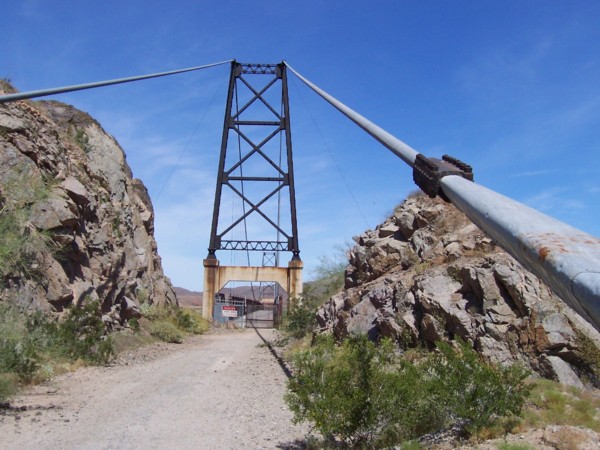
http://en.structurae.de/structures/d...fm?ID=s0007346
Oh yea, as far as Nitrogen in the tires goes, there can be benefits to using it, some only loosely associated with the BS she was given, but in no case worth the money they charged. I would demand a refund just for telling such a wopper...
GUSTO
Last edited by GUSTO14; Jan 11, 2007 at 11:23 AM.

Safety Car
Joined: May 2006
Posts: 3,799
Likes: 1
From: Northern Virginia
St. Jude Donor '08
Didn't read through the whole thread so please forgive me if what I say has already been said.
The reason for using nitrogen is that it contains little to no moisture unlike regular air out of a air pump. When there is moisture in the air as the tires heat up they expand more than they would if there was no moisture in the air increasing the psi more than you might like. Using nitrogen avoids this.
Can't speak to the cost issue because I do not know what is reasonable.
The reason for using nitrogen is that it contains little to no moisture unlike regular air out of a air pump. When there is moisture in the air as the tires heat up they expand more than they would if there was no moisture in the air increasing the psi more than you might like. Using nitrogen avoids this.
Can't speak to the cost issue because I do not know what is reasonable.