



Is a Catch Can always needed?

Thread Starter
7th Gear

Joined: Dec 2012
Posts: 7
Likes: 0
 Is a Catch Can always needed?
I have a friend that has a 2002 Chevy Corvette. He loves the car and I would too if I owned it. I started researching Catch cans after he noticed some oil leaks around the throttle body. I told him about catch cans but he is very hesitant to buy and install because according to him "it takes away from the original design of the engine".
He drives with a very heavy lead foot and he never takes it racing. Just freeway and city driving. He was also concerned about emptying the oil. He just does not want a big hassle of emptying it very often and how messy it will be.
Also referencing the title is a catch can always needed? So in other words when do you know that you need to put in a catch can?
Please help me alleviate his concerns if you can. Thank you.
He drives with a very heavy lead foot and he never takes it racing. Just freeway and city driving. He was also concerned about emptying the oil. He just does not want a big hassle of emptying it very often and how messy it will be.
Also referencing the title is a catch can always needed? So in other words when do you know that you need to put in a catch can?
Please help me alleviate his concerns if you can. Thank you.

Burning Brakes

Joined: Apr 2009
Posts: 1,163
Likes: 4
From: Concord California
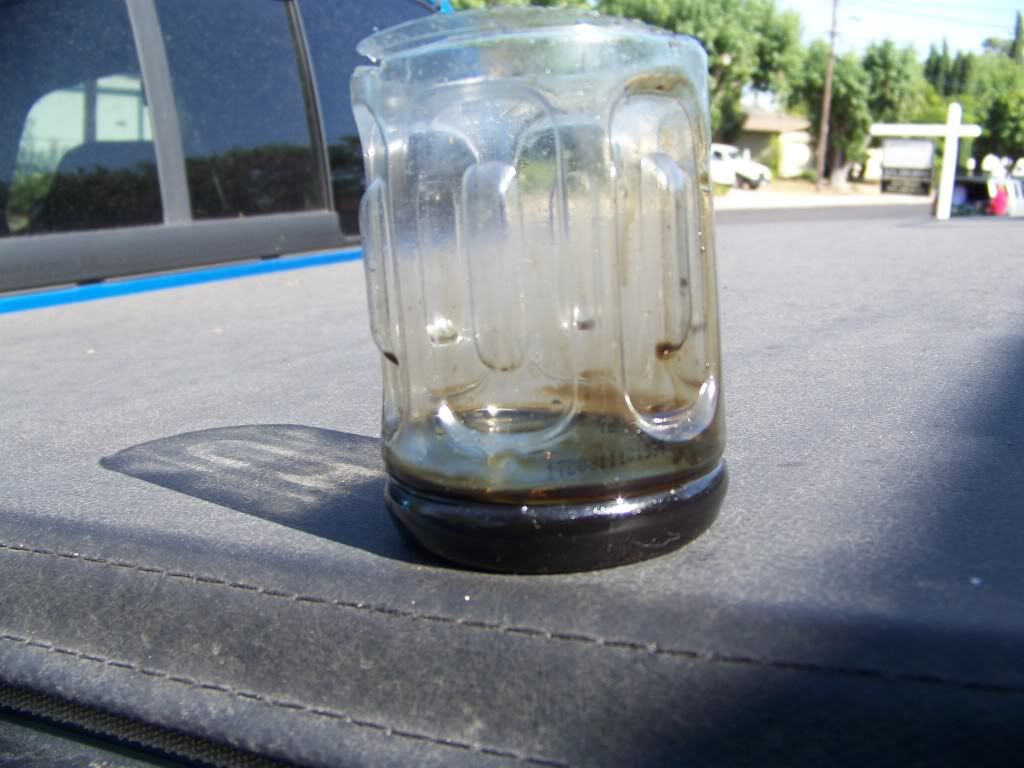
Yes, I installed one and drove normal after installation, within 3 weeks I drained it and this is what I got under normal driving.. Prior to installation, I had installed the duel cone cold air and smooth tunnel ram, I had to clean out my intake due to the oil that was inside the intake manifold, I've checked it a few months ago and it dry and clean no more oil.. You will love it.

Race Director


Joined: Dec 2000
Posts: 19,304
Likes: 85
From: San Diego CA
Check out "PCV LINE OIL REMOVAL 102" on this page:
http://www.conceptualpolymer.com/corvette_c5_corner.htm
It contains more info regarding catch cans than any other document.
http://www.conceptualpolymer.com/corvette_c5_corner.htm
It contains more info regarding catch cans than any other document.
Thread Starter
7th Gear
Joined: Dec 2012
Posts: 7
Likes: 0
Yes, I installed one and drove normal after installation, within 3 weeks I drained it and this is what I got under normal driving.. Prior to installation, I had installed the duel cone cold air and smooth tunnel ram, I had to clean out my intake due to the oil that was inside the intake manifold, I've checked it a few months ago and it dry and clean no more oil.. You will love it.

Team Owner

Joined: Mar 2001
Posts: 21,325
Likes: 3,841
From: small town in S.E Pa. PA
St. Jude Donor '03-'04
There have been approximately 1.75 million Corvettes built since 1953. These cars have been built by some of the most brilliant minds in the automotive industry.. there has never been a factory " catch can " designed into any Corvette.

Race Director


Joined: Jan 2008
Posts: 16,028
Likes: 170
From: oregon
sealed catch cans are used on many factory engines. honda for example started using a baffled black box in 1994 on the b18c engines. the whole purpose of a sealed system is to help trap oil/water vapor before it enters the manifold and combustion process.

the pcv valve either sat on top of this box and went to manifold vacuum or sat in the manifold with hoses doing the same thing. the box helped to prevent crud from clogging the pcv valve and of course traveling to the manifold. a lot of these engines have nothing more than a light oil film in the intake manifold at 100k
Last edited by racebum; Feb 18, 2013 at 02:49 PM.

Administrator


Joined: Mar 2001
Posts: 368,360
Likes: 24,783
From: In a parallel universe. Currently own 2014 Stingray Coupe.
C7 of the Year - Modified Finalist 2021
MO Events Coordinator
St. Jude Co-Organizer
St. Jude Donor '03 thru '26
NCM Sinkhole Donor
CI 5, 8 & 11 Veteran
You can get by without running a catch can, but after I installed one on mine, I was amazed at how much oil comes through the PCV system and into the intake. I empty mine about every 1K miles or so and while there may not be a whole lot in there at that mileage, it still is oil that did not go into the intake.
I installed an Elite Engineering catch can on mine - a great design and easy to install. Emptying the reservoir is simply a matter of unscrewing the bottom portion of the catch can, emptying the oil back into the oil filler tube and reinstalling the lower portion of the catch can. Takes about 2-3 minutes tops. I will use a paper towel to wipe off the lip of the catch can just to keep things nice and clean.
I installed an Elite Engineering catch can on mine - a great design and easy to install. Emptying the reservoir is simply a matter of unscrewing the bottom portion of the catch can, emptying the oil back into the oil filler tube and reinstalling the lower portion of the catch can. Takes about 2-3 minutes tops. I will use a paper towel to wipe off the lip of the catch can just to keep things nice and clean.
Corvette Stories
The Best of Corvette for Corvette Enthusiasts

Top 10 Most Expensive Corvettes Ever Sold on Bring A Trailer
Brett Foote
10 Things Every Corvette Owner Needs (2026 Edition)
Michael S. Palmer
8 Most "Only Corvette Owners Understand" Quirks and Problems
Pouria Savadkouei
10 Reasons the C6 Z06 is Still A Performance Benchmark After 20 Years
Joe Kucinski
How Much Horsepower Every Corvette Engine "LOST" in 1972
Joe Kucinski
Top 10 DOs and DON'Ts for Protecting Your Convertible Top!
Michael S. Palmer
Top 10 Most Explosive Corvettes Ever Made: Power-to-Weight Ratio Ranked!
Joe Kucinski
150 hp to 1,250 hp: Every Corvette Generation Compared by the Specs That Matter
Joe Kucinski
8 Coolest Corvette Pace Cars (and Replicas) of All Time
Verdad Gallardo
Premium Supporting Vendor


Joined: Oct 2004
Posts: 36,838
Likes: 438
From: Manassas Park VA
St. Jude Donor '07-'08,-'13-'14, '16-'17
You asked a question that has passionate answers for both yes and no...
Catch Cans remain one of the most popular items we sell...
http://www.customcorvetteaccessories...lcatchcan.html
I put one on every LSx motor I have ever owned...
Peace
Chip
Catch Cans remain one of the most popular items we sell...
http://www.customcorvetteaccessories...lcatchcan.html
I put one on every LSx motor I have ever owned...
Peace
Chip
__________________
..................Click for




..................Click for
Burning Brakes
Joined: Apr 2009
Posts: 1,163
Likes: 4
From: Concord California
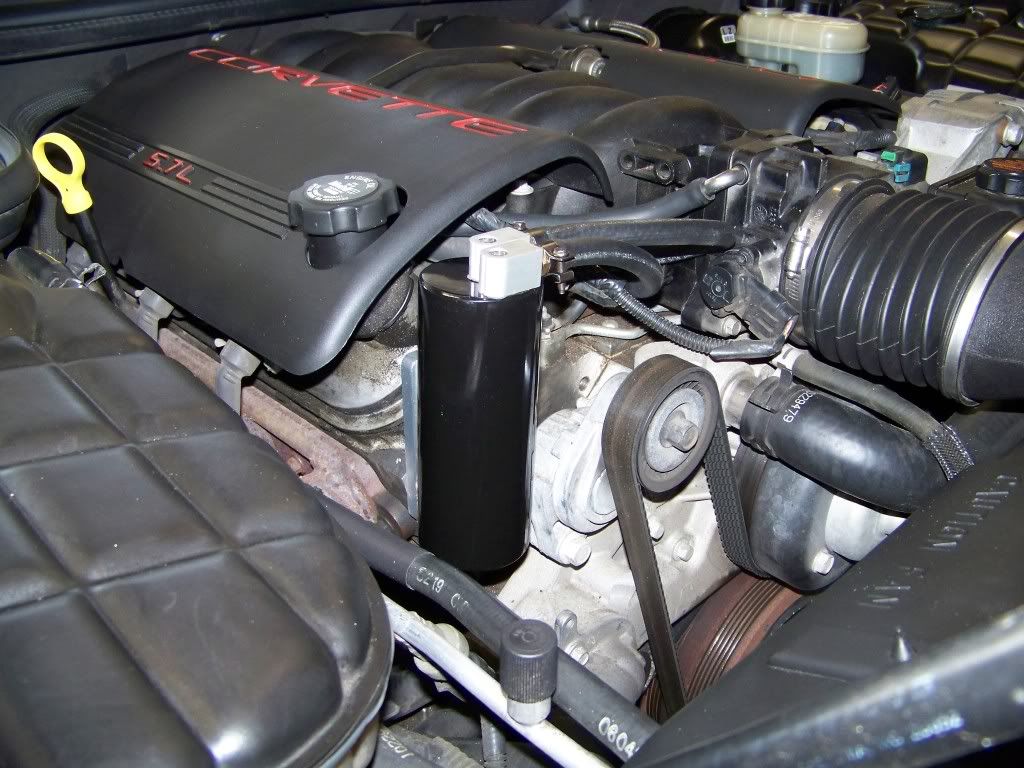
Well my experience says this, put in the best Oil Catch Can (OCC) you can buy. But with that said, I ordered an inexpensive one and modifed it to work, any device that has air space between the hoses is better than stock or nothing (see my design below). It is also best to place the location of the can near colder air to help with the separation of the oil from hot oil gases. Here is a picture of my setup. They make different types, I have found that as the oil enters the can it needs to be forced through wire mesh screen to condense, then it drips and the gases cool down and the gases are sucked in the OUTPUT hose. Some have the wire mesh at/or near the OUTPUT, that setup with some pressure will splatter oil out and defeat the purpose (well that's my view). Good luck.

Last edited by Jesse Asis; Feb 22, 2013 at 11:02 PM.

Race Director
Joined: Dec 2000
Posts: 19,304
Likes: 85
From: San Diego CA
You will notice in my white paper that air/oil separation effectiveness is dependent upon many factors, including filter media density, temperature (due to location), and gas flow direction. Currently, no industrial air/oil separation filters allow collected oil to be exposed to outgoing gases. Turbulent, liquid oil may, in of itself create more airborne oil droplets to form and be extracted downstream and into the intake. Saikoumichi's design forces "dirty" air to be filtered just before it exits the manifold. Industrial filter experts and I agree, and have improved upon their design by adjusting air velocity to optimum levels through the filter media.
Simply stuffing course media in a tube is crude but will separate some of the oil droplets. Unfortunately, this quick and easy method will still allow your intake to be gradually coated with engine oil.
Simply stuffing course media in a tube is crude but will separate some of the oil droplets. Unfortunately, this quick and easy method will still allow your intake to be gradually coated with engine oil.
Burning Brakes
Joined: Apr 2009
Posts: 1,163
Likes: 4
From: Concord California
Dave68, yes you are correct, a much better form of filtering is needed to catch every micro drop of oil. But given the space, time of exposure of the cannister I am using, it is much better than the stock method by a very long shot. Again I've check my intake about a month ago, still clean. Unlike prior, there were oil puddles inside the air runner. I was thinking of doing a double catch can with the second cannistor full of a cotton or dense absorbant type media, but again space in the engine area and type of driving dictated the present setup. Thanks for the added information, very well put..
Race Director
Joined: Jan 2008
Posts: 16,028
Likes: 170
From: oregon
Dave68, yes you are correct, a much better form of filtering is needed to catch every micro drop of oil. But given the space, time of exposure of the cannister I am using, it is much better than the stock method by a very long shot. Again I've check my intake about a month ago, still clean. Unlike prior, there were oil puddles inside the air runner. I was thinking of doing a double catch can with the second cannistor full of a cotton or dense absorbant type media, but again space in the engine area and type of driving dictated the present setup. Thanks for the added information, very well put..
filters would get plugged. best examples are the OE manufactures that use catch cans. since you won't have the block drain designed like an OE would you just drain the can every so often. from a performance standpoint draining the can is better anyway. the only reason honda designed the catch can to mount on the block was for oil drain back. if you don't mind the draining it keeps that watery sludge from getting in the oil
Race Director
Joined: Dec 2000
Posts: 19,304
Likes: 85
From: San Diego CA
Dave68, yes you are correct, a much better form of filtering is needed to catch every micro drop of oil. But given the space, time of exposure of the cannister I am using, it is much better than the stock method by a very long shot. Again I've check my intake about a month ago, still clean. Unlike prior, there were oil puddles inside the air runner. I was thinking of doing a double catch can with the second cannistor full of a cotton or dense absorbant type media, but again space in the engine area and type of driving dictated the present setup. Thanks for the added information, very well put..
And simply using two of the same catch cans will not trap twice as much oil, since the smaller (sub-micron) oil droplets will find their way past course media.
Premium Supporting Vendor
Joined: Oct 2004
Posts: 36,838
Likes: 438
From: Manassas Park VA
St. Jude Donor '07-'08,-'13-'14, '16-'17
I have to thank Dave68.
Everytime he gets involved in one of these Catch Can threads,
(and there are many)
my screen lights up with Oil Catch Can Orders
Peace
Chip
Everytime he gets involved in one of these Catch Can threads,
(and there are many)
my screen lights up with Oil Catch Can Orders
Peace
Chip

Le Mans Master

Joined: Feb 2007
Posts: 9,296
Likes: 1,531
From: Oviedo Florida
2024 C5 of the Year Finalist - Modified
2024 C2 of the Year Finalist - Modified
2023 C2 of the Year Finalist - Modified
2021 C2 of the Year Finalist - Modified
2016 C5 of Year Finalist
locked steering columns, etc..And that's just our C-5's.
Those minds are far from perfect.
Burning Brakes
Joined: Apr 2009
Posts: 1,163
Likes: 4
From: Concord California
Road Pilot, you're correct, the GM engineers will not design a "Oil Catch Can" into the vette motor, why because they really don't want their ride to last forever. They want that motor to have issues around the 5th to 8th year, so you trade that sucker in for a NEW model and the world continues to turn (a profit) for them. I respect the AFTER MARKET engineers for coming up with a better mouse trap, thus why I install oil catch cans in my vehicle. Some car companies have design them into their vehicle but very few.



Premium Supporting Vendor
Joined: Oct 2004
Posts: 36,838
Likes: 438
From: Manassas Park VA
St. Jude Donor '07-'08,-'13-'14, '16-'17
