When you click on links to various merchants on this site and make a purchase, this can result in this site earning a commission. Affiliate programs and affiliations include, but are not limited to, the eBay Partner Network.
I have a 2000 FRC Nassau Blue and I recently purchased a vial of Eckler's touchup paint. The paint matches well but while using the (lil too wide) touch-up brush that came with it, I overspread the scratches/chips I was attempting to cover. Now they standout even more than before (although with a finer brush head, it might've appeared flawless). How can I remove the touch-up paint I applied without damaging my car's clearcoat/paint/finish?
Last edited by craig_vette; Jul 17, 2016 at 02:45 PM.
since it is fresh, you can rub it off with some rubbing compound, just be careful. I would use a variable sped wheel, but they can cause damage if not careful. good luck
since it is fresh, you can rub it off with some rubbing compound, just be careful. I would use a variable sped wheel, but they can cause damage if not careful. good luck
Unfortunately it's not fresh, I applied it 2 weeks ago.
Your NOT going to like my reply... IF it were mine I would take some 1500 grit sandpaper and work it down till it was all nice and flush, then buff it out... then seal it...
I have filled LOTS of freakin chips and nicks on our car, at one time there were just too many rock trucks ( you couldn't avoid them in town or on the hiway) working in and around our place from the OIL BOOM... not much of an issue now though...
So... I have been there and done that...just take your time and be careful...
But when your finished you can't see where I fixed them...
Last edited by 73Corvette; Jul 17, 2016 at 03:56 PM.
[QUOTE=73Corvette;1592647170]Your NOT going to like my reply... IF it were mine I would take some 1500 grit sandpaper and work it down till it was all nice and flush, then buff it out... then seal it...
I have filled LOTS of freakin chips and nicks on our car, at one time there were just too many rock trucks ( you couldn't avoid them in town or on the hiway) working in and around our place from the OIL BOOM... not much of an issue now though...
So... I have been there and done that...just take your time and be careful...
But when your finished you can't see where I fixed them
73, is your car pewter? If so, you just gave me hope! Where you say seal it, seal with what? Thanks!
they way it works - after you apply your the touch up, let it dry, use their product to now rub the repair (as they show a cotton cloth wrapped around a credit card - iirc) and their product will remove the bulge on the touch up paint BUT not effect your original paint and it leaves both touch up paint & original paint smooth - for the most part ...
You can use a DA style buffer which is much safer to use. The Porter Cable 7424XP Dual Action Orbital Polisher has been around for years and can be bought for about $120. Level the touch up paint with the 1500 and then follow with 2000, both wet. Then compound the 2000 grit scratches following with wax/sealer. By gentle with the sanding until you get more experience. I have a couple of spots on the hood of my Z from the PO that sound much like yours. It's on the list to address at some point.
Also, I was taught to use a match as a touch up brush. You tear off a match from the book and use the torn end as the brush. They always tend to tear off leaving a point which works great for accurate paint application.
You can use a DA style buffer which is much safer to use. The Porter Cable 7424XP Dual Action Orbital Polisher has been around for years and can be bought for about $120. Level the touch up paint with the 1500 and then follow with 2000, both wet. Then compound the 2000 grit scratches following with wax/sealer. By gentle with the sanding until you get more experience. I have a couple of spots on the hood of my Z from the PO that sound much like yours. It's on the list to address at some point.
Also, I was taught to use a match as a touch up brush. You tear off a match from the book and use the torn end as the brush. They always tend to tear off leaving a point which works great for accurate paint application.
IMO wet sanding and compounding after touch up paint is the only way to truly blend it in. Makes it a long process but it's worth it in the end. Makes it so you can only see the scratch or chip if you are really looking for it. Just take your time read up on the process and do it right you'll be happy you did.
I have a 2000 FRC Nassau Blue and I recently purchased a vial of Eckler's touchup paint. The paint matches well but while using the (lil too wide) touch-up brush that came with it, I overspread the scratches/chips I was attempting to cover. Now they standout even more than before (although with a finer brush head, it might've appeared flawless). How can I remove the touch-up paint I applied without damaging my car's clearcoat/paint/finish?
I'm not familiar with Eckler's. Did the paint touch up process involve a cataylist (like a 'hardener')? If not, and it's just paint from a bottle applied with a brush, it's possible the only adhesion it has is surface "bonding" tension. If you didn't prep the area by scuffing it, you might be able to scratch the paint off with a fingernail. Another alternative on an OEM factory panel (no aftermarket repair by a body shop) is to try and wipe the touch-up paint off with some acetone--if the paint will at least transfer to a rag wet with acetone or lacquer thinner, enough rubbing with acetone or even thinner could remove your paint application.
I wouldn't sand it with sandpaper except as a last resort. Sandpaper is always the last desperate methodology.
I have a completely different method of taking care of chips than what I've seen mentioned here. I admit right from the get go that I'm not a body man but have taken several classes on doing it. Here is how I would handle your problem. Go to a body shop and talk to the painter and ask if he has an old nib file that you can have or buy, these are used by painters to remove runs in a paint job it's a file about an inch square with a small block of wood attached for a handle, the reason you want a used one is that they are very sharp when new, so if you use a newer one be very careful with it. Using a very lite hand you can cut the raised portion of the paint getting down closer to level with the original paint, if you're worried about damaging anything then put some tape around the spot your working on. Once you get it down close to where you want then I would take a paint stick or small piece of wood and wrap a piece of 800-1000 grit wet or dry sandpaper used wet and start working it down further as you get closer use finer grit paper until you get it flat. Once flat then start using polish to bring the shine back up. It's all about being patient and going slowly and taking your time. Using a D/A or polisher is way to big and will damage the surrounding area before you fix the spot your working on, think small on your tools and sandpaper and always use a lite hand. I've even used jewelers files on small spots. If you need pictures of some of these tools let me know and I'll send them to you
Last edited by Hotrodzz3; Jul 17, 2016 at 09:01 PM.
I have a completely different method of taking care of chips than what I've seen mentioned here. I admit right from the get go that I'm not a body man but have taken several classes on doing it. Here is how I would handle your problem. Go to a body shop and talk to the painter and ask if he has an old nib file that you can have or buy, these are used by painters to remove runs in a paint job it's a file about an inch square with a small block of wood attached for a handle, the reason you want a used one is that they are very sharp when new, so if you use a newer one be very careful with it. Using a very lite hand you can cut the raised portion of the paint getting down closer to level with the original paint, if you're worried about damaging anything then put some tape around the spot your working on. Once you get it down close to where you want then I would take a paint stick or small piece of wood and wrap a piece of 800-1000 grit wet or dry sandpaper used wet and start working it down further as you get closer use finer grit paper until you get it flat. Once flat then start using polish to bring the shine back up. It's all about being patient and going slowly and taking your time. Using a D/A or polisher is way to big and will damage the surrounding area before you fix the spot your working on, think small on your tools and sandpaper and always use a lite hand. I've even used jewelers files on small spots. If you need pictures of some of these tools let me know and I'll send them to you
NOT true... I have done several on my car and you can't tell where I repaired them....
Like I said I'm not a body man, but I have used this method many times and it has worked flawlessly for me. Using bigger power tools usually get me into more trouble than I need. I'm just trying to give the OP a different perspective and one that I feel is safer.. You feel confidant with a D/A or a wheel go for it.
Like I said I'm not a body man, but I have used this method many times and it has worked flawlessly for me. Using bigger power tools usually get me into more trouble than I need. I'm just trying to give the OP a different perspective and one that I feel is safer.. You feel confidant with a D/A or a wheel go for it.
I used a buffer but kept in on the LOW speed... if you turn it up, you can burn thru the clear...you have to keep moving... and stay away from edges and quick over the curves... I was nervous till after doing it a few hours...now I'm pretty comfortable with it..
Before you get into sanding or using a machine try some clay bar on it first. I did a very similar thing recently and spent about 20 minutes using the clay with plenty of lubricant which got rid of the excess paint.
I'm not familiar with Eckler's. Did the paint touch up process involve a cataylist (like a 'hardener')? If not, and it's just paint from a bottle applied with a brush, it's possible the only adhesion it has is surface "bonding" tension. If you didn't prep the area by scuffing it, you might be able to scratch the paint off with a fingernail. Another alternative on an OEM factory panel (no aftermarket repair by a body shop) is to try and wipe the touch-up paint off with some acetone--if the paint will at least transfer to a rag wet with acetone or lacquer thinner, enough rubbing with acetone or even thinner could remove your paint application.
I wouldn't sand it with sandpaper except as a last resort. Sandpaper is always the last desperate methodology.
I was able to use a dab of acetone and remove it. Thanks!
In the future, apply your touch up paint with a tooth pick instead of the supplied brush. Get just enough on the tip of the tooth pick and let it flow into the chip and self level. It may take a few tries, but you'll get the hang of it. The key is not putting too much material into the chip at one time.
In the future, apply your touch up paint with a tooth pick instead of the supplied brush. Get just enough on the tip of the tooth pick and let it flow into the chip and self level. It may take a few tries, but you'll get the hang of it. The key is not putting too much material into the chip at one time.
You have NO idea(I was a nervous wreck)but it turned out to be ok...
Last edited by 73Corvette; Jul 18, 2016 at 12:37 PM.



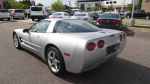



 Touch-Up Paint Mistake














 The DA style is Safer for the novice...