




Thermo installed/Lost power??

Thread Starter
Instructor

Joined: Jan 2005
Posts: 215
Likes: 0
From: Granbury TX
 Thermo installed/Interesting??
Installed a 160 today and the SOTP feel is different. It feels slower.
The temp hovers around 178.
Is the computer changing something?
Any ideas
The temp hovers around 178.
Is the computer changing something?
Any ideas
Last edited by viper punisher; Mar 7, 2005 at 10:44 AM. Reason: felt like it

Team Owner

Joined: Mar 2001
Posts: 21,325
Likes: 3,841
From: small town in S.E Pa. PA
St. Jude Donor '03-'04
Did you make any fan settings changes????????? The only thing you have acomplished at this point is your circulation starts sooner.. it has no effect on your SOTP feeling.. or the cars ability to keep the car running cooler "ON IT'S OWN". Keeping the car between 190 and 200 coolant, and 200 and 210 oil temp ( The Sweet spot) is where the car runs the best.. a 160 stat only helps you to lower fan seetings so the fans do not run all the time... this is usually done when it is in the 80 to 90F degree temperature range day. Runing an LS1/6 in the 178 range for long periods of time is not in its best interest...If your running a 160 stat and its 20 degrees outside, and your coolant is in the 160 to 170 range, I suggest you get that stat out of your car...I can not tell from your profile where you live.. but if its cold outside ... a 160 stat will be a very bad thing...
Thread Starter
Instructor
Joined: Jan 2005
Posts: 215
Likes: 0
From: Granbury TX
I'm a bad man then, because I like the thermo! I just thought my car felt slower that day. I raced my buddies GTSViper again and same result. Dead heat.
I disagree with the whole bad thing you are describing without any details. If you provide some details then I might be more inclined to listen. My SS and my GT dont seem to mind the 160 thermo. I have put over 100k miles on the GT and have pulled the motor apart to put higher comp pistons in it and have seen zero signs of any problems.
I really like this forum because you always seem to learn something cool.
So learn me.
I disagree with the whole bad thing you are describing without any details. If you provide some details then I might be more inclined to listen. My SS and my GT dont seem to mind the 160 thermo. I have put over 100k miles on the GT and have pulled the motor apart to put higher comp pistons in it and have seen zero signs of any problems.
I really like this forum because you always seem to learn something cool.
So learn me.

Safety Car

Joined: Jun 2003
Posts: 4,640
Likes: 0
From: Sunshine State
Originally Posted by Evil-Twin
Did you make any fan settings changes????????? The only thing you have acomplished at this point is your circulation starts sooner.. it has no effect on your SOTP feeling.. or the cars ability to keep the car running cooler "ON IT'S OWN". Keeping the car between 190 and 200 coolant, and 200 and 210 oil temp ( The Sweet spot) is where the car runs the best.. a 160 stat only helps you to lower fan seetings so the fans do not run all the time... this is usually done when it is in the 80 to 90F degree temperature range day. Runing an LS1/6 in the 178 range for long periods of time is not in its best interest...If your running a 160 stat and its 20 degrees outside, and your coolant is in the 160 to 170 range, I suggest you get that stat out of your car...I can not tell from your profile where you live.. but if its cold outside ... a 160 stat will be a very bad thing...
"a 160 stat only helps you to lower fan seetings so the fans do not run all the time"
The higher the fan temp settings, the less thay run.
I see in your signature you run a 160.

I do agree in a cold climate I would change it out and run a 180.
Bob

Last edited by Korreck; Mar 6, 2005 at 07:33 AM.
Burning Brakes


Joined: Oct 2004
Posts: 802
Likes: 0
From: Bueche Louisiana
maybe
not sure if this is what evils talking about but i changed the therm in my s10 to a 160 and after about a week it threw a code
the code was far the coolant not getting above 178 degrees
i guess thats something the pcm is looking for and it wasnt there so it threw the code
the code was far the coolant not getting above 178 degrees
i guess thats something the pcm is looking for and it wasnt there so it threw the code
Corvette Stories
The Best of Corvette for Corvette Enthusiasts

Top 10 Most Expensive Corvettes Ever Sold on Bring A Trailer
Brett Foote
10 Things Every Corvette Owner Needs (2026 Edition)
Michael S. Palmer
8 Most "Only Corvette Owners Understand" Quirks and Problems
Pouria Savadkouei
10 Reasons the C6 Z06 is Still A Performance Benchmark After 20 Years
Joe Kucinski
How Much Horsepower Every Corvette Engine "LOST" in 1972
Joe Kucinski
Top 10 DOs and DON'Ts for Protecting Your Convertible Top!
Michael S. Palmer
Top 10 Most Explosive Corvettes Ever Made: Power-to-Weight Ratio Ranked!
Joe Kucinski
150 hp to 1,250 hp: Every Corvette Generation Compared by the Specs That Matter
Joe Kucinski
8 Coolest Corvette Pace Cars (and Replicas) of All Time
Verdad Gallardo
Safety Car
Joined: Jun 2003
Posts: 4,640
Likes: 0
From: Sunshine State
Originally Posted by viper punisher
I said screw it!! I just went out and ran the codes and guess what...
NOTHING!! NADA!
Well we can throw the code throwing out the window, at least.
NOTHING!! NADA!
Well we can throw the code throwing out the window, at least.
 Is this going to be one of those threads that just won't die? By the way, welcome to the forum.
 Oops, sorry I got off track. I hope Evil will reply cause I want to know more about the 'sweet spot'.
Bob
Team Owner
Joined: Mar 2001
Posts: 21,325
Likes: 3,841
From: small town in S.E Pa. PA
St. Jude Donor '03-'04
As far as I am concerned this thread will die..... I'm sorry Im posted in this thread... I'M getting closer to the door everyday.....it's obvious the author of this thread is a street racer or a bullsh|t artist. I have no time for either. Enjoy your 160 stat.
Safety Car
Joined: Jun 2003
Posts: 4,640
Likes: 0
From: Sunshine State
Originally Posted by Evil-Twin
As far as I am concerned this thread will die..... I'm sorry Im posted in this thread... I'M getting closer to the door everyday.....it's obvious the author of this thread is a street racer or a bullsh|t artist. I have no time for either. Enjoy your 160 stat.
Bob

Race Director

Joined: Oct 2002
Posts: 16,477
Likes: 26
From: Gone
CI 6-7-8-9-10 Veteran
St. Jude Donor '03
The only effect a lower thermostat has, is it opens a little sooner, and takes longer for the car to fully warm up. It does not regulate temperature, unless the outside temps are cold enough that the tstat is continually opening/closing to actually keep the engine warm enough.
In warm climates, the 160 Tstat will open, and stay open once the coolant temp reaches 160. Beyond that, it does absolutely nothing. If you want your car to run cooler, turning the fans on sooner will achieve that..the Tstat alone won't do it.
Anyone with aftermarket valvesprings knows the importance of getting the car up to temp before beating on it. Seems silly to add a mod that only lengthens that wait time to "normal temp", yet does nothing to limit max temps.
The lower Tstat is best used in conjunction with lowered fan settings. If you keep the fans on down to 200, and your stock Tstat closes at 195, both will be a continuous on/off cycle in normal driving...not a good thing. This is the reason you'd want to add a lower Tstat.
Coolant temps of 190-210, and oil temps of 200-220 are considered "ideal". I agree with E-T, running consistantly at temps colder than those will cause more harm than good to the engine.
Why are warm temps desirable? A lot more than just emissions reasons...if your oil temp isn't reaching 200 degrees, you aren't burning off the condensation in the oil, and this is what creates sludge, as well as much increased wear to the moving parts.
Aluminum engines don't have the same expansion/contraction properties as older cast-iron engines...These LSx engines really are at their loosest when warm. Oil thins and flows better when warm, another beneficial thing in the quest of power.
As for power difference....ever give any thought as to why the 3rd of 3 dyno pulls is almost always the highest? (assuming no changes in between pulls). Most any reputable tuner will tell you these engines do perform better at moderately high temps, and dyno's reveal that routinely.
Too many people retain the old carbuerated mindset that a cold engine makes more power. Those days are long gone.

In warm climates, the 160 Tstat will open, and stay open once the coolant temp reaches 160. Beyond that, it does absolutely nothing. If you want your car to run cooler, turning the fans on sooner will achieve that..the Tstat alone won't do it.
Anyone with aftermarket valvesprings knows the importance of getting the car up to temp before beating on it. Seems silly to add a mod that only lengthens that wait time to "normal temp", yet does nothing to limit max temps.
The lower Tstat is best used in conjunction with lowered fan settings. If you keep the fans on down to 200, and your stock Tstat closes at 195, both will be a continuous on/off cycle in normal driving...not a good thing. This is the reason you'd want to add a lower Tstat.
Coolant temps of 190-210, and oil temps of 200-220 are considered "ideal". I agree with E-T, running consistantly at temps colder than those will cause more harm than good to the engine.
Why are warm temps desirable? A lot more than just emissions reasons...if your oil temp isn't reaching 200 degrees, you aren't burning off the condensation in the oil, and this is what creates sludge, as well as much increased wear to the moving parts.
Aluminum engines don't have the same expansion/contraction properties as older cast-iron engines...These LSx engines really are at their loosest when warm. Oil thins and flows better when warm, another beneficial thing in the quest of power.
As for power difference....ever give any thought as to why the 3rd of 3 dyno pulls is almost always the highest? (assuming no changes in between pulls). Most any reputable tuner will tell you these engines do perform better at moderately high temps, and dyno's reveal that routinely.
Too many people retain the old carbuerated mindset that a cold engine makes more power. Those days are long gone.
Safety Car
Joined: Jun 2003
Posts: 4,640
Likes: 0
From: Sunshine State
Originally Posted by Y2Kvert4me
The only effect a lower thermostat has, is it opens a little sooner, and takes longer for the car to fully warm up. It does not regulate temperature, unless the outside temps are cold enough that the tstat is continually opening/closing to actually keep the engine warm enough.
In warm climates, the 160 Tstat will open, and stay open once the coolant temp reaches 160. Beyond that, it does absolutely nothing. If you want your car to run cooler, turning the fans on sooner will achieve that..the Tstat alone won't do it.
Anyone with aftermarket valvesprings knows the importance of getting the car up to temp before beating on it. Seems silly to add a mod that only lengthens that wait time to "normal temp", yet does nothing to limit max temps.
The lower Tstat is best used in conjunction with lowered fan settings. If you keep the fans on down to 200, and your stock Tstat closes at 195, both will be a continuous on/off cycle in normal driving...not a good thing. This is the reason you'd want to add a lower Tstat.
Coolant temps of 190-210, and oil temps of 200-220 are considered "ideal". I agree with E-T, running consistantly at temps colder than those will cause more harm than good to the engine.
Why are warm temps desirable? A lot more than just emissions reasons...if your oil temp isn't reaching 200 degrees, you aren't burning off the condensation in the oil, and this is what creates sludge, as well as much increased wear to the moving parts.
Aluminum engines don't have the same expansion/contraction properties as older cast-iron engines...These LSx engines really are at their loosest when warm. Oil thins and flows better when warm, another beneficial thing in the quest of power.
As for power difference....ever give any thought as to why the 3rd of 3 dyno pulls is almost always the highest? (assuming no changes in between pulls). Most any reputable tuner will tell you these engines do perform better at moderately high temps, and dyno's reveal that routinely.
Too many people retain the old carbuerated mindset that a cold engine makes more power. Those days are long gone.
In warm climates, the 160 Tstat will open, and stay open once the coolant temp reaches 160. Beyond that, it does absolutely nothing. If you want your car to run cooler, turning the fans on sooner will achieve that..the Tstat alone won't do it.
Anyone with aftermarket valvesprings knows the importance of getting the car up to temp before beating on it. Seems silly to add a mod that only lengthens that wait time to "normal temp", yet does nothing to limit max temps.
The lower Tstat is best used in conjunction with lowered fan settings. If you keep the fans on down to 200, and your stock Tstat closes at 195, both will be a continuous on/off cycle in normal driving...not a good thing. This is the reason you'd want to add a lower Tstat.
Coolant temps of 190-210, and oil temps of 200-220 are considered "ideal". I agree with E-T, running consistantly at temps colder than those will cause more harm than good to the engine.
Why are warm temps desirable? A lot more than just emissions reasons...if your oil temp isn't reaching 200 degrees, you aren't burning off the condensation in the oil, and this is what creates sludge, as well as much increased wear to the moving parts.
Aluminum engines don't have the same expansion/contraction properties as older cast-iron engines...These LSx engines really are at their loosest when warm. Oil thins and flows better when warm, another beneficial thing in the quest of power.
As for power difference....ever give any thought as to why the 3rd of 3 dyno pulls is almost always the highest? (assuming no changes in between pulls). Most any reputable tuner will tell you these engines do perform better at moderately high temps, and dyno's reveal that routinely.
Too many people retain the old carbuerated mindset that a cold engine makes more power. Those days are long gone.
This other guy tore his engine down at 100,000 and it looked good. 180 is not cool. Aluminum will expand quicker and at lower temp than cast iron.
Bob
Team Owner
Joined: Mar 2001
Posts: 21,325
Likes: 3,841
From: small town in S.E Pa. PA
St. Jude Donor '03-'04
I am a retired GM Engineer. I was involved in the prototype design and subsequent launch and post launch debugging of this car, I have 35 years of automotive engineering under my belt I am an SAE Sr Engineer. This motor is almost bullet proof with the right configuration, that is, the right oil, and the motor running at the right temperatures, both oil and coolant. This allows proper lubrication , suspension of contaminants in the oil, and reduction of thermal breakdown... The sweet spot was established buy thousands of hours of run time while developing this LS1 design... simultaneous test were done to develop the algorithms for the oil life monitor, under all types of loads and driving conditions.. unfortunately WE build cars that run in Minnesota in the winter @ -30F, and the same car has to run in the Arizona desert @ +130F. The hp vs. cu. in of the LS1/6 was developed through tight clearances and a lubrication system that needs the right combination. Running an LS1/6 at 160 F will cause premature carbon build up...increase compression ratio, cause automatic Knock retard sensors to retard the timing, thus causing a loss in performance.. WE ( GM engineering ) have seen this scenario so many time we have developed the famous GM De carbonization process... This guy posting in this thread is mis-guided and deserves what he gets... these cars run anywhere from 190F to 235 F. and that is normal in the general design.. the PCM helps to compensate for this variance with appropriate fan settings.. but the car runs best at one temperature..both coolant and oil.. but it will function and various temperatures.. the sweet spot is insider information..keeping it in that sweet spot is what a well tuned engine wants to see.. and where optimal performance is gained...without loss of internal integrity
This is similar to the tire pressure sticker 30 pounds cold on the door... it is just a generic tire pressure sticker setting.. so customers wont use the max pressure settings on the tires,..,, but that 30 psi sticker is just a general statement.. the tires perform best at 30 psi.. but if you set them cold at 30 psi and get out on a Hot black top on a summer 90+ day road where temps can reach 160F, those tires will increase to 36 psi... that is not where they should run... I never allow my tires to get over 30/31 psi "Hot" that's where they perform,, they do not perform at all when cold...so why set the temperature there. Tire pressure is so critical... Nascar pit crews monitor track temperatures all day long and adjust tire pressure accordingly. Proper temps can give you better mileage and more tire life... these are critical in Nascar. A few extra laps on the tires and better fuel economy are all part of a well tuned Nascar. Not as critical to a daily driver, but the concept is the same... I consistently get 33 mpg on the highway with my car.. and I can get 45,000 miles out of a set of tires.. because I know what I am doing.. my car is tuned for me and where I live and how I drive and the road conditions... I have been trying to teach this concept to people here... many have adopted this, and other do not..
I am so..... moving away from posting in open forum and just helping people who know me in pm.. I do not need to argue with anyone.. or qualify my statements to Bullsh}t artists or street racers>
This is similar to the tire pressure sticker 30 pounds cold on the door... it is just a generic tire pressure sticker setting.. so customers wont use the max pressure settings on the tires,..,, but that 30 psi sticker is just a general statement.. the tires perform best at 30 psi.. but if you set them cold at 30 psi and get out on a Hot black top on a summer 90+ day road where temps can reach 160F, those tires will increase to 36 psi... that is not where they should run... I never allow my tires to get over 30/31 psi "Hot" that's where they perform,, they do not perform at all when cold...so why set the temperature there. Tire pressure is so critical... Nascar pit crews monitor track temperatures all day long and adjust tire pressure accordingly. Proper temps can give you better mileage and more tire life... these are critical in Nascar. A few extra laps on the tires and better fuel economy are all part of a well tuned Nascar. Not as critical to a daily driver, but the concept is the same... I consistently get 33 mpg on the highway with my car.. and I can get 45,000 miles out of a set of tires.. because I know what I am doing.. my car is tuned for me and where I live and how I drive and the road conditions... I have been trying to teach this concept to people here... many have adopted this, and other do not..
I am so..... moving away from posting in open forum and just helping people who know me in pm.. I do not need to argue with anyone.. or qualify my statements to Bullsh}t artists or street racers>
Race Director
Joined: Oct 2002
Posts: 16,477
Likes: 26
From: Gone
CI 6-7-8-9-10 Veteran
St. Jude Donor '03
Originally Posted by Korreck
My thermostat opens at 160. Engine stays around 180. Fan doesn't kick on till 200 and off at 185. So they're not on most of the time. If I ran a 192 the engine would never run below 192. Thermostat does keep it cooler.
This other guy tore his engine down at 100,000 and it looked good. 180 is not cool. Aluminum will expand quicker and at lower temp than cast iron.
Bob
This other guy tore his engine down at 100,000 and it looked good. 180 is not cool. Aluminum will expand quicker and at lower temp than cast iron.
Bob
I guess since you're the one going through the effort to make the car run cooler...you must have a reason?
If temps were high enough that you would get ping or knock, then yes, it makes sense to lower temps.
The only other power benefit I know of to be had with a cooler operating temp, is to lower the IAT. (Intake Air Temperature). Cooler and denser intake air is always beneficial for more power...but with these plastic intake manifolds, heat soak ain't what it used to be, and engine temp now has a much lesser affect on IAT's.
There was a lot of discussion years ago when the tuners started noticing the dyno pull phenomenon. The cars dyno'd higher the warmer they got. To people "in the know", it is generally accepted that cold air into a fully warm engine is the best recipe for hp.
And yet people still strive to make them run cooler. I don't get it.
Safety Car
Joined: Jun 2003
Posts: 4,640
Likes: 0
From: Sunshine State
Originally Posted by Y2Kvert4me
But why are you doing it? What benefit do you see running it that cool?
I guess since you're the one going through the effort to make the car run cooler...you must have a reason?
If temps were high enough that you would get ping or knock, then yes, it makes sense to lower temps.
The only other power benefit I know of to be had with a cooler operating temp, is to lower the IAT. (Intake Air Temperature). Cooler and denser intake air is always beneficial for more power...but with these plastic intake manifolds, heat soak ain't what it used to be, and engine temp now has a much lesser affect on IAT's.
There was a lot of discussion years ago when the tuners started noticing the dyno pull phenomenon. The cars dyno'd higher the warmer they got. To people "in the know", it is generally accepted that cold air into a fully warm engine is the best recipe for hp.
And yet people still strive to make them run cooler. I don't get it.
I guess since you're the one going through the effort to make the car run cooler...you must have a reason?
If temps were high enough that you would get ping or knock, then yes, it makes sense to lower temps.
The only other power benefit I know of to be had with a cooler operating temp, is to lower the IAT. (Intake Air Temperature). Cooler and denser intake air is always beneficial for more power...but with these plastic intake manifolds, heat soak ain't what it used to be, and engine temp now has a much lesser affect on IAT's.
There was a lot of discussion years ago when the tuners started noticing the dyno pull phenomenon. The cars dyno'd higher the warmer they got. To people "in the know", it is generally accepted that cold air into a fully warm engine is the best recipe for hp.
And yet people still strive to make them run cooler. I don't get it.
I said I am always willing to learn
 I think I just did. Thanks.
Bob

Racer

Joined: May 2001
Posts: 304
Likes: 0
From: Bryn Mawr PA
I agree totally. On numerous dyno runs, the last one was the highest (after changes made had been frozen). I live in the NE and a quick warm up not only makes sense but the higher temps allow the enggine to operate more effciciently.
It is interesting to note that with my 99 FRC, the coolant is always 197 when warm, regardless of outside temperatures. Last summer, with the air on, the outside temp was 98 deg and coolant was, as always, 197. When temps are 20 deg out, the coolant is still 197! Have no intention to change stats and fiddle with the fans, it seems the Genreral got this one right!
It is interesting to note that with my 99 FRC, the coolant is always 197 when warm, regardless of outside temperatures. Last summer, with the air on, the outside temp was 98 deg and coolant was, as always, 197. When temps are 20 deg out, the coolant is still 197! Have no intention to change stats and fiddle with the fans, it seems the Genreral got this one right!
Le Mans Master

Joined: Sep 2004
Posts: 7,027
Likes: 6
From: Shiloh Ohio
Bracket racing
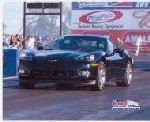
II posted this once before about why I like a 160 for bracket drag racing. And as far as I know this is fairly common knowledge in bracket drag racing circles where consistency of the qtr mile ET is the second most important factor second only to reaction time. Ok, this is a simple concept but a little hard to make into a short story so bear with me. I try to launch at the exact same engine water temperature on every run, I have found 180 to be the optimal temp for ETs and as far as finding a temp I can consistently manipulate the car to stay at. Now that means I want to pull into the burn out area around 170, I do a short burn out, stage and I am usually at 180. If I have a 180 thermostat I will be at 180 and climbing usually by the time I reach the burn out box, this is not the best way to do business. So I am setting in the pits waiting to go after time trials, the car has cooled to 164. When I start the car to pull to the pits my water is circulating and I have much more control over how hot I want the car to get, in other words it is warming slower so I can use techniques to adjust it. If I am too cool it is an easy matter to just start the car in the staging lane and let it warm some, rather than praying it will cool. If I did not have the 160 thermostat it would very quickly warm to 180 and I would not have as great of control of the temp because the thermostat is closed and no water is circulating. This is really the only benefit I can think of to install a 160 thermostat. As was stated once the car has been cruising for a while it will not run any cooler just because of the 160 thermo, it will reach the same operating temperature as it would have with a 180, it will just take a little longer. The same will hold true with lower fan settings too, after a certain period of time it will reach the same operating temperature as the normal stock fan settings, the early fan turn on will just delay this. For normal driving I do not think you can improve on the stock setup for engine longevity. The lower thermostat concept comes from bracket drag racing and it can be used very effectively to improve your dial in consistency, which in order to win on a regular basis needs to stay around three hundreds of a second. Not a lot of room for error so every little advantage helps. Also ET you should not be so sensitive, your posts are very helpful I have learned a lot about the C5 from reading them. Keep posting, don't get thin skinned all of the sudden, many members find your posts valuable.
Edit: I should add that on short daily driving runs in very hot weather lower fan settings and thermostat would keep your car cooler if you are having over heat type problems. But eventually the car will heat up to the same temp regardless of the thermostat and fan settings, it only slows down the process. And cheers again
Edit: I should add that on short daily driving runs in very hot weather lower fan settings and thermostat would keep your car cooler if you are having over heat type problems. But eventually the car will heat up to the same temp regardless of the thermostat and fan settings, it only slows down the process. And cheers again
Last edited by shurite44; Mar 6, 2005 at 10:09 AM.