





Red Hot Catch Can!!
Thread Starter
Racer

Joined: Dec 2005
Posts: 431
Likes: 0
From: North Las Vegas Nevada
 Red Hot Catch Can!!
This topic is dead but one thing I have really noticed lately, though it does look good, having the can mounted to the cylinder head is heating up the can so much, the oil is not condencing and it is catching virtually no oil!! My 1st can in the line, that is mounted to the battery compartment divider where it stays cooler, catches alot and so does my breather filter between the intake and the AMW. I am going to relocate the AMW way down in front between the radiator shroud and the part of the chassis where the hood hinge is mounted. This will keep that thing nice and cool and hopefully do alot more oil catching!
My 1st can in the line, that is mounted to the battery compartment divider where it stays cooler, catches alot and so does my breather filter between the intake and the AMW. I am going to relocate the AMW way down in front between the radiator shroud and the part of the chassis where the hood hinge is mounted. This will keep that thing nice and cool and hopefully do alot more oil catching!
Le Mans Master


Joined: Oct 2005
Posts: 7,088
Likes: 1,829
From: Metro Detroit Michigan
I don't think the temperature of the catch can will affect how much oil it catches. The oil isn't a vapor, it's in the form of droplets.
A cooler can might collect more liquid because it would be more likely to condense water and fuel vapors, which are in vapor form. As far as I know, there's no harm in passing these back to the engine.
A cooler can might collect more liquid because it would be more likely to condense water and fuel vapors, which are in vapor form. As far as I know, there's no harm in passing these back to the engine.
Thread Starter
Racer
Joined: Dec 2005
Posts: 431
Likes: 0
From: North Las Vegas Nevada
Originally Posted by Warp Factor
I don't think the temperature of the catch can will affect how much oil it catches. The oil isn't a vapor, it's in the form of droplets.
A cooler can might collect more liquid because it would be more likely to condense water and fuel vapors, which are in vapor form. As far as I know, there's no harm in passing these back to the engine.
A cooler can might collect more liquid because it would be more likely to condense water and fuel vapors, which are in vapor form. As far as I know, there's no harm in passing these back to the engine.


Team Owner


Joined: May 2004
Posts: 26,345
Likes: 232
From: SoCal
Originally Posted by allmee
The reason I feel the can will catch more oil in a cooler location is the fact that cooler oil is thicker, and thicker oil will be harder to draw up the walls & out of the can.


DH
Thread Starter
Racer
Joined: Dec 2005
Posts: 431
Likes: 0
From: North Las Vegas Nevada
Originally Posted by Dirty Howie
I have mine mounted on the frame up front of the shroud...
DH
DH
Thanks!
Rob

Melting Slicks

Joined: Jul 2004
Posts: 2,340
Likes: 35
From: Folsom Lake CA
I agree, I think cooler is better.
You also say you have two cans. What are you using for the first can in the line... the one that's mounted to the battery divider. It also may be a better filter, so you may never catch the same amount in the AMW. I mean while cooling the AMW will probably help, the AMW just may not be as good as your other filter.
You also say you have two cans. What are you using for the first can in the line... the one that's mounted to the battery divider. It also may be a better filter, so you may never catch the same amount in the AMW. I mean while cooling the AMW will probably help, the AMW just may not be as good as your other filter.

Race Director


Joined: Oct 1999
Posts: 17,709
Likes: 1,219
From: Phila PA, Bonita Springs FL
Doesn't matter where you locate it..
Before the AMW (on cylinder head mount location), I tried the Campbell Hausfield jar, and had it routed near the fan shroud with a big loop, and it got so hot I thought it was going to melt!
As long as that metal can is in the engine compartment its going to get red hot..
The catch can does NOT have to be "cool" in order to condense the oil vapors.....
The design with the preforations & steel wool will do that, hot or not..
Before the AMW (on cylinder head mount location), I tried the Campbell Hausfield jar, and had it routed near the fan shroud with a big loop, and it got so hot I thought it was going to melt!
As long as that metal can is in the engine compartment its going to get red hot..
The catch can does NOT have to be "cool" in order to condense the oil vapors.....
The design with the preforations & steel wool will do that, hot or not..
Corvette Stories
The Best of Corvette for Corvette Enthusiasts

Top 10 Most Expensive Corvettes Ever Sold on Bring A Trailer
Brett Foote
10 Things Every Corvette Owner Needs (2026 Edition)
Michael S. Palmer
8 Most "Only Corvette Owners Understand" Quirks and Problems
Pouria Savadkouei
10 Reasons the C6 Z06 is Still A Performance Benchmark After 20 Years
Joe Kucinski
How Much Horsepower Every Corvette Engine "LOST" in 1972
Joe Kucinski
Top 10 DOs and DON'Ts for Protecting Your Convertible Top!
Michael S. Palmer
Top 10 Most Explosive Corvettes Ever Made: Power-to-Weight Ratio Ranked!
Joe Kucinski
150 hp to 1,250 hp: Every Corvette Generation Compared by the Specs That Matter
Joe Kucinski
8 Coolest Corvette Pace Cars (and Replicas) of All Time
Verdad Gallardo
Thread Starter
Racer
Joined: Dec 2005
Posts: 431
Likes: 0
From: North Las Vegas Nevada
Originally Posted by MrLeadFoot
I agree, I think cooler is better.
You also say you have two cans. What are you using for the first can in the line... the one that's mounted to the battery divider. It also may be a better filter, so you may never catch the same amount in the AMW. I mean while cooling the AMW will probably help, the AMW just may not be as good as your other filter.
You also say you have two cans. What are you using for the first can in the line... the one that's mounted to the battery divider. It also may be a better filter, so you may never catch the same amount in the AMW. I mean while cooling the AMW will probably help, the AMW just may not be as good as your other filter.
 [/IMG]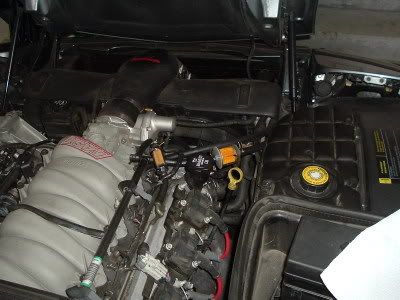

Le Mans Master
Joined: Feb 2003
Posts: 6,683
Likes: 144
From: Memphis Tennessee
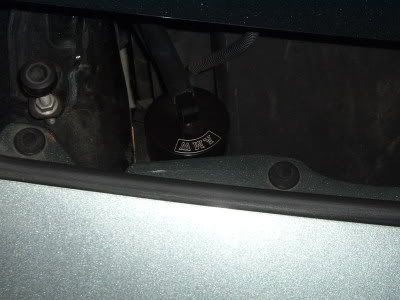
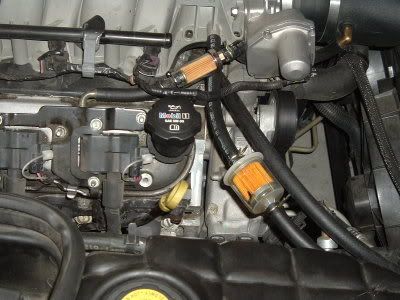
Here's my set up with the CH bowl mounted in reverse-flow configuration It is mounted in the battery box.
I get some oil (more than I would like) but feel a bit better that at least I am catching some of it.


I get some oil (more than I would like) but feel a bit better that at least I am catching some of it.


Melting Slicks
Joined: Jul 2004
Posts: 2,340
Likes: 35
From: Folsom Lake CA
Originally Posted by allmee
The first can in my system is one of those compressor moisture catch cans. I do not have the stone filter in it and it catches alot of oil. The 2nd, which is my AMW, WAS catching some oil but lately has been catching basicly none. The temps here in Vegas have gone fron the 70's to the 90's in the last week and a half or so. I am getting the feeling that the higher temps outside are affecting the temps in the engine bay. I can't see any other logical reason, and as I stated earlier, the hotter the oil in the can, the thinner it will be, thus be drawn out more easily. I have a 3rd glass filter with some breather element in it so I can see what is getting through. It IS getting oil to IT quicker than it was a couple of weeks ago.
Your findings on the heat issue serve as evidence of this, but maybe also in a different way than you originally thought. You see, the oil is NOT creeping up the walls because it is thinner. The undercuts in the walls prevent that creepage. What you're seeing is the unit's failure to "condense" the liquid out of the vapors. So, what's actually happening is that the "filtering" mechanism of that AMW can is proving to not be worth much, because if it was working as a filter the liquids would in fact be filtered out of the vapors.
So, this demonstrates that the most efficient way to extract liquids from the crankcase vapors is through centrifugal "wicking", as is the case with the air compressor filter. The very design of the bowl enables the vapors to "swirl" around inside the unit, and the sheer contact of the vapors on ALL inside sufaces of the bowl is what serves to help extract the liquids. If you look carefully at how the air actually flows inside the air compressor unit, you'll notice that unlike the AMW unit the air is designed to swirl around inside the bowl. The AMW, on the other hand, has the input coming straight down into the middle of the unit, and it's output is straight out the side. Hardly a good path for the air for wicking purposes.
Additionally, the AMW design is such that the air coming into the unit travels through the steel wool stuff, which its designers think filters the oil out of the vapors. In reality, this does not happen. Sure, some oil in the vapors may cling to the steel wool, as the air passes through the stuff, but that's really not as effective as if the vapors had the chance to swirl around inside the can along the walls.
Now, combine this with what you found about the heat issue. What's happening now is that the "thinner" oil, as you put it, is not really creeping out of the unit; it's more of the fact that the hotter the vapors, the longer they need to be in contact with surface area inside the unit, which simply cannot happen given the design of the AMW can. First, the air path coming straight down into the center of the can is simply being sucked right out of the can before the air even has a chance to hit touch anything other than the steel wool filtering stuff.
Now, some might argue that if you blow through the input of the AMW can, the air will touch the walls, which is true, because in order to force the air out through the output, the can must first be filled with air, then the continued pressure forces the air out. However, that's not how the PCV system works, remember? The PCV system DRAWS the air into the can, which is a whole different animal than PUSHING the air in.
Secondly, even if the air had the opportunity to touch the walls, the right angles where the walls hit the bottom are hardly the best design for swirling the air flow.
The air compressor filter, on the other hand, allows the vapors to maintain contact with the entire inside surface of the filter bowl, which is where your wicking occurs. Even though the PCV system is drawing air in through the air compressor filter, the path that air must follow is a swirl along the walls of the unit.
Further proof of what I'm saying here is in the fact that you don't even have the stone element in there, either, and it's catching alot of oil right? Now, look how LITTLE the surface of the bowl is. Can you imagine how much more oil you would catch if that air compressor filter had a usable swirling surface area the size of the AMW can?
Well, guess what? There is a larger sized air compressor filter available. I've seen them at Home Depot. Same EXACT design as the little one, but more along the size of the AMW can. But, as I've already shown above, the AMW can design does not use centrifugal wicking, while the larger air compressor does. So, in my opinion, you'd probably be better off with the larger compressor filter than the AMW can.
There are a ton of folks willing to pay good money for the AMW can, just because it's a cool looking unit. I know, I was one of them, although I bought mine before the price was upped to near-gold prices. Not saying it's worse that other catch-cans out there, because it's not. The undercuts on the walls do work to keep any trapped oil from creeping up the walls better than units without them. It's just that it has no centrifugal wicking capabilites, which other cans I've seen don't have either. So it is better than other cans, which means you could sell it, buy the more efficient larger air compressor filter for $17, which you can locate in a cooler location like up front if you wish, and still have $100 left over.
In fact, now you got me thinking I should "upgrade" my little filter to the big one, too. I've always planned on doing it, so I wouldn't have to drain the little one so often, but I just never got around to it.
Last edited by MrLeadFoot; May 11, 2006 at 12:53 AM.
Le Mans Master
Joined: Oct 2005
Posts: 7,088
Likes: 1,829
From: Metro Detroit Michigan
I still don't think lowering the temperature of the catch can improves it's performance.
I've tried locating my catch can where it stays cooler, and it may have caught more liquid, but the composition was different. When the catch can was cooler, the liquid inside was thinner, less like oil. This leads me to believe that the cool surface was consensing fuel vapor.
Unless someone has information that this fuel vapor is lower octane than gas, I can't see any advantage in removing it. It will just fill up your catch can sooner.
MrLeadFoot, my catch can has the entry at a tangent to the side wall producing swirl, and the exit at the top center of the can. I put a media near the exit, and it doesn't seem to be getting any oil on it, so spinning the air seems to be pretty effective at removing oil.
I haven't tried the air compressor filter/moisture remover, but it sounds like it would work well, probably better than a convetional catch can. I'd vote for the larger one, because it probably has less restriction and a larger capacity.
I've tried locating my catch can where it stays cooler, and it may have caught more liquid, but the composition was different. When the catch can was cooler, the liquid inside was thinner, less like oil. This leads me to believe that the cool surface was consensing fuel vapor.
Unless someone has information that this fuel vapor is lower octane than gas, I can't see any advantage in removing it. It will just fill up your catch can sooner.
MrLeadFoot, my catch can has the entry at a tangent to the side wall producing swirl, and the exit at the top center of the can. I put a media near the exit, and it doesn't seem to be getting any oil on it, so spinning the air seems to be pretty effective at removing oil.
I haven't tried the air compressor filter/moisture remover, but it sounds like it would work well, probably better than a convetional catch can. I'd vote for the larger one, because it probably has less restriction and a larger capacity.
Melting Slicks
Joined: Jul 2004
Posts: 2,340
Likes: 35
From: Folsom Lake CA
Originally Posted by Warp Factor
I still don't think lowering the temperature of the catch can improves it's performance.
I've tried locating my catch can where it stays cooler, and it may have caught more liquid, but the composition was different. When the catch can was cooler, the liquid inside was thinner, less like oil. This leads me to believe that the cool surface was consensing fuel vapor.
Unless someone has information that this fuel vapor is lower octane than gas, I can't see any advantage in removing it. It will just fill up your catch can sooner.
I've tried locating my catch can where it stays cooler, and it may have caught more liquid, but the composition was different. When the catch can was cooler, the liquid inside was thinner, less like oil. This leads me to believe that the cool surface was consensing fuel vapor.
Unless someone has information that this fuel vapor is lower octane than gas, I can't see any advantage in removing it. It will just fill up your catch can sooner.
MrLeadFoot, my catch can has the entry at a tangent to the side wall producing swirl, and the exit at the top center of the can. I put a media near the exit, and it doesn't seem to be getting any oil on it, so spinning the air seems to be pretty effective at removing oil.
I haven't tried the air compressor filter/moisture remover, but it sounds like it would work well, probably better than a convetional catch can. I'd vote for the larger one, because it probably has less restriction and a larger capacity.
I haven't tried the air compressor filter/moisture remover, but it sounds like it would work well, probably better than a convetional catch can. I'd vote for the larger one, because it probably has less restriction and a larger capacity.
Last edited by MrLeadFoot; May 12, 2006 at 03:15 PM.
Le Mans Master
Joined: Oct 2005
Posts: 7,088
Likes: 1,829
From: Metro Detroit Michigan
Originally Posted by MrLeadFoot
Sounds like you've got a good design going there. Did you make this yourself with maybe PVC, or something, or is it a commercially manufactured unit?

OK, that was just a joke. The real one's over
here
Last edited by Warp Factor; May 12, 2006 at 04:18 PM.
Melting Slicks
Joined: Jul 2004
Posts: 2,340
Likes: 35
From: Folsom Lake CA
Originally Posted by Warp Factor
I can't see any reason to change what you're using, but what the heck.
OK, that was just a joke. The real one's over
here
OK, that was just a joke. The real one's over
here
Seriously, though, I can see why your homemade one works so well. You also probably don't see the heat issue that the original poster was talking about because the PVC is a good insulator, unlike the metal AMW can. Good design!
I'm going to go with the larger air compressor unit because I want more surface area and a larger container, but I also want something see through.
