



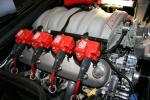

Alternator wire looks burnt.

Thread Starter
Drifting


Joined: Sep 2002
Posts: 1,614
Likes: 7
From: South Florida
 Alternator wire looks burnt.
The main wire out of the back of the alternator with the rubber boot looks burnt. The rubber boot is brittle and brown. I have not seen any abnormal charging on the battery gauge...but if it was intermittent I may not notice it.
2000 cpe, after market stereo, red top bat.


the last pic is out of focus, but it shows the burnt color a little better.
2000 cpe, after market stereo, red top bat.
the last pic is out of focus, but it shows the burnt color a little better.
Last edited by Smokin Joe; Jan 7, 2008 at 12:48 AM.
Drifting

Joined: Jun 2002
Posts: 1,945
Likes: 41
From: Corinth TX
Not trying to be funny or anything but it looks like the top connector cover has been gnawed on by a rat or mouse. If so, then what looks burnt could actually be urine covered in dust. I have found similarly looking stuff on some of my cars that stay outside.
Tech Contributor

Joined: Dec 2006
Posts: 10,962
Likes: 29
From: Van Buren Arkansas
Wounded Warrior Escort '11
I'm going to suggest that a trip to the local alternator shop or the dealer is in order for you. Yes its possible it was chewed on as far as the cover is concerned but the wire has the appearance of overheated or burned. Looks like something is shorting out and frying that wire. You might also wish to PM Bill Curlee and get his opinion as well.
Thread Starter
Drifting
Joined: Sep 2002
Posts: 1,614
Likes: 7
From: South Florida
No, rat, it was so brittle that when I pulled back on the boot, it broke apart. I'm going to have to replace some of the wiring...I really don't want to replace the entire wiring harness.
Pro

Joined: Sep 2007
Posts: 548
Likes: 3
From: Northeast NE
 Had that happen to me on a past car of mine.....fried wires constantly until I realized the bolt was not tight inside the alternator.
 Good luck

Team Owner


Joined: Apr 2001
Posts: 54,204
Likes: 180
From: S.W. Ohio. . . . . . NRA Life Member
when I chromed mine, I too noticed that the front windings looked liked "natural" magnet -type- wire... but the rearward windings looked discolored.

I think it's heat related. The front of the alternator sees the coolest air entering the entire alternator case cavity.
I think it's heat related. The front of the alternator sees the coolest air entering the entire alternator case cavity.
Corvette Stories
The Best of Corvette for Corvette Enthusiasts

Top 10 Most Expensive Corvettes Ever Sold on Bring A Trailer
Brett Foote
10 Things Every Corvette Owner Needs (2026 Edition)
Michael S. Palmer
8 Most "Only Corvette Owners Understand" Quirks and Problems
Pouria Savadkouei
10 Reasons the C6 Z06 is Still A Performance Benchmark After 20 Years
Joe Kucinski
How Much Horsepower Every Corvette Engine "LOST" in 1972
Joe Kucinski
Top 10 DOs and DON'Ts for Protecting Your Convertible Top!
Michael S. Palmer
Top 10 Most Explosive Corvettes Ever Made: Power-to-Weight Ratio Ranked!
Joe Kucinski
150 hp to 1,250 hp: Every Corvette Generation Compared by the Specs That Matter
Joe Kucinski
8 Coolest Corvette Pace Cars (and Replicas) of All Time
Verdad Gallardo
Race Director

Joined: Sep 2004
Posts: 17,786
Likes: 4
From: Redsox, Pats, Celts & Bruins !!! Redsox Nation !!!
St. Jude Donor '06-'07-'08-'09-'10-'11-'12
Time to do the BIG3. How much amperage are you hitting on the new system? The big 3 will take care of voltage problems and old wires at the same time.

Tech Contributor


Joined: Dec 1999
Posts: 32,910
Likes: 2,402
From: Anthony TX
CI 6,7,8,9,11 Vet
St. Jude Donor '08
The alternator connection at the back of the alternator (STATOR OUTPUT) is being severely over taxed and the wire and screw on the back of the alternator is overheated and brittle. It was most likely caused by a poor connection and just got worse over time. If I were you, I would take the alternator to an "ALTERNATOR/STARTER" repair shop and have them examine it, see if they can repair it and then you can do the BIG THREE!! That wire also goes STRAIGHT to the starter and that connection may also be compromised as well. I recommend examining the connections on the starter solenoid.
If your going to draw more current than the wiring system is designed to carry or if you want to make sure your not going to over tax whats there, it would be very simple to increase the gage of the wires in that circuit.!

BC



Thread Starter
Drifting
Joined: Sep 2002
Posts: 1,614
Likes: 7
From: South Florida
Holy crap! Getting to that starter is going to require me to pull the headers out. What a PITA!!
I guess the only solution is to pull the headers out, put heads and cam in, fix the frame rust from the Crap GM battery design, do something about the rust on my supposed staineless steel LG headers, fix the electrical (including the hood light), clean up the coroosion on the garaged kept alluminum parts??, and whatever else I find.
Rant off
Thanks for your help guys. What are the big three. I did a search and can't find them. battery? (new), starter, and alternator? or a combination of wires?
Thanks again.
I guess the only solution is to pull the headers out, put heads and cam in, fix the frame rust from the Crap GM battery design, do something about the rust on my supposed staineless steel LG headers, fix the electrical (including the hood light), clean up the coroosion on the garaged kept alluminum parts??, and whatever else I find.
Rant off
Thanks for your help guys. What are the big three. I did a search and can't find them. battery? (new), starter, and alternator? or a combination of wires?
Thanks again.
Racer

Joined: Apr 2005
Posts: 256
Likes: 1
From: Delta BC
Melting Slicks


Joined: May 2000
Posts: 2,498
Likes: 4
From: Brentwood TN
A MAJOR problem on C4 alternator failure attributed to bearings turned out to be related to this very issue. It took three years and close to a dozen "lifetime warranty" alternators to solve the problem, but here is what I found.
1. The connector at the alternator for the main power lead was crimped. I haven't looked at my C5, but the photos here look like the connector is crimped.
2. Even with 2 gage wire, carrying 125 - 145 amps taxes the conductor, as in produces heat.
3. Heat/cool cycles cause the crimp connector to relax, granted probably less than one or two mils, but it happens.
4. Relaxed connector equals less contact area between the connector and the conductor.
5. Less contact means higher current flux where there IS contact.
6. Higher current flux means increased heat and temperature.
7. Higher temperature means oxidation of the copper conductor (the black color you see in the pictures).
8. Oxidation means higher resistance across the connector to the conductor.
9. Higher resistance means more oxidation.
10. More oxidation means higher resistance which means higher temps which means more oxidation which means.... You get the idea.
FINALLY THE PAY OFF - WHAT FIXED THE PROBLEM?
Mine was SO bad the 4 gage conductor was HEAVILY oxidized almost a FOOT back along the wire. I had to cut out and splice in a new, unoxidized section of wire to eliminate that as a problem.
The BIGGEST change was to solder the connector to the wire rather than crimp it. All the parts needed to do this are available at any auro parts store.
What was the result?
After five YEARS of alternator problems, once I eliminated the oxidized wire and connectors and soldered in the new pieces instead of crimping them, I drove the car another four years with not a single problem.
The whole process takes less than a coupel of hours. It would be MOST interesting and helpful if the OP would try the above fix and let us know what happens.
Charlie
1. The connector at the alternator for the main power lead was crimped. I haven't looked at my C5, but the photos here look like the connector is crimped.
2. Even with 2 gage wire, carrying 125 - 145 amps taxes the conductor, as in produces heat.
3. Heat/cool cycles cause the crimp connector to relax, granted probably less than one or two mils, but it happens.
4. Relaxed connector equals less contact area between the connector and the conductor.
5. Less contact means higher current flux where there IS contact.
6. Higher current flux means increased heat and temperature.
7. Higher temperature means oxidation of the copper conductor (the black color you see in the pictures).
8. Oxidation means higher resistance across the connector to the conductor.
9. Higher resistance means more oxidation.
10. More oxidation means higher resistance which means higher temps which means more oxidation which means.... You get the idea.
FINALLY THE PAY OFF - WHAT FIXED THE PROBLEM?
Mine was SO bad the 4 gage conductor was HEAVILY oxidized almost a FOOT back along the wire. I had to cut out and splice in a new, unoxidized section of wire to eliminate that as a problem.
The BIGGEST change was to solder the connector to the wire rather than crimp it. All the parts needed to do this are available at any auro parts store.
What was the result?
After five YEARS of alternator problems, once I eliminated the oxidized wire and connectors and soldered in the new pieces instead of crimping them, I drove the car another four years with not a single problem.
The whole process takes less than a coupel of hours. It would be MOST interesting and helpful if the OP would try the above fix and let us know what happens.
Charlie
Race Director
Joined: Sep 2004
Posts: 17,786
Likes: 4
From: Redsox, Pats, Celts & Bruins !!! Redsox Nation !!!
St. Jude Donor '06-'07-'08-'09-'10-'11-'12
Good link. Also go over to audio section and search the big 3. Plenty of pictures and know how. The whole thing can be done for under 30 bucks.
Much better than going for a farad cap or another battery. The stock wiring of the car handle plenty of amps, but when you start adding stereo equipment the draw is getting higher. The battery and the alternator will not last long. Don't let people tell you a different battery or two batteries or a high amp alternator or a cap, it will work. It will but costs $$$$ and only needed if you are pushing 5000 watts of powers.
Last edited by screw991le; Jan 8, 2008 at 11:16 AM.
