

tire plugs

Thread Starter
Racer

Joined: Nov 2007
Posts: 327
Likes: 0
 tire plugs
Started my C5 recently and had a tire sensor reading of 17 lbs. on my left rear Michelin Pilot. The local service station found not 1 but 2 gremlins, a nail and screw. When it rains it pours. He plugged both of the holes. I asked about the reliability of the plugs at speed and he responded that the FHP and local sheriff's office both relied on plugs without problems. This view of reliability varies with my opinion but would like to believe as I do not want to replace the tire as it has plenty of tread left. I drive fairly fast on occasion and do not want to be unsafe but neither do I want to waste money on a new tire or two if it is not necessary. He claims the plug process of today actually creates a chemical bond as strong as the original tire. Any insight on this would be appreciated.

Burning Brakes


Joined: Oct 2004
Posts: 931
Likes: 35
From: Rowlett, Texas
I have had several nails/screws in the tread portion of runflats. Probably similar to what you had; not too big, just the typical nail, small screw, which I found via the sensors before any serious harm was done.
The Goodyear dealer always took the tire off and patched it on the inside. I never had any issue with this type fix. But I did tend to keep it under 100mph when I had a rear tire with 2 patches in it. Plugging without tire removal? Well, this just logically does not seem as good as a nice flat patch glued securely to the inside of the tire, but maybe it is.
You should get a couple of opinions from experts I guess.
DG
The Goodyear dealer always took the tire off and patched it on the inside. I never had any issue with this type fix. But I did tend to keep it under 100mph when I had a rear tire with 2 patches in it. Plugging without tire removal? Well, this just logically does not seem as good as a nice flat patch glued securely to the inside of the tire, but maybe it is.
You should get a couple of opinions from experts I guess.
DG

Team Owner

Joined: Mar 2001
Posts: 21,325
Likes: 3,841
From: small town in S.E Pa. PA
St. Jude Donor '03-'04

Le Mans Master


Joined: Sep 2003
Posts: 8,847
Likes: 795
From: Longview Texas
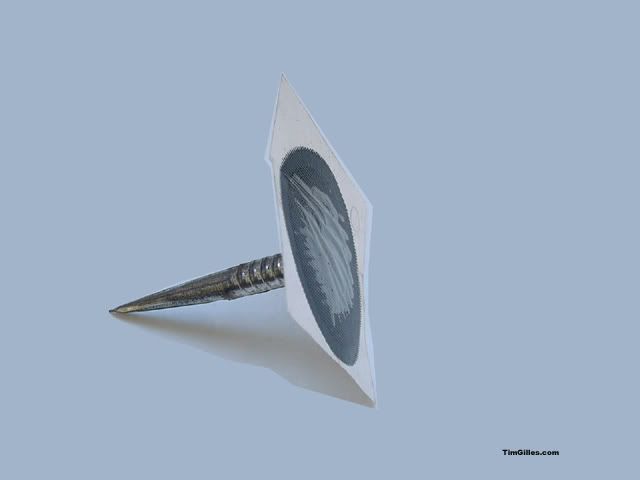
These are the only kind of patch to use, and the only kind a good tire shop will use. The plug not only helps hold the patch in place, but it also serves to seal the cords of the tires so water does not enter the tire and cause deterioration within the tread.

Le Mans Master

Joined: Oct 2004
Posts: 9,369
Likes: 4
From: Zephyrhills, Florida
St. Jude Donor '06-'07-'08-'09-'10-'11-'12-'13
Thread Starter
Racer
Joined: Nov 2007
Posts: 327
Likes: 0
Thanks to everyone for the replies. This is a great site and the responses based on both personal experience and direction to authoritative web pages is greatly appreciated. The local service station used the plug only method, no patch. Since there are two plugs I think I'll either replace the tire or keep it under 100 until such time as new tires are warranted.
Thanks Again to Everyone!!!!!!!!!!!
Thanks Again to Everyone!!!!!!!!!!!

Melting Slicks

Joined: Jan 2005
Posts: 2,409
Likes: 34
From: St. Louis Missouri
You could always take it to a shop that does the Plug/Patch combo and have them redo the current Plugs with the proper Plug/Patch. I had a Michelin PS2 305/30/19 with a Patch that started leaking slowly. Had a shop do the Plug/Patch and haven't had a problem since. At $500 a tire I don't have a problem with the fix.
Corvette Stories
The Best of Corvette for Corvette Enthusiasts

Top 10 Most Expensive Corvettes Ever Sold on Bring A Trailer
Brett Foote
10 Things Every Corvette Owner Needs (2026 Edition)
Michael S. Palmer
8 Most "Only Corvette Owners Understand" Quirks and Problems
Pouria Savadkouei
10 Reasons the C6 Z06 is Still A Performance Benchmark After 20 Years
Joe Kucinski
How Much Horsepower Every Corvette Engine "LOST" in 1972
Joe Kucinski
Top 10 DOs and DON'Ts for Protecting Your Convertible Top!
Michael S. Palmer
Top 10 Most Explosive Corvettes Ever Made: Power-to-Weight Ratio Ranked!
Joe Kucinski
150 hp to 1,250 hp: Every Corvette Generation Compared by the Specs That Matter
Joe Kucinski
8 Coolest Corvette Pace Cars (and Replicas) of All Time
Verdad Gallardo
Melting Slicks


Joined: Feb 2006
Posts: 2,172
Likes: 104
From: Des Moines Iowa
Yep, as others have said, the mushroom shape combination plug/patch, which can only be applied from the inside of the tire, is the way to go for the best / permanent fix, and it is the only recommeded fix by Goodyear.

Racer
Joined: Jan 2003
Posts: 411
Likes: 1
From: Newhall CA
Interesting. I had never seen one of those. With regard to speed, though, I can say this: I had a plug patch (external rubber t-handle cheap-o DIY thing), that was later augmented with an internal patch. The plug sealed the tread and the internal circle patch was the ultimate seal. With the two on the car, I hit 154mph at California Speedway, several times. And was over 100mph for a good length of the track. No issues. When I replaced the set, all still looked perfect.
- Colby
- Colby

Tech Contributor


Joined: Jan 2007
Posts: 19,459
Likes: 1,165
From: Dyer, IN
Thanks to everyone for the replies. This is a great site and the responses based on both personal experience and direction to authoritative web pages is greatly appreciated. The local service station used the plug only method, no patch. Since there are two plugs I think I'll either replace the tire or keep it under 100 until such time as new tires are warranted.
Thanks Again to Everyone!!!!!!!!!!!
Thanks Again to Everyone!!!!!!!!!!!


Advanced
Joined: Mar 2007
Posts: 97
Likes: 0
From: Baxter Minnesota
According to Goodyear, a UHP (ultra high performance) tire that is properly repaired (plug/patch as ref above), and the repaired area is within a specified area of the tire, will retain it's speed rating. Any competent Goodyear dealer could remove the plug and patch it properly. You will be perfectly safe.

Safety Car

Joined: Dec 2004
Posts: 3,526
Likes: 20
From: Santa Fe TX
I have had tires plugged and patched.
Tire shops will normally patch from the inside.
I have also plugged tires myself, with the tire repair kits that use a combination of rubber cement and plugs, and I've never had one leak or come loose.
Guess which one I feel more confident in? The one I did myself, or the one the tire shop does?
Tire shops will normally patch from the inside.
I have also plugged tires myself, with the tire repair kits that use a combination of rubber cement and plugs, and I've never had one leak or come loose.
Guess which one I feel more confident in? The one I did myself, or the one the tire shop does?
Racer
Joined: Aug 2002
Posts: 417
Likes: 1
From: Florida
I run Michelin Pilot sports 285s on the front and 335s on the rear. Kind of expensive to replace. Anyways these tires are screw magnets. When I have a problem I always ask for an inside patch to be used whan I need to have them repaired. The last time I went to T__e K_____m the guy tells me he is going to plug it. I tell him, no way. He tells me to relax and that all their tire patches have a plug combined with the patch that goes on the inside and also plugs the hole, and that no one uses just plane plugs anymore except for bicycles. I guess you have to keep up with technology.

Melting Slicks
Joined: Jul 2006
Posts: 2,332
Likes: 31
From: Silver Spring MD
Michelin PS ZPs are warrented
Check the Michelin website. I did before I bought my PS ZPs. They have road hazzard warranty INCLUDED in the purchase price. I think it is for 2 years or about half of the tread life whichever comes first for FREE REPLACEMENT and proroted therafter. If your 2 holes are a concern get a NEW tire under WARRANTY. BIGHANK
BIGHANK

Pro

Joined: Oct 2007
Posts: 679
Likes: 4
From: TremontonUT UT
There is one thing you need to know with any plug whether it is external or internal. Unless you have a large hole already either plug is going to make the hole bigger. This is done by breaking more cords. The dealers I have done business with patch the inside. I plugged several ATV tires on the trails. I don't like plugs for the reason stated above. I took the tires in and the dealer removed my plugs and installed the internal plugs with the attached patch. All is well now. Later! Frank


Race Director

Joined: Jan 2007
Posts: 16,513
Likes: 4
From: Official Dirty Dozen Member
Started my C5 recently and had a tire sensor reading of 17 lbs. on my left rear Michelin Pilot. The local service station found not 1 but 2 gremlins, a nail and screw. When it rains it pours. He plugged both of the holes. I asked about the reliability of the plugs at speed and he responded that the FHP and local sheriff's office both relied on plugs without problems. This view of reliability varies with my opinion but would like to believe as I do not want to replace the tire as it has plenty of tread left. I drive fairly fast on occasion and do not want to be unsafe but neither do I want to waste money on a new tire or two if it is not necessary. He claims the plug process of today actually creates a chemical bond as strong as the original tire. Any insight on this would be appreciated.