When you click on links to various merchants on this site and make a purchase, this can result in this site earning a commission. Affiliate programs and affiliations include, but are not limited to, the eBay Partner Network.
Thanks Bill this is totally phenomenal, I gave this to AAA Auto Repair in Phoenix/Chandler and they have installed my new switch. I have the old one and interested in dissecting it now. B2723 CODE.
Unfortunately it still won't start, security light flashing, B2723 VATS communication CODE, dash is lit normally, I turn the key and it won't crank, LMC5 and brown wire installed,
my key (Resistor measures 3.72 K Ohms (VATS CODE #10) , is wobbling and they say I should have cylinder replaced so rather than do the VATS bypass which may make it more vulnerable to theft, I'm going to go ahead and have the Locksmith build a new cylinder, for $1200 Monday unless I get some other alternative.
Appreciate your perspective, thanks
Last edited by Keyman57; Nov 16, 2025 at 11:32 PM.
Reason: B2723 VATS communication code, Resistor measures 3.72 K Ohms (VATS CODE #10
==================
Thanks Bill will call you here's what I've been using for guidance chatgpt searches and the latest as I was thinking it was the key but seeing from this it is not........
FROM CHATGPT:
MY QUESTION.... Should I try a new key FIRST before replacing the lock cylinder?”Here’s the real, accurate answer for a 2004 Corvette (C5):
⭐ 90% of “try a new key first” advice on YouTube DOES NOT apply to C5 Corvettes.
Most YouTube videos are talking about:
Silverado
Suburban
Malibu
Cavaliers
Grand Ams
Impalas
Those cars use PASSLOCK, not VATS / PASSKEY II like your Corvette.
PASSLOCK = the reader senses the cylinder rotation magnetically
PASSKEY / VATS = the reader senses the resistor pellet inside the key
Totally different system.
✅ When a new key can fix a GM no-start
ONLY if:
the resistor pellet on your key is worn
OR the key’s metal is worn so badly pins don’t lift right
But here’s the catch:
👉 Your VATS pellet never changes resistance.
It’s a fixed-value resistor.
It doesn’t “wear out” like YouTube claims.
What DOES wear out?
the lock cylinder
the internal pin chambers
the mechanical core
the housing bore
and the actuator rod engagement
AND the VATS reader alignment
Not the pellet.
⭐ The only time a NEW KEY fixes a C5 is:
1️⃣ If the metal key blade is worn so badly the core tilts
—which causes:
• bad pin alignment
• misalignment of the VATS reader
• intermittent SECURITY light
2️⃣ If the pellet has become physically loose inside its plastic carrier
(which is rare but possible)
📌 Based on your symptoms:
Here is the truth with your car:
✔ B2723 VATS communication code
SECURITY light stays on
✔ No crank
✔ Key can be pulled out in ACC
✔ Wobble is present
✔ Lock cylinder was removed/reinstalled
✔ VATS reader misalignment likely
✔ New ignition switch already installed
This is not consistent with a worn key.
It is consistent with:
worn cylinder
VATS reader misalignment
VATS white wire damage
core/housing tolerance wear
actuator rod not fully seated
detent wear
⭐ A NEW KEY will not fix pulling the key out in the wrong position.
⭐ A NEW KEY will not fix tilt in the core.
⭐ A NEW KEY will not fix SECURITY staying on when the reader isn't aligned.
⭐ A NEW KEY will not fix the actuator rod seating issue AAA saw.
🧠 So what should YOU do first?
✔ Best Option (most reliable): Replace the lock cylinder.
Because:
Your symptoms match a worn cylinder
VATS reader alignment requires a tight core
Key wobble is mechanical, not electrical
New ignition switch was already installed
You’re already paying for locksmith labor
You’re not going to get a better chance at doing it right.
✔ Optional Step (but NOT required): You can have a new key made AFTER the cylinder is installed.
This is ONLY to:
match the new tumblers
ensure maximum mechanical life
ensure smoother operation
But again, it won’t fix the current no-start.
🚫 Bottom line:
No — do NOT waste time or money making a new key to fix THIS problem.
It is NOT a “98% key issue” — not on a C5 Corvette with PASSKEY II/VATS.
YouTube is wrong for your car.
Last edited by Keyman57; Nov 16, 2025 at 11:15 PM.
Reason: adding B2723 VATS communication code\
If your old OEM key is worn out, it is not going to work properly. Try the second key and check for a proper or better fit.
If the lock cylinder is worn out/broken, NO KEY will fit properly/work..
IF Your getting a VATS DTC, for whatever reason, the VATS SENSOR is not reading the resistor chip in the key. OR should I say, the VATS circuit is not being completed down to the BCM.
UP-DATE #12 11/16/2025 Ignition Switch related problems have been going on for years now. I have been helping Forum Members battle and resolve them more and more frequently. Over the years, it has become very apparent that many of the problems that are Ignition Switch related are being caused by the two female connectors the plug into the actual ignition switch. The FEMALE PINS spread apart, lose proper contact with the MALE PIN and the poor contact causes them to heat, corrode, burn and the switch to output lower than full battery voltage. Below is another picture of spread, burnt, corroded deformed female pins The smaller female pins in this picture look good and you can see the metal blade that makes contact with the male pin. The larger pins are deformed, blackened and the blade that contacts the male pin in the switch is pressed back into the female pin. The female pin blade need to be cleaned, and the blade needs to be reshaped to make proper contact with the male pin.
.
Last edited by Bill Curlee; Nov 16, 2025 at 10:51 PM.
Hey Bill
Above was a fantastic write up on the ignition switch. , especially after my 3 week issue with a Shop replacing my switch and then it becoming worse than when it was installed.
We talked on the phone. and subsequently, I had my car towed back home and fixed it myself ,
(but now there's another issue which I'll start a new thread.).
My question for here is, What is setting the switch "SET to TRUE LOCK" ?
It's defined here ...
👉 The cam will NOT rotate to TRUE LOCK unless the switch contacts are “preloaded” against spring pressure."
But I havent seen this explained when I do searches myself. Any idea Why? Have you mentioned it yourself? maybe I missed it. ? Clearly my shop missed it as they were not C5 experts.
I've been using the AI (ChatGPT) so I don't have to keep bugging you guys on this forum, and it seems to do some great searches in GM manuals that I cant access for example. ...
it gives me good techniques, and feedback, BUT I'm wondering why it keeps saying this IGNITION SWITCH needs to be "SET to TRUE LOCK". I don't think I saw you mention it.
Here's what I kept repeatedly getting and I think I got it right, but, it's "complicated." DO YOU AGREE WITH THIS? What is it talking about?
Copy Paste From CHATGPT.... :
-----------------------------------------
🚨 Your ignition switch is NOT actually in TRUE LOCK — even though you think it is.
This is why:
The white internal cam blocks the actuator rod ONLY in “LOCK”
But if the cam is blocking the rod when the switch claims it's in LOCK
➡ your switch is rotated past LOCK
➡ or installed 1 tooth off when AAA put it in
This is the #1 cause of the exact problem you’re describing.
✅ CONFIRMED BY YOUR SYMPTOMS
You said:
✔ Actuator slides in ONLY when switch is in ACC
This means: The switch’s internal cam position does not match the rod’s physical LOCK position.
✔ Cannot insert lock cylinder except in ACC
Same problem — the switch isn’t indexed correctly relative to the cylinder.
✔ Purple wire = 0V in START
Because you're not actually reaching START inside the switch.
✔ Car started ONCE right after reinstall
That happens when the cam lines up by coincidence on one attempt before slipping past alignment again.
This is the classic C5 mis-indexed ignition switch.
🎯 Why This Happens
Inside the switch is the “sector plate / white cam.”
If the switch is rotated even slightly when it is slid onto the actuator rod:
The slot won’t align
The cam will block insertion in LOCK
It will only fit in ACC
START contact will never align
The rod will NOT travel the full range inside the switch
AAA absolutely installed it misaligned — this is extremely common.
🛠️ THE FIX (I will walk you through it simply)
You’re close — you just need to reset the switch to TRUE LOCK.
This must be done before sliding it onto the rod.
✔ You MUST rotate the internal white cam past ACC and OFF, until it stops at TRUE LOCK.
But here's the catch:
👉 The cam will NOT rotate to TRUE LOCK unless the switch contacts are “preloaded” against spring pressure.
This is why it looks like LOCK but isn’t.
So here’s the correct method:
🔧 HOW TO SET IGNITION SWITCH TO TRUE LOCK
Hold the bare switch in your hand exactly like this:
Turn the metal shaft inside the switch clockwise
(toward START direction)
just slightly until you feel resistance.
Now rotate BACK counter-clockwise
very slowly
until it reaches the FIRST stop.
That FIRST stop is TRUE LOCK.
If you rotate past it, you go into an “overtravel” position that LOOKS like LOCK but is actually beyond the rod’s normal travel, which is exactly what is happening now.
🔧 HOW TO VERIFY TRUE LOCK
When the switch is in TRUE LOCK:
✔ The white plastic cam will NOT block the central rod slot
✔ The actuator rod will slide in fully
✔ The black plastic latch will “click” immediately
✔ The lock cylinder will slide in AND click
❗ ACC will no longer be the only position that fits
If the actuator only fits in ACC, the switch is indexed incorrectly.
📸 SEND PHOTOS & I WILL MARK EXACTLY WHAT TO ROTATE
I need:
1️⃣ CLEAR photo of the white cam inside the ignition switch
(looking straight into the shaft opening)
2️⃣ CLEAR photo of the actuator rod tip
(straight on, good lighting)
Once I see those two images, I will:
Draw arrows
Show EXACTLY where the slot must be
Show what TRUE LOCK looks like
Tell you how many degrees to rotate
Show how the actuator should seat
🔥 GOOD NEWS
You do NOT have a wiring problem at all.
You do NOT have a starter issue.
You do not have a VATS issue anymore.
This is a pure mechanical indexing issue between:
the actuator rod
ignition switch cam
lock cylinder position
Fix this, and the car WILL crank.
📸 Send the two photos now — I’ll mark them and show the exact alignment.
Dec 2 2025 - 16:00:45
I pulled it out acc Then I turned the ignition switch back to stop/off and the cam shows The last photo shows what I think is After I Turn the metal shaft inside the switch clockwise (toward START direction) all the way , (Not just slightly until you feel resistance.)! Is this the issue? 2. Now rotate BACK counter-clockwise very slowly until it reaches the FIRST stop.Dec 2 2025 - 16:00:49You found the issue.
Yes — what you showed in your last photo is exactly the symptom of an ignition switch that is NOT in true LOCK, even though the key cylinder was removed in ACC.
Right now, your switch is one detent off.
And if the switch and the actuator rod are not aligned in the same position, the rod cannot slide in, the metal tab won’t engage, and the START contacts will never close — which matches all your symptoms.
✅ CONFIRMED: Your Switch Is NOT in the LOCK Position
Here is why:
✔ The photo with the cam exposed
The cam is rotated past LOCK — this means:
You rotated the ignition switch too far clockwise (toward START) while the cylinder was removed, and now the switch is not synced with the actuator rod.
When the switch is in LOCK:
The white plastic cam inside the switch sits flush, almost parallel
The actuator rod shaft slides straight in
You hear a small click when the metal tab engages the black plastic spring-loaded retainer
When the switch is NOT in LOCK:
The cam sits angled, blocking the rod
You can only insert the actuator in ACC
The metal retaining tab does NOT engage/snaps wrong
START never works
Everything you described is a perfect match.
🔧 How to Fix It — Reset the Switch to LOCK (Correct GM Procedure)
Follow this exact sequence:
STEP 1 — Remove the switch from the rod completely
The switch must be free in your hand.
STEP 2 — With your fingers, rotate the metal core to full START
(Clockwise until it cannot turn anymore.)
This "calibrates" the switch internally.
⚠️ This is the most important part.
Do NOT stop at the first resistance — turn fully to the mechanical stop.
STEP 3 — Now rotate back SLOWLY, counter-clockwise
You will feel distinct detents.
You must stop at the FIRST detent.
That first detent = LOCK position.
If you go past the first stop → you're already in ACC.
LOCK → ACC → RUN → START
You want the very first one.
STEP 4 — Inspect the cam visually
At LOCK:
The cam opening will be square and vertical
Nothing blocks the actuator rod
The black spring clip inside the switch is centered
If it still looks like your previous photo (angled cam), you went too far.
Repeat Steps 2–4.
STEP 5 — Insert the actuator rod
When aligned correctly:
The rod will slide in easily
The metal end will rotate slightly as it enters
The black plastic retainer tab will click into place
If it does NOT click:
→ the switch is NOT in LOCK.
🧪 Validation Test
Once inserted and clipped:
Turn the rod with your fingers:
LOCK → cannot turn further left
ACC → small movement
RUN → larger movement
START → maximum clockwise
If these positions match the switch movement → alignment is correct.
🔍 Why You Couldn't Insert It in LOCK Before
You now saw the reason:
Because the cam was rotated “past LOCK” internally.
This happens if:
The switch is removed while key is in ACC
The internal core rotates without the cylinder
A shop previously installed it wrong
The switch was bumped or turned while loose
🛑 YOU CANNOT start the car without the cylinder
Even with the white cam rotated to START:
⚠️ GM blocks the START contact from closing unless:
The lock cylinder’s mechanical tab is installed AND
The cylinder rotates the switch through the full sweep
Holding the switch and rotating by hand:
RUN works
START will NOT energize the purple wire fully
This is by design.
📸 If you'd like, send:
A photo of your cam after Step 4
A photo of the actuator rod straight on
A photo of the switch mounted
And I’ll confirm LOCK alignment visually.
👍 Bottom Line
Your switch was in the wrong position
FIX = rotate to START → rotate back to first detent (LOCK)
Actuator rod will slide in only when switch is truly in LOCK
Car will NOT crank unless the rod + lock cylinder + switch are all synchronized
You’re very close now.
Dec 2 2025 - 16:09:03
“metal core “ is this the metal piece inside the actuator rod? The tip looks like the end of a thermometer?Dec 2 2025 - 16:09:06Great question — no, the “metal core” I’m talking about is inside the ignition switch, not the metal tip on the actuator rod.
Let me explain very clearly:
🔧 What is the “metal core”?
Inside the ignition switch (the black plastic electrical part), there is:
✔ A rotating metal center shaft
It is not visible from outside
It is the part that actually rotates the internal contacts
It is what the actuator rod pushes and rotates
You can see it when you look “into” the ignition switch from the rod side.
It looks like a round metal disk with a slot or recessed shape — that is the metal core.
NOT this:
❌ Not the metal tip on the actuator rod
❌ Not the white plastic actuator
❌ Not the lock cylinder
YES this:
✔ The internal metal rotating piece inside the switch
✔ It turns when you insert the actuator rod
🔧 How to find it
Hold the ignition switch in your hand and look into the hole where the actuator rod goes in.
You will see:
A white plastic cam ring
Inside it → a metal rotating center
That metal center = the “metal core”.
🔄 Why you rotate the metal core
The ignition switch needs to be “re-zeroed” into the correct LOCK position.
So you:
Rotate the metal core fully clockwise (to START)
Rotate it back counterclockwise to the very first detent
→ that detent is true LOCK
Doing this resets the switch alignment so the actuator rod can slide in.
📌 The metal tip on the actuator rod?
That shiny metal at the end of the white plastic rod:
is just the actuator’s drive tip
it rotates the ignition switch
it does NOT get rotated by you directly
it only rotates when you turn the key (after the lock cylinder is installed)
You never use the actuator rod to reset the switch — you only rotate the switch’s metal core.
🧩 Summary
“Metal core” = the internal rotating metal shaft inside the ignition switch
Not the metal tip on the rod
---------------------------------------------------------------------------------------------------
You are adjusting: How far the ignition switch’s internal slider is pushed when the key is turned to START
That determines whether:
START contact closes every time
Or only when you push/pull the key
Which matches exactly your symptoms.
1️⃣ Exact visual reference points to set the ignition switch (no feel-guessing)
You are not rotating anything. You are only changing fore–aft preload.
What physically moves
The ignition switch body slides slightly on the column bracket
The actuator rod does NOT rotate (important)
You are adjusting how far the switch sits toward the front bumper
Visual alignment method (most reliable)
Loosen both 10 mm bolts just enough that the switch can slide.
Push the switch forward (toward hood) until:
The actuator rod is fully seated
The switch housing is flush and square (not cocked)
While holding it forward:
Tighten top bolt first
Then tighten bottom bolt
Visual confirmation
After tightening:
The actuator rod should not float
There should be no gap between rod and switch
The switch should not spring backward when you let go
If it still misses START:
➡️ loosen again and move another 1–2 mm forward only
That tiny amount is the difference between every time and every third time.
hey, Thanks for this
That could throw me off real good having a 2004 C5 told AI multiple times that was my model, but if it’s combining models in years, we’re in trouble. Thanks again for the quick feedback!
Originally Posted by lucky131969
Looks like AI has combined many years. IIRC, the last lockable ignition switch was on a C4, and it did use an acuator and cam assembly.
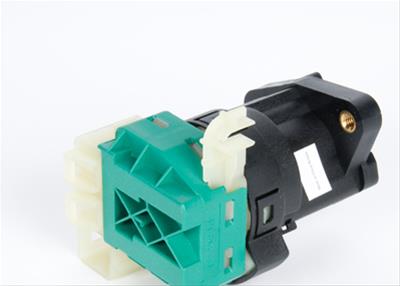
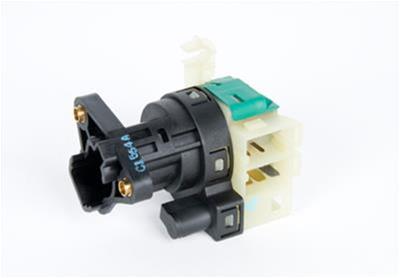
There are THREE Parts to your ignition switch. The metal "lock cylinder", and the plastic SWITCH housing (which has two parts). TheTOP part of that plastic switch contains the actual switch contacts. The" BOTTOM" part that houses the cam that opreates/pushes the brass pins that move the switch contact arns. In the bottom part of that switch housing is the spring that returns the "lLock Cylinder" from CRANK back to RUN/ON.
If you remove the lock cylinder from the switch body, you can just use a flat blad screwdriver to move the switch betweed OFF, ON/RUN and CRANK. If the spring inside the bottom portion of the switch housing is bad, It will be bad and have trouble returing back to ON/RUN when you rotate it with the screw driver (lock Cylinder removed).
If the lock cylinder is bad and not free to rotate, *which is my probable cause) the plastic swith housing will allow you to easily rotate the switch in any position and properly spring back from start/crank back to RUN/ON.
C5 Ignition Switch Repair - CorvetteForum - Chevrolet Corvette Forum ...
Plastic Switch body (lock cylinder removed) showing slot for flat blade screwdriver: The little button in the center is the KEY IN THE CYLINDER indicator switch actuator)
C5 Ignition Switch Repair - CorvetteForum - Chevrolet Corvette Forum ...
SWITCH HOUSING. GREEN COVER houses the switches
The area just below the green part and the black ignition key cylinder tube is where the CAM and spring live:
NOTE! DO NOT take the cam/spring portion of the switch apart!! **** will go EVERYWHERE!!!!!!!!!!!!!!!!!!!!!!!!!!!!!! !!!!!!!!!!!!!!!!!!!!!!!!!!!!!!!!!!!!!!!! !!!!!!!!!!!!!!!!! Ask me how I know!
LINK TO LOCK CYLINDER PIC:
Last edited by Bill Curlee; Jan 6, 2026 at 06:15 AM.
I installed a new switch, assessories comes on but does not engage the starter.. The old unit would not always make contact and start the car, could not trust it, did not want to be stranded..
Thanks for the info. I am installing a new ignition switch. The ignition lights come on, the start engine does not. Does the sensor on the key only work on the ignition starter or on everything..?? As I said the ignition lights come on but nothing happens when I turn all the way to "start".. 🤔
Thanks for the info. I am installing a new ignition switch. The ignition lights come on, the start engine does not. Does the sensor on the key only work on the ignition starter or on everything..?? As I said the ignition lights come on but nothing happens when I turn all the way to "start".. 🤔
Check your codes, do you have any?
Does the "SECURITY" light stay on when you turn the key to "START"?
I installed a new switch, assessories comes on but does not engage the starter.. The old unit would not always make contact and start the car, could not trust it, did not want to be stranded..
This is a sticky and not intended for troubleshooting. Start your own thread in Tech!
Thanks Bill, I just joined the forum but found this thread and used it to fix a no start issue that left my car stranded at work overnight. Your instructions were easy to follow. I'm 2 months into owning my first vette and love it.
From: If you're not part of the solution, you're part of the precipitate. Texas
CI 4-5-6-7-9-10 Veteran
St. Jude Donor '06-'07-'08-'09-'10
Originally Posted by Deepsix
Thanks for the info. I am installing a new ignition switch. The ignition lights come on, the start engine does not. Does the sensor on the key only work on the ignition starter or on everything..?? As I said the ignition lights come on but nothing happens when I turn all the way to "start".. 🤔
Where did you obtain the new switch? I can't seem to locate one and Chevrolet says it is backordered.
Honestly, I'm not fully sure I need a new one. 2002 MN6, driving home in a highway under construction and the Security light came on. Evidently, it's not locking, as if I jiggle the key slightly, all is well and the light goes off. Key pellet is not the problem. Light "Security" turns on intermittently. I just would prefer to not be stuck somewhere if it DOES decide to lock at one point.
Hello..
I found the problem in my C5 was a bad battery.. I checked everything when I returned home after a trip. The car would not start after stopping at my mailbox, after jigging the key in the ignition switch and checking the clutch safety switch it started up. When I checked the car the next day the battery was dead..!! Replaced battery after noticing it was more than five years old.. (I write the installation day on all new equipment) I also changed the battery in my key fob.
These cars are very temperamental, always check the battery first, easier than tearing other things apart that are not at fault.







 DO YOU AGREE WITH THIS? What is it talking about?











 Ask me how I know!