




Voltage Experts...

Instructor

Joined: May 2008
Posts: 149
Likes: 0
From: Twain Harte CA

All instrument panels of old had a voltage regulator which limited the voltage to the gauges at 5.0 volts DC (approximately). If the C5 uses a regulated voltage supply to the gauges and the regulator is failing, you are going to get false readings. Again, not knowing the ins and outs of the C5's electrical system, I may be blowing smoke, but it's a reasonable guess, given past automotive history.
Good Luck!

Thread Starter
Le Mans Master


Joined: May 2006
Posts: 6,774
Likes: 363
From: Midland TX
I'm not sure about the answer to this question. You know for sure now that your frame and engine grounds are both good. The only other answer is a voltage drop somewhere between the "A" lead (output wire from the alternator) and the battery. Not having ever seen the wiring diagrams for the C5, I cannot tell you where the "A" lead ties in (I presume at the starter, like all earlier Chevrolets, but I'm not sure). It also seems as though the PCM is working properly or you'd have no significant charging output whatsoever. So, this may leave only one other consideration, if it applies to our Vettes.
All instrument panels of old had a voltage regulator which limited the voltage to the gauges at 5.0 volts DC (approximately). If the C5 uses a regulated voltage supply to the gauges and the regulator is failing, you are going to get false readings. Again, not knowing the ins and outs of the C5's electrical system, I may be blowing smoke, but it's a reasonable guess, given past automotive history.
Good Luck!
All instrument panels of old had a voltage regulator which limited the voltage to the gauges at 5.0 volts DC (approximately). If the C5 uses a regulated voltage supply to the gauges and the regulator is failing, you are going to get false readings. Again, not knowing the ins and outs of the C5's electrical system, I may be blowing smoke, but it's a reasonable guess, given past automotive history.
Good Luck!

Pro

Joined: Sep 2007
Posts: 735
Likes: 7
From: Bucks County Pa
Charging Problem
I am just wondering if this is not tied to a mechanical problem since I only see the voltage drop when the car physically slows down. Just wonder if maybe it is not the Serpentine belt slipping or maybe the tensioner or idler? The belt is only a year old, but the tensioner and idler are 8 years old? There is no visual indication that I can see, but not sure that does not mean there is an issue?
The system voltage
sense circuit receives battery positive voltage that is Hot At All Times
through a fuse link that is connected to the starter motor. This voltage is
used by the regulator as the reference for system voltage control. .
The fusible link wire that is connected to the solenoid is the sense circuit wire. It feeds the reg the info as to the load conditions. The bat charging wire is connected to the large top terminal of the starter, it sends the current to charge the bat by connecting to the bat cable on that terminal. Logic would suggest that if there were an internal problem with the post's connectivity between the starter and solenoid, the reference signal going back to the volt reg would be inaccurate. If you are able to, it would be a good idea to pull the starter and have a look at the internal connections for burnt or corroded areas. And while you are down there look at the fusible link wire, for corosion or deterioration in the link area, and the connector on the alt.
Good Luck
Last edited by bestvettever; Aug 13, 2008 at 12:57 AM.
Thread Starter
Le Mans Master
Joined: May 2006
Posts: 6,774
Likes: 363
From: Midland TX
The fusible link wire that is connected to the solenoid is the sense circuit wire. It feeds the reg the info as to the load conditions. The bat charging wire is connected to the large top terminal of the starter, it sends the current to charge the bat by connecting to the bat cable on that terminal. Logic would suggest that if there were an internal problem with the post's connectivity between the starter and solenoid, the reference signal going back to the volt reg would be inaccurate. If you are able to, it would be a good idea to pull the starter and have a look at the internal connections for burnt or corroded areas. And while you are down there look at the fusible link wire, for corosion or deterioration in the link area, and the connector on the alt.
Good Luck
Good Luck

Last edited by Choreo; Aug 13, 2008 at 01:25 AM.
Pro
Joined: Sep 2007
Posts: 735
Likes: 7
From: Bucks County Pa
Charging Problems
Here is a photo I took the other day while under the car (I may not have everything labeled correctly). Not sure how to go about repairing a fusible link if that is the problem? Car has not seen much in the way of moisture over the years. I recently removed every ground on the car cleaned and reattached (except G-107) - they all looked like they just rolled off the assembly line before I cleaned them.
Good Luck
Last edited by bestvettever; Aug 13, 2008 at 12:28 PM.
Thread Starter
Le Mans Master
Joined: May 2006
Posts: 6,774
Likes: 363
From: Midland TX
So, sounds like if I need a new starter, it will be out of pocket.
Wish there was a group of photos somewhere showing a C5 starter taken apart showing what everything does? I have seen a couple posts here about how the "bakelite" is what holds the primary terminal rigid, but every single person I have questioned in GM parts departments as well as the Service Advisor today all say that is not the case - that the primary stud is a metal to metal connection and that it is very difficult to round the corners off to the point the stud would actually rotate in the casing? So, I am just confused on that point
Thread Starter
Le Mans Master
Joined: May 2006
Posts: 6,774
Likes: 363
From: Midland TX
If so, then let's see (maybe an oversimplification from a non-electrician)... when the ignition key is first inserted, even though the main starter terminal is HOT (from battery charge only), the grey wire is performing no function at that point. The rust-colored wire connected to the same terminal is monitoring voltage all the time and sending that info back to the alternator for the regulator to use once the engine is running and the starter has done its job. When the ignition key is in the start position, the purple wire on the solenoid causes the battery power to flow through the starter via the large red wire turning the flywheel. When the ignition key is in the ON position, the alternator uses the info it receives from the rust colored wire together with a signal it receives from the PCM that the engine is indeed running to start routing alternator produced voltage back to the battery through the grey wire based upon what the rust-colored wire says it needs. Is that even close - or am I totally in left field?
Last edited by Choreo; Aug 15, 2008 at 12:53 AM.
Corvette Stories
The Best of Corvette for Corvette Enthusiasts

Top 10 Most Expensive Corvettes Ever Sold on Bring A Trailer
Brett Foote
10 Things Every Corvette Owner Needs (2026 Edition)
Michael S. Palmer
8 Most "Only Corvette Owners Understand" Quirks and Problems
Pouria Savadkouei
10 Reasons the C6 Z06 is Still A Performance Benchmark After 20 Years
Joe Kucinski
How Much Horsepower Every Corvette Engine "LOST" in 1972
Joe Kucinski
Top 10 DOs and DON'Ts for Protecting Your Convertible Top!
Michael S. Palmer
Top 10 Most Explosive Corvettes Ever Made: Power-to-Weight Ratio Ranked!
Joe Kucinski
150 hp to 1,250 hp: Every Corvette Generation Compared by the Specs That Matter
Joe Kucinski
8 Coolest Corvette Pace Cars (and Replicas) of All Time
Verdad Gallardo
Team Owner


Joined: Jul 2006
Posts: 22,188
Likes: 4,178
From: Kannapolis NC
The connection may be metal on metal, but something has to insulate that 12 volts from ground. The post can't be connected to the solenoid case, so it has to have some material between the post and the metal. This may not be your problem since you ran a wire to bypass the connection, but it sure looks like you have too many threads showing where your red wire connects. That post will pull through as you tighten if the insulator is burned internally in the solenoid. It should not turn when you torque the nut. I've seen it myself on two occasions and the symptoms were the same as yours. Again, I don't know if yours is the same, since you ran a bypass wire.
Pro
Joined: Sep 2007
Posts: 735
Likes: 7
From: Bucks County Pa
Alt basics
Let's see if I understand this correctly? The smaller Grey Wire carries the output voltage from the Alternator to this post on the starter and then the large Red Wire transfers that same voltage to the Battery? If that is the case, why is the Red Wire so much heavier? Is that because it takes more power to start the car than to keep it running or replenish the battery?
If so, then let's see (maybe an oversimplification from a non-electrician)... when the ignition key is first inserted, even though the main starter terminal is HOT (from battery charge only), the grey wire is performing no function at that point. The rust-colored wire connected to the same terminal is monitoring voltage all the time and sending that info back to the alternator for the regulator to use once the engine is running and the starter has done its job. When the ignition key is in the start position, the purple wire on the solenoid causes the battery power to flow through the starter via the large red wire turning the flywheel. When the ignition key is in the ON position, the alternator uses the info it receives from the rust colored wire together with a signal it receives from the PCM that the engine is indeed running to start routing alternator produced voltage back to the battery through the grey wire based upon what the rust-colored wire says it needs. Is that even close - or am I totally in left field?
If so, then let's see (maybe an oversimplification from a non-electrician)... when the ignition key is first inserted, even though the main starter terminal is HOT (from battery charge only), the grey wire is performing no function at that point. The rust-colored wire connected to the same terminal is monitoring voltage all the time and sending that info back to the alternator for the regulator to use once the engine is running and the starter has done its job. When the ignition key is in the start position, the purple wire on the solenoid causes the battery power to flow through the starter via the large red wire turning the flywheel. When the ignition key is in the ON position, the alternator uses the info it receives from the rust colored wire together with a signal it receives from the PCM that the engine is indeed running to start routing alternator produced voltage back to the battery through the grey wire based upon what the rust-colored wire says it needs. Is that even close - or am I totally in left field?
The large starter terminal connects inside to the coils usually by way of wiring. Loose connections can cause these wires to burn up, of course this would then cause the starter to not work, but there can be enough deterioration in the connections to skew the reference points and the starter still work for a while. Also the reference wire is connected on the solenoid post, and gets its feed reference via inner contacts and wires in the solenoid. I would think the solenoid would be the culprit rather than the starter itself.,(solenoid rebuild kits aren't widely available, due to lack of demand since GM starter solenoids can be had from $13 on up. there's really only one contact switch in a solenoid that wears out to replace, & if you really have to do it yourself, removing the two bolts that hold the plastic end of the solenoid on, will reveal a springloaded set of contacts. you will likely have to fabricate the parts yourself, or just spend the $13 bux & get a new one at autozone).
Is this the answer, possibly, that is why I suggest pulling the starter and getting a look at the inside of it if possible, before buying a new one.. As for the dealers reference to the warranty not covering this situation, I can only say that charging at 11 or 12 volts is not going to keep the battery functional for long. Even 13 volts is not enough to keep a battery fully charged unless the rides are very long.
Good Luck
Last edited by bestvettever; Aug 15, 2008 at 05:08 PM.

Tech Contributor


Joined: Dec 1999
Posts: 32,910
Likes: 2,402
From: Anthony TX
CI 6,7,8,9,11 Vet
St. Jude Donor '08
Why replace the entire starter??? Just replace the solenoid. There like 30-40 bucks and it secured with three small screws. I got mine from a starter alternator repair shop. I have the old one off my Z and I will take picts of it and then diesect it for you.
The new solenoid solved my intermittant starting issues.
I will do it as soon as I can. Im on a tight time line to finish up suspension work n our 71 Coupe.
Bill
Just replace the solenoid. There like 30-40 bucks and it secured with three small screws. I got mine from a starter alternator repair shop. I have the old one off my Z and I will take picts of it and then diesect it for you. The new solenoid solved my intermittant starting issues.
I will do it as soon as I can. Im on a tight time line to finish up suspension work n our 71 Coupe.
Bill
Thread Starter
Le Mans Master
Joined: May 2006
Posts: 6,774
Likes: 363
From: Midland TX
Is this the answer, possibly, that is why I suggest pulling the starter and getting a look at the inside of it if possible, before buying a new one.. As for the dealers reference to the warranty not covering this situation, I can only say that charging at 11 or 12 volts is not going to keep the battery functional for long. Even 13 volts is not enough to keep a battery fully charged unless the rides are very long.
Good Luck
Good Luck
Thread Starter
Le Mans Master
Joined: May 2006
Posts: 6,774
Likes: 363
From: Midland TX
Why replace the entire starter??? Just replace the solenoid. There like 30-40 bucks and it secured with three small screws. I got mine from a starter alternator repair shop. I have the old one off my Z and I will take picts of it and then diesect it for you.
The new solenoid solved my intermittant starting issues.
I will do it as soon as I can. Im on a tight time line to finish up suspension work n our 71 Coupe.
Bill
Just replace the solenoid. There like 30-40 bucks and it secured with three small screws. I got mine from a starter alternator repair shop. I have the old one off my Z and I will take picts of it and then diesect it for you. The new solenoid solved my intermittant starting issues.
I will do it as soon as I can. Im on a tight time line to finish up suspension work n our 71 Coupe.
Bill
I tried O'Reileys for a solenoid, but they said it was not available as a separate part? I will try some other sources.
PS - I vaguely remember replacing my suspension in my '71 about 30 some years ago! Ah, the good old days!
Pro
Joined: Sep 2007
Posts: 735
Likes: 7
From: Bucks County Pa
Charging Problems
)..Maybe some of the other electrical guys like BC and Black and others will chime in on this. So if the sense wire is actually getting its reference voltage from the tdr circuit, you could take a look at the tdr relay, and also the connector in the underhood fuse block where the purple wire goes in and comes out on the other side, I assume through some kind of connector. Also the connector going to the ip fuse block and specifically the pin that corresponds to fuse 52. The more you look at these circuits the more you come up with, and unfortunatly I don't have an overall view of the entire circuit, the schematics in the fsm have portions of the entire circuit, and you have to piece them together.
Below is an article I found that explains the alt a bit better.
Good Luck
++++++++++++++++++++++++++++++++++
Alternators Are The Heart
Of Import Electrical Systems
Edited from an article by Gary Goms, ImportCar Magazine, April 2004
In current SAE J1930 terminology, the "alternator" is now being referred to as a "generator." Of course, this isn't news for many import technicians because many imports have always been equipped with "generators" for several years. By either name, the alternator's job has definitely become more complex during the past decade. Years ago, the typical import vehicle could "live" very happily with 40 amperes of electrical current, which was enough to power the ignition, fuel and lighting systems. Today, that threshold is rapidly advancing toward 100 amperes of current which, among other things, must power innovations like heated seats, heated glass, sound systems, electronic power steering, air injection pumps, steering, braking and valve-train controls.
Even more critical, the advent of electronic automatic overdrive transmissions is keeping engine speeds well below 2,000 rpm at highway speeds. If the alternator can't keep the battery fully charged during periods of high accessory use at low engine speeds, the battery will become partially discharged. When battery voltage drops below 9.6 volts during cranking, the result may be that the electric fuel pump and electronic fuel injection fails to supply enough fuel and the electronic ignition enough spark for a quick start.
Precise voltage control is also critical because charging rates in excess of 17 volts may damage delicate electronics and on-board computer systems. More recently, at least one import manufacturer has reduced that threshold to as low as 16 volts. So, in the strictest sense, the alternator has become the heart of the modern import electrical system because it must maintain very precise voltage levels throughout the vehicle's electrical system during a wide variety of driving conditions.
THE CHEMISTRY OF ALTERNATORS
It's important to understand the differences between the chemical and electro-mechanical aspects of the charging system. The battery, which is the chemical storage component of the team, initiates the charging cycle by using chemical energy to crank the engine and supply field voltage to the alternator. The alternator, which is the electro-mechanical component of the team, takes over by using engine torque to generate enough electrical current to keep the engine and vehicle accessories running properly, while at the same time replenishing the current originally drawn from the battery for starting. By working together, the battery and alternator maintain the system voltage at levels that allow the vehicle's electronics systems to efficiently manage vehicle operations.
In order to keep the electrical system functioning at peak performance, the alternator must be able to generate different amounts of amperage at very specific voltage levels. Keeping in mind that the battery is a chemical device, alternator voltage regulators are designed to increase charging voltage (Example: 14.7 volts) at sub-freezing temperatures when the chemical activity in the battery is low.
At ambient temperatures above 70° F, the voltage regulator reduces charging voltage (Example: 13.7 volts) to prevent the battery from evaporating the electrolyte. At room temperatures of about 70° F, the charging voltage generally should be about 14.2 volts, which is enough to maintain a full charge without evaporating electrolyte.
With that said, import manufacturers publish battery and alternator specifications that fit specific vehicle platforms. Factors that may affect charging voltage specifications are the chemical characteristics of the OEM-spec battery, the voltage drop occurring over the length of the cable connecting the alternator and the battery, and the physical location of the battery within the vehicle platform itself. A battery mounted in the rear of a vehicle, for example, may require a slightly higher charging voltage than one mounted in the engine compartment.
OPERATING PRINCIPLES
In the most basic terms, the alternator consists of a rotating magnetic field (the rotor) turning inside a stationary winding (the stator). The magnetic lines of force generated by the rotor are "cut" by the stator, which produces "AC" or alternating current that changes direction of flow through the stator windings as the stator is exposed to various phases of the rotor's magnetic field.
Since a lead-acid storage battery operates only on direct current, the alternating current produced by the stator is rectified into "DC" or direct current by using three positive and three negative diodes attached to the stator windings. Because a diode allows current to flow in only one direction, the diodes rectify the AC into DC by "clipping" the undesired positive or negative current flows. The result is that alternating current flowing in either direction is rectified into direct current flowing in one direction.
The current flow from the alternator is controlled by a voltage regulator. The regulator is connected to the rotor via carbon brushes that seat on copper slip rings mounted on the rotor shaft. The regulator controls the degree of magnetization in the rotor by regulating the amount of current flowing into the rotor.
In order to control alternator output, the voltage regulator must accurately sense the battery voltage level (B+). When the regulator senses a low B+ level, it increases the field current flow through the rotor assembly. When the desired voltage level is reached, the regulator reduces the field current flow through the rotor.
Voltage regulators can be mounted remotely on the vehicle firewall or fender, or mounted internally in the engine management computer or the alternator itself. Obviously, the remotely mounted voltage regulators are less able to accurately sense B+ voltage because of the inevitable effects of corrosion and potential wiring defects. Internally mounted regulators, on the other hand, are protected by the computer or alternator housing and are much less vulnerable to either corrosion or wiring defects.
DIAGNOSTIC GUIDELINES
Most alternator failures are indicated by a red warning light on the instrument panel, by dim headlamps, or by hard starting caused by a partially discharged battery. When testing alternator output, it's important to perform any test with the alternator and the battery warmed to room temperature.
Because alternator systems may vary in design and application, it's very important to have the manufacturers' specifications and procedures at hand before proceeding with a definitive diagnosis. Many Honda alternators, for example, are based on a load-sensing system that may require the headlamps to be turned on before the alternator begins to charge.
When testing alternator output, remember that the most accurate procedure is to place the tester's inductive amp probe on the B+ wire as close to the alternator as possible. If the probe is placed at or near the battery, the specified charging rate will be minus about 15 amps (refer to specifications) of current required to power the fuel pump, ignition system and alternator field.
Testing the condition of the battery is the most important step in diagnosing any alternator problem. Keep in mind that the alternator charges against internal resistance that's present in any good battery. A battery with a shorted cell will offer less resistance and therefore cause the alternator to charge at an unusually high amperage rate. On the other hand, a battery with badly sulfated plates will offer too much resistance and will cause the alternator to charge at an abnormally low amperage rate.
If the alternator isn't charging or field current isn't present at the alternator's field connector, always begin a diagnosis by testing the alternator fuse located in the underhood or instrument panel fuse box. If B+ voltage isn't available at the alternator B+ terminal, test the continuity of the fusible links located near the starter or battery.
If the charging rate is low, inspect belts for slippage caused by belt or pulley wear, oil contamination, a defective tensioning device or a loose belt adjustment. Remember also that low charging voltage can be caused by a shorted or open-circuit diode. A bad diode is indicated by excessive "ripple" on a charging system analyzer or 250 millivolts or more of AC electricity present at the alternator B+ terminal.
If the charging rate is intermittently absent, suspect worn or sticking alternator brushes, broken field wires or loose field connectors. While an intermittent overcharge condition is extremely rare, its presence is indicated by premature headlamp failure and excessive gassing at the battery vent. In most cases, an overcharge condition is caused by a defective voltage regulator or an intermittent open B+ reference voltage circuit. In all cases, follow the import manufacturer's wiring diagrams and recommended troubleshooting procedures in order to ensure accurate, trouble-free alternator diagnosis.
Thread Starter
Le Mans Master
Joined: May 2006
Posts: 6,774
Likes: 363
From: Midland TX
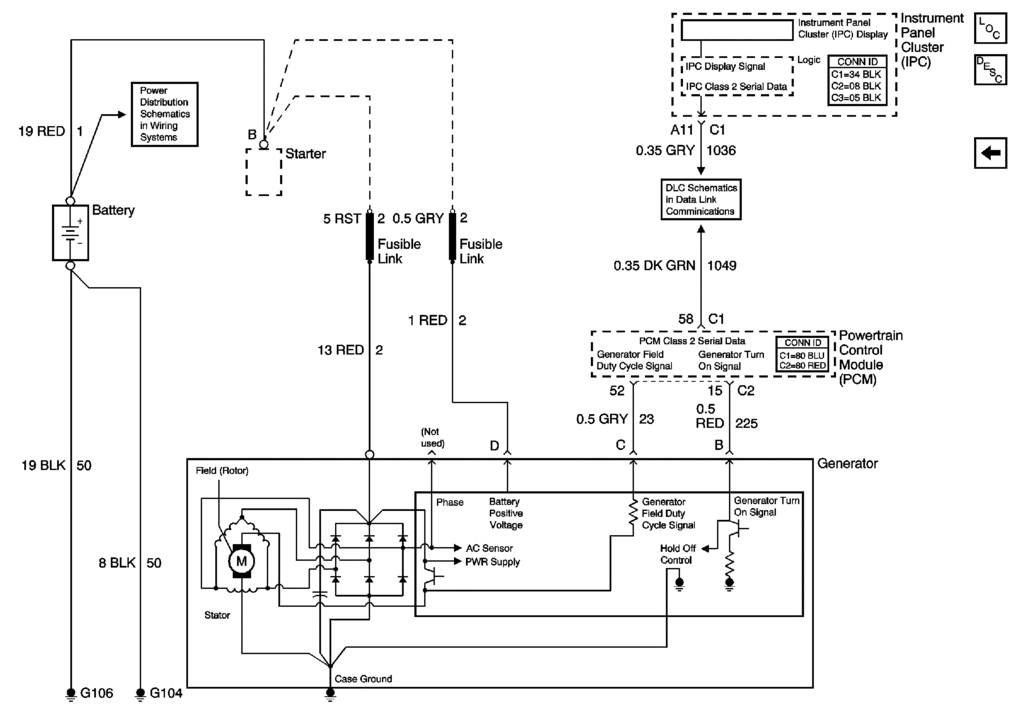
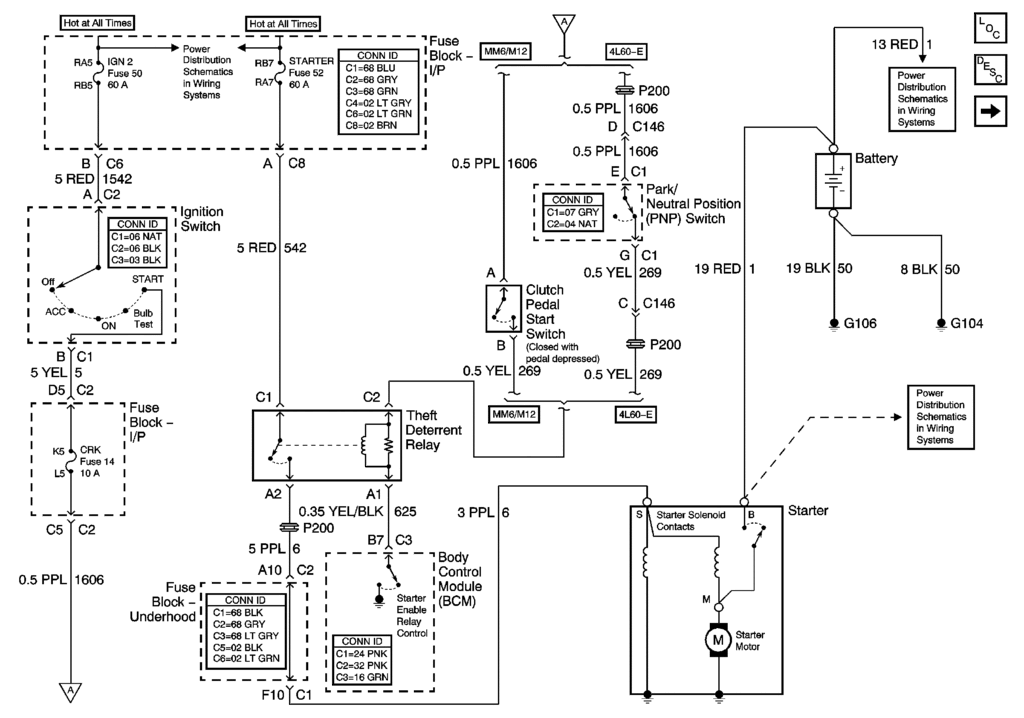
Hi, I'm going to throw another idea at you, because I can't remember if you addressed the tdr issue in the past posts. As I've been studying the wiring schematics. It appears to me that the sense wire on the solenoid is actually getting its reference current from the power source in the ip fuse block through fuse #52 and then via a red wire through the tdr coming out as a purple wire to the solenoid, which is on the same post with the sense wire. It would not make sense,(no pun intended), for the sense wire to get it's signal from the starter batt wire, because once the engine is running the starter contact opens. But the tdr remains closed and sending a hot at all times signal. (The system voltage sense circuit receives B+ voltage that is Hot At All Times through a fuse link that is connected to the starter. This voltage is used by the regulator as the reference for system voltage control.
)..Maybe some of the other electrical guys like BC and Black and others will chime in on this. So if the sense wire is actually getting its reference voltage from the tdr circuit, you could take a look at the tdr relay, and also the connector in the underhood fuse block where the purple wire goes in and comes out on the other side, I assume through some kind of connector. Also the connector going to the ip fuse block and specifically the pin that corresponds to fuse 52. The more you look at these circuits the more you come up with, and unfortunatly I don't have an overall view of the entire circuit, the schematics in the fsm have portions of the entire circuit, and you have to piece them together.
Below is an article I found that explains the alt a bit better.
)..Maybe some of the other electrical guys like BC and Black and others will chime in on this. So if the sense wire is actually getting its reference voltage from the tdr circuit, you could take a look at the tdr relay, and also the connector in the underhood fuse block where the purple wire goes in and comes out on the other side, I assume through some kind of connector. Also the connector going to the ip fuse block and specifically the pin that corresponds to fuse 52. The more you look at these circuits the more you come up with, and unfortunatly I don't have an overall view of the entire circuit, the schematics in the fsm have portions of the entire circuit, and you have to piece them together.
Below is an article I found that explains the alt a bit better.
Pro
Joined: Sep 2007
Posts: 735
Likes: 7
From: Bucks County Pa
Charging Circuit
QUOTE-Is there a sense wire on the solenoid? Looking at my photo, I was thinking that the purple "start" wire was the only wire on the solenoid post? I think the two alternator fusible links and the battery + are all three on the same starter terminal? Quote...
Hi, It's hard to tell from the photo, but the schematic shows the 3 wires , Batt, charging, and sense wire going to the starter post. So I got under my car and with the help of mirrors and a good light took a closer look. It does appear that the 3 wires do go to the starter post. So that makes my recent point not applicable about the tdr and such. But it also makes the argument about the internals of the starter post, and solenoid connection not applicable to your problem. If the 3 wires are on the one post, the only problem there would seem to only be the cleanliness and tightness of the connection. If the 3 wires are clean and tight the inner post connections shouldn't make a difference to the charging reference, but only to the ability to start, which you say is not a problem. So back to the drawing board. I think at this point I would have to wire a known good voltmeter to the batt connections and run the wires inside my car and drive for a while with the meter connected and compare the dic and guage readings to my meter to see if there actually is a problem. And if there truly is a problem and you know for sure that all the connections are clean and tight, and the battery is not heavily sulphated, then I would be looking for a new alt and reg, even though I know you say they have already tried 2 new ones. The only other possibility I can think of are the batt cables themselves. I remember having an old pontiac that kept killing the battery, and eventually wouldn't start when the battery would get weak. So in the way of the times back then I replaced the gen, and then the reg, and then the starter, and never replaced the cables because they looked clean. Finally while hanging around the gas station with repair bays(remember them), that a bunch of us used to hang around and discussing it amongst the crowd, an old mechanic,(now called techs), said I should replace the batt cables, I said why , they look clean. he said cut the cover off and look in between wire strands . So we replaced the both cables and then ripped off the cover and sure enough there was what looked like white powder from acid migration all in between the strands of wire about a few inches up from the ends covering the entire length. He was an old guy that most of us thought was not even breathing most of the time, but he had forgotten more than most of us knew. He taught me that electric current is transported on the surface of wire, that is why they use stranded cable as opposed to solid cable,(more surface area for the current to use), and all the acid corosion between the strands was causing a lot of resistance, so the battery was going dead . Any way the car,(59 Bonneville Convertible that I wish I still had), ran fine after that and I learned to never take things for granted and look at all possibilities. Thanks for your indulgence of an old guys story.
Good Luck
Hi, It's hard to tell from the photo, but the schematic shows the 3 wires , Batt, charging, and sense wire going to the starter post. So I got under my car and with the help of mirrors and a good light took a closer look. It does appear that the 3 wires do go to the starter post. So that makes my recent point not applicable about the tdr and such. But it also makes the argument about the internals of the starter post, and solenoid connection not applicable to your problem. If the 3 wires are on the one post, the only problem there would seem to only be the cleanliness and tightness of the connection. If the 3 wires are clean and tight the inner post connections shouldn't make a difference to the charging reference, but only to the ability to start, which you say is not a problem. So back to the drawing board. I think at this point I would have to wire a known good voltmeter to the batt connections and run the wires inside my car and drive for a while with the meter connected and compare the dic and guage readings to my meter to see if there actually is a problem. And if there truly is a problem and you know for sure that all the connections are clean and tight, and the battery is not heavily sulphated, then I would be looking for a new alt and reg, even though I know you say they have already tried 2 new ones. The only other possibility I can think of are the batt cables themselves. I remember having an old pontiac that kept killing the battery, and eventually wouldn't start when the battery would get weak. So in the way of the times back then I replaced the gen, and then the reg, and then the starter, and never replaced the cables because they looked clean. Finally while hanging around the gas station with repair bays(remember them), that a bunch of us used to hang around and discussing it amongst the crowd, an old mechanic,(now called techs), said I should replace the batt cables, I said why , they look clean. he said cut the cover off and look in between wire strands . So we replaced the both cables and then ripped off the cover and sure enough there was what looked like white powder from acid migration all in between the strands of wire about a few inches up from the ends covering the entire length. He was an old guy that most of us thought was not even breathing most of the time, but he had forgotten more than most of us knew. He taught me that electric current is transported on the surface of wire, that is why they use stranded cable as opposed to solid cable,(more surface area for the current to use), and all the acid corosion between the strands was causing a lot of resistance, so the battery was going dead . Any way the car,(59 Bonneville Convertible that I wish I still had), ran fine after that and I learned to never take things for granted and look at all possibilities. Thanks for your indulgence of an old guys story.
Good Luck
Thread Starter
Le Mans Master
Joined: May 2006
Posts: 6,774
Likes: 363
From: Midland TX
QUOTE-So that makes my recent point not applicable about the tdr and such. But it also makes the argument about the internals of the starter post, and solenoid connection not applicable to your problem. If the 3 wires are on the one post, the only problem there would seem to only be the cleanliness and tightness of the connection. If the 3 wires are clean and tight the inner post connections shouldn't make a difference to the charging reference, but only to the ability to start, which you say is not a problem.
I have decided to attack why the inside gauges are so far off first (by at least .5V all the time when compared to my multimeter). Looking at BCs diagram I see the Grey wire coming out of terminal "C" on the alternator is what feeds the signal to the PCM which in turn sends the signal to the gauges somehow. WE KNOW THERE IS A PROBLEM HERE since the multimeter reads say 13.7 at the alternator and the gauges inside read say 13 at the same time. What would cause this discrepancy?

Melting Slicks


Joined: Aug 2006
Posts: 2,475
Likes: 97
From: KY/TN
St. Jude Donor '13-'14-'15-'16
I have decided to attack why the inside gauges are so far off first (by at least .5V all the time when compared to my multimeter). Looking at BCs diagram I see the Grey wire coming out of terminal "C" on the alternator is what feeds the signal to the PCM which in turn sends the signal to the gauges somehow. WE KNOW THERE IS A PROBLEM HERE since the multimeter reads say 13.7 at the alternator and the gauges inside read say 13 at the same time. What would cause this discrepancy?
Even the Tech2 gives me different readings for battery and igintion voltage, than what my multimeter and Instrument Panel give.
At this point I just believe the gauge itself is the culprit....
Pro
Joined: Sep 2007
Posts: 735
Likes: 7
From: Bucks County Pa
Charging Problems
This was my thinking as well. If all three wires are tight on the starter post, that should work even if the post fell out of the starter all together? Of course, I guess there is a possibility that the post may be partially grounding inside the starter? But if that were the case, why would it only do it when I come to a stop and then quickly rise back up?
I have decided to attack why the inside gauges are so far off first (by at least .5V all the time when compared to my multimeter). Looking at BCs diagram I see the Grey wire coming out of terminal "C" on the alternator is what feeds the signal to the PCM which in turn sends the signal to the gauges somehow. WE KNOW THERE IS A PROBLEM HERE since the multimeter reads say 13.7 at the alternator and the gauges inside read say 13 at the same time. What would cause this discrepancy?
I have decided to attack why the inside gauges are so far off first (by at least .5V all the time when compared to my multimeter). Looking at BCs diagram I see the Grey wire coming out of terminal "C" on the alternator is what feeds the signal to the PCM which in turn sends the signal to the gauges somehow. WE KNOW THERE IS A PROBLEM HERE since the multimeter reads say 13.7 at the alternator and the gauges inside read say 13 at the same time. What would cause this discrepancy?
If the dmm reads 13.7 at idle that is mostly normal, have you been able to wire it in and check it at speeds and at a stoplight.
Good Luck