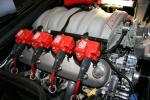



Changing Plug wires

Tech Contributor


Joined: Dec 2003
Posts: 19,384
Likes: 87
From: Horncastle Lincolnshire, England
2023 C5 of the Year Finalist - Unmodified

Is this any use?
Plug Change Tips
Tmqdoc1
First give credit where credit is due. I learned a great deal from the search function. However, in the process today, I learned some things that I have not found posted (which doesn’t mean they aren’t somewhere on the forums but I didn’t see them). Some of these things will be obvious but I want someone that doesn't know what they are doing to hopefully learn from this or at least get some helpful tips.
Tools needed: Good 3/8 socket wrench best if it can swivel at the head like the craftsman model (others may do this as well). 3/8 (ratchet size) spark plug socket - should be 5/8 (plug size). If you can find one with a built-in swivel, that may work best. If not just use a 3/8 swivel. One or two long and short socket wrench extensions. Small and large channel lock pliers and or large regular pliers. Long straight screwdriver. Dielectric grease and Anti-seize (any automotive store should have them) A good work light. I use a fluorescent trouble light (looks like a one-foot long tube). A towel or fender cover to protect your finish as you rub up against it. Masking tape. Gloves if you like. Also I wear shop glasses although this project it really isn’t necessary. Spark plug gapper. Rags to wipe off your hands.
Plugs and wires:
AC-Delco Irridium plugs (AC Delco part number 41-985) should be gapped at .040 most of mine were at .038 so just double check all of them. I use the little chrome round gap tool and just slide the plug around until it reached .040 push easy as possible to get it to the desired point and dont bend it unless you know what you are doing.
GM Performance kit (red wires) part #12495519
Plugs should be less than $7 a piece (usually near $6)
Wires should be no more than $60 and closer to $50
First if this is the first plug change for the car or first in a long time or your first time, Buy the red performance GM wires as everybody has suggested. They are only $50. We will get to why later.
Don’t freak out when you open the wires box. They are all the same size as they just run from a coil over each cylinder and down to the plug.
Before starting make sure the motor is cold. I have always done this early morning on the weekend.
First you will have to remove the black plastic pieces that read corvette. These are attached with clips so just pull firmly and they will come off. The driver’s side is a little tricky and you will have to gently bend it enough to separate it at the slit in the plastic to get around the braided hose. Take your time it will come out. With these out my valve covers were a little greasy so I sprayed some engine degreaser on the motor and simple green on the rest of the engine compartment. I waited 5-10 minutes and then hosed it off well with water. No don’t do this if you don’t have a leave blower or some compressed air to blow all the water out. Water sitting around on the engine or around the electrical connection is not good. But I have been using this method for 30 years and have never had a problem. Still others may warn against the water.
Next, I didn’t have a 3/8 plug socket, so I had to use a 1/2 to 3/8 reducer and then a swivel.
**If you can find a 3/8 plug socket with a built-in swivel that would be best. I couldn’t find one here. I swivel directly on the 3/8 socket plug would be the next best thing.
Now, with that said, removing the driver side plug closest to the firewall is the most difficult so I started there. The swivel is a must. I don't know if I needed to but I used the swivel on all the drivers side plugs.
**Removing the plug wires was the most difficult portion for me. I only saved 2 wires but I replaced all wires anyway.
Well I'll tell you how I finally removed the wires and hopefully this will help you. With the back drivers plug make sure you rotate the hose on the front of the big black thing ... Brake master? .... clockwise to move it out of your way. Also, disconnect the plug from the coil first. You will see a metal cylinder surrounding the plug wire. This a heat shield do not bend it. With very long pair of pliers or long channel lock pliers you can grasp the cylinder gently and push it towards the motor leaving more exposed plug wire. Now especially with the drivers side there is not a lot of room to pull, rotate, or move the wire back and forth to loosen it. IMPORTANT. Therefore, I grasped as large a portion of the plug and possible and while holding it tightly placed a large long straight screwdriver into the top of the rubber plug and pried the plug wire away from the motor. It take a little time but my wires were so tight it was the only way I could remove them. The passenger side was removed with only a small channel lock pliers twisting and turning as I pulled away from the motor.
Once again regarding plug removal I used the swivel on all drivers side plugs and just a long handle socket wrench with a handle the swivels away from the head of the wrench.
Once the plug is a little loose it is usually easier to just turn it out by hand.
**I found that by wrapping several rounds of masking tape around the socket (away from the plug end or closest to the wrench end) That it was easier to turn than the slick geasy chrome finish. This also helps with placing the new plug in. Pay attention to the angle and position of the plug when taking it out. It will go in easier than you think. Once you get it hand tight you don’t need much more with the wrench. With the swivel it would have been very inaccurate for me to use a torque wrench. You may be fine with it.
Regarding replacing the plugs. If you do it this way you will thank me when you do it again .... place a thin film of "dielectric grease" on the end of the plug that will snap into the wire and some over the white ceramic portion as well. Next put the plug into the socket and place a thin film of "antiseize" on the threads and spread it out. I also put some on the outside of the but before putting on the heat shield. I then gave the shielf a few spins.
When replacing the wires make sure you hear or feel a good snap at the plug and the coil.
Now with that drivers firewall plug I found it easiest to use a telescoping magnet to pick up the socket as I guided the plug socket swivel extension assembly into place I then turned it a few times and with the swivel and extension I had to move it around a little to find the easiest position for it to turn.
Of note, over the valve cover next to the firewall on the drivers side was what looked like a breather valve or something and it was almost out so I pushed that in before continuing. So before you start take a good look around and make sure everything looks connected and that nothing is loose. Good Idea to do that when you are done too.
Passenger side I could just remove the wires with the small channel locks. I may have used the screwdriver for leverage on the plugwire closest to the firewall but not the others. Now I started it up and ran it a little with the plastic "corvette" covers off just in case something was wrong I wouldn’t have to remove those again.
Remember whether or not you plan on replacing wires, for $50 you can’t beat the good feeling you'll have if one breaks. Also, you may not have the difficulty I had removing wires but if you do you will be prepared. Oh I also ran fuel cleaner through my system and changed oil before changing the plugs (just my preferenc). Make sure to wipe everything down when you are done. A corvette motor should never be dirty. Also, remember, don’t clean it with water unless you can immediately blow it away.
Plug Change Tips
Tmqdoc1
First give credit where credit is due. I learned a great deal from the search function. However, in the process today, I learned some things that I have not found posted (which doesn’t mean they aren’t somewhere on the forums but I didn’t see them). Some of these things will be obvious but I want someone that doesn't know what they are doing to hopefully learn from this or at least get some helpful tips.
Tools needed: Good 3/8 socket wrench best if it can swivel at the head like the craftsman model (others may do this as well). 3/8 (ratchet size) spark plug socket - should be 5/8 (plug size). If you can find one with a built-in swivel, that may work best. If not just use a 3/8 swivel. One or two long and short socket wrench extensions. Small and large channel lock pliers and or large regular pliers. Long straight screwdriver. Dielectric grease and Anti-seize (any automotive store should have them) A good work light. I use a fluorescent trouble light (looks like a one-foot long tube). A towel or fender cover to protect your finish as you rub up against it. Masking tape. Gloves if you like. Also I wear shop glasses although this project it really isn’t necessary. Spark plug gapper. Rags to wipe off your hands.
Plugs and wires:
AC-Delco Irridium plugs (AC Delco part number 41-985) should be gapped at .040 most of mine were at .038 so just double check all of them. I use the little chrome round gap tool and just slide the plug around until it reached .040 push easy as possible to get it to the desired point and dont bend it unless you know what you are doing.
GM Performance kit (red wires) part #12495519
Plugs should be less than $7 a piece (usually near $6)
Wires should be no more than $60 and closer to $50
First if this is the first plug change for the car or first in a long time or your first time, Buy the red performance GM wires as everybody has suggested. They are only $50. We will get to why later.
Don’t freak out when you open the wires box. They are all the same size as they just run from a coil over each cylinder and down to the plug.
Before starting make sure the motor is cold. I have always done this early morning on the weekend.
First you will have to remove the black plastic pieces that read corvette. These are attached with clips so just pull firmly and they will come off. The driver’s side is a little tricky and you will have to gently bend it enough to separate it at the slit in the plastic to get around the braided hose. Take your time it will come out. With these out my valve covers were a little greasy so I sprayed some engine degreaser on the motor and simple green on the rest of the engine compartment. I waited 5-10 minutes and then hosed it off well with water. No don’t do this if you don’t have a leave blower or some compressed air to blow all the water out. Water sitting around on the engine or around the electrical connection is not good. But I have been using this method for 30 years and have never had a problem. Still others may warn against the water.
Next, I didn’t have a 3/8 plug socket, so I had to use a 1/2 to 3/8 reducer and then a swivel.
**If you can find a 3/8 plug socket with a built-in swivel that would be best. I couldn’t find one here. I swivel directly on the 3/8 socket plug would be the next best thing.
Now, with that said, removing the driver side plug closest to the firewall is the most difficult so I started there. The swivel is a must. I don't know if I needed to but I used the swivel on all the drivers side plugs.
**Removing the plug wires was the most difficult portion for me. I only saved 2 wires but I replaced all wires anyway.
Well I'll tell you how I finally removed the wires and hopefully this will help you. With the back drivers plug make sure you rotate the hose on the front of the big black thing ... Brake master? .... clockwise to move it out of your way. Also, disconnect the plug from the coil first. You will see a metal cylinder surrounding the plug wire. This a heat shield do not bend it. With very long pair of pliers or long channel lock pliers you can grasp the cylinder gently and push it towards the motor leaving more exposed plug wire. Now especially with the drivers side there is not a lot of room to pull, rotate, or move the wire back and forth to loosen it. IMPORTANT. Therefore, I grasped as large a portion of the plug and possible and while holding it tightly placed a large long straight screwdriver into the top of the rubber plug and pried the plug wire away from the motor. It take a little time but my wires were so tight it was the only way I could remove them. The passenger side was removed with only a small channel lock pliers twisting and turning as I pulled away from the motor.
Once again regarding plug removal I used the swivel on all drivers side plugs and just a long handle socket wrench with a handle the swivels away from the head of the wrench.
Once the plug is a little loose it is usually easier to just turn it out by hand.
**I found that by wrapping several rounds of masking tape around the socket (away from the plug end or closest to the wrench end) That it was easier to turn than the slick geasy chrome finish. This also helps with placing the new plug in. Pay attention to the angle and position of the plug when taking it out. It will go in easier than you think. Once you get it hand tight you don’t need much more with the wrench. With the swivel it would have been very inaccurate for me to use a torque wrench. You may be fine with it.
Regarding replacing the plugs. If you do it this way you will thank me when you do it again .... place a thin film of "dielectric grease" on the end of the plug that will snap into the wire and some over the white ceramic portion as well. Next put the plug into the socket and place a thin film of "antiseize" on the threads and spread it out. I also put some on the outside of the but before putting on the heat shield. I then gave the shielf a few spins.
When replacing the wires make sure you hear or feel a good snap at the plug and the coil.
Now with that drivers firewall plug I found it easiest to use a telescoping magnet to pick up the socket as I guided the plug socket swivel extension assembly into place I then turned it a few times and with the swivel and extension I had to move it around a little to find the easiest position for it to turn.
Of note, over the valve cover next to the firewall on the drivers side was what looked like a breather valve or something and it was almost out so I pushed that in before continuing. So before you start take a good look around and make sure everything looks connected and that nothing is loose. Good Idea to do that when you are done too.
Passenger side I could just remove the wires with the small channel locks. I may have used the screwdriver for leverage on the plugwire closest to the firewall but not the others. Now I started it up and ran it a little with the plastic "corvette" covers off just in case something was wrong I wouldn’t have to remove those again.
Remember whether or not you plan on replacing wires, for $50 you can’t beat the good feeling you'll have if one breaks. Also, you may not have the difficulty I had removing wires but if you do you will be prepared. Oh I also ran fuel cleaner through my system and changed oil before changing the plugs (just my preferenc). Make sure to wipe everything down when you are done. A corvette motor should never be dirty. Also, remember, don’t clean it with water unless you can immediately blow it away.

Thread Starter
Pro

Joined: Aug 2006
Posts: 561
Likes: 2
From: Arlington TX
Thanks DeeGee
I did a search and I guess I need to attend "Search 101" class. I got back everything but how to change the wires.
When I walked out I looked at the drivers side plug next to the firewall and walked back in thinking this was going to be a BIG issue. So I wanted to post and see what advise there was before starting.
I have the red wires but it is 6 years old. I picked up a set of MSD superconductor wires and thought I would put them on.
Sgt Paul
When I walked out I looked at the drivers side plug next to the firewall and walked back in thinking this was going to be a BIG issue. So I wanted to post and see what advise there was before starting.
I have the red wires but it is 6 years old. I picked up a set of MSD superconductor wires and thought I would put them on.
Sgt Paul

Burning Brakes

Joined: Oct 2008
Posts: 1,062
Likes: 2
From: Minnesota City MN
A very nice post! One more thing to add: There is a tool made for removing the spark plug wires that can be purchased for under $10. The head is angled and makes getting to the spark plug boot a very simple task. When it comes to working on cars, having the right tools make the job a breeze.

Le Mans Master


Joined: Sep 2007
Posts: 7,604
Likes: 8
From: Belleville Il
 Yes indeed!!! The 2 small bolts on the AIR injection line at the exhaust manifold and a couple of the connecting hoses,,pull them out and #7 makes a worls of difference!! Only a couple of minutes of extra work,,will save a lot of time and frustration!!!


Melting Slicks


Joined: Oct 2007
Posts: 2,798
Likes: 8
From: It's true money can't buy happiness, but it is more comfortable crying in a Corvette than on a bicyc
St. Jude Donor '13
All good advice. Use gloves though. Bloody job. I used the plug wire pulling pliers. I also had an 11" pair of angle tipped needle nose that proved valuable. You will destroy over half the wires removing them. I also would avoid the GM plugs that have the little puck on the electrode. Why? Cause when you remove the old ones over half will be missing the little puck of platinum or whatever it is. I can't imagine that tiny piece of metal as being good in your cylinder. Check out the NGK's a lot of folks are running them with good results.
Corvette Stories
The Best of Corvette for Corvette Enthusiasts

2027 Corvette vs The World: Every Model vs Closest Competitor
Joe Kucinski
10 Most Common Corvette Problems of the Last 20 Years!
Joe Kucinski
5 MOST and 5 LEAST Popular Corvette Model Years in History!
Joe Kucinski
2027 Corvette Buyer's Guide: Everything You Need to Know!
Joe Kucinski
10 Things C8 Corvette Owners Hate (But Won't Tell You)
Joe Kucinski
10 Best Corvettes Coming to Barrett-Jackson Palm Beach 2026!
Brett Foote
Every Corvette Grand Sport Explained! (C2, C4, C6, C7, & C8)
Joe Kucinski
Grand Sport & Grand Sport X Launch Alongside All-New 535hp LS6 V8!
Michael S. Palmer