




Electrical Voltage question(s)

Thread Starter
Advanced

Joined: Aug 2007
Posts: 69
Likes: 0
From: Albuquerque New Mexico

So the underside of that mystery harness is nice and crispy:
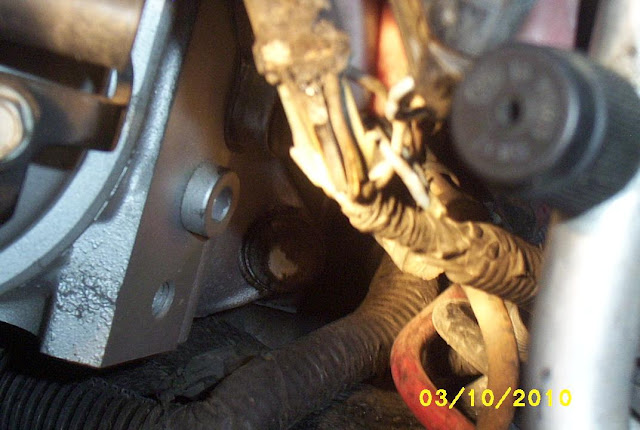
One side of it goes down to the oxygen sensor, and the other side goes into the large loom.
So what did this used to be plugged into? I'm assuming that whoever had it before me (or the shop that did the engine replace) didn't use it because it was fried...but where would that be replaced if that's true?
One side of it goes down to the oxygen sensor, and the other side goes into the large loom.
So what did this used to be plugged into? I'm assuming that whoever had it before me (or the shop that did the engine replace) didn't use it because it was fried...but where would that be replaced if that's true?

Tech Contributor


Joined: Jan 2007
Posts: 19,540
Likes: 1,199
From: Dyer, IN
So the underside of that mystery harness is nice and crispy:
One side of it goes down to the oxygen sensor, and the other side goes into the large loom.
So what did this used to be plugged into? I'm assuming that whoever had it before me (or the shop that did the engine replace) didn't use it because it was fried...but where would that be replaced if that's true?
One side of it goes down to the oxygen sensor, and the other side goes into the large loom.
So what did this used to be plugged into? I'm assuming that whoever had it before me (or the shop that did the engine replace) didn't use it because it was fried...but where would that be replaced if that's true?
Thread Starter
Advanced
Joined: Aug 2007
Posts: 69
Likes: 0
From: Albuquerque New Mexico
Thanks Lucky!
You say, "If there are four contacts in that connector, it most likely is for the rear O2 sensor. While the codes are probably tuned out for the rears, that needs to be addressed.....as there is still a signal and 12 volts to that connector for the heater circuit."
There are four contacts. So where are the rear 02 sensors? This car has Kook's long tubes and no cats to the stock TI exhaust currently. Can I just cut that off, tape it up and call it good? Where is the heater circuit exactly, and what would it's path be? I just want to make sure this isn't my culprit grounding the 12v!
You say, "If there are four contacts in that connector, it most likely is for the rear O2 sensor. While the codes are probably tuned out for the rears, that needs to be addressed.....as there is still a signal and 12 volts to that connector for the heater circuit."
There are four contacts. So where are the rear 02 sensors? This car has Kook's long tubes and no cats to the stock TI exhaust currently. Can I just cut that off, tape it up and call it good? Where is the heater circuit exactly, and what would it's path be? I just want to make sure this isn't my culprit grounding the 12v!

Burning Brakes


Joined: Apr 2003
Posts: 908
Likes: 4
From: TROY MI
Thanks Lucky!
You say, "If there are four contacts in that connector, it most likely is for the rear O2 sensor. While the codes are probably tuned out for the rears, that needs to be addressed.....as there is still a signal and 12 volts to that connector for the heater circuit."
There are four contacts. So where are the rear 02 sensors? This car has Kook's long tubes and no cats to the stock TI exhaust currently. Can I just cut that off, tape it up and call it good? Where is the heater circuit exactly, and what would it's path be? I just want to make sure this isn't my culprit grounding the 12v!
You say, "If there are four contacts in that connector, it most likely is for the rear O2 sensor. While the codes are probably tuned out for the rears, that needs to be addressed.....as there is still a signal and 12 volts to that connector for the heater circuit."
There are four contacts. So where are the rear 02 sensors? This car has Kook's long tubes and no cats to the stock TI exhaust currently. Can I just cut that off, tape it up and call it good? Where is the heater circuit exactly, and what would it's path be? I just want to make sure this isn't my culprit grounding the 12v!
Tech Contributor
Joined: Jan 2007
Posts: 19,540
Likes: 1,199
From: Dyer, IN
Sounds like you either purchased the car this way, or had the work done........that being said, I'm just making assumptions based on common practice.
They probably have been moved to the front positions, and the rear positions are blocked off. Adapter harnesses are available to plug the rear o2's in the front harness, because the rears have better heater circuits. So the rear o2 harness would be left unused, but should still be covered, protected, and tied back.
The short answer...yes you can.....but you'll screw the next owner, and screw yourself if you choose to de-mod before selling. If the connector is indeed fried, the the point is moot, since it has to be replaced anyway.....in which case, I would recommend a pigtail.
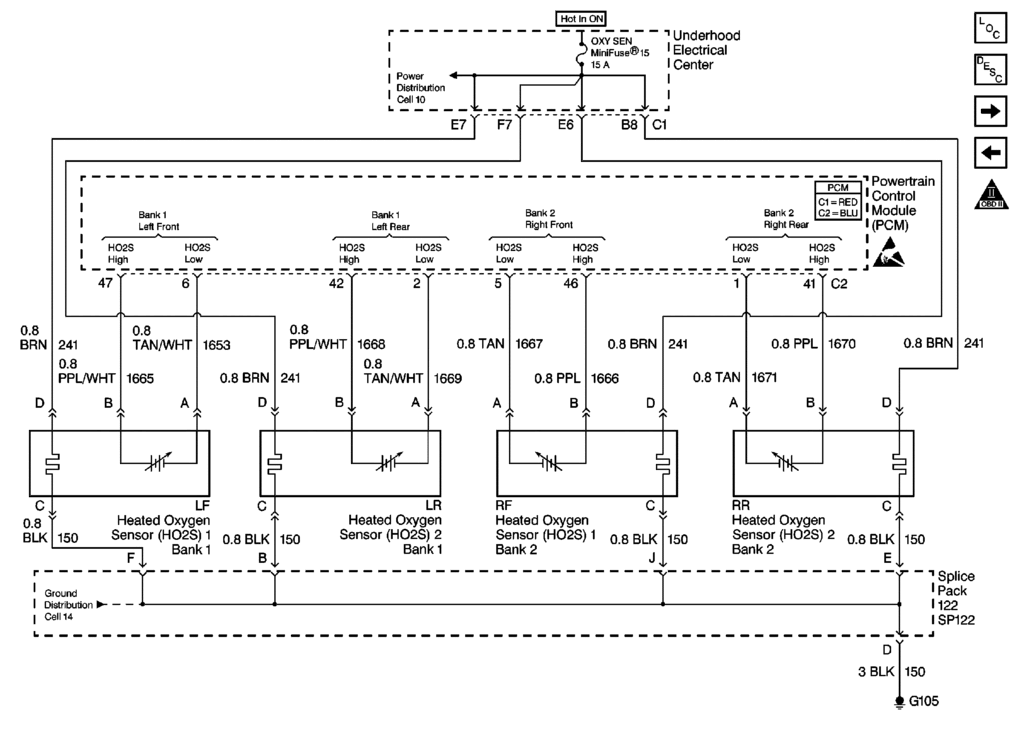
The heater circuit runs to all o2's in parallel, and is controlled by one fuse #15 underhood fusebox. If the wiring is damaged, it should be repaired....period.....since you cannot just pull the fuse, as you will kill the heaters for the front O2's.
They probably have been moved to the front positions, and the rear positions are blocked off. Adapter harnesses are available to plug the rear o2's in the front harness, because the rears have better heater circuits. So the rear o2 harness would be left unused, but should still be covered, protected, and tied back.
The short answer...yes you can.....but you'll screw the next owner, and screw yourself if you choose to de-mod before selling. If the connector is indeed fried, the the point is moot, since it has to be replaced anyway.....in which case, I would recommend a pigtail.
The heater circuit runs to all o2's in parallel, and is controlled by one fuse #15 underhood fusebox. If the wiring is damaged, it should be repaired....period.....since you cannot just pull the fuse, as you will kill the heaters for the front O2's.
Thread Starter
Advanced
Joined: Aug 2007
Posts: 69
Likes: 0
From: Albuquerque New Mexico
Is there a way to test fuse 15 to see if it is grounded? It should be carrying the 12v, correct?
And yes, bought it this way, and header does have to be moved to get to starter!
And yes, bought it this way, and header does have to be moved to get to starter!
Corvette Stories
The Best of Corvette for Corvette Enthusiasts

5 Best & 5 Worst Corvette Daily Drivers
Joe Kucinski
The Headlights of Every Corvette Generation Explained
Joe Kucinski
5 Best & 5 Most Overrated Corvette Track Packages of All Time!
Joe Kucinski
Every 2027 Corvette Engine Explained
Joe Kucinski
Designer Imagines A Corvette That Looks More Like a Corvette Than the Corvette
Verdad Gallardo
10 Ugly Corvettes That We Still Kinda Love
Joe Kucinski
Top 10 Most Expensive Corvettes Ever Sold on Bring A Trailer
Brett Foote
10 Things Every Corvette Owner Needs (2026 Edition)
Michael S. Palmer
8 Most "Only Corvette Owners Understand" Quirks and Problems
Pouria Savadkouei
Thread Starter
Advanced
Joined: Aug 2007
Posts: 69
Likes: 0
From: Albuquerque New Mexico
So from comparing Bill's diagram, it appears as though they used the front O2 sensors and cut the rear's out entirely. We cleaned up the mess as best as we could, and also replaced the positive battery terminal to starter wire, as it was showing bare metal. Got the starter and header back on, buttoned everything up, and tested today.
It never dropped below 13.7 volts, but it also never got above 200 degrees (balloon fiesta weather strikes!). But it didn't throw any codes on the test to work and back (it usually dies on the way back for whatever reason, road conditions (bumpy!) and heat, I believe. So none of those factors applied on this test. But so far so good.
I'm still not confident that the problem is actually fixed, but I will run it until this happens again.
Thanks again to everyone for all the great information!
It never dropped below 13.7 volts, but it also never got above 200 degrees (balloon fiesta weather strikes!). But it didn't throw any codes on the test to work and back (it usually dies on the way back for whatever reason, road conditions (bumpy!) and heat, I believe. So none of those factors applied on this test. But so far so good.
I'm still not confident that the problem is actually fixed, but I will run it until this happens again.
Thanks again to everyone for all the great information!

Pro

Joined: Aug 2010
Posts: 545
Likes: 4
From: Calgary Alberta
What does your volts show with the stereo off?
Oh and why a stereo in a Z06? I thought it was supposed to be a light weight factory racer? Plus it comes with built in heavenly stereo just push the gas pedal to turn the volume up!
What happened to the radio delete option?
Oh and why a stereo in a Z06? I thought it was supposed to be a light weight factory racer? Plus it comes with built in heavenly stereo just push the gas pedal to turn the volume up!
What happened to the radio delete option?

Tech Contributor


Joined: Dec 1999
Posts: 32,910
Likes: 2,402
From: Anthony TX
CI 6,7,8,9,11 Vet
St. Jude Donor '08
Remember...... You still need to get the battery/alternator connected together. The alternator monitors battery voltage and adjust charging voltages. The connections and wiring at the starter solenoid are "CRITICAL" for proper charging system operation.
Examine the wiring and bolted connections. The wires should be in good condition. The red wire from the alternator and purple wire from the TDR are in lined FUSED. The wire after the inline fuses changes wiring colors.
Check the wires and connections at the solenoid...!!
Examine the wiring and bolted connections. The wires should be in good condition. The red wire from the alternator and purple wire from the TDR are in lined FUSED. The wire after the inline fuses changes wiring colors.
Check the wires and connections at the solenoid...!!
Thread Starter
Advanced
Joined: Aug 2007
Posts: 69
Likes: 0
From: Albuquerque New Mexico
We pulled the starter out entirely, and rechecked all the connections to both starter and solenoid.
Coming home after work, got the car above 200 degrees, and the volts on the DIC dropped to 13.3 and the code threw yet again.
I will double check the red and purple alternator wires just to confirm their status.
Anything else to check? Other ideas?
Coming home after work, got the car above 200 degrees, and the volts on the DIC dropped to 13.3 and the code threw yet again.
I will double check the red and purple alternator wires just to confirm their status.
Anything else to check? Other ideas?
Thread Starter
Advanced
Joined: Aug 2007
Posts: 69
Likes: 0
From: Albuquerque New Mexico
What does your volts show with the stereo off?
Oh and why a stereo in a Z06? I thought it was supposed to be a light weight factory racer? Plus it comes with built in heavenly stereo just push the gas pedal to turn the volume up!
What happened to the radio delete option?
Oh and why a stereo in a Z06? I thought it was supposed to be a light weight factory racer? Plus it comes with built in heavenly stereo just push the gas pedal to turn the volume up!
What happened to the radio delete option?
Why? It was already in there when I bought the car. And it wasn't done well. MUCH of this car wasn't done well. Sigh. Bad choices in life come back to haunt you in the form of codes!
Seriously thinking about pulling the whole stereo out. Maybe just keep the head unit and some simple speakers up front just for extra noise on the long trips.
But I agree, the motor makes some wonderful noises. The "bing" of the DIC kicking off codes.....not so much!!!
Does anyone make the ENTIRE wiring harness for C5's yet? That's looking like a better option at this point!

Thread Starter
Advanced
Joined: Aug 2007
Posts: 69
Likes: 0
From: Albuquerque New Mexico
Yes, the plastic shroud that goes around the battery is still there. Why?
We've checked MOST of the engine ground straps. Was thinking about adding some to see if that was an issue, but the ones on the passenger side ARE confirmed good.
Pro
Joined: Aug 2010
Posts: 545
Likes: 4
From: Calgary Alberta
It is very common to find, in the electrical field, things which fail as they heat up. Sometimes it's a component others it's a connection. What happens is that a loose or poor connection exhibits some resistance. When current flows through that connection a voltage develops across the "resistor" that the connection has become. The formulas for electrical power or watts is voltage times current. So as the resistance of the faulty connection increases the voltage dropped across it increases. Therefore the wattage dissipated increases. It gets hotter as it deals with that and so on and so on.
An example that I dealt with recently is a Makino A55E machining centre. It uses a Honda connector on a cable that communicates between the servo motor amp and the NC controller. Periodically it would through a fault code. Over time the frequency of that increased until the machine failure rate was to high to simply reset and carry on. We got involved and after thousands of parts and numerous hours I pulled said connector apart and stuck it under the microscope. The connector used a vampire style crimp, the type where a v blade is pressed over the wire insulation to make the connection. When this particular connector was installed the alignment of the wire was not ideal and so a secure connection was not made. The voltage here was five volts dc as it was simply a signal line. $20 part plagued this machine for years. Even at that low a voltage it can be a problem. Often we have to adjust power supplies for 5 volt systems because a simple tenth of a volt will cause a fault. If I remember correctly your code with TPS sensors not agreeing by more then 7.5%. That's less then 4 tenths of a volt.
What I'm getting at is that either the battery or alternator is having a problem or you have a connection that is heating up and causing your voltage drop. I'd try hooking up a good digital meter to the battery negative and positive. Get the car good and hot see if agrees with the digital gauge on the DIC. If it does next try positive on the alternator output, then positive on battery negative on alternator bracket.
If the gauge in the DIC agrees with the meter on the battery then I'd suspect the charging system or battery. If it doesn't then it would mean to me that a bad connection some where is leading to a voltage drop.

Drifting

Joined: Mar 2010
Posts: 1,628
Likes: 15
From: Seattle WA
Placing the black lead of your multimeter on the battery + and the red lead on the alternator output will tell you exactly how much voltage you are losing between the two. If it's more than about .1-.2 volts you are losing too much and need to check your connections.
