







Very Strange "Car won't start sometimes" problem

Thread Starter
Instructor

Joined: Apr 2007
Posts: 112
Likes: 0

WELL,,,,,,,,,, replacing the stater solenoid is just as involved as replacing the starter because you MUST remove the starter for BOTH jobs. The solenoid is only $50 or so, a new or rebuilt starter is a LOT more. For me, saving the cash it cost for the new starter replacement was well worth the time. I waited till I tore my engine down for my heads cam fast 90 install so I killed two birds with one stone. If you have headers, they have to come off.
There are THREE small screws that secure the solenoid to the starter. One of those screws is in a deep recess and you will have to purchase a 1/4" drive deep well socket just for that screw. Got mine from bumper to bumper for $3.00
So, you either lay out a lot of cash for a new starter or a little for a solenoid.
BC
There are THREE small screws that secure the solenoid to the starter. One of those screws is in a deep recess and you will have to purchase a 1/4" drive deep well socket just for that screw. Got mine from bumper to bumper for $3.00
So, you either lay out a lot of cash for a new starter or a little for a solenoid.
BC
Got a new unit for 153 + tax in town.
I am hoping when I get in there its loose wire connections on the solenoid and not a bad unit.
Thread Starter
Instructor
Joined: Apr 2007
Posts: 112
Likes: 0
Soon it will give me the finger and not start! I am taking care of this asap.
Last edited by BIGTACO; Mar 11, 2011 at 03:15 PM.

Advanced
Joined: Oct 2010
Posts: 65
Likes: 0
After all the problems I've been having with intermittent starting issues and all the troubleshooting, I think I have it narrowed down to faulty sensors in the ignition switch, the sensors that picks up the key pellet. During one of my no-start moments, I took a reading of the resistance from the ignition switch and didn't get any, but after several attempts of inserting both keys it would finally pick it up so instead of replacing the switch or the sensors, I just made a (somewhat crude I admit) circuitry with the correct amount of resistance and installed it in lieu of the ignition sw sensor and just to be on the safe side, installed a (hidden) switch to turn it off and disabling the starting circuit. So far no problems. I would attach some photos of my handi-work but I don't have permission. 
Thread Starter
Instructor
Joined: Apr 2007
Posts: 112
Likes: 0
After all the problems I've been having with intermittent starting issues and all the troubleshooting, I think I have it narrowed down to faulty sensors in the ignition switch, the sensors that picks up the key pellet. During one of my no-start moments, I took a reading of the resistance from the ignition switch and didn't get any, but after several attempts of inserting both keys it would finally pick it up so instead of replacing the switch or the sensors, I just made a (somewhat crude I admit) circuitry with the correct amount of resistance and installed it in lieu of the ignition sw sensor and just to be on the safe side, installed a (hidden) switch to turn it off and disabling the starting circuit. So far no problems. I would attach some photos of my handi-work but I don't have permission.
Is it true that if I jump the terminals on the solenoid, and then the starter engages then the solenoid and starter are good?
Also, does anyone know if I will have to completely remove the passenger side long tube header from the car or just unbolt it and move it out of the way, in order to get the starter out???
Last edited by BIGTACO; Mar 11, 2011 at 04:06 PM.

Melting Slicks


Joined: Jan 2009
Posts: 2,127
Likes: 33
From: Easley/Anderson South Carolina
After all the problems I've been having with intermittent starting issues and all the troubleshooting, I think I have it narrowed down to faulty sensors in the ignition switch, the sensors that picks up the key pellet. During one of my no-start moments, I took a reading of the resistance from the ignition switch and didn't get any, but after several attempts of inserting both keys it would finally pick it up so instead of replacing the switch or the sensors, I just made a (somewhat crude I admit) circuitry with the correct amount of resistance and installed it in lieu of the ignition sw sensor and just to be on the safe side, installed a (hidden) switch to turn it off and disabling the starting circuit. So far no problems. I would attach some photos of my handi-work but I don't have permission.
Advanced
Joined: Oct 2010
Posts: 65
Likes: 0
Wow nice work. I hope I dont replace my started and find out its not the starter!
Is it true that if I jump the terminals on the solenoid, and then the starter engages then the solenoid and starter are good?
Also, does anyone know if I will have to completely remove the passenger side long tube header from the car or just unbolt it and move it out of the way, in order to get the starter out???
Is it true that if I jump the terminals on the solenoid, and then the starter engages then the solenoid and starter are good?
Also, does anyone know if I will have to completely remove the passenger side long tube header from the car or just unbolt it and move it out of the way, in order to get the starter out???

Melting Slicks
Joined: Jan 2009
Posts: 2,127
Likes: 33
From: Easley/Anderson South Carolina
Before changing your starter/solenoid, try jumping the RED (Battery) wire and the PURPLE (Starter/Solenoid) wire at your Theft Deterrent Relay. Make sure you're in neutral/park as the engine will turn over if the starter/solenoid are good. Its probably easier to do that then trying to get at the starter.
Corvette Stories
The Best of Corvette for Corvette Enthusiasts

Top 10 Most Expensive Corvettes Ever Sold on Bring A Trailer
Brett Foote
10 Things Every Corvette Owner Needs (2026 Edition)
Michael S. Palmer
8 Most "Only Corvette Owners Understand" Quirks and Problems
Pouria Savadkouei
10 Reasons the C6 Z06 is Still A Performance Benchmark After 20 Years
Joe Kucinski
How Much Horsepower Every Corvette Engine "LOST" in 1972
Joe Kucinski
Top 10 DOs and DON'Ts for Protecting Your Convertible Top!
Michael S. Palmer
Top 10 Most Explosive Corvettes Ever Made: Power-to-Weight Ratio Ranked!
Joe Kucinski
150 hp to 1,250 hp: Every Corvette Generation Compared by the Specs That Matter
Joe Kucinski
8 Coolest Corvette Pace Cars (and Replicas) of All Time
Verdad Gallardo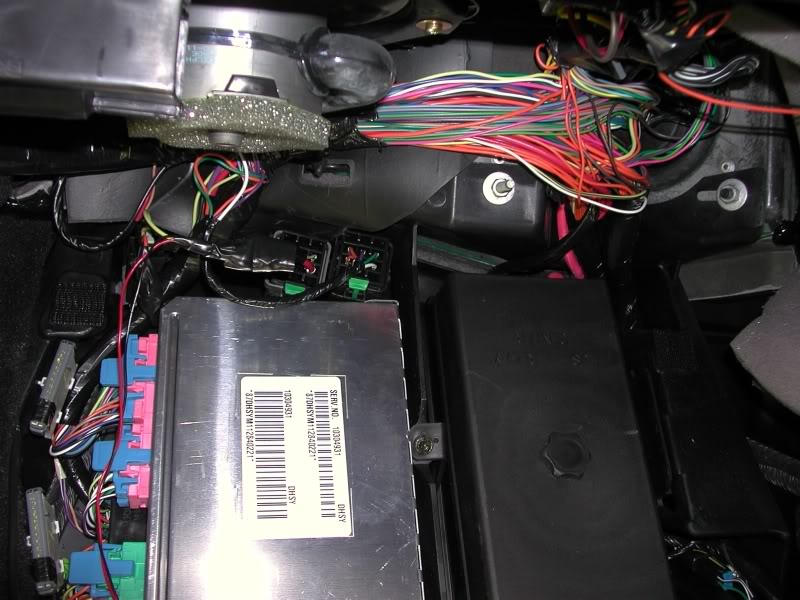
Thread Starter
Instructor
Joined: Apr 2007
Posts: 112
Likes: 0
Before changing your starter/solenoid, try jumping the RED (Battery) wire and the PURPLE (Starter/Solenoid) wire at your Theft Deterrent Relay. Make sure you're in neutral/park as the engine will turn over if the starter/solenoid are good. Its probably easier to do that then trying to get at the starter.
Just trying to make sure I am not about to invest 200 bucks on a starter and a day of vacation off work for nothing.

I can try to jump the starter relay but my car is starting fine at the moment so I am sure when I jump it, it will start... ya know.

Tech Contributor

Joined: Dec 2006
Posts: 10,962
Likes: 29
From: Van Buren Arkansas
Wounded Warrior Escort '11
Sounds like either the TDR is bad or the solenoid from everything that Bill says and from what you say is happening. If you elect to jumper the TDR, make sure the car is in neutral of a MM6 otherwise it'll drive away without you.

Tech Contributor


Joined: Dec 1999
Posts: 32,910
Likes: 2,402
From: Anthony TX
CI 6,7,8,9,11 Vet
St. Jude Donor '08
My car does this periodically. To this point it eventually starts up on every "No-Start" event. If the solenoid truly IS bad wouldn't the thing just go out all at once and not work at all...? Doesn't the fact that my car will eventually start mean that the solenoid is good, and its probably something else??? I always thought when solenoids go bad its like blowing out a light bulb. Once its blown its blown... I am unsure if it can slooooowly go out...
Just trying to make sure I am not about to invest 200 bucks on a starter and a day of vacation off work for nothing.
I can try to jump the starter relay but my car is starting fine at the moment so I am sure when I jump it, it will start... ya know.
Just trying to make sure I am not about to invest 200 bucks on a starter and a day of vacation off work for nothing.
I can try to jump the starter relay but my car is starting fine at the moment so I am sure when I jump it, it will start... ya know.
It could very well be something else, Poor connection at the solenoid could be one possibility, Bad TDR, could be another. Thats why,,, it is very important to do a bit of troubleshooting with a meter.
The schematic provided is the key...
To provide an answer to your question "Doesn't the fact that my car will eventually start mean that the solenoid is good, and its probably something else???
ABSOLUTELY NOT! The solenoid coil will read fine but the spool (inside the solenoid) will not retract when power is applied. Trust me... I have one on the work bench just like I explained.. I just changed the $50 solenoid and solved all of my no start issues.
BC
What you can do is BUMP the starter/solenoid with a long wooden rod while someone holds the key to start (when it fails to start). If the solenoid is failing mechanically, agitating it mechanically will make it start the engine
Advanced
Joined: Oct 2010
Posts: 65
Likes: 0
My car does this periodically. To this point it eventually starts up on every "No-Start" event. If the solenoid truly IS bad wouldn't the thing just go out all at once and not work at all...? Doesn't the fact that my car will eventually start mean that the solenoid is good, and its probably something else??? I always thought when solenoids go bad its like blowing out a light bulb. Once its blown its blown... I am unsure if it can slooooowly go out...
Just trying to make sure I am not about to invest 200 bucks on a starter and a day of vacation off work for nothing.
I can try to jump the starter relay but my car is starting fine at the moment so I am sure when I jump it, it will start... ya know.
Just trying to make sure I am not about to invest 200 bucks on a starter and a day of vacation off work for nothing.
I can try to jump the starter relay but my car is starting fine at the moment so I am sure when I jump it, it will start... ya know.

In reality, the VATS/PASS-Key system is very simple. There are only a couple switches it passes thru (clutch/park, ignition, and TDR) before the BCU can process it and send the correct signals to the PCM (Power Control Module), and Solenoid/Starter.
There is one fuse (10 amp, #14 CRK) prior to the TDR from the ignition switch. Two other fuses (60 amps, IGN 2, #50, and STARTER, #52) are hot at all times. These fuses are located in the passenger footwell. The STARTER fuse is the RED wire to the TDR and from the TDR is the Purple wire to the starter solenoid. Because the solenoid is an electrical/mechanical device, it is subject to sticking and as BC suggested, carrying a big stick might be prudent.
The other part of the PASS-Key system is the key resister sensing terminal, located within the ignition lock cylinder. The BCU sends a 5 volt signal to the sensing terminal and when a key with a pellet is inserted in the ignition it completes the circuit back to the BCU and if it is within a set measurment in the BCU it sends a signal to the TDR Control which provides a ground to the TDR. Once the TDR has the correct power from the ignition switch, through the clutch/park switch, and finds its grnd from the BCU, it closes its contact to allow battery volts (thru the RED wire via the STARTER fuse) to cross to the purple wire and to the starter solenoid. The BCU then sends a signal through the serial data connector to the PCM which allows the fuel pump to operate.
The SECURITY light is controlled by the BCU and if the correct signal isn't recieved from the key resister sensing terminals, it turns it on. While doing my troubleshooting and checking out everything multiple times, I would get the SECURITY light on while driving. This was telling me I was loosing the signal from the sensing terminals in the ignition lock cylinder but since the engine was running and the BCU/PCM were operating properly the engine would stay running. What I did was bypass the sensing terminals with the correct resistant resisters I made, but as a safety precaution, I installed a switch to disconnect the module I made and thus disabling the starter circuit. Otherwise anyone could have put a non-PASSKey key in and driven off with my toy.
If you have a no-start condition and the SECURITY light is NOT on, I would suspect something other than the PASS-Key system. The three fuses would be a good start. If its intermittent, again, without the SECURITY light, then I would suspect the starter/solenoid. If you jumper the RED wire and PURPLE wire at the TDR and the engine doesn't turn over (make sure you're in neutral/park), listen for a clicking sound. That would be the solenoid. If you don't hear that, then it is more likely a faulty solenoid. Those use to be pretty common fault items. Chrysler installs them in an easy access location but GM always mounted them on the starter, too hard to get to most of the time.
I would suspect that if you had BCU or PCM failure, there would be more indications than just a no-start. I'm sure there is more to the system than a back yard mechanic such as myself can understand, let alone do much about, but as BC suggested, carrying a big stick might be a good idea, if not to just threaton your teenager
 to stay away from your pride and joy...

Thread Starter
Instructor
Joined: Apr 2007
Posts: 112
Likes: 0
It could very well be something else, Poor connection at the solenoid could be one possibility, Bad TDR, could be another. Thats why,,, it is very important to do a bit of troubleshooting with a meter.
The schematic provided is the key...
To provide an answer to your question "Doesn't the fact that my car will eventually start mean that the solenoid is good, and its probably something else???
ABSOLUTELY NOT! The solenoid coil will read fine but the spool (inside the solenoid) will not retract when power is applied. Trust me... I have one on the work bench just like I explained.. I just changed the $50 solenoid and solved all of my no start issues.
BC
What you can do is BUMP the starter/solenoid with a long wooden rod while someone holds the key to start (when it fails to start). If the solenoid is failing mechanically, agitating it mechanically will make it start the engine
The schematic provided is the key...
To provide an answer to your question "Doesn't the fact that my car will eventually start mean that the solenoid is good, and its probably something else???
ABSOLUTELY NOT! The solenoid coil will read fine but the spool (inside the solenoid) will not retract when power is applied. Trust me... I have one on the work bench just like I explained.. I just changed the $50 solenoid and solved all of my no start issues.
BC
What you can do is BUMP the starter/solenoid with a long wooden rod while someone holds the key to start (when it fails to start). If the solenoid is failing mechanically, agitating it mechanically will make it start the engine
I have purchased a starter/solenoid and secured a lift tomorrow. I have ruled out the relay using a voltmeter and also the key itself by using my spare key and having the same result. Based on your response in regards to the solenoid I am feeling very confident my problem is either this or the connections to it.
Tomorrow I'll find out.
One more question: Will I be able to unbolt my passenger longtube and twist it out of the way in order to remove the starter or will I have to pull the whole darn header out..?! God I hope not. Then I'll have to remove the valve cover


Thread Starter
Instructor
Joined: Apr 2007
Posts: 112
Likes: 0
 So I gave in and today dropped her at my mechanic. She is under the knife as I type. Pray for her. She may have a few miles but her heart and will to live are strong!
Thread Starter
Instructor
Joined: Apr 2007
Posts: 112
Likes: 0
Trying to chase down intermittent gremlins is the hardest part of troubleshooting.
In reality, the VATS/PASS-Key system is very simple. There are only a couple switches it passes thru (clutch/park, ignition, and TDR) before the BCU can process it and send the correct signals to the PCM (Power Control Module), and Solenoid/Starter.
There is one fuse (10 amp, #14 CRK) prior to the TDR from the ignition switch. Two other fuses (60 amps, IGN 2, #50, and STARTER, #52) are hot at all times. These fuses are located in the passenger footwell. The STARTER fuse is the RED wire to the TDR and from the TDR is the Purple wire to the starter solenoid. Because the solenoid is an electrical/mechanical device, it is subject to sticking and as BC suggested, carrying a big stick might be prudent.
The other part of the PASS-Key system is the key resister sensing terminal, located within the ignition lock cylinder. The BCU sends a 5 volt signal to the sensing terminal and when a key with a pellet is inserted in the ignition it completes the circuit back to the BCU and if it is within a set measurment in the BCU it sends a signal to the TDR Control which provides a ground to the TDR. Once the TDR has the correct power from the ignition switch, through the clutch/park switch, and finds its grnd from the BCU, it closes its contact to allow battery volts (thru the RED wire via the STARTER fuse) to cross to the purple wire and to the starter solenoid. The BCU then sends a signal through the serial data connector to the PCM which allows the fuel pump to operate.
The SECURITY light is controlled by the BCU and if the correct signal isn't recieved from the key resister sensing terminals, it turns it on. While doing my troubleshooting and checking out everything multiple times, I would get the SECURITY light on while driving. This was telling me I was loosing the signal from the sensing terminals in the ignition lock cylinder but since the engine was running and the BCU/PCM were operating properly the engine would stay running. What I did was bypass the sensing terminals with the correct resistant resisters I made, but as a safety precaution, I installed a switch to disconnect the module I made and thus disabling the starter circuit. Otherwise anyone could have put a non-PASSKey key in and driven off with my toy.
If you have a no-start condition and the SECURITY light is NOT on, I would suspect something other than the PASS-Key system. The three fuses would be a good start. If its intermittent, again, without the SECURITY light, then I would suspect the starter/solenoid. If you jumper the RED wire and PURPLE wire at the TDR and the engine doesn't turn over (make sure you're in neutral/park), listen for a clicking sound. That would be the solenoid. If you don't hear that, then it is more likely a faulty solenoid. Those use to be pretty common fault items. Chrysler installs them in an easy access location but GM always mounted them on the starter, too hard to get to most of the time.
I would suspect that if you had BCU or PCM failure, there would be more indications than just a no-start. I'm sure there is more to the system than a back yard mechanic such as myself can understand, let alone do much about, but as BC suggested, carrying a big stick might be a good idea, if not to just threaton your teenager to stay away from your pride and joy...
In reality, the VATS/PASS-Key system is very simple. There are only a couple switches it passes thru (clutch/park, ignition, and TDR) before the BCU can process it and send the correct signals to the PCM (Power Control Module), and Solenoid/Starter.
There is one fuse (10 amp, #14 CRK) prior to the TDR from the ignition switch. Two other fuses (60 amps, IGN 2, #50, and STARTER, #52) are hot at all times. These fuses are located in the passenger footwell. The STARTER fuse is the RED wire to the TDR and from the TDR is the Purple wire to the starter solenoid. Because the solenoid is an electrical/mechanical device, it is subject to sticking and as BC suggested, carrying a big stick might be prudent.
The other part of the PASS-Key system is the key resister sensing terminal, located within the ignition lock cylinder. The BCU sends a 5 volt signal to the sensing terminal and when a key with a pellet is inserted in the ignition it completes the circuit back to the BCU and if it is within a set measurment in the BCU it sends a signal to the TDR Control which provides a ground to the TDR. Once the TDR has the correct power from the ignition switch, through the clutch/park switch, and finds its grnd from the BCU, it closes its contact to allow battery volts (thru the RED wire via the STARTER fuse) to cross to the purple wire and to the starter solenoid. The BCU then sends a signal through the serial data connector to the PCM which allows the fuel pump to operate.
The SECURITY light is controlled by the BCU and if the correct signal isn't recieved from the key resister sensing terminals, it turns it on. While doing my troubleshooting and checking out everything multiple times, I would get the SECURITY light on while driving. This was telling me I was loosing the signal from the sensing terminals in the ignition lock cylinder but since the engine was running and the BCU/PCM were operating properly the engine would stay running. What I did was bypass the sensing terminals with the correct resistant resisters I made, but as a safety precaution, I installed a switch to disconnect the module I made and thus disabling the starter circuit. Otherwise anyone could have put a non-PASSKey key in and driven off with my toy.
If you have a no-start condition and the SECURITY light is NOT on, I would suspect something other than the PASS-Key system. The three fuses would be a good start. If its intermittent, again, without the SECURITY light, then I would suspect the starter/solenoid. If you jumper the RED wire and PURPLE wire at the TDR and the engine doesn't turn over (make sure you're in neutral/park), listen for a clicking sound. That would be the solenoid. If you don't hear that, then it is more likely a faulty solenoid. Those use to be pretty common fault items. Chrysler installs them in an easy access location but GM always mounted them on the starter, too hard to get to most of the time.
I would suspect that if you had BCU or PCM failure, there would be more indications than just a no-start. I'm sure there is more to the system than a back yard mechanic such as myself can understand, let alone do much about, but as BC suggested, carrying a big stick might be a good idea, if not to just threaton your teenager
to stay away from your pride and joy... 
My security light doesn't come on when I have no start. I have checked my fuses and such and all look good. I checked the TDR with a voltmeter and get 12 V on the purple wire when the key is turned inn the ignition so its good. Probably the solenoid. Its being replaced right now. I'll keep you guys posted as to the result, which I will only be able to tell with time as this happens periodically. But, if I go a few weeks with no problems I am good to go!
We shall see


Safety Car

Joined: Feb 2000
Posts: 3,872
Likes: 0
From: OKC OK
I know I am in on this a bit late..but I have a similar issue. I need to watch the security light when this happens. I put the key in, turn it, everything comes on like its supposed to, but no start UNLESS I move the key to one side or the other and put slight pressure...then it starts right up.
Sounds like a key issue...I might have to try my other key?
Sounds like a key issue...I might have to try my other key?
Advanced
Joined: Oct 2010
Posts: 65
Likes: 0
I know I am in on this a bit late..but I have a similar issue. I need to watch the security light when this happens. I put the key in, turn it, everything comes on like its supposed to, but no start UNLESS I move the key to one side or the other and put slight pressure...then it starts right up.
Sounds like a key issue...I might have to try my other key?
Sounds like a key issue...I might have to try my other key?
