



Weird Charging issue

Thread Starter
Advanced

Joined: Dec 2007
Posts: 95
Likes: 0
From: Liberty NC

I will try to explain. If I charge the battery where the did reads 14.0 in the morning by the time I get home in the evening it will show in the low 13s. The other day I left work at 13.7 showing on did made 2 stops in town (maybe 6 lights total) and it showed 13.3 when I got back. Just testing earlier tonight it went to 12.
When I press the brakes, ac comes on or any drain it seems to drop momentarily about 0.5 volts
Does that make sense?
When I press the brakes, ac comes on or any drain it seems to drop momentarily about 0.5 volts
Does that make sense?

Pro


Joined: Aug 2010
Posts: 545
Likes: 4
From: Calgary Alberta
The battery in your car has six cells. Each cell by design should make 2.2 volts. The math means that the maxiumum is 13.2 volts. When you are charging at a peak rate I would expect the battery voltage to be higher say the 14 you mention. When the rate slows and you get to a float mode I would expect it to be just slightly higher then the 13.2. It can and will dip when loads switch on and off.
When I build battery charging systems I look at the technical data sheet for the battery I intend to charge. They will have data stating charge rates for the battery as well as charge voltages. I'll have to look to see if I can find those rates for an automotive battery.
My question to you would be does the car start everytime?
When I build battery charging systems I look at the technical data sheet for the battery I intend to charge. They will have data stating charge rates for the battery as well as charge voltages. I'll have to look to see if I can find those rates for an automotive battery.
My question to you would be does the car start everytime?
Pro
Joined: Aug 2010
Posts: 545
Likes: 4
From: Calgary Alberta
Charging information for an Optima battery is listed below. Note float voltage can be as low as 13.2.
OPTIMA YellowTop Charging Information
The following charging methods are recommended to insure a long battery life - always use a voltage-regulated charger, with voltage limits set as described below.
YellowTop Type: D51 & D51R - D35 - D75/25 - D34 - D34/78
These batteries are dual-purpose. They are designed for engine start and cyclic applications and for use in vehicles with large accessory loads.
Recommended charging information:
Alternator:
■13.65 to 15.0 volts, no amperage limit.
Battery Charger:
■13.8 to 15.0 volts, 10 amps maximum, 6-12 hours approximate.
Cyclic Applications:
■14.7 volts, no current limit as long as battery temperature remains below 125°F (51.7°C). When current falls below 1 amp, finish with 2 amp constant current for 1 hour.
Rapid Recharge:
■Maximum voltage 15.6 volts (regulated), no current limit as long as battery temperature remains below 125°F (51.7°C). Charge until current drops below 1 amp.
Float Charge:
■13.2 to 13.8 volts, 1 amp maximum current, time indefinite (at lower voltage).
OPTIMA YellowTop Charging Information
The following charging methods are recommended to insure a long battery life - always use a voltage-regulated charger, with voltage limits set as described below.
YellowTop Type: D51 & D51R - D35 - D75/25 - D34 - D34/78
These batteries are dual-purpose. They are designed for engine start and cyclic applications and for use in vehicles with large accessory loads.
Recommended charging information:
Alternator:
■13.65 to 15.0 volts, no amperage limit.
Battery Charger:
■13.8 to 15.0 volts, 10 amps maximum, 6-12 hours approximate.
Cyclic Applications:
■14.7 volts, no current limit as long as battery temperature remains below 125°F (51.7°C). When current falls below 1 amp, finish with 2 amp constant current for 1 hour.
Rapid Recharge:
■Maximum voltage 15.6 volts (regulated), no current limit as long as battery temperature remains below 125°F (51.7°C). Charge until current drops below 1 amp.
Float Charge:
■13.2 to 13.8 volts, 1 amp maximum current, time indefinite (at lower voltage).
Pro
Joined: Aug 2010
Posts: 545
Likes: 4
From: Calgary Alberta
What other electrical loads have been added to the car, stereo, lighting, GPS, Radar etc.?
Also you never answered my question about the belt deflection. You had mentioned something like 1/2-3/4" which would be way to much. Are the pulleys glazed?
Also you never answered my question about the belt deflection. You had mentioned something like 1/2-3/4" which would be way to much. Are the pulleys glazed?
Thread Starter
Advanced
Joined: Dec 2007
Posts: 95
Likes: 0
From: Liberty NC
Maybe I am looking for something that is not there. I had some issues with the starter lugs not being tight and caused me to be towed. After that I started paying attention to the voltage. Everyone else says their dic is stable in the upper 13s. I have been putting it on a charger at night to try to help. Maybe I will let it go for a few days and see.
I do not have an optima.
I do not have an optima.

Tech Contributor


Joined: Dec 1999
Posts: 32,910
Likes: 2,402
From: Anthony TX
CI 6,7,8,9,11 Vet
St. Jude Donor '08
So I'm not quite sure what you are saying here. You used your DC clamp on ampmeter and measured the current coming out of the alternator, correct? Then you measured the current load to the fuse box from the battery, correct?
They may well be a difference. The current going to the fuse box when subtracted from the alternator current would tell you the charge rate of the battery.
What exactly in as few words as possible is the problem you are having?
They may well be a difference. The current going to the fuse box when subtracted from the alternator current would tell you the charge rate of the battery.
What exactly in as few words as possible is the problem you are having?

I sort of agree
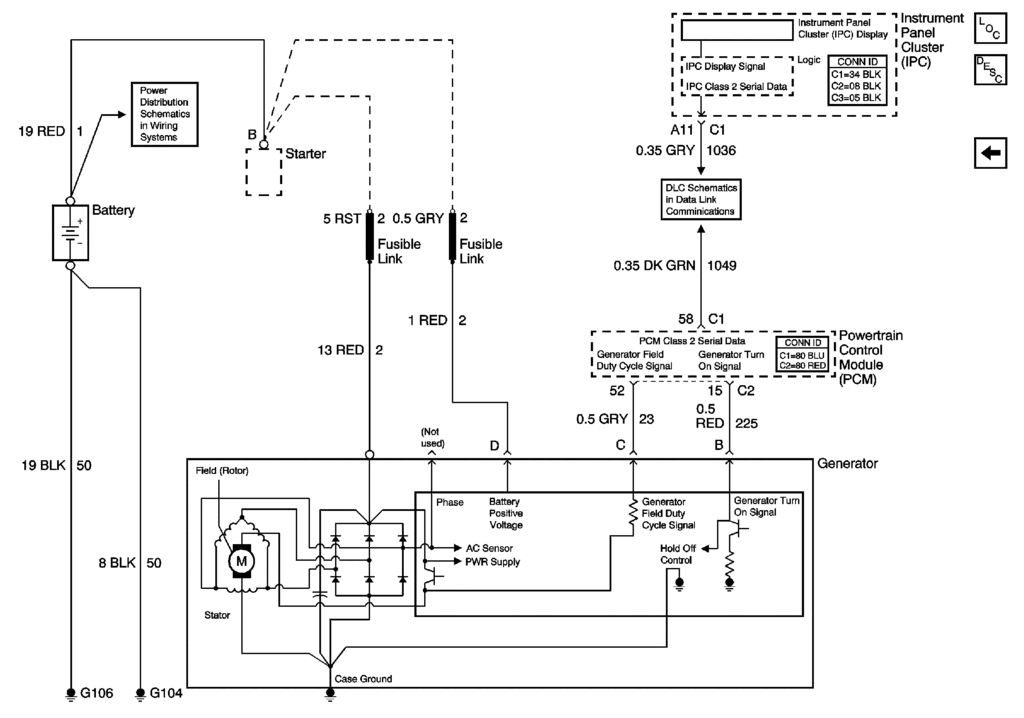
 What problem are we solving??? REMEMBER! The alternator feeds TWO fuse boxes!! The passengers foot well fuse box and the engine comparment box. So there may be current drawn from OTHER fuse boxes and loads..
 Look at the schematic:
Late C5
Early C5
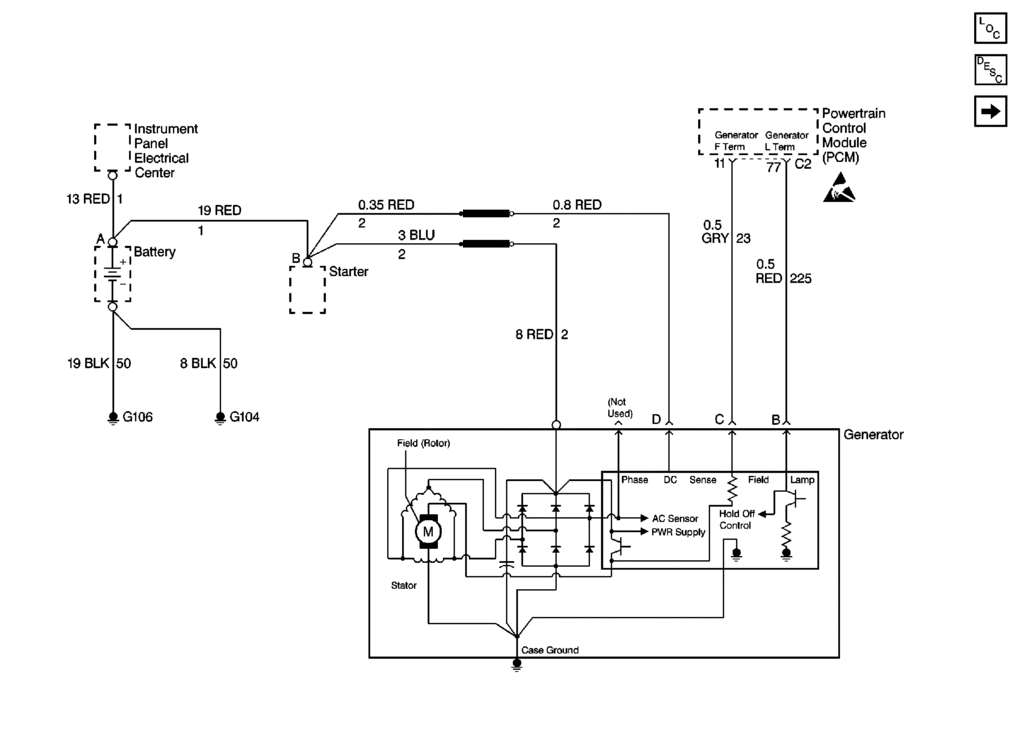
Either schematic,, PIN D is the BATTERY sense wire that tells the generator, what the actual battery voltages is. If that is in error / wrong due to resistance or corrosion,,,, BINGO!
MAKE SURE that that wire is PERFECT and passing ZERO OHMS end to end! Make sure that it is properly connected on either end. Terminals clean and tight .. Connector female pin not loose on the male pin!
BC
Pro
Joined: Aug 2010
Posts: 545
Likes: 4
From: Calgary Alberta
I just used Optima as an example. It may be different for you brand but I doubt it would vary much.
I found what works on my car is to keep the DIC on range. That way I don't worry about anything other then the money that's getting sucked out of my wallet and how many "passing maneuvers" I have left.
I found what works on my car is to keep the DIC on range. That way I don't worry about anything other then the money that's getting sucked out of my wallet and how many "passing maneuvers" I have left.
Thread Starter
Advanced
Joined: Dec 2007
Posts: 95
Likes: 0
From: Liberty NC
Looking at the schematic it looks like there should be 2 wires from alternator to the starter. Maybe I unhooked the wrong one (I am reading that D goes there, would that be correct?
No fancy accessories just radar detector. I have not measured the belt deflection yet
No fancy accessories just radar detector. I have not measured the belt deflection yet
Corvette Stories
The Best of Corvette for Corvette Enthusiasts

5 Best & 5 Worst Corvette Daily Drivers
Joe Kucinski
The Headlights of Every Corvette Generation Explained
Joe Kucinski
5 Best & 5 Most Overrated Corvette Track Packages of All Time!
Joe Kucinski
Every 2027 Corvette Engine Explained
Joe Kucinski
Designer Imagines A Corvette That Looks More Like a Corvette Than the Corvette
Verdad Gallardo
10 Ugly Corvettes That We Still Kinda Love
Joe Kucinski
Top 10 Most Expensive Corvettes Ever Sold on Bring A Trailer
Brett Foote
10 Things Every Corvette Owner Needs (2026 Edition)
Michael S. Palmer
8 Most "Only Corvette Owners Understand" Quirks and Problems
Pouria Savadkouei
Thread Starter
Advanced
Joined: Dec 2007
Posts: 95
Likes: 0
From: Liberty NC
Looking at the schematics (keep in mind, i am not an eletrical engineer... LOL) ... 3 wires in that 4 wire connector...
EMPTY - RED(1) - GREY - RED(2)
With the car off I unplugged the connector. (unless I totally miss read this)
RED(1) - No "beep" from OHMs meter to either hot or ground.
GREY - No "beep" from OHMs meter to either hot or ground.
RED(2) - Looks like is grounded when using the meter
I am calling them RED(1) and RED(2) because I do not know which one woudl be "D". I can make the assumption that they are in order and "not used" is the emtpy then DCB meaning the first wire by the "not used" is "D".
Looks to me, according to the picture, that one of the red wires ("D") should run back to the battery (via the starter). If I knew which one I could check it out by splicing and running a wire directly back.
Simply put, should I see battery voltage on one of the reds and, if so, which one?
Thanks for your help here.
EMPTY - RED(1) - GREY - RED(2)
With the car off I unplugged the connector. (unless I totally miss read this)
RED(1) - No "beep" from OHMs meter to either hot or ground.
GREY - No "beep" from OHMs meter to either hot or ground.
RED(2) - Looks like is grounded when using the meter
I am calling them RED(1) and RED(2) because I do not know which one woudl be "D". I can make the assumption that they are in order and "not used" is the emtpy then DCB meaning the first wire by the "not used" is "D".
Looks to me, according to the picture, that one of the red wires ("D") should run back to the battery (via the starter). If I knew which one I could check it out by splicing and running a wire directly back.
Simply put, should I see battery voltage on one of the reds and, if so, which one?
Thanks for your help here.
Pro
Joined: Aug 2010
Posts: 545
Likes: 4
From: Calgary Alberta
A is the unused slot and D is at the opposite side of the connector. With the battery connected measured between the negative on the battery and pin D. It should read battery volts. If it does not then your fuseable link may be open.
With the battery connected measure between battery negative and the the red charge wire lug on the alternator. You may want to disconnect it and isolate it with a rag or something to prevent shorting it out. When disconnecting or reconnecting it make certain the battery is disconnected. If you do not measure battery voltage the fuseable link may be open.
If either of these items have failed I'd suggest getting new replacements from your local dealership on GMpartshouse online. You can try repairing with wire and fuses but I think the rookie risk factor may not be advisible.
Quote from one of your earlier posts in this thread "I have some play but not much in the belt (probably 1/2 to 3/4 inch)... ". You may want to take a moment and have a look there.

With the battery connected measure between battery negative and the the red charge wire lug on the alternator. You may want to disconnect it and isolate it with a rag or something to prevent shorting it out. When disconnecting or reconnecting it make certain the battery is disconnected. If you do not measure battery voltage the fuseable link may be open.
If either of these items have failed I'd suggest getting new replacements from your local dealership on GMpartshouse online. You can try repairing with wire and fuses but I think the rookie risk factor may not be advisible.
Quote from one of your earlier posts in this thread "I have some play but not much in the belt (probably 1/2 to 3/4 inch)... ". You may want to take a moment and have a look there.
Thread Starter
Advanced
Joined: Dec 2007
Posts: 95
Likes: 0
From: Liberty NC
I will double check D but I do not think I have battery voltage there. . If that is the case I will splice in a wire and run it straight to the battery to check it. It should be hot with car off, correct?
Pro
Joined: Aug 2010
Posts: 545
Likes: 4
From: Calgary Alberta
I don't know about hot but it should measure out to be the same potential as the positive terminal with respect to the negative terminal.
At the end of all this you are going to know your charging system like the back of your hand. With any luck you may learn the proper terms as well!
How many beers have we gone through on this now?

At the end of all this you are going to know your charging system like the back of your hand. With any luck you may learn the proper terms as well!
How many beers have we gone through on this now?
Thread Starter
Advanced
Joined: Dec 2007
Posts: 95
Likes: 0
From: Liberty NC
I need to start drinking more...
Same voltage at alt lug and D... argh
C reads battery voltage between the lug and C but is not a ground (open on ohm setting to ground)
B is 2 volts lower than the lug
Same voltage at alt lug and D... argh
C reads battery voltage between the lug and C but is not a ground (open on ohm setting to ground)
B is 2 volts lower than the lug
Tech Contributor
Joined: Dec 1999
Posts: 32,910
Likes: 2,402
From: Anthony TX
CI 6,7,8,9,11 Vet
St. Jude Donor '08
Im not sure if I understand that you understand that,,, when you use and OHM METER, the the circuit MUST be DEAD/ ELECTRICALLY ISOLATED/NO POWER!
Are you reading circuits that are still connected to the nattery??
Bill
Are you reading circuits that are still connected to the nattery??
Bill
Pro
Joined: Aug 2010
Posts: 545
Likes: 4
From: Calgary Alberta
I'm certain he is using a Fluke Cat IV meter with fused leads.
I run the electrical safety program for the plant I work in. After the incidents I've been witness too and those I've been made aware of it's very difficult for me to accept layman with volt meters in their hands but I tell myself it's only 12 volts.
Failing to switch the meter to the proper setting for testing is indeed a very common cause of electrical injuries. To anyone who's listening buy a proper meter, Fluke for example. They are designed to protect you should you make a mistake. The $20 unit from the autoparts store not so much.
By the way what's a nattery?
So you are saying the lug and D measured the same as the positive terminal on the battery?
They were disconnected when you did this? Engine was off?
I run the electrical safety program for the plant I work in. After the incidents I've been witness too and those I've been made aware of it's very difficult for me to accept layman with volt meters in their hands but I tell myself it's only 12 volts.
Failing to switch the meter to the proper setting for testing is indeed a very common cause of electrical injuries. To anyone who's listening buy a proper meter, Fluke for example. They are designed to protect you should you make a mistake. The $20 unit from the autoparts store not so much.
By the way what's a nattery?
So you are saying the lug and D measured the same as the positive terminal on the battery?
They were disconnected when you did this? Engine was off?
Thread Starter
Advanced
Joined: Dec 2007
Posts: 95
Likes: 0
From: Liberty NC
I did not know that. I normally put the dial to the "speaker" setting for ease and touch the probes to 2 things. If it beeps I was under the impression that it was ok. If I wanted further clarification I would switch to 200 and look for a reading less than 1.
Are you saying that I should unhook the neg terminal to check for connectivity?
Are you saying that I should unhook the neg terminal to check for connectivity?
Thread Starter
Advanced
Joined: Dec 2007
Posts: 95
Likes: 0
From: Liberty NC
It is a fluke meter...lol
Never said I was an expert... that is why I am here...you guys have saved me tons of work and money. I just do not have the $ to drop it at the stealership.
12 volt I do not fear (too much) ... I know enough not to grab red wires...lol
Battery (battery), lug and D all read 12.57 right now
Is the 10.7 volts on B right?
Never said I was an expert... that is why I am here...you guys have saved me tons of work and money. I just do not have the $ to drop it at the stealership.
12 volt I do not fear (too much) ... I know enough not to grab red wires...lol
Battery (battery), lug and D all read 12.57 right now
Is the 10.7 volts on B right?
Pro
Joined: Aug 2010
Posts: 545
Likes: 4
From: Calgary Alberta
Voltage test is all you need to do.
1. disconnect the battery negative terminal and wrap it in a rag to ensure it does not accidently make contact with the battery post.
2. unplug the four pin connector from the alternator.
3. remove the red cable lug connector from the back of the alternator.
4. tape it to something plastic or otherwise secure it so that it can't touck anything metal while you do your tests.
5. reconnect the negative terminal making sure to tighten to the proper torque, not less not more.
6. set the meter to measure DC volts.
7. using an alligator clip end on the meter if available connect the negative lead of the meter to the negative on the battery.
8. check to make certain you set the meter to DC volts.
9. measure the voltage at battery positive terminal
10. measure the voltage at pin D
11. measure the voltage at the lug from the alternator red cable.
12. connect the negative lead of the meter to the alternator case.
13. repeat the voltage measurements.
14. disconnect the negative termianl.
15. reconnect the alternator lug and four pin connector.
16. reconnect the negative terminal making sure to tighten to the proper torque, not less not more.
17. remove all tools and rags from the engine compartment.
18. Swig two beers and report back here.
All measured voltages should be exactly the same.
1. disconnect the battery negative terminal and wrap it in a rag to ensure it does not accidently make contact with the battery post.
2. unplug the four pin connector from the alternator.
3. remove the red cable lug connector from the back of the alternator.
4. tape it to something plastic or otherwise secure it so that it can't touck anything metal while you do your tests.
5. reconnect the negative terminal making sure to tighten to the proper torque, not less not more.
6. set the meter to measure DC volts.
7. using an alligator clip end on the meter if available connect the negative lead of the meter to the negative on the battery.
8. check to make certain you set the meter to DC volts.
9. measure the voltage at battery positive terminal
10. measure the voltage at pin D
11. measure the voltage at the lug from the alternator red cable.
12. connect the negative lead of the meter to the alternator case.
13. repeat the voltage measurements.
14. disconnect the negative termianl.
15. reconnect the alternator lug and four pin connector.
16. reconnect the negative terminal making sure to tighten to the proper torque, not less not more.
17. remove all tools and rags from the engine compartment.
18. Swig two beers and report back here.
All measured voltages should be exactly the same.
Pro
Joined: Aug 2010
Posts: 545
Likes: 4
From: Calgary Alberta
Thread Starter
Advanced
Joined: Dec 2007
Posts: 95
Likes: 0
From: Liberty NC
I missed the 2 beers part since i have none here and my car is down, so I hope that won't count against me.
Negative lead to:
Positive lead - 12.43 volts
D - 12.43
alt cable - 12.43
Case ground to all the same give the same reading (12.43).
Negative lead to:
Positive lead - 12.43 volts
D - 12.43
alt cable - 12.43
Case ground to all the same give the same reading (12.43).
Last edited by TheeMike; Jun 2, 2011 at 07:12 PM.