




Alternator Charging Issue- Help Please.

Thread Starter
Burning Brakes


Joined: Dec 2012
Posts: 832
Likes: 14
From: Lake Charles Louisiana

Thanks guy but I have literally read 100's of threads and nothing quite fits. This started friday morning and since then I have either been swapping alts bats or searching forum and entire net. Nothing quite fits.

Drifting

Joined: Feb 2008
Posts: 1,596
Likes: 67
From: Bahama North Carolina
Did you see the posts that said dielectric is an insulator? Stop mucking up the connections and compounding the problem. Check those wires at the starter again, both ends.

Pro

Joined: May 2011
Posts: 580
Likes: 1
From: Chicago Suburb
St. Jude Donor '13
I'd start with the ignition switch. Bill Curlee has an excellent "how to" in this Forum.
Also, I've seen it said by those much smarter about these things than I, that C5's are noted for their idiosyncrasies related to the correct alternator. I had similar problems with erratic charging; I went through 2 "new" alternators (both recommended for my '01 Z06) until I got one that consistently gave me the magic 14.2v.
Instead of a $700 battery, maybe a new Valeo w/ same p/n as your "old" unit for $400??
Also, I've seen it said by those much smarter about these things than I, that C5's are noted for their idiosyncrasies related to the correct alternator. I had similar problems with erratic charging; I went through 2 "new" alternators (both recommended for my '01 Z06) until I got one that consistently gave me the magic 14.2v.
Instead of a $700 battery, maybe a new Valeo w/ same p/n as your "old" unit for $400??

Le Mans Master

Joined: Mar 2011
Posts: 6,835
Likes: 302
From: Columbia SC
I just helped solve a similar problem for someone here on the Forum. I think I may know what is going on. PM or email me with your phone number and we can discuss.
I don't think you have an alternator issue causing the problem, it seems to be overworking trying to charge the battery which it can't do. Exactly what happened to the other guy.
Also, if you put dielectric grease on any electric contact/conducting surfaces remove it. It is an insulating grease! NOT a conducting grease.
I don't think you have an alternator issue causing the problem, it seems to be overworking trying to charge the battery which it can't do. Exactly what happened to the other guy.
Also, if you put dielectric grease on any electric contact/conducting surfaces remove it. It is an insulating grease! NOT a conducting grease.

Tech Contributor


Joined: Dec 1999
Posts: 32,910
Likes: 2,402
From: Anthony TX
CI 6,7,8,9,11 Vet
St. Jude Donor '08
I provided Reath assistance in a PM but will follow up more here.
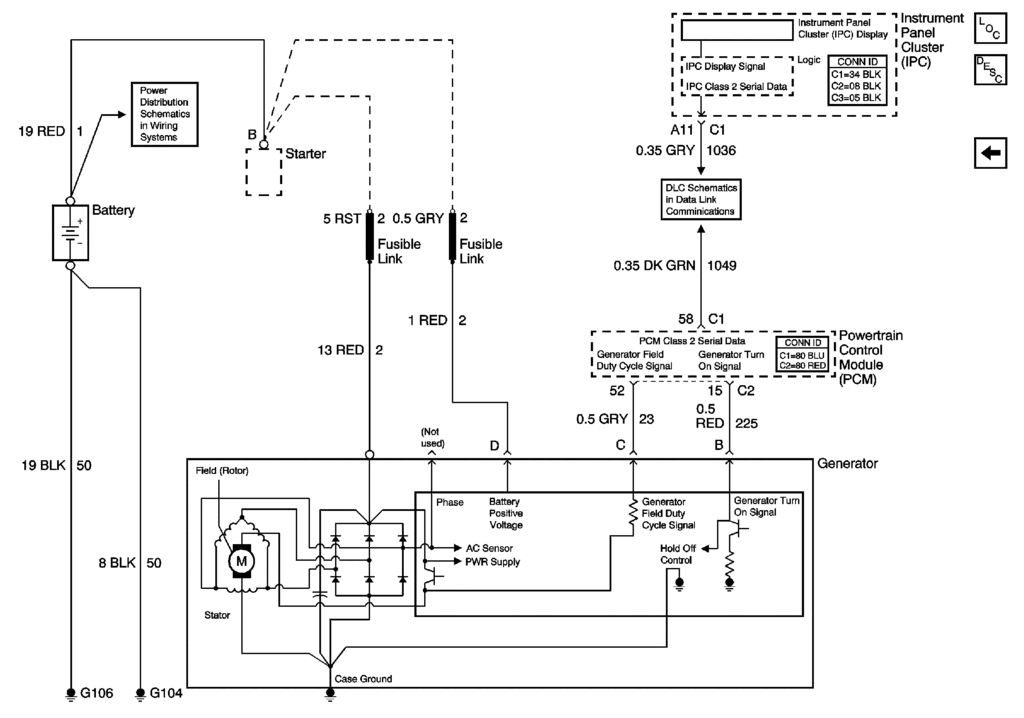
You need the schematic below to properly troubleshoot the issue:
If it were me, I would check the wires and connections on the solenoid and make sure that none of the wires and fusible links are compromised.
Pin "D" on the alternator is the FEED BACK signal to the alternator from the solenoid. It tells the alternator what the battery voltage is and allows the alternator to make the correct adjustments for voltage output.
With the engine OFF, you should read full battery voltage on the BATT terminal (rear of the alternator under the black boot) and on PIN "D"
With the engine running, you should see charging voltage on the battery ( 13.5 -14.5 is normal ). That voltage should be the same on pin D and on the BATT terminal.
IF, you place the DC Voltmeter leads (one on the positive terminal & one on the BATT terminal on the back of the alternator) you should theoretically read ZERO volts. IF,, you read voltage there is/are some resistance between the battery and alternator that needs to be resolved. The more voltage that you read, the worse the poor connection is.
You can do the same thing with PIN "D" You can read pin D by back pinning the connector so that you can measure the pin with the connector properly connected.
Examine that stuff and see where you are,
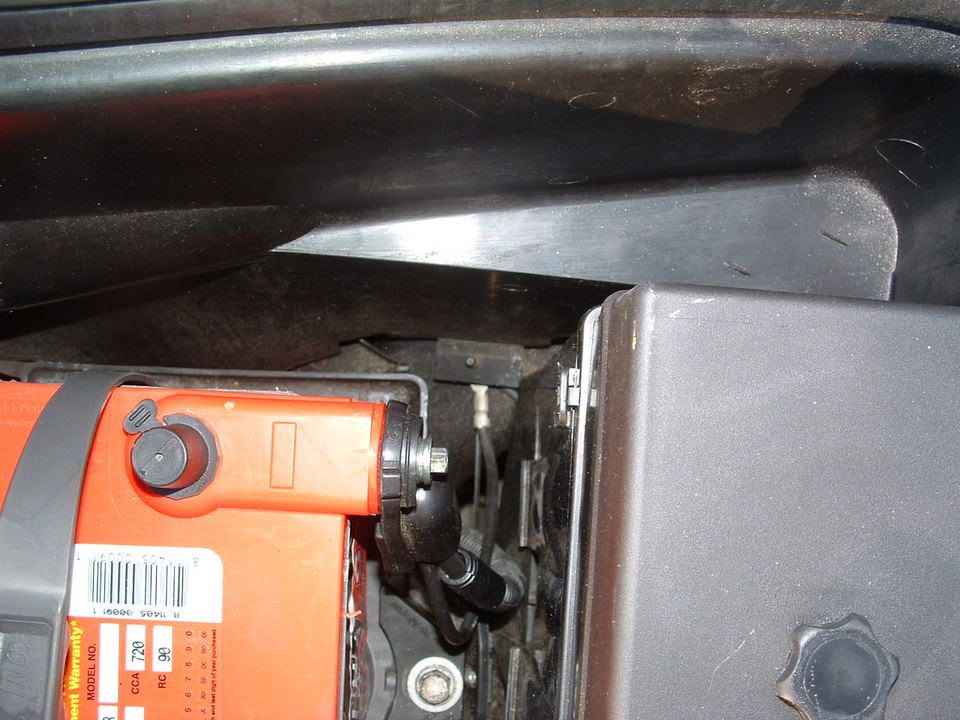
Another area to check is the NEGATIVE connection on the block and at chassis ground G-104/108. Just follow the large ground wire down to the block just above the starter and follow the smaller ground wire to the frame stud next to the battery.
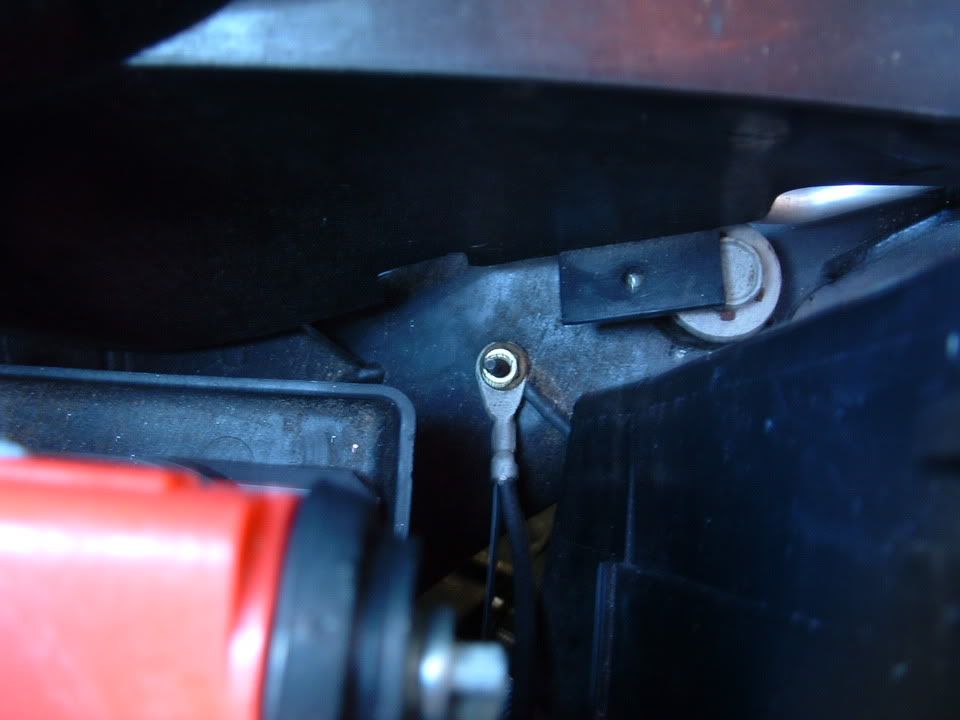
What voltage do you get directly on the battery and on the IPC digital volt meter and analog volt meter on the IPC (engine running) Compare both..
Bill
You need the schematic below to properly troubleshoot the issue:
If it were me, I would check the wires and connections on the solenoid and make sure that none of the wires and fusible links are compromised.
Pin "D" on the alternator is the FEED BACK signal to the alternator from the solenoid. It tells the alternator what the battery voltage is and allows the alternator to make the correct adjustments for voltage output.
With the engine OFF, you should read full battery voltage on the BATT terminal (rear of the alternator under the black boot) and on PIN "D"
With the engine running, you should see charging voltage on the battery ( 13.5 -14.5 is normal ). That voltage should be the same on pin D and on the BATT terminal.
IF, you place the DC Voltmeter leads (one on the positive terminal & one on the BATT terminal on the back of the alternator) you should theoretically read ZERO volts. IF,, you read voltage there is/are some resistance between the battery and alternator that needs to be resolved. The more voltage that you read, the worse the poor connection is.
You can do the same thing with PIN "D" You can read pin D by back pinning the connector so that you can measure the pin with the connector properly connected.
Examine that stuff and see where you are,
Another area to check is the NEGATIVE connection on the block and at chassis ground G-104/108. Just follow the large ground wire down to the block just above the starter and follow the smaller ground wire to the frame stud next to the battery.
What voltage do you get directly on the battery and on the IPC digital volt meter and analog volt meter on the IPC (engine running) Compare both..
Bill

Racer


Joined: Apr 2006
Posts: 435
Likes: 0
Dielectric grease is fine for connectors,it's non conductive but the function of the grease isn't to add conductivity,it's to seal out moisture and prevent stray current flow due to moisture.The connection in all spring type connectors is metal to metal,never through a medium like grease.
Thread Starter
Burning Brakes
Joined: Dec 2012
Posts: 832
Likes: 14
From: Lake Charles Louisiana
Bill,
First off, thanks.
I just got back in from out of town. Will check these points tomorrow. I am pretty sure I understand exactly what you are saying. I have already checked the grounds and they all looked factory new.
For all who think putting dielectric grease on connections is a bad idea...it's not, as long as good contact, metal to metal, is made. I have been putting dielectric grease on both AC and DC contacts for 30 years. Have never seen a failed connection because of it. Have seen MANY failed connections that didn't have it.
dadaroo, PM'ing you my number. Give me a shout tomorrow if you don't mind.
First off, thanks.
I just got back in from out of town. Will check these points tomorrow. I am pretty sure I understand exactly what you are saying. I have already checked the grounds and they all looked factory new.
For all who think putting dielectric grease on connections is a bad idea...it's not, as long as good contact, metal to metal, is made. I have been putting dielectric grease on both AC and DC contacts for 30 years. Have never seen a failed connection because of it. Have seen MANY failed connections that didn't have it.
dadaroo, PM'ing you my number. Give me a shout tomorrow if you don't mind.
Le Mans Master
Joined: Mar 2011
Posts: 6,835
Likes: 302
From: Columbia SC
Dielectric grease is fine for connectors,it's non conductive but the function of the grease isn't to add conductivity,it's to seal out moisture and prevent stray current flow due to moisture.The connection in all spring type connectors is metal to metal,never through a medium like grease.
Corvette Stories
The Best of Corvette for Corvette Enthusiasts

Top 10 Most Expensive Corvettes Ever Sold on Bring A Trailer
Brett Foote
10 Things Every Corvette Owner Needs (2026 Edition)
Michael S. Palmer
8 Most "Only Corvette Owners Understand" Quirks and Problems
Pouria Savadkouei
10 Reasons the C6 Z06 is Still A Performance Benchmark After 20 Years
Joe Kucinski
How Much Horsepower Every Corvette Engine "LOST" in 1972
Joe Kucinski
Top 10 DOs and DON'Ts for Protecting Your Convertible Top!
Michael S. Palmer
Top 10 Most Explosive Corvettes Ever Made: Power-to-Weight Ratio Ranked!
Joe Kucinski
150 hp to 1,250 hp: Every Corvette Generation Compared by the Specs That Matter
Joe Kucinski
8 Coolest Corvette Pace Cars (and Replicas) of All Time
Verdad Gallardo
Race Director


Joined: Jan 2008
Posts: 16,028
Likes: 170
From: oregon
i've always thought of it as a preventative grease, not at all an energy enhancer which it does get referred to as from time to time
Thread Starter
Burning Brakes
Joined: Dec 2012
Posts: 832
Likes: 14
From: Lake Charles Louisiana
I provided Reath assistance in a PM but will follow up more here.
You need the schematic below to properly troubleshoot the issue:
If it were me, I would check the wires and connections on the solenoid and make sure that none of the wires and fusible links are compromised.
Bill, all of these look good as well as the fusible links. No signs of damage to them whatsoever.
Pin "D" on the alternator is the FEED BACK signal to the alternator from the solenoid. It tells the alternator what the battery voltage is and allows the alternator to make the correct adjustments for voltage output.
With the engine OFF, you should read full battery voltage on the BATT terminal (rear of the alternator under the black boot) and on PIN "D"
Correct, these match the volts of the battery exactly at whatever state of charge the battery happens to be in.
With the engine running, you should see charging voltage on the battery ( 13.5 -14.5 is normal ). That voltage should be the same on pin D and on the BATT terminal.
This is correct. I see anywhere from 13.2 to 14.2 depending on how long i have had the battery on a charger prior to testing.
IF, you place the DC Voltmeter leads (one on the positive terminal & one on the BATT terminal on the back of the alternator) you should theoretically read ZERO volts. IF,, you read voltage there is/are some resistance between the battery and alternator that needs to be resolved. The more voltage that you read, the worse the poor connection is.
90 mv difference here Bill. I think that would indicate very little and certain acceptable resistance.
You can do the same thing with PIN "D" You can read pin D by back pinning the connector so that you can measure the pin with the connector properly connected.
About the same here. Minimal.
Examine that stuff and see where you are,
Another area to check is the NEGATIVE connection on the block and at chassis ground G-104/108. Just follow the large ground wire down to the block just above the starter and follow the smaller ground wire to the frame stud next to the battery.
Both of these are "from the factory" condition and tight.
What voltage do you get directly on the battery and on the IPC digital volt meter and analog volt meter on the IPC (engine running) Compare both..
IPC??? I only have a digital meter but all voltages match except the DIC which always reads .2 to .5 volts lower than the meter. But all other points match.
The one thing I noticed comparing my stock alternator, which charges low in my opinion, with the two new ones I bought is that my clutch seems very week. This is leading me to believe that #1 the only thing wrong with my alternator is the weak clutch and #2 I just happened to buy two "BAD" reman alternators.
I am trying to get this worked out before I install the HO alternator that I ordered to make sure I don't have another charging issue other than the alternator. Trying to track down a NEW one now as my local dealer is telling me his is on sale for $459. Ludicrous. Wouldn't mind spending $200-$250'ish to call it a spare when my other one comes in but $500 with tax aint gonna happen.
Any other thoughts Bill?
Thanks all.
You need the schematic below to properly troubleshoot the issue:
If it were me, I would check the wires and connections on the solenoid and make sure that none of the wires and fusible links are compromised.
Bill, all of these look good as well as the fusible links. No signs of damage to them whatsoever.
Pin "D" on the alternator is the FEED BACK signal to the alternator from the solenoid. It tells the alternator what the battery voltage is and allows the alternator to make the correct adjustments for voltage output.
With the engine OFF, you should read full battery voltage on the BATT terminal (rear of the alternator under the black boot) and on PIN "D"
Correct, these match the volts of the battery exactly at whatever state of charge the battery happens to be in.
With the engine running, you should see charging voltage on the battery ( 13.5 -14.5 is normal ). That voltage should be the same on pin D and on the BATT terminal.
This is correct. I see anywhere from 13.2 to 14.2 depending on how long i have had the battery on a charger prior to testing.
IF, you place the DC Voltmeter leads (one on the positive terminal & one on the BATT terminal on the back of the alternator) you should theoretically read ZERO volts. IF,, you read voltage there is/are some resistance between the battery and alternator that needs to be resolved. The more voltage that you read, the worse the poor connection is.
90 mv difference here Bill. I think that would indicate very little and certain acceptable resistance.
You can do the same thing with PIN "D" You can read pin D by back pinning the connector so that you can measure the pin with the connector properly connected.
About the same here. Minimal.
Examine that stuff and see where you are,
Another area to check is the NEGATIVE connection on the block and at chassis ground G-104/108. Just follow the large ground wire down to the block just above the starter and follow the smaller ground wire to the frame stud next to the battery.
Both of these are "from the factory" condition and tight.
What voltage do you get directly on the battery and on the IPC digital volt meter and analog volt meter on the IPC (engine running) Compare both..
IPC??? I only have a digital meter but all voltages match except the DIC which always reads .2 to .5 volts lower than the meter. But all other points match.
The one thing I noticed comparing my stock alternator, which charges low in my opinion, with the two new ones I bought is that my clutch seems very week. This is leading me to believe that #1 the only thing wrong with my alternator is the weak clutch and #2 I just happened to buy two "BAD" reman alternators.
I am trying to get this worked out before I install the HO alternator that I ordered to make sure I don't have another charging issue other than the alternator. Trying to track down a NEW one now as my local dealer is telling me his is on sale for $459. Ludicrous. Wouldn't mind spending $200-$250'ish to call it a spare when my other one comes in but $500 with tax aint gonna happen.
Any other thoughts Bill?
Thanks all.
Tech Contributor
Joined: Dec 1999
Posts: 32,910
Likes: 2,402
From: Anthony TX
CI 6,7,8,9,11 Vet
St. Jude Donor '08
I provided Reath assistance in a PM but will follow up more here.
You need the schematic below to properly troubleshoot the issue:
If it were me, I would check the wires and connections on the solenoid and make sure that none of the wires and fusible links are compromised.
Bill, all of these look good as well as the fusible links. No signs of damage to them whatsoever.
Pin "D" on the alternator is the FEED BACK signal to the alternator from the solenoid. It tells the alternator what the battery voltage is and allows the alternator to make the correct adjustments for voltage output.
With the engine OFF, you should read full battery voltage on the BATT terminal (rear of the alternator under the black boot) and on PIN "D"
Correct, these match the volts of the battery exactly at whatever state of charge the battery happens to be in.
With the engine running, you should see charging voltage on the battery ( 13.5 -14.5 is normal ). That voltage should be the same on pin D and on the BATT terminal.
This is correct. I see anywhere from 13.2 to 14.2 depending on how long i have had the battery on a charger prior to testing.
IF, you place the DC Voltmeter leads (one on the positive terminal & one on the BATT terminal on the back of the alternator) you should theoretically read ZERO volts. IF,, you read voltage there is/are some resistance between the battery and alternator that needs to be resolved. The more voltage that you read, the worse the poor connection is.
90 mv difference here Bill. I think that would indicate very little and certain acceptable resistance.
You can do the same thing with PIN "D" You can read pin D by back pinning the connector so that you can measure the pin with the connector properly connected.
About the same here. Minimal.
Examine that stuff and see where you are,
Another area to check is the NEGATIVE connection on the block and at chassis ground G-104/108. Just follow the large ground wire down to the block just above the starter and follow the smaller ground wire to the frame stud next to the battery.
Both of these are "from the factory" condition and tight.
What voltage do you get directly on the battery and on the IPC digital volt meter and analog volt meter on the IPC (engine running) Compare both..
IPC??? I only have a digital meter but all voltages match except the DIC which always reads .2 to .5 volts lower than the meter. But all other points match.
The one thing I noticed comparing my stock alternator, which charges low in my opinion, with the two new ones I bought is that my clutch seems very week. This is leading me to believe that #1 the only thing wrong with my alternator is the weak clutch and #2 I just happened to buy two "BAD" reman alternators.
I am trying to get this worked out before I install the HO alternator that I ordered to make sure I don't have another charging issue other than the alternator. Trying to track down a NEW one now as my local dealer is telling me his is on sale for $459. Ludicrous. Wouldn't mind spending $200-$250'ish to call it a spare when my other one comes in but $500 with tax aint gonna happen.
Any other thoughts Bill?
Thanks all.
You need the schematic below to properly troubleshoot the issue:
If it were me, I would check the wires and connections on the solenoid and make sure that none of the wires and fusible links are compromised.
Bill, all of these look good as well as the fusible links. No signs of damage to them whatsoever.
Pin "D" on the alternator is the FEED BACK signal to the alternator from the solenoid. It tells the alternator what the battery voltage is and allows the alternator to make the correct adjustments for voltage output.
With the engine OFF, you should read full battery voltage on the BATT terminal (rear of the alternator under the black boot) and on PIN "D"
Correct, these match the volts of the battery exactly at whatever state of charge the battery happens to be in.
With the engine running, you should see charging voltage on the battery ( 13.5 -14.5 is normal ). That voltage should be the same on pin D and on the BATT terminal.
This is correct. I see anywhere from 13.2 to 14.2 depending on how long i have had the battery on a charger prior to testing.
IF, you place the DC Voltmeter leads (one on the positive terminal & one on the BATT terminal on the back of the alternator) you should theoretically read ZERO volts. IF,, you read voltage there is/are some resistance between the battery and alternator that needs to be resolved. The more voltage that you read, the worse the poor connection is.
90 mv difference here Bill. I think that would indicate very little and certain acceptable resistance.
You can do the same thing with PIN "D" You can read pin D by back pinning the connector so that you can measure the pin with the connector properly connected.
About the same here. Minimal.
Examine that stuff and see where you are,
Another area to check is the NEGATIVE connection on the block and at chassis ground G-104/108. Just follow the large ground wire down to the block just above the starter and follow the smaller ground wire to the frame stud next to the battery.
Both of these are "from the factory" condition and tight.
What voltage do you get directly on the battery and on the IPC digital volt meter and analog volt meter on the IPC (engine running) Compare both..
IPC??? I only have a digital meter but all voltages match except the DIC which always reads .2 to .5 volts lower than the meter. But all other points match.
The one thing I noticed comparing my stock alternator, which charges low in my opinion, with the two new ones I bought is that my clutch seems very week. This is leading me to believe that #1 the only thing wrong with my alternator is the weak clutch and #2 I just happened to buy two "BAD" reman alternators.
I am trying to get this worked out before I install the HO alternator that I ordered to make sure I don't have another charging issue other than the alternator. Trying to track down a NEW one now as my local dealer is telling me his is on sale for $459. Ludicrous. Wouldn't mind spending $200-$250'ish to call it a spare when my other one comes in but $500 with tax aint gonna happen.
Any other thoughts Bill?
Thanks all.
LOL!!!!!!!!!!!!!
 Look in the YELLOW PAGES or GOOGLE: STARTER/ALTERNATOR REPAIR SHOPS in your area. Take your OEM alternator to them and have them rebuild/repair it. They will diagnosis it and repair yours with a 30/60 day warranty!!
Thats what I would do!
BC
Thread Starter
Burning Brakes
Joined: Dec 2012
Posts: 832
Likes: 14
From: Lake Charles Louisiana
Two shops near me that rebuild them. Both said 1-2 weeks turnaround. The C5 is my daily driver so I am kind of against the wall. Forgot to mention up there...also changed the ignition switch yesterday and no difference.
Thanks again Bill.
Thanks again Bill.
Race Director
Joined: Jan 2008
Posts: 16,028
Likes: 170
From: oregon
other option is trying a quality reman like ac delco

Racer
Joined: May 2005
Posts: 289
Likes: 19
From: Hilton Head Island, SC
Cruise-In VII Veteran

Le Mans Master


Joined: May 2006
Posts: 6,774
Likes: 363
From: Midland TX
I thought I was maybe testing for some link internally in the alternator between the main positive terminal and the pin D post itself, but apparently this test is meant to check for power back to the alternator from the battery/starter which you stated clearly - I think I just misinterpreted the procedure steps?
Last edited by Choreo; Sep 1, 2013 at 07:11 AM.
Le Mans Master
Joined: May 2006
Posts: 6,774
Likes: 363
From: Midland TX
I went back and unplugged the 4-pin harness connector to the alternator and this time instead of probing the posts sticking up in the alternator socket, I probed the first pin (the one furthest toward the passenger side on the harness plug itself (with the engine off) - I am assuming this is PIN D since I got an identical reading of 12.67 volts (same as when I probe to the main positive alternator post under the rubber boot). The other two active terminals in the 4-pin harness read zero.
So, assuming that the harness plug is making good contact when inserted into the alternator, I am guessing there is something wrong internally in the new replacement alternator? My problem also began the day after installing the new alternator.
So, assuming that the harness plug is making good contact when inserted into the alternator, I am guessing there is something wrong internally in the new replacement alternator? My problem also began the day after installing the new alternator.
Last edited by Choreo; Sep 1, 2013 at 07:07 AM.
Le Mans Master
Joined: Mar 2011
Posts: 6,835
Likes: 302
From: Columbia SC
Choreo: We don't know what your problem is so it is not possible to help. Suggest you start a new thread and tell us what your problem is. You can always put in a post and link into an existing thread like this to request our help to make sure we get your attention.
Last edited by dadaroo; Sep 1, 2013 at 08:14 AM.