When you click on links to various merchants on this site and make a purchase, this can result in this site earning a commission. Affiliate programs and affiliations include, but are not limited to, the eBay Partner Network.
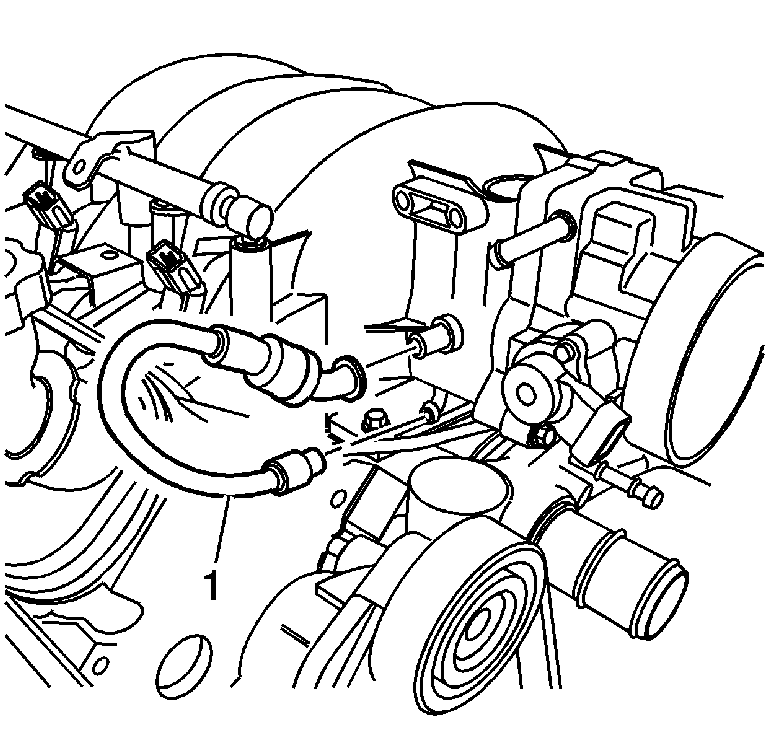
Will someone please tell me which way vapors and vacuum are flowing in this diagram? In all the hoses? I'm setting up PCV just like this on a 408 but I'm trying to understand where the "fresh" air is coming from, if at all. I'm also trying to understand which direction the PCV valve needs to be oriented.
Thanks in advance!
Last edited by scott1974; Aug 14, 2014 at 11:52 AM.
It seems like the hose going from the passenger side valve cover to the bellows before the throttle body (LS2 TB) would be under vacuum from the venturi effect of the air rushing into the throttle body. Also the port on the intake manifold is vacuum so it seems they would be working against each other.
Maybe some simple directional arrows would help me understand better.
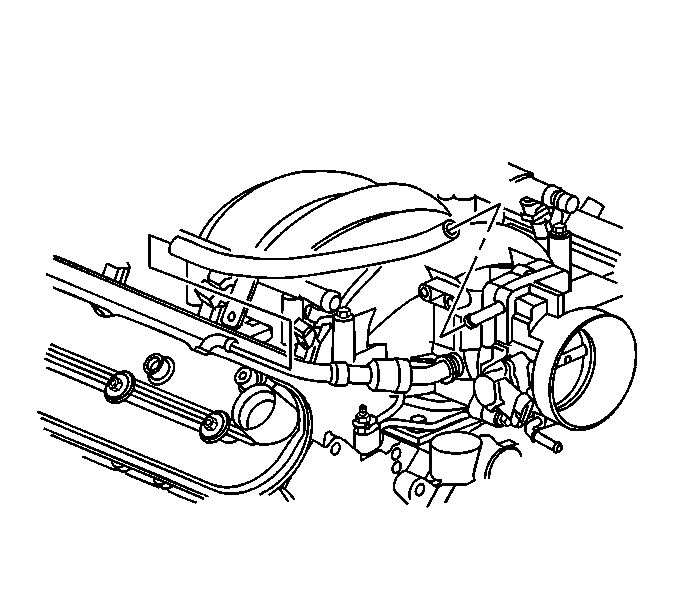
Here is the LS1 & LS6 PCV actual hose routing schematic's:
LS6 Vacuum from the intake manifold pulls gasses from the block into the intake for disposal via compustion:
LS1
The manifold connection pulls gasses from the rear of the valve covers and into the intake for disposal via compustion:
ON BOTH systems, there is a fitting on the same side of the Throttle body that allows metered fresh filtered air into the block to replace the air/gasses that the PCV system removes. You can see it very clearly on the LS6 PCV picture.
On both systems, it connects to the front fitting on the passengers side valve cover:
Follow the connection line carefully as its difficult to distinguish it. (showing LS-1 system.)
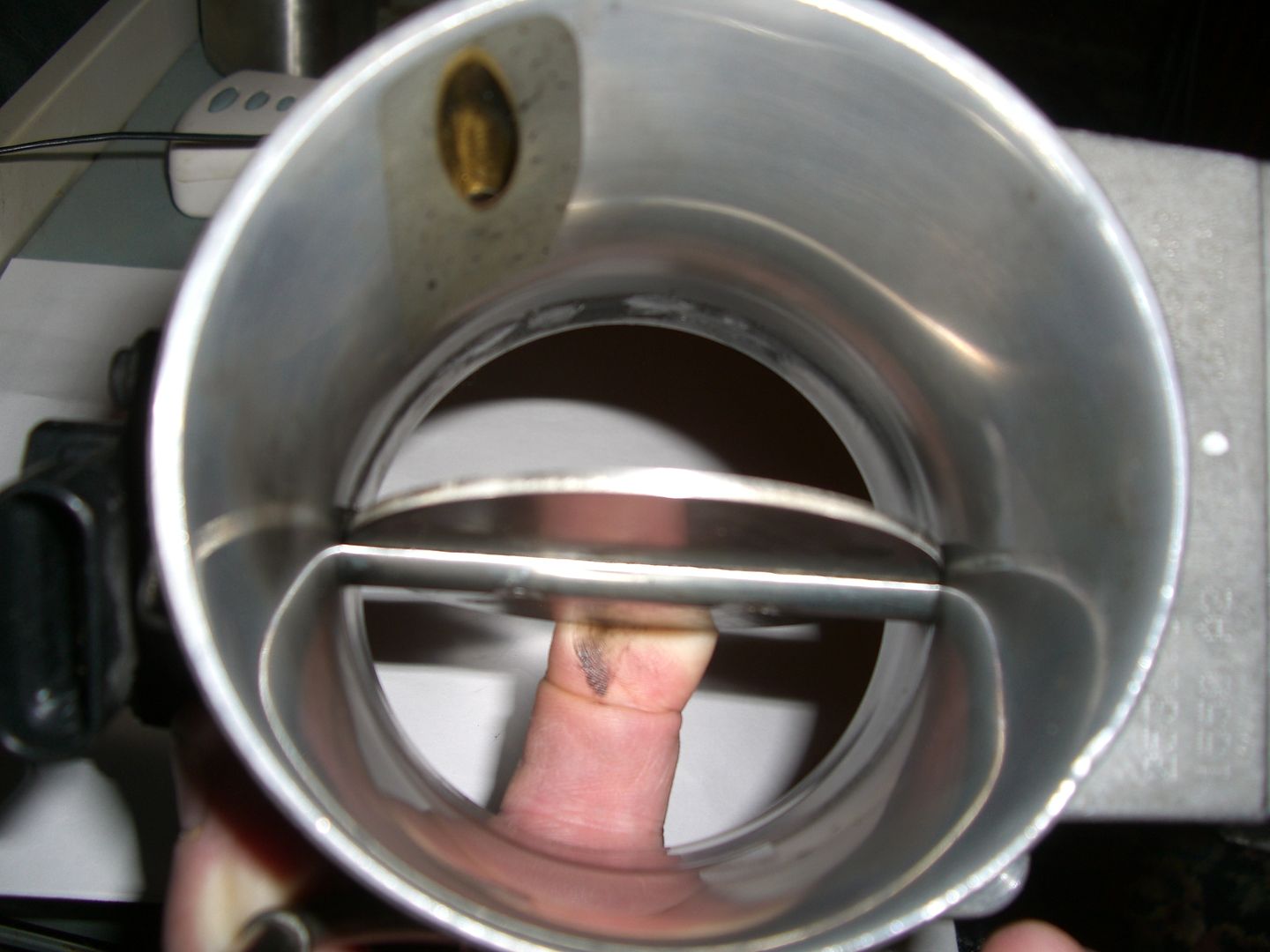
This is the port inside the TB where the fresh air for the block comes from:
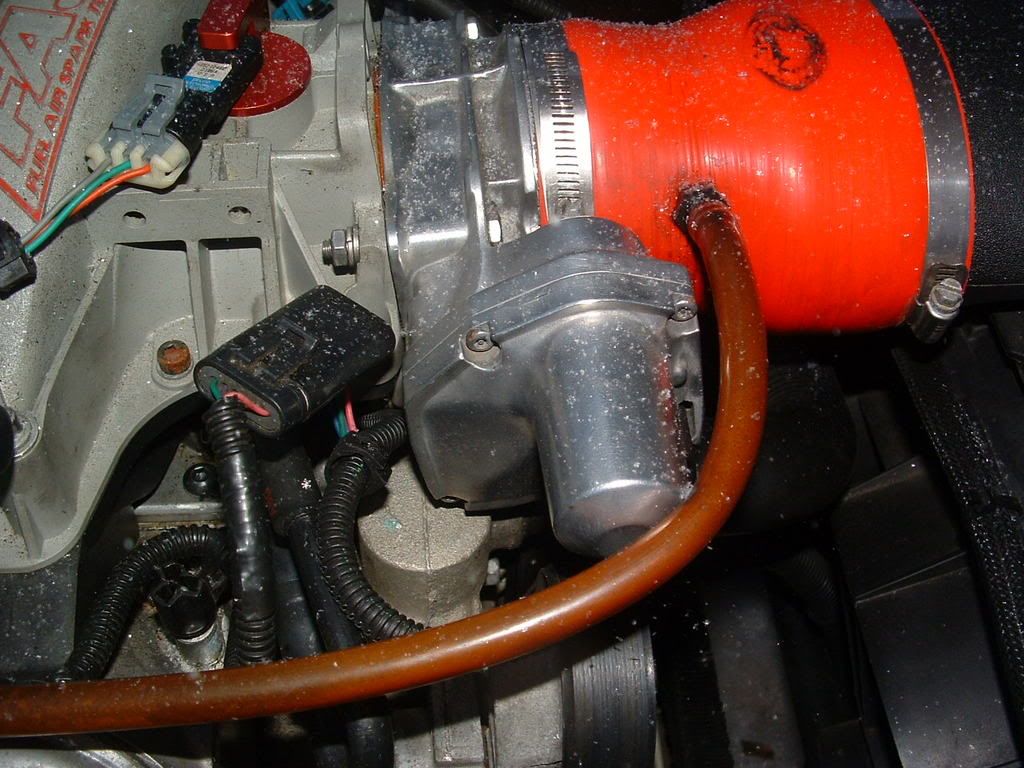
When you add an after market FAST 90mm & 90 mm TB to a C5, the 90 mm TB does NOt have the fresh air port. So, you have to find a way to get Metered Fresh Air into the block. That is where I temproarily tapped into. I have since replaced the coupler and took the air from the other side of the air bridge on the flat spot. i installed a brass 90 deg barbed fitting and routed the hose under the TB back to the passengers valve cover.
So I'm guessing when the throttle blade is open far enough, the vacuum of the air rushing into the manifold would overcome the vacuum created in the crankcase (valve cover port) making the PCV system inoperable until the crankcase vacuum is greater than the venturi effect of the hose plumbed in the red coupler? Following me? Is PCV only happening at low rpm?
As an experiment I think I will attach my vacuum gauge to the hole in the red coupler and see what kind of venturi effect vacuum is there under different rpms. Maybe its much less than I am imagining. Then I will do the same with the port on the valve cover. Will be interesting to see...
Designer Imagines A Corvette That Looks More Like a Corvette Than the Corvette
Slideshow: A Jaguar designer's personal project imagines what a modern front-engined Corvette might look like if Chevrolet revisited the golden age of the Stingray.





 ANOTHER PCV question