





 Mar 3, 2015, 12:30 PM
Last edit by: IB Advertising
See related guides and technical advice from our community experts:
Browse all: Engine and Powertrain
- Why is my cat misfiring?
Guide to diagnose trouble with recommended solutions.
Browse all: Engine and Powertrain

P0300: Misfire from hell

Thread Starter
Racer


Joined: Aug 2000
Posts: 460
Likes: 12
From: Gulf Shores AL
 P0300: Misfire from hell - SOLVED
For several years now I have been experiencing an intermittent, cold idle misfire in cylinder #5. I ignored the problem because a) I wasn’t able to solve it easily and b) the car wasn’t up for emissions inspection so procrastination.
Fast forward, I had a differential leak, had a bunch of lights out on my IP, and my cat was shot, so I needed to start addressing deferred maintenance and decided to refresh a whole bunch of things. Got myself a new cat setup, figured I’d replace the O2 sensors while I was under the car, decided to bust a bunch bolts so I had to pull the right side head, tore the dash out, so on and so forth. Great project, got everything I wanted to do done but now I still have this misfire that won’t solve.
More specifically, the car starts and idles smoothly for maybe 5 seconds, then #5 will misfire intermittently while the engine warms up. If I give it gas, the misfire goes away, and it will rarely misfire at idle once warm. Occasionally the stumble is severe enough to trigger a misfire count on the next cylinder in the firing order (#4), but otherwise the other cylinders are firing perfectly. Current misfire counts vary from zero to sometimes 10-20, and the historical count will climb up to a 200-300 during a warm up cycle. This will trigger a P0300.
I have performed the following tests.
I have confirmed good spark.
Confirmed good fuel.
Reasonably confident there are no vacuum issues
Mechanical
After all of this, I still have the same misfire behavior. The misfire is not horrible from an operational standpoint, but the second O2 sensor on the bank is indicating a lot of activity so I know I am going wreck the new cat if I don’t solve this. The only idea I have left is a bad valve or valve seal. The only other odd thing I see are some hairline cracks in the plate covering the engine valley, but I think if this was creating a vacuum issue it would not be isolated to one cylinder.
Anyone have any suggestions?
oh, stock 2001 Z06
Fast forward, I had a differential leak, had a bunch of lights out on my IP, and my cat was shot, so I needed to start addressing deferred maintenance and decided to refresh a whole bunch of things. Got myself a new cat setup, figured I’d replace the O2 sensors while I was under the car, decided to bust a bunch bolts so I had to pull the right side head, tore the dash out, so on and so forth. Great project, got everything I wanted to do done but now I still have this misfire that won’t solve.
More specifically, the car starts and idles smoothly for maybe 5 seconds, then #5 will misfire intermittently while the engine warms up. If I give it gas, the misfire goes away, and it will rarely misfire at idle once warm. Occasionally the stumble is severe enough to trigger a misfire count on the next cylinder in the firing order (#4), but otherwise the other cylinders are firing perfectly. Current misfire counts vary from zero to sometimes 10-20, and the historical count will climb up to a 200-300 during a warm up cycle. This will trigger a P0300.
I have performed the following tests.
I have confirmed good spark.
- Ignition coil shows proper resistance
- I swapped #5 ignition coil with a non-misfiring cylinder’s coil
- Swapped plug wires
- Swapped plugs
- Replaced plugs and wires anyway because the old ones were pretty old
- Tested #5 ignition coil ground to chassis ground and got a good result
- Cleaned the ground connectors.
- Checked resistance across the injector wiring harness and everything was good.
- Tested continuity across the main injector connector and got a good result.
- Replaced the injector harness anyway because it was showing some age.
- Put a timing light on #5 and am getting a reliable spark
Confirmed good fuel.
- Swapped fuel injector #5 with a non-misfiring injector.
- Changed the fuel injector gaskets
- Tested fuel pressure (61 psi, in range)
- Performed Fuel Injector Coil balance test, passed with flying colors
Reasonably confident there are no vacuum issues
- Visually inspected hoses, all good.
- Tested with some propane and a home made smoker and did not find any leaks.
- Cleaned MAF.
- I had to pulled the intake to replace the air check valve, so I replaced the intake seals and visually inspected intake for cracks.
- No exhaust leaks.
Mechanical
- Performed a compression test, passed
- Visually inspected valve springs, no broken spring.
- Checked harmonic balancer for any obvious failures.
After all of this, I still have the same misfire behavior. The misfire is not horrible from an operational standpoint, but the second O2 sensor on the bank is indicating a lot of activity so I know I am going wreck the new cat if I don’t solve this. The only idea I have left is a bad valve or valve seal. The only other odd thing I see are some hairline cracks in the plate covering the engine valley, but I think if this was creating a vacuum issue it would not be isolated to one cylinder.
Anyone have any suggestions?
oh, stock 2001 Z06
Last edited by jwg2; Sep 14, 2015 at 09:43 AM.
Corvette Stories
The Best of Corvette for Corvette Enthusiasts

Top 10 Most Expensive Corvettes Ever Sold on Bring A Trailer
Brett Foote
10 Things Every Corvette Owner Needs (2026 Edition)
Michael S. Palmer
8 Most "Only Corvette Owners Understand" Quirks and Problems
Pouria Savadkouei
10 Reasons the C6 Z06 is Still A Performance Benchmark After 20 Years
Joe Kucinski
How Much Horsepower Every Corvette Engine "LOST" in 1972
Joe Kucinski
Top 10 DOs and DON'Ts for Protecting Your Convertible Top!
Michael S. Palmer
Top 10 Most Explosive Corvettes Ever Made: Power-to-Weight Ratio Ranked!
Joe Kucinski
150 hp to 1,250 hp: Every Corvette Generation Compared by the Specs That Matter
Joe Kucinski
8 Coolest Corvette Pace Cars (and Replicas) of All Time
Verdad Gallardo
Thread Starter
Racer
Joined: Aug 2000
Posts: 460
Likes: 12
From: Gulf Shores AL
Interesting...should have checked that when I had the intake off. I haven't noticed any unexpected noises but I'll get the stethoscope out.

Tech Contributor


Joined: Dec 1999
Posts: 32,910
Likes: 2,402
From: Anthony TX
CI 6,7,8,9,11 Vet
St. Jude Donor '08
Have you compared the Injector pulse widths between cylinders especially when it misfires?
I would also find a way to check the dwell on 5 compared to other working cylinders. Find an old points dwell meter and slip a wire in the pin for the coil firing signal and see what it is during normal operation and misfire operation.
Sounds like you checked/swapped out all mechanical stuff. Maybe you have a bad PCM driver for the fuel or coil.
Dont know if the dwell meter would work on the injector but, it cant hurt to try.
I knew that those old 1970s tools would STILL be handy one day in the future!!!
If all else fails,, get a used PCM and swap that in.
Bill
I would also find a way to check the dwell on 5 compared to other working cylinders. Find an old points dwell meter and slip a wire in the pin for the coil firing signal and see what it is during normal operation and misfire operation.
Sounds like you checked/swapped out all mechanical stuff. Maybe you have a bad PCM driver for the fuel or coil.
Dont know if the dwell meter would work on the injector but, it cant hurt to try.
I knew that those old 1970s tools would STILL be handy one day in the future!!!
If all else fails,, get a used PCM and swap that in.
Bill
Thread Starter
Racer
Joined: Aug 2000
Posts: 460
Likes: 12
From: Gulf Shores AL
Have you compared the Injector pulse widths between cylinders especially when it misfires?
I would also find a way to check the dwell on 5 compared to other working cylinders. Find an old points dwell meter and slip a wire in the pin for the coil firing signal and see what it is during normal operation and misfire operation.
Sounds like you checked/swapped out all mechanical stuff. Maybe you have a bad PCM driver for the fuel or coil.
Dont know if the dwell meter would work on the injector but, it cant hurt to try.
I knew that those old 1970s tools would STILL be handy one day in the future!!!
If all else fails,, get a used PCM and swap that in.
Bill
I would also find a way to check the dwell on 5 compared to other working cylinders. Find an old points dwell meter and slip a wire in the pin for the coil firing signal and see what it is during normal operation and misfire operation.
Sounds like you checked/swapped out all mechanical stuff. Maybe you have a bad PCM driver for the fuel or coil.
Dont know if the dwell meter would work on the injector but, it cant hurt to try.
I knew that those old 1970s tools would STILL be handy one day in the future!!!
If all else fails,, get a used PCM and swap that in.
Bill
Never tried pulling dwell off an electronic ignition, but tried what you suggested and it worked. Put a pin up the purple wire on #1 and clamped my meter red to it, put black to chassis ground. Dwell came ups 43.6. Did the same thing on #5 (green wire this time), also came up with 43.6. Not sure if this is expected value, but that they agree is encouraging.
The misfire is intermittent but frequent at idle, so these values were pulled while the engine was misfiring and not.
Bill, you had mentioned swapping a PCM as another option. Before I reload the parts cannon, can you think of any other diagnostic I can try?
Tech Contributor
Joined: Dec 1999
Posts: 32,910
Likes: 2,402
From: Anthony TX
CI 6,7,8,9,11 Vet
St. Jude Donor '08
I pulled injector pulse width off of #5 (misfiring) and number #1 (good). Pulled #5 first, from a cold start, idling. At first pulse width came up at about 3.0 mS, but after a few seconds dropped and held steady at 2.7 mS. Switched to #1 with the engine warm but not at operating temperature, and it pulled a steady 2.7 mS pulse width at idle. I was expecting about 3 ms, but this is probably close enough.
Never tried pulling dwell off an electronic ignition, but tried what you suggested and it worked. Put a pin up the purple wire on #1 and clamped my meter red to it, put black to chassis ground. Dwell came ups 43.6. Did the same thing on #5 (green wire this time), also came up with 43.6. Not sure if this is expected value, but that they agree is encouraging.
The misfire is intermittent but frequent at idle, so these values were pulled while the engine was misfiring and not.
Bill, you had mentioned swapping a PCM as another option. Before I reload the parts cannon, can you think of any other diagnostic I can try?
Never tried pulling dwell off an electronic ignition, but tried what you suggested and it worked. Put a pin up the purple wire on #1 and clamped my meter red to it, put black to chassis ground. Dwell came ups 43.6. Did the same thing on #5 (green wire this time), also came up with 43.6. Not sure if this is expected value, but that they agree is encouraging.
The misfire is intermittent but frequent at idle, so these values were pulled while the engine was misfiring and not.
Bill, you had mentioned swapping a PCM as another option. Before I reload the parts cannon, can you think of any other diagnostic I can try?
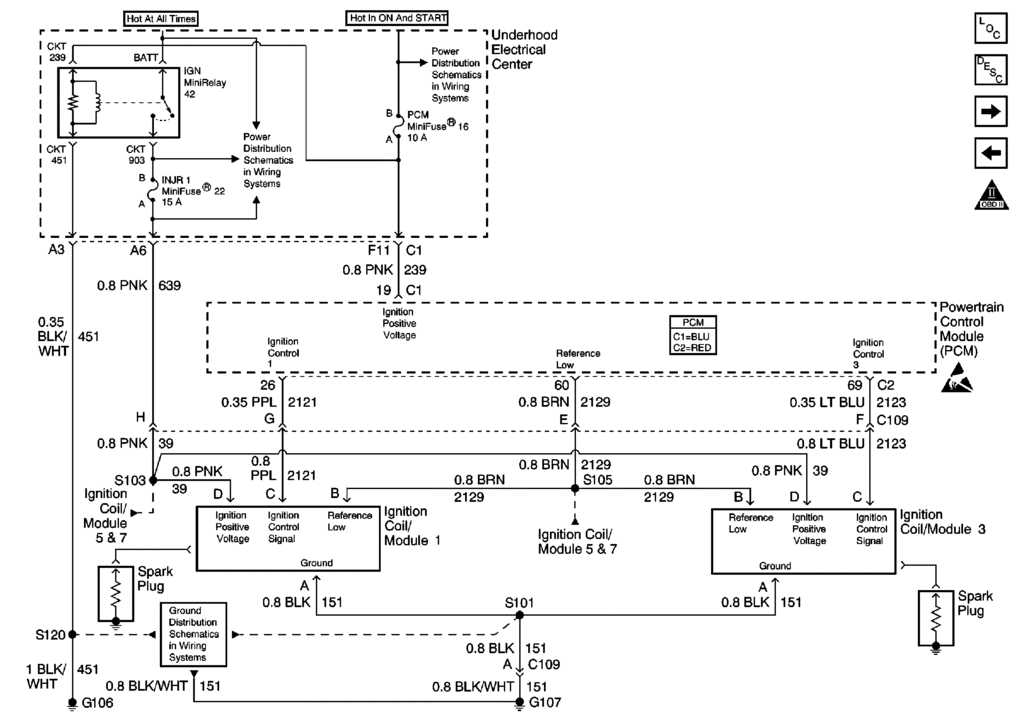
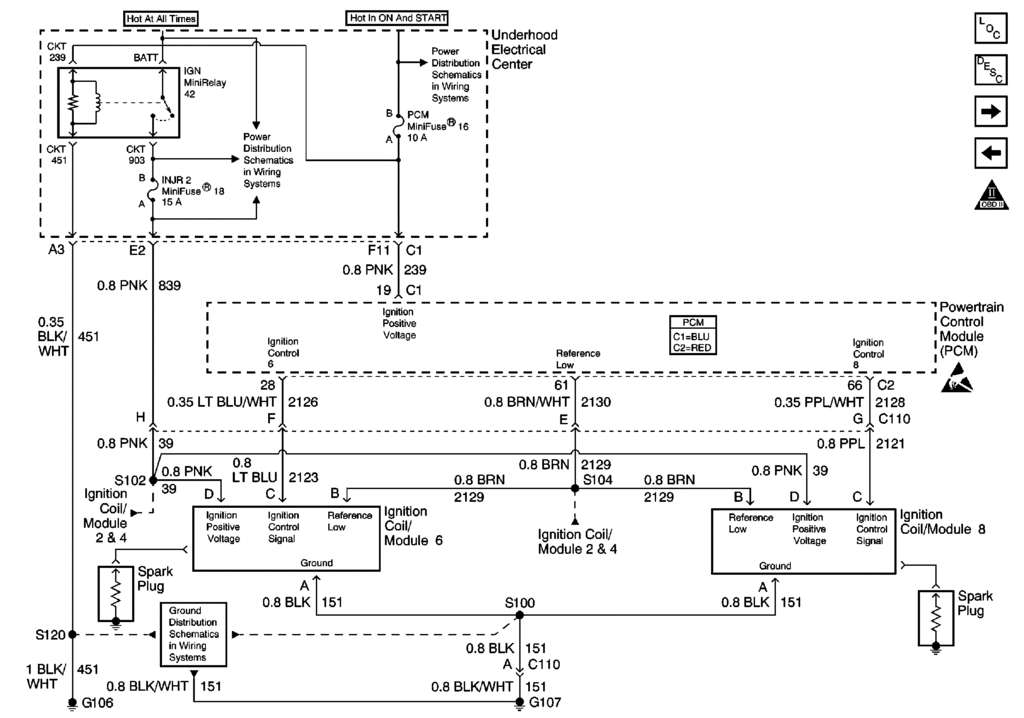
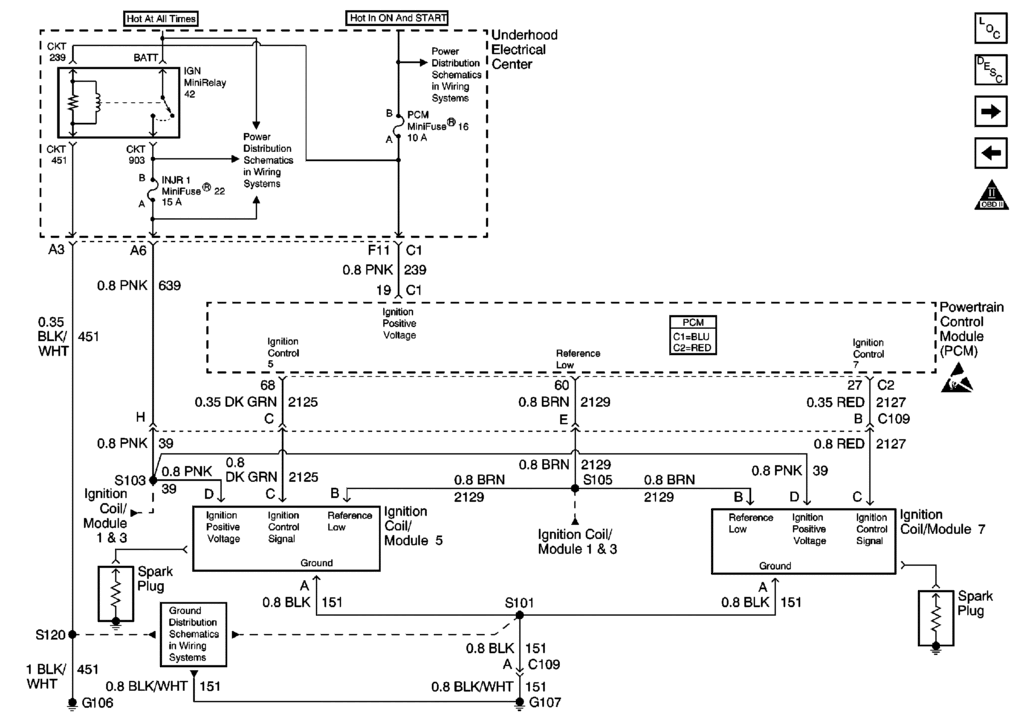
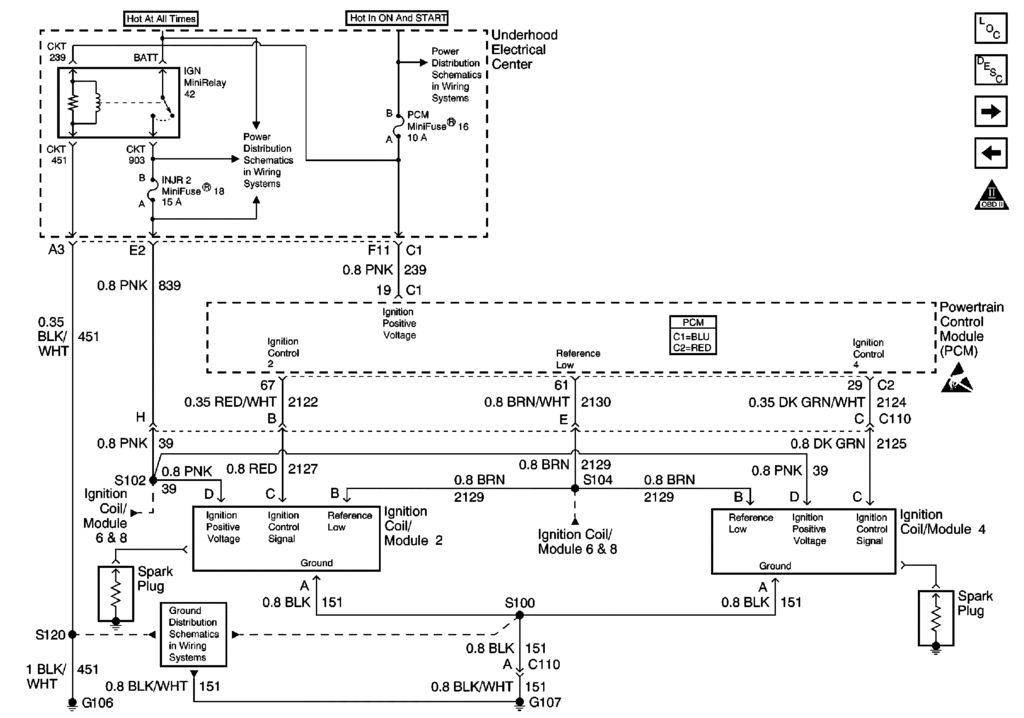
 ,, try power/voltage on a good and the bad coil. Check the VOLTAGE on that dwell signal and compare voltage to other coils. Also look very closely at the female pins on the offending coil connector and the connector for that bank. Look for loose spread pins. Wiggle, and bend the wires in the connectors and see if you get a change. The power voltage should be very close to FULL battery voltage. Make sure that you are reading it when it misfires.
Measure the voltage to engine ground and then chassis ground on the test slots on top of the fuses for the IGNITION FUSES. Fuses #16, 22, & 18
Bill
If you are POSITIVE that you swapped all the misfiring cylinder individual parts with a good cylinders parts,,, After that, its got to be mechanical.
Last edited by Bill Curlee; Oct 25, 2014 at 01:50 PM.
Tech Contributor
Joined: Dec 1999
Posts: 32,910
Likes: 2,402
From: Anthony TX
CI 6,7,8,9,11 Vet
St. Jude Donor '08
Something is DIFFERENT on the cylinder with a misfire. We just have to pick it apart and narrow it down to FULE, AIR, SPARK, COMPRESSION and figure out what one if suffering.
Can you spray come brake parts cleaner around the intake runner and vacuum points for Cyl #5 and see if you have a small vacuum leak?
Obtain an inferred thermometer and measure all the exhaust runners at the points just out of each cylinder and also measure the INTAKE runner at the point it enters each cylinder. The exhaust temps should be pretty consistent.
If you have a bad intake valve spring, the weak valve spring will allow some exhaust gasses to pass back up the intake runner and that runner will be higher in temp.
Bill
Can you spray come brake parts cleaner around the intake runner and vacuum points for Cyl #5 and see if you have a small vacuum leak?
Obtain an inferred thermometer and measure all the exhaust runners at the points just out of each cylinder and also measure the INTAKE runner at the point it enters each cylinder. The exhaust temps should be pretty consistent.
If you have a bad intake valve spring, the weak valve spring will allow some exhaust gasses to pass back up the intake runner and that runner will be higher in temp.
Bill
Thread Starter
Racer
Joined: Aug 2000
Posts: 460
Likes: 12
From: Gulf Shores AL
Something is DIFFERENT on the cylinder with a misfire. We just have to pick it apart and narrow it down to FULE, AIR, SPARK, COMPRESSION and figure out what one if suffering.
Can you spray come brake parts cleaner around the intake runner and vacuum points for Cyl #5 and see if you have a small vacuum leak?
Obtain an inferred thermometer and measure all the exhaust runners at the points just out of each cylinder and also measure the INTAKE runner at the point it enters each cylinder. The exhaust temps should be pretty consistent.
If you have a bad intake valve spring, the weak valve spring will allow some exhaust gasses to pass back up the intake runner and that runner will be higher in temp.
Bill
Can you spray come brake parts cleaner around the intake runner and vacuum points for Cyl #5 and see if you have a small vacuum leak?
Obtain an inferred thermometer and measure all the exhaust runners at the points just out of each cylinder and also measure the INTAKE runner at the point it enters each cylinder. The exhaust temps should be pretty consistent.
If you have a bad intake valve spring, the weak valve spring will allow some exhaust gasses to pass back up the intake runner and that runner will be higher in temp.
Bill
How different will the runner temps be if I have exhaust blowing back? I did a quick check on all four on bank one, and they were all slightly different but nothing remarkable.
Tech Contributor
Joined: Dec 1999
Posts: 32,910
Likes: 2,402
From: Anthony TX
CI 6,7,8,9,11 Vet
St. Jude Donor '08
Depends on how much back flow you have from the improper sealing. Ive seen 30-40 deg difference.
A leak down and compression test will tell you more data. Thats just a quick check.
BC

Melting Slicks

Joined: Apr 2009
Posts: 2,479
Likes: 36
P0300: Misfire from hell
Originally Posted by jwg2
Crankshaft variation relearn was the answer.
Last edited by Cybermind; Sep 14, 2015 at 10:15 AM.


Cruising
Joined: May 2021
Posts: 14
Likes: 0
C5 2003 misfiring, gives P0305 code
Couple days ago my C5 after I got on it, backed off quickly started to run rough, idle rough, backfire but got her home. Now after researching the P0305 code I am in the process of removing the ignition coil, ok, no problem so far, then pulled wire off coil to spark plug, tried to remove wire from spark plug and yes I broke it, ok, will buy another, the problem is I can not get the wire off of the spark plug (very tight for hands to operate) or able to remove the metal can cover protecting the spark plug. I would appreciate any help/advice on how to remove the plug and wire, from cylinder #5? Thank you, a new member.