



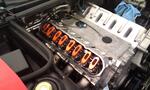



Broken crank pulley

Thread Starter
Advanced

Joined: Nov 2015
Posts: 88
Likes: 1
 Broken crank pulley


I did a search and could not find anyone who has had this same problem. Looks like my crank pulley is splitting into two pieces. If I need a new pulley, how do you balance them? Does it matter that my old one is damaged? I also forgot to make reference marks for the alignment but I will before I take it off completely. There are a lot of balancing holes drilled in the damaged pulley, but no weights in them.
Thread Starter
Advanced
Joined: Nov 2015
Posts: 88
Likes: 1
Balancer pulley on the C5 from the factory is an inner hub that is interference fit to the snout of the crank and an outer ring that the belts ride on. The two metal parts are hel together by a rubber material that is well known for failing on the C5. Dometimes the outer portion will move forward and contact the rack and sometimes it walks back and into the front cover and oil pan. Check for damage once the the balancer is off.....
Unlike balancer pulleys of old there is no "key way" to align the pulley.
Several options for replacements. OEM or aftermarket. OEM will be the least expensive but subject to the same failure somewhere down the road. Aftermarket will be more expensive.
Either way the bolt that held the pulley onto the crank is a one time use torque to yield design. You must replace that with new as well. Again two choices, OEM or aftermarket. ARP makes a multi use crank pulley bolt but again it will be more expensive than the OEM bolt. If you go OEM bolt do NOT use the new bolt to press the pulley onto the crank. Use the old one to get the pulley pressed in place then use the new bolt to torque to spec.
Unlike balancer pulleys of old there is no "key way" to align the pulley.
Several options for replacements. OEM or aftermarket. OEM will be the least expensive but subject to the same failure somewhere down the road. Aftermarket will be more expensive.
Either way the bolt that held the pulley onto the crank is a one time use torque to yield design. You must replace that with new as well. Again two choices, OEM or aftermarket. ARP makes a multi use crank pulley bolt but again it will be more expensive than the OEM bolt. If you go OEM bolt do NOT use the new bolt to press the pulley onto the crank. Use the old one to get the pulley pressed in place then use the new bolt to torque to spec.

Tech Contributor


Joined: Dec 1999
Posts: 32,910
Likes: 2,402
From: Anthony TX
CI 6,7,8,9,11 Vet
St. Jude Donor '08
THIS APPLIES IF,,,,,,,,,,,,,,,, YOU HAVE A MN6/NMN12 STANDARD TRANS:
Yes,,,,,,,,, The crank pulley is HOT BALANCED to the engine after the engine is assembled and running.
IF,,,,,,,,,, you failed to mark the old pulley, its NOT as important as conducting the HOT BALANCE compensation to the Manual trans flywheel/pressure plate assy.
Order a new GM Replacement Dampener or install a new power bond dampener. I highly recommend spending the cash for a ARP Bolt!
If you have a A4 Trans,,, Its DOES NOT MATTER!
BC
Yes,,,,,,,,, The crank pulley is HOT BALANCED to the engine after the engine is assembled and running.
IF,,,,,,,,,, you failed to mark the old pulley, its NOT as important as conducting the HOT BALANCE compensation to the Manual trans flywheel/pressure plate assy.
Order a new GM Replacement Dampener or install a new power bond dampener. I highly recommend spending the cash for a ARP Bolt!
If you have a A4 Trans,,, Its DOES NOT MATTER!
BC
Tech Contributor
Joined: Dec 1999
Posts: 32,910
Likes: 2,402
From: Anthony TX
CI 6,7,8,9,11 Vet
St. Jude Donor '08
 All you have removed is the outer rim. Now you have to get the jaws of the puller inside the HUB and yank it off.
SECRET: If you heat the hub until its approx. 200-250 deg, it comes off a LOT easier!
Bill
Thread Starter
Advanced
Joined: Nov 2015
Posts: 88
Likes: 1
THIS APPLIES IF,,,,,,,,,,,,,,,, YOU HAVE A MN6/NMN12 STANDARD TRANS:
Yes,,,,,,,,, The crank pulley is HOT BALANCED to the engine after the engine is assembled and running.
IF,,,,,,,,,, you failed to mark the old pulley, its NOT as important as conducting the HOT BALANCE compensation to the Manual trans flywheel/pressure plate assy.
Order a new GM Replacement Dampener or install a new power bond dampener. I highly recommend spending the cash for a ARP Bolt!
If you have a A4 Trans,,, Its DOES NOT MATTER!
BC
Yes,,,,,,,,, The crank pulley is HOT BALANCED to the engine after the engine is assembled and running.
IF,,,,,,,,,, you failed to mark the old pulley, its NOT as important as conducting the HOT BALANCE compensation to the Manual trans flywheel/pressure plate assy.
Order a new GM Replacement Dampener or install a new power bond dampener. I highly recommend spending the cash for a ARP Bolt!
If you have a A4 Trans,,, Its DOES NOT MATTER!
BC

I am replacing the cam

You're correct, i thought that it didn't matter but unfortunately i realized that too late. Now i can't decide whether i should get a different puller and trying to salvage the pulley for balancing, or ripping off the outer hub then getting the inner hub of separately and trying to piece them together. I would get another puller i just can't find anything other than 3 arm pullers exactly like mine. I went to advanced auto parts and autozone and only found more standard 3 arms.
Tech Contributor
Joined: Dec 1999
Posts: 32,910
Likes: 2,402
From: Anthony TX
CI 6,7,8,9,11 Vet
St. Jude Donor '08
Bud,,,,, Your a little too late. The dampener is HOT balanced ON THE ENGINE as a WHOLE dampener.. That includes the outer ring, rubber elastomeric bonded seal and the HUB.
There is NO way you can balance the new damper to the old one as you have destroyed the old one.
When you balance the new dampener, you have to have a GOOD OLD OEM dampener that has been matched marked to the crank so it can go back on in the exact same orientation.
Just install a new one and don't worry about it.
There is NO way you can balance the new damper to the old one as you have destroyed the old one.
When you balance the new dampener, you have to have a GOOD OLD OEM dampener that has been matched marked to the crank so it can go back on in the exact same orientation.
Just install a new one and don't worry about it.
Corvette Stories
The Best of Corvette for Corvette Enthusiasts

Top 10 Most Expensive Corvettes Ever Sold on Bring A Trailer
Brett Foote
10 Things Every Corvette Owner Needs (2026 Edition)
Michael S. Palmer
8 Most "Only Corvette Owners Understand" Quirks and Problems
Pouria Savadkouei
10 Reasons the C6 Z06 is Still A Performance Benchmark After 20 Years
Joe Kucinski
How Much Horsepower Every Corvette Engine "LOST" in 1972
Joe Kucinski
Top 10 DOs and DON'Ts for Protecting Your Convertible Top!
Michael S. Palmer
Top 10 Most Explosive Corvettes Ever Made: Power-to-Weight Ratio Ranked!
Joe Kucinski
150 hp to 1,250 hp: Every Corvette Generation Compared by the Specs That Matter
Joe Kucinski
8 Coolest Corvette Pace Cars (and Replicas) of All Time
Verdad Gallardo
Team Owner


Joined: May 2001
Posts: 36,836
Likes: 244
From: Dear Karma, I have a list of people you missed.
St. Jude Donor '08-'09-'10-'11-'12-'13-'14-'15-'16
There are a lot of balancing holes drilled in the damaged pulley, but no weights in them.
Team Owner
Joined: May 2001
Posts: 36,836
Likes: 244
From: Dear Karma, I have a list of people you missed.
St. Jude Donor '08-'09-'10-'11-'12-'13-'14-'15-'16

Racer
Joined: Jan 2010
Posts: 296
Likes: 33
From: Virginia Beach VA
Agree with this. Your engine went through the hot balance and NO WEIGHTS needed to be added. So a zero balanced damper is what you need. All aftermarket and OEM dampers will be close to zero balance out of the box. Put on one of your choice and be done with it. No need to go to extra steps in this case.
Thread Starter
Advanced
Joined: Nov 2015
Posts: 88
Likes: 1

Bud,,,,, Your a little too late. The dampener is HOT balanced ON THE ENGINE as a WHOLE dampener.. That includes the outer ring, rubber elastomeric bonded seal and the HUB.
There is NO way you can balance the new damper to the old one as you have destroyed the old one.
When you balance the new dampener, you have to have a GOOD OLD OEM dampener that has been matched marked to the crank so it can go back on in the exact same orientation.
Just install a new one and don't worry about it.
There is NO way you can balance the new damper to the old one as you have destroyed the old one.
When you balance the new dampener, you have to have a GOOD OLD OEM dampener that has been matched marked to the crank so it can go back on in the exact same orientation.
Just install a new one and don't worry about it.
Although i am leaning toward an ATI balancer.
Agree with this. Your engine went through the hot balance and NO WEIGHTS needed to be added. So a zero balanced damper is what you need. All aftermarket and OEM dampers will be close to zero balance out of the box. Put on one of your choice and be done with it. No need to go to extra steps in this case.
I know everyone has told me there's no need to take extra steps but my interest in learning how to hot balance a harmonic balancer is peaked.. I don't see why it would be a bad idea, but i'm sure it isn't easily done at home.
Tech Contributor
Joined: Dec 1999
Posts: 32,910
Likes: 2,402
From: Anthony TX
CI 6,7,8,9,11 Vet
St. Jude Donor '08
Unless you have access to GMs million dollar hot balance machine, HOT balancing isn't going to happen.
That said,,,, There are machines that can dynamically balance the engine and allow you to ADD or remove weight on the flywheel and or dampener with the engine in the car and running. Look in your Yellow Pages for machine balancing and inquire..
Bill
That said,,,, There are machines that can dynamically balance the engine and allow you to ADD or remove weight on the flywheel and or dampener with the engine in the car and running. Look in your Yellow Pages for machine balancing and inquire..
Bill
Racer
Joined: Jan 2010
Posts: 296
Likes: 33
From: Virginia Beach VA
This would be true if the only holes were the standard symmetrical holes they are manufactured with to accommodate the balancing weights. Mine has no weights but it has had its weight reduced on exclusively one side via a bunch of holes with varying depths. like you said they come zero balanced, so with all the holes i don't think mine is zero balanced. It seems that drilling holes instead of adding weights is just what they were doing at the factory when mine was built, my flywheel is the same way and also has a bunch of holes side by side, on one side, that vary in depth.
I know everyone has told me there's no need to take extra steps but my interest in learning how to hot balance a harmonic balancer is peaked.. I don't see why it would be a bad idea, but i'm sure it isn't easily done at home.
I know everyone has told me there's no need to take extra steps but my interest in learning how to hot balance a harmonic balancer is peaked.. I don't see why it would be a bad idea, but i'm sure it isn't easily done at home.
The Damper is delivered to GM by the manufacturer having been "zero balanced" to within a given balance tolerance. This is what the "non symmetrical patterned" blind holes, that do not go all the way through are for. They are drilled by the manufacturer to bring the damper to zero balance (within a given balance tolerance). The equally spaced through holes around the perimeter are there, by design, from the manufacturer to accept balance weights, if needed, that would be installed by GM during the hot balance procedure. During the hot balance, GM will ONLY ADD WEIGHTS as necessary to the damper and/or flywheel. They DO NOT do any additional drilling. So, the damper is zero balanced by the manufacturer by drilling blind holes (not the balance weight receptacle holes) before delivery to GM, and GM would install weights if needed after installation on to an engine and during the hot balance. If you do not see any weights in it, it did not need any added during the hot balance. And it is close to zero balance.
This is the exact same scenario with the flywheels. They are zero balanced (to within a given tolerance) by the manufacturer (LuK). This is done by drilling blind holes where needed. Then they also have 12 circumferential holes, equally spaced, to accept balance weights if needed during the hot balance. If there are no weights in them, they also did not need them added during the hot balance. HOWEVER, this is a different situation than the damper. The damper is but ONE component. The Flywheel AND Pressure Plate are both installed, as an assembly, during the hot balance. So any weights added to the flywheel are counting for the engine, flywheel, and pressure plate, all combined. Therefore it's a good idea to see what your balance/unbalance is of your stock FW/PP combo, regardless of the presence or absence of balance weights.
Of course it won't hurt to check the balance of your stock damper, but without weights, it is going to be very close to zero. And the small radius of the balance weight receptacle holes in the damper offer a much much smaller correction capability than do the holes of the flywheel. It's relatively cheap to try to have your new damper matched to the OEM, but unnecessary in this case.
If you ever change your clutch, pay attention to this and have the new clutch assembly matched to the original clutch assembly. Regardless of whether or not you see weights. The combined balance tolerances of the FW and PP as delivered are enough to potentially exceed the 0.5 oz∙in balance spec for the entire engine assembly.
Now wasn't that fun??

Thread Starter
Advanced
Joined: Nov 2015
Posts: 88
Likes: 1
You have this backwards.
The Damper is delivered to GM by the manufacturer having been "zero balanced" to within a given balance tolerance. This is what the "non symmetrical patterned" blind holes, that do not go all the way through are for. They are drilled by the manufacturer to bring the damper to zero balance (within a given balance tolerance). The equally spaced through holes around the perimeter are there, by design, from the manufacturer to accept balance weights, if needed, that would be installed by GM during the hot balance procedure. During the hot balance, GM will ONLY ADD WEIGHTS as necessary to the damper and/or flywheel. They DO NOT do any additional drilling. So, the damper is zero balanced by the manufacturer by drilling blind holes (not the balance weight receptacle holes) before delivery to GM, and GM would install weights if needed after installation on to an engine and during the hot balance. If you do not see any weights in it, it did not need any added during the hot balance. And it is close to zero balance.
This is the exact same scenario with the flywheels. They are zero balanced (to within a given tolerance) by the manufacturer (LuK). This is done by drilling blind holes where needed. Then they also have 12 circumferential holes, equally spaced, to accept balance weights if needed during the hot balance. If there are no weights in them, they also did not need them added during the hot balance. HOWEVER, this is a different situation than the damper. The damper is but ONE component. The Flywheel AND Pressure Plate are both installed, as an assembly, during the hot balance. So any weights added to the flywheel are counting for the engine, flywheel, and pressure plate, all combined. Therefore it's a good idea to see what your balance/unbalance is of your stock FW/PP combo, regardless of the presence or absence of balance weights.
Of course it won't hurt to check the balance of your stock damper, but without weights, it is going to be very close to zero. And the small radius of the balance weight receptacle holes in the damper offer a much much smaller correction capability than do the holes of the flywheel. It's relatively cheap to try to have your new damper matched to the OEM, but unnecessary in this case.
If you ever change your clutch, pay attention to this and have the new clutch assembly matched to the original clutch assembly. Regardless of whether or not you see weights. The combined balance tolerances of the FW and PP as delivered are enough to potentially exceed the 0.5 oz∙in balance spec for the entire engine assembly.
Now wasn't that fun??
The Damper is delivered to GM by the manufacturer having been "zero balanced" to within a given balance tolerance. This is what the "non symmetrical patterned" blind holes, that do not go all the way through are for. They are drilled by the manufacturer to bring the damper to zero balance (within a given balance tolerance). The equally spaced through holes around the perimeter are there, by design, from the manufacturer to accept balance weights, if needed, that would be installed by GM during the hot balance procedure. During the hot balance, GM will ONLY ADD WEIGHTS as necessary to the damper and/or flywheel. They DO NOT do any additional drilling. So, the damper is zero balanced by the manufacturer by drilling blind holes (not the balance weight receptacle holes) before delivery to GM, and GM would install weights if needed after installation on to an engine and during the hot balance. If you do not see any weights in it, it did not need any added during the hot balance. And it is close to zero balance.
This is the exact same scenario with the flywheels. They are zero balanced (to within a given tolerance) by the manufacturer (LuK). This is done by drilling blind holes where needed. Then they also have 12 circumferential holes, equally spaced, to accept balance weights if needed during the hot balance. If there are no weights in them, they also did not need them added during the hot balance. HOWEVER, this is a different situation than the damper. The damper is but ONE component. The Flywheel AND Pressure Plate are both installed, as an assembly, during the hot balance. So any weights added to the flywheel are counting for the engine, flywheel, and pressure plate, all combined. Therefore it's a good idea to see what your balance/unbalance is of your stock FW/PP combo, regardless of the presence or absence of balance weights.
Of course it won't hurt to check the balance of your stock damper, but without weights, it is going to be very close to zero. And the small radius of the balance weight receptacle holes in the damper offer a much much smaller correction capability than do the holes of the flywheel. It's relatively cheap to try to have your new damper matched to the OEM, but unnecessary in this case.
If you ever change your clutch, pay attention to this and have the new clutch assembly matched to the original clutch assembly. Regardless of whether or not you see weights. The combined balance tolerances of the FW and PP as delivered are enough to potentially exceed the 0.5 oz∙in balance spec for the entire engine assembly.
Now wasn't that fun??
 God forbid i even grinned a couple times reading that. You're exactly right i had it backwards, I knew i had to be missing something. It makes so much more sense that the blind holes were drilled by the manufacturer to balance it to zero. I also enjoyed the comparisons to the flywheels hot balancing setup that i will put to use when i install my LS7 PP&FW. Thank you for taking the time, i very much appreciate your insight and attention to detail.
  No kidding!
 I am not worthy..


Racer
Joined: Jan 2010
Posts: 296
Likes: 33
From: Virginia Beach VA
I can feel the love!
Here are a few links:
video of current LT4 and LS7 engine builds. Hot balance machine and weights are shown at approx 8:50
http://gmauthority.com/blog/2014/12/...engines-video/
article on LS3 dry sump build. Later photos show and discuss balance procedure.
http://www.superchevy.com/how-to/vem...-engine-build/
I just find this a very interesting topic.
Here are a few links:
video of current LT4 and LS7 engine builds. Hot balance machine and weights are shown at approx 8:50
http://gmauthority.com/blog/2014/12/...engines-video/
article on LS3 dry sump build. Later photos show and discuss balance procedure.
http://www.superchevy.com/how-to/vem...-engine-build/
I just find this a very interesting topic.
Last edited by thbwlZ; Feb 29, 2016 at 04:12 PM.
Thread Starter
Advanced
Joined: Nov 2015
Posts: 88
Likes: 1
I can feel the love!
Here are a few links:
video of current LT4 and LS7 engine builds. Hot balance machine and weights are shown at approx 8:50
http://gmauthority.com/blog/2014/12/...engines-video/
article on LS3 dry sump build. Later photos show and discuss balance procedure.
http://www.vetteweb.com/tech/vemp_10..._engine_build/
I just find this a very interesting topic.
Here are a few links:
video of current LT4 and LS7 engine builds. Hot balance machine and weights are shown at approx 8:50
http://gmauthority.com/blog/2014/12/...engines-video/
article on LS3 dry sump build. Later photos show and discuss balance procedure.
http://www.vetteweb.com/tech/vemp_10..._engine_build/
I just find this a very interesting topic.
As do I
That LT4 and LS7 build video is very cool. There's the hot balance machine in all its glory. It looks really expensive but it sure is neat. I'm assuming the balance at the front is at the pulley and rear at the flywheel, looks like the engine in the video did not require any correction, makes sense since the total unbalance of 0.382 oz-in doesn't exceed the 0.5 oz-in limit. Interesting stuff.The LS3 build article's link doesn't work, looks like a ... got copied into the web address.
http://www.superchevy.com/how-to/vem...-engine-build/
I never fully understood the dry sump system.. i know i'll have to if i ever want to swap in a 427