




Air in brake lines

Safety Car


Joined: Mar 2017
Posts: 3,771
Likes: 940
From: Orlando Florida

I'm with Mr. Curlee on this one, see if you can get any air out of the master cylinder fittings. How many miles on the car -- and more importantly, the master cylinder? I have also had more than one master cylinder go bad during a bleed process, when the pistons travel further into the cylinder than usual, and find a bit of corrosion on the cylinder wall. One locked up with the piston at the bottom of the bore...
Just saying that if all else fails, try a new master. $80 for AC Delco on Amazon
Just saying that if all else fails, try a new master. $80 for AC Delco on Amazon
Thread Starter
Team Owner


Joined: May 2005
Posts: 23,682
Likes: 9
From: Flagstaff Az.
I'm with Mr. Curlee on this one, see if you can get any air out of the master cylinder fittings. How many miles on the car -- and more importantly, the master cylinder? I have also had more than one master cylinder go bad during a bleed process, when the pistons travel further into the cylinder than usual, and find a bit of corrosion on the cylinder wall. One locked up with the piston at the bottom of the bore...
Just saying that if all else fails, try a new master. $80 for AC Delco on Amazon
Just saying that if all else fails, try a new master. $80 for AC Delco on Amazon
Thanks, I'm going to give Bill's suggestion a try tomorrow. Car has 22,000 on it and brake fluid changed every two years since new.
Air up here is really dry so usually no problems with brake fluid picking moisture.
Drifting


Joined: Sep 2009
Posts: 1,862
Likes: 594
From: Prescott, Arizona
Even though you did not work on the rear, just bleeding the front may not get all the air out. The FSM order of bleeding is:
R-R
L-F
L-R
R-F
I always use this order no matter where I work on the brake system and never have air issues.
This might be an opportune time to put on speed bleeders and use the FSM order of bleeding. Bleeding via speed bleeders is a fast, one man job.
R-R
L-F
L-R
R-F
I always use this order no matter where I work on the brake system and never have air issues.
This might be an opportune time to put on speed bleeders and use the FSM order of bleeding. Bleeding via speed bleeders is a fast, one man job.
Thread Starter
Team Owner
Joined: May 2005
Posts: 23,682
Likes: 9
From: Flagstaff Az.
Even though you did not work on the rear, just bleeding the front may not get all the air out. The FSM order of bleeding is:
R-R
L-F
L-R
R-F
I always use this order no matter where I work on the brake system and never have air issues.
This might be an opportune time to put on speed bleeders and use the FSM order of bleeding. Bleeding via speed bleeders is a fast, one man job.
R-R
L-F
L-R
R-F
I always use this order no matter where I work on the brake system and never have air issues.
This might be an opportune time to put on speed bleeders and use the FSM order of bleeding. Bleeding via speed bleeders is a fast, one man job.
See post #18.

Drifting
Joined: May 2008
Posts: 1,695
Likes: 490
From: Denver, NC
I am curious as to why you removed the calipers to push the pistons back though. That seems like an awful lot of complication for something unnecessary unless there was something else going on.
Last edited by Ed Ramberger; Jul 21, 2019 at 11:33 AM.
Thread Starter
Team Owner
Joined: May 2005
Posts: 23,682
Likes: 9
From: Flagstaff Az.
You asked for help. The suggestion regarding clamping off the lines was to eliminate a failed caliper seal as well or anything that may have happened at the other corners - and to tell you if you blew out the master or got air in it. If you've been working on cars for 40 years, then I would assume you've seen a coincidence failure - so the suggestion was to assume nothing and determine where the failure is. SS lines obviously make this troubleshooting step moot. No one questioned your past experience or knowledge - we replied to your request for assistance. Hopefully you got air in the master and Bill's thoughts will help.
I am curious as to why you removed the calipers to push the pistons back though. That seems like an awful lot of complication for something unnecessary unless there was something else going on.
I am curious as to why you removed the calipers to push the pistons back though. That seems like an awful lot of complication for something unnecessary unless there was something else going on.
My father had a Ford agency from the early 50's and I grew up working on cars. I have never had a "coincidence failure" you speak of.
Yes, I have asked for help and Bill is the only one who has some sort of an answer. I doubt that there is air in the master cylinder because I never let it go below half full during the bleeding process. I am going to try the procedure later today.
As far as to why I removed the calipers-it is much easier to clean around the pistons, and install the new pads on the bench than it is to do so on the car.
I have had the calipers off a couple of times before so to me it is no big deal.

1/4 mile/AutoX


Joined: Jun 2014
Posts: 11,442
Likes: 2,186
From: Buffalo Texas
what you are not getting is did you get air in the system, and if it's in the EBCM it is hard to get out and that's why GM has the Auto bleed function in the Tech 2 !!!!!!!!!!!!!!!!!!!
Drifting
Joined: May 2008
Posts: 1,695
Likes: 490
From: Denver, NC
My father had a Ford agency from the early 50's and I grew up working on cars. I have never had a "coincidence failure" you speak of.
Yes, I have asked for help and Bill is the only one who has some sort of an answer. I doubt that there is air in the master cylinder because I never let it go below half full during the bleeding process. I am going to try the procedure later today.
As far as to why I removed the calipers-it is much easier to clean around the pistons, and install the new pads on the bench than it is to do so on the car.
I have had the calipers off a couple of times before so to me it is no big deal.
Yes, I have asked for help and Bill is the only one who has some sort of an answer. I doubt that there is air in the master cylinder because I never let it go below half full during the bleeding process. I am going to try the procedure later today.
As far as to why I removed the calipers-it is much easier to clean around the pistons, and install the new pads on the bench than it is to do so on the car.
I have had the calipers off a couple of times before so to me it is no big deal.
As a tech I cant tell you how many times we get “ever since”. I was once blamed for a horn being inop after doing brakes. I got in the car, held the horn on and operated the tilt wheel to demonstrate the broken wire.
Seems like you got lots of good advice here from people trying to help and now you’re taking offense to it.
Best of luck to you sir.
Last edited by Ed Ramberger; Jul 21, 2019 at 02:23 PM.
Corvette Stories
The Best of Corvette for Corvette Enthusiasts

Top 10 Most Expensive Corvettes Ever Sold on Bring A Trailer
Brett Foote
10 Things Every Corvette Owner Needs (2026 Edition)
Michael S. Palmer
8 Most "Only Corvette Owners Understand" Quirks and Problems
Pouria Savadkouei
10 Reasons the C6 Z06 is Still A Performance Benchmark After 20 Years
Joe Kucinski
How Much Horsepower Every Corvette Engine "LOST" in 1972
Joe Kucinski
Top 10 DOs and DON'Ts for Protecting Your Convertible Top!
Michael S. Palmer
Top 10 Most Explosive Corvettes Ever Made: Power-to-Weight Ratio Ranked!
Joe Kucinski
150 hp to 1,250 hp: Every Corvette Generation Compared by the Specs That Matter
Joe Kucinski
8 Coolest Corvette Pace Cars (and Replicas) of All Time
Verdad Gallardo
Thread Starter
Team Owner
Joined: May 2005
Posts: 23,682
Likes: 9
From: Flagstaff Az.
I realize there is air in the system, I also realize there is no way possible to get air in the EBCM system if you are only disconnecting the brake lines at the calipers.
I am aware of the auto bleed function.
You keep mentioning the EBCM, so advise me how air can get into that system if the brake lines are only disconnected at the calipers.
Thread Starter
Team Owner
Joined: May 2005
Posts: 23,682
Likes: 9
From: Flagstaff Az.
Well I know plenty of people who did brakes and had a master fail or a caliper seal go on some older cars.
As a tech I cant tell you how many times we get “ever since”. I was once blamed for a horn being inop after doing brakes. I got in the car, held the horn on and operated the tilt wheel to demonstrate the broken wire.
Seems like you got lots of good advice here from people trying to help and now you’re taking offense to it.
Best of luck to you sir.
As a tech I cant tell you how many times we get “ever since”. I was once blamed for a horn being inop after doing brakes. I got in the car, held the horn on and operated the tilt wheel to demonstrate the broken wire.
Seems like you got lots of good advice here from people trying to help and now you’re taking offense to it.
Best of luck to you sir.
Not taking offense and am grateful for the input. However, except for Bill's theory no one has suggested anything I haven't all ready tried, except the EBCM thing.
1/4 mile/AutoX
Joined: Jun 2014
Posts: 11,442
Likes: 2,186
From: Buffalo Texas
I realize there is air in the system, I also realize there is no way possible to get air in the EBCM system if you are only disconnecting the brake lines at the calipers.
I am aware of the auto bleed function.
You keep mentioning the EBCM, so advise me how air can get into that system if the brake lines are only disconnected at the calipers.
I am aware of the auto bleed function.
You keep mentioning the EBCM, so advise me how air can get into that system if the brake lines are only disconnected at the calipers.
Drifting
Joined: May 2008
Posts: 1,695
Likes: 490
From: Denver, NC
Great. No possibility you keyed the ignition on while the line was open was there? You can bleed antilock like normal brakes and not get air into them, but if the unit cycles with the lines open and air in them, it can get into the unit. If that's the case, you're going to need a tech ii as previously brought up. There is always the possibility the master is damaged internally as well.
Thread Starter
Team Owner
Joined: May 2005
Posts: 23,682
Likes: 9
From: Flagstaff Az.
You can not induce air into the ECBM from the calipers. How are you going to get air 5 to 12 feet back thru the brake lines to the ECBM?
The brake lines were not drained of fluid and any air that got into the lines at the calipers can not travel back to the ECBM when I tape the lines ends to prevent fluid loss.
1/4 mile/AutoX
Joined: Jun 2014
Posts: 11,442
Likes: 2,186
From: Buffalo Texas
You can not induce air into the ECBM from the calipers. How are you going to get air 5 to 12 feet back thru the brake lines to the ECBM?
The brake lines were not drained of fluid and any air that got into the lines at the calipers can not travel back to the ECBM when I tape the lines ends to prevent fluid loss.
The brake lines were not drained of fluid and any air that got into the lines at the calipers can not travel back to the ECBM when I tape the lines ends to prevent fluid loss.

Thread Starter
Team Owner
Joined: May 2005
Posts: 23,682
Likes: 9
From: Flagstaff Az.
Great. No possibility you keyed the ignition on while the line was open was there? You can bleed antilock like normal brakes and not get air into them, but if the unit cycles with the lines open and air in them, it can get into the unit. If that's the case, you're going to need a tech ii as previously brought up. There is always the possibility the master is damaged internally as well.
No Ed, the ignition was never on as the key stayed in the house.
Tjhanks for your posts, I have found out things i did not know from them, such as this one.
Thread Starter
Team Owner
Joined: May 2005
Posts: 23,682
Likes: 9
From: Flagstaff Az.
All four wheels came off at once and have not been put back on the car, and rotors have not been rotated.
As I posted above with Ed you have brought attention to things I did not know such as this one.
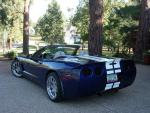
I have decided to let Lil Blue sit for a few days, then go thru the whole bleed procedure again.
My thanks to you, Ed, and all the rest of the posters.