When you click on links to various merchants on this site and make a purchase, this can result in this site earning a commission. Affiliate programs and affiliations include, but are not limited to, the eBay Partner Network.
So I finally got my (new to me) C5Z out to the track. I haven't been able to drive it really since I bought it because it's not street legal where I live due to the cage and harnesses. I did 3 sessions of about 5 - 8 laps to get a feel for the car and thoroughly enjoyed it. I didn't push to the limit but did put the car through it's paces. It had fresh fluid all around ... but low and behold middle of the first session there was smoke in the cabin coming through the shifter area in the transmission tunnel!
Oil...
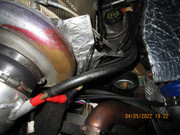
I take off the hood and I see oil splatter from the first catch can. Not too bad, oil level looks ok. I throw a sock/rag over the catch can (old school trick) with a zip tie and head back out. Welp now there is an AMAZING amount of oil/liquid coming out of the front moroso breather!!! The funny part is draining the catch can there wasn't a lot IN the can. So I think first up I switch to a down draft kind to catch the fluid better.
So I qualify this as excessive but I'm looking for some insight as to maybe why this is happening or if this is normal under track conditions? I don't know a lot about the car and I'm learning a lot about it on the fly.
I've attached some pictures for you to see how it is setup and what I mean by excessive. I would love anyone's insight honestly!
Only two things cause blow-by to blow oil out of the engine under normal circumstances (tracking and harsh corners may not be *normal*)
1. Broken piston = do a compression test
2. High crankcase pressure = measure crankcase pressure
If you brought this car to one of my shops I would
A. Clean out the intake manifold and PCV system for a fresh start
B. Clean out the valve cover baffles as they've clearly full of engine oil causing oil aspiration
C. Perform compression test to ensure bottom end healthy
D. Remove all the catch cans and lines and breathers as these help force oil from the engine by allowing/creating high crankcase pressure
E. Re-install OEM factory PCV system so the air filter can pull down crankcase pressure at WOT which will eliminate oil blowing out of the engine
F. Install a gauge with warning lamp which monitors crankcase pressure
If there were abusive track conditions causing oil sloshing of the crankcase I would customize a return catch for oil that made its way past the baffles so it will return to the oil pan. Thus it will become maintenance free
Only two things cause blow-by to blow oil out of the engine under normal circumstances (tracking and harsh corners may not be *normal*)
1. Broken piston = do a compression test
2. High crankcase pressure = measure crankcase pressure
If you brought this car to one of my shops I would
A. Clean out the intake manifold and PCV system for a fresh start
B. Clean out the valve cover baffles as they've clearly full of engine oil causing oil aspiration
C. Perform compression test to ensure bottom end healthy
D. Remove all the catch cans and lines and breathers as these help force oil from the engine by allowing/creating high crankcase pressure
E. Re-install OEM factory PCV system so the air filter can pull down crankcase pressure at WOT which will eliminate oil blowing out of the engine
F. Install a gauge with warning lamp which monitors crankcase pressure
If there were abusive track conditions causing oil sloshing of the crankcase I would customize a return catch for oil that made its way past the baffles so it will return to the oil pan. Thus it will become maintenance free
Thanks for the breakdown of where to go from here! The scan showed upwards of 14PSI for intake manifold pressure, which seemed high to me. Maybe valve seals? I love the idea of returning to the oil pan but there was a lot of moisture as well. I'll have to take it to a shop, I don't have the tools or experience to do most of those items. But I appreciate very greatly an idea of where to start and not going in blind!
Originally Posted by helga203
Im dumb but just open oil cap and see if smoke comes out will running. It might of been said up above but this is similar to me.
What did this determine? What was your cause/effect here?
The intake pressure is based on throttle condition. IF there is no throttle body intake manifold will be absolute atmospheric pressure 14.5psi which is normal for wide open throttle
The pressure that causes blow-by is crankcase pressure, not intake pressure. You can measure from the oil cap like this
It's esoteric. Most mechanics have never heard of this or have any clue what or how to measure crankcase pressure. You should ask specifically if they can "measure crankcase pressure and record results". It is extremely rare to have this type of knowledge.
Maybe not a biggie but it looks like you have a Vararam air intake. From the pictures it looks like you have the air pump port on the Vararam open to atmosphere. This is after the air filter so it may have some effect on the PVC system as well as letting unfiltered air into the engine. If it blocked off then ignore this post.
Maybe not a biggie but it looks like you have a Vararam air intake. From the pictures it looks like you have the air pump port on the Vararam open to atmosphere. This is after the air filter so it may have some effect on the PVC system as well as letting unfiltered air into the engine. If it blocked off then ignore this post.
Yep thats probably where the OEM pcv is intended to attach which pulls down crankcase pressure at WOT when connected properly. Looks like the pcv system has been disabled and catch can breather system is allowing crankcase pressure to rise uncontrollably. The filter wetting with oil probably preventing the breather from breathing which additionally causing crankcase pressure to rise to the point is starts blowing oil all over the engine.
Thanks for the breakdown of where to go from here! The scan showed upwards of 14PSI for intake manifold pressure, which seemed high to me. Maybe valve seals? I love the idea of returning to the oil pan but there was a lot of moisture as well. I'll have to take it to a shop, I don't have the tools or experience to do most of those items. But I appreciate very greatly an idea of where to start and not going in blind!
What did this determine? What was your cause/effect here?
if rhere is a smoke coming out/most likely u hurt a cylinder. Do leak down test on each cylinder and maybe something might show its face.
if rhere is a smoke coming out/most likely u hurt a cylinder. Do leak down test on each cylinder and maybe something might show its face.
IT will have smoke because there is no PCV so the crankcase is fogged out. A leakdown isn't needed just a compression test. Smoke isn't an indication of anything.
IT will have smoke because there is no PCV so the crankcase is fogged out. A leakdown isn't needed just a compression test. Smoke isn't an indication of anything.
Tell my bubby that. Had no smoking coming out to smoking and now blow.engine. so keep giving good advice its only his money.
Yep thats probably where the OEM pcv is intended to attach
No, the OEM pcv is between the front of the valley cover going to the intake manifold behind the throttle body. His still may be disconnected, I can't tell from the picture.
No, the OEM pcv is between the front of the valley cover going to the intake manifold behind the throttle body. His still may be disconnected, I can't tell from the picture.
All PCV systems from every vehicle in the world attach between throttle body and air filter
All of them
no exceptions
100%
You are talking about another PCV attachment. there is more than one. One is intake manifold -> PCV valve -> Crankcase.
The pcv valve is what I was referring to. And I believe there is usually a hose running from the passenger valve cover to the back of the throttle body.
Regardless, the port you were referencing is for the EGR pump, not pcv system
The pcv valve is what I was referring to. And I believe there is usually a hose running from the passenger valve cover to the back of the throttle body.
Regardless, the port you were referencing is for the EGR pump, not pcv system
edit: AIR not EGR
EGR is for exhaust gas recirculation. I am not sure hot exhaust gas is going to play well with the plastic intake piece. I don't know about 1200*F exhaust gas being introduced to that location. I seriously doubt it. And if so, then where is the PCV port for the air filter to feed the crankcase? Are you saying there are TWO ports on the plastic intake filter section? Because there is ALWAYS a fresh air port from air filter to crankcase.
Depending on the engine there are 1 2 3 or 4 PCV connections. Wet sump engines use 2 ports, one for air filter, one for pcv valve to intake manifold. Dry sump engines like LS7 I've seen use 3 ports, 2 are valve cover breathers to air filter, one is valley cover to intake manifold. Those do not use a pcv valve but it doesn't matter if you install a pcv valve it makes no different for the naturally aspirated version of those engines.
Here is a picture showing Idle/cruise for typical wet sump engines. Notice the air filter supplies fresh air to crankcase.
Here is the dry sump LS7 version for the V8 engine
Notice the air filter also supplies fresh air to the crankcase. Both examples, same thing, 100 % of all OEM engines use this design. There is no exception. There is always a port to feed air filter to crankcase somewhere between throttle body and air filter.
I looked at the service manual and although the pictures are obscured there is a good chance that port *IS* Indeed for the air pump. The OEM seems like it attached there.
Looking at say an LS1 intake manifold there is a passage which is supposed to connect the crankcase to the Pre- Throttle body area which supplies PCV fresh air instead.
So lets break down how PCV works on this intake manifold
#7 is the intake manifold suction side, it is connected BEHIND the throttle body. #7 is the PCV valve location according to the service manual.
During Idle/Cruise intake suction is applied via #7 to both valve covers (the crankcase) look at where the tube connects to both covers.
Next. Look at #8
This is the PCV fresh air supply for crankcase. Whatever #7 pulls out of the crankcase, #8 provides from the air filter. Exactly as in my diagrams above. It is as close as possible to the throttle body to maximize the pressure drop at WOT
During WOT both #7 and #8 transfer crankcase gas into the intake suction stream. #7 may blow crankcase air directly into the intake manifold Behind the throttle body as the PCV valve is allowing more blow-by into the intake manifold when crankcase pressure rises.
#8 is used to PULL crankcase gas into the region IN FRONT of the throttle body, at least this is the factory intention.
During WOT the air filter tract is pulled down via air filter restriction to 0.5" to 3" Hg usually. This allows #8 to pull on the crankcase which would be something over 0.01psi at WOT due to blow-by gas + atmospheric pressure.
IF the air filter is removed or enlarged unnecessarily, then #8 will no longer pull on the crankcase. Instead crankcase pressure will rise above 0.01psi and crankcase gas will "blow out" of the crankcase into the throttle body (before the throttle body region) causing oil aspiration, it will suck oil and coat everything with oil. This is why it is important to use an air filter which provides adequate pressure drop at WOT.
Good call on the AIR pump forget they even had those. Yes that port on the side of the intake duct does appear to be for AIR pump. The PCV vent is located very close to the throttle body on this intake design as it should be, but not all vehicles use that design, many have a port just like the one on the intake tract which is used as a vent. It can be mistaken for the PCV vent when you work on several different types of engines.










 Excessive Blowby?