When you click on links to various merchants on this site and make a purchase, this can result in this site earning a commission. Affiliate programs and affiliations include, but are not limited to, the eBay Partner Network.
A/C time. It works great, but loses charge after about 3 weeks. Made it thru last summer by adding a can of 134 every 3 weeks or so, but decided I need to fix it.
Borrowed a sniffer from a friend, alarmed around compressor. Put it up on ramps to check it out, was hoping I could get away with changing seal washer at hose manifold,
but it looks dry as a bone. Compressor body has some oily residue on it, so it looks like I'll be swapping it out. Was going to remove exhaust manifold, and go out that way,
but bolts are tight enough that I'm scared they'll snap. (I wish I'd checked the manifold bolts before removing the rest of the exhaust!)
So, I found a video where they remove thermostat outlet, loosen motor mount and jack passenger side of engine up, and gain enough clearance to remove compressor without
pulling water pump or steering rack. This is the path I'm taking right now.... will be a while, working whenever I have time (and inclination.)
Update: Still won't have time to work on it for another week or so, but today I put 120# of compressed air on it, and look what I found on compressor... makes me feel a little better, I hate changing a part and hoping it's gonna fix an issue.
I did this job last year on my 2000. I bought the o ring kit and shaft seal from Auto Zone and disassembled and replaced all the o rings along with the shaft seal on the compressor. Takes time but not a hard job. My compressor looked brand new inside it just needed new o rings. Once everything was put back together I took it to a shop for vacuum and recharge. The easy way is to put the car on ramps so you can drain the coolant and access the two bottom bolts for the compressor. Then remove the water pump and you’ll have plenty of room to pull the compressor. No need to mess with the exhaust manifold, motor mounts or steering rack. Getting the bolt off that holds the lines on at the rear of the compressor can be tricky since space is tight between the compressor and frame. For this use a short 1/4 ratchet and you’ll have just enough room to ratchet that bolt off and then back on. I also installed a new drier and orifice tube while I had the system open. System takes PAG 150 oil. Be sure to use mineral oil on all seals during reassembly. AC compressor seals listed below.
Santech A/C Compressor Gasket Kit MT2215
Santech A/C System O-Ring Gasket Kit MT2540
Santech A/C Compressor Shaft Seal Kit MT2331
Last edited by Midwest19942000; Apr 11, 2024 at 12:08 AM.
I did this job last year on my 2000. I bought the o ring kit and shaft seal from Auto Zone and disassembled and replaced all the o rings along with the shaft seal on the compressor. Takes time but not a hard job. My compressor looked brand new inside it just needed new o rings. Once everything was put back together I took it to a shop for vacuum and recharge. The easy way is to put the car on ramps so you can drain the coolant and access the two bottom bolts for the compressor. Then remove the water pump and you’ll have plenty of room to pull the compressor. No need to mess with the exhaust manifold, motor mounts or steering rack. Getting the bolt off that holds the lines on at the rear of the compressor can be tricky since space is tight between the compressor and frame. For this use a short 1/4 ratchet and you’ll have just enough room to ratchet that bolt off and then back on. I also installed a new drier and orifice tube while I had the system open. System takes PAG 150 oil. Be sure to use mineral oil on all seals during reassembly. AC compressor seals listed below.
I did this job last year on my 2000. I bought the o ring kit and shaft seal from Auto Zone and disassembled and replaced all the o rings along with the shaft seal on the compressor. Takes time but not a hard job. My compressor looked brand new inside it just needed new o rings. Once everything was put back together I took it to a shop for vacuum and recharge. The easy way is to put the car on ramps so you can drain the coolant and access the two bottom bolts for the compressor. Then remove the water pump and you’ll have plenty of room to pull the compressor. No need to mess with the exhaust manifold, motor mounts or steering rack. Getting the bolt off that holds the lines on at the rear of the compressor can be tricky since space is tight between the compressor and frame. For this use a short 1/4 ratchet and you’ll have just enough room to ratchet that bolt off and then back on. I also installed a new drier and orifice tube while I had the system open. System takes PAG 150 oil. Be sure to use mineral oil on all seals during reassembly. AC compressor seals listed below.
Santech A/C Compressor Gasket Kit MT2215
Santech A/C System O-Ring Gasket Kit MT2540
Santech A/C Compressor Shaft Seal Kit MT2331
I complimented you on your work last year. I was a Delphi Engineer who worked on the launch of this V7 compressor and, although I am capable of disassembling and reassembling the compressor, I decided to spend the money on a new Delphi service compressor to keep on the shelf. It’s just too much work for me to think about the compressor install.
Good to hear how well it worked out so many months later.
Just a word of caution though for anyone who takes on this body oring repair. Be sure to carefully inspect all the machined surfaces where the orings seal. One of the long term root causes for body oring leaks historically has been corrosion on these surfaces. Second word of caution, especially in hot humid climates like Florida, is internal corrosion of some of the steel parts. If this rust works its way onto the sealing surfaces for the inlet and outlet valving, it will not lead to a mechanical failure but does reduce the compressors pumping performance.
Once again, I want to commend you on your DIY compressor rebuild!
Late to this thread, here's a great right up by Rocco on compresser replacement
Good write up. All my research pointed to PAG 150 not 46. Interested to see if anyone has additional input on that. Also I did not have to remove the wheel to get to the lower compressor bolts. Ramps ended up working great for me.
bookyoh would you be able to confirm the PAG oil type for these V7 compressors?
Last edited by Midwest19942000; Apr 11, 2024 at 10:07 AM.
Just a word of caution though for anyone who takes on this body oring repair. Be sure to carefully inspect all the machined surfaces where the orings seal. One of the long term root causes for body oring leaks historically has been corrosion on these surfaces. Second word of caution, especially in hot humid climates like Florida, is internal corrosion of some of the steel parts. If this rust works its way onto the sealing surfaces for the inlet and outlet valving, it will not lead to a mechanical failure but does reduce the compressors pumping performance.
You are exactly right about this when I had all three sections of the compressor apart there was a little bit of corrosion in and around the grooves and surfaces where the seals sit. I cleaned and lightly wire brushed before install.
One of these days if I get some time I should do a write up with the pictures I have of the compressor rebuild to include all the little details.
Thanks again for jumping in on these AC threads. It sure helps to hear directly from the engineers.
Last edited by Midwest19942000; Apr 11, 2024 at 10:04 AM.
So this is weird... Rented vacuum pump from AutoZone, pulled system down thru gauge set, when I cut it off and isolate it from the vacuum pump, it's not holding vacuum. Within 2 or 3 minutes, it's at zero. So to locate a leak, I did the same thing that I found the case leak with, pressured the system to around 100 psi. I can't find any leak's in with soapy water, and pressure seems to be steady. Took a picture of the gauge when I stopped today, will compare it in the morning. If no change, I'll pull it back under and Go with it.
Back in 2020, I replaced the compressor with a Four Seasons unit. The leak was towards the back of the unit. I got a $$ quote on the job and watched a few YouTube videos, but decided to waited until I dropped front subframe to do a whole number of other jobs and replaced it myself along with the orifice tube, then took it to a shop to have them purge/charge the system. So for me it was fairly easy with everything out of the way (sort of like cheating), but I agree normally its really packed in there. Wish I had also replaced the starter at the same time, but that is another story...
Been doing a little here and there as time permits. While it was down, I changed radiator hoses, new thermostat,
new plugs, and changed oil. It's all buttoned back up and charged, blowing 43° out the center vent. All that's left
for now is cleaning the engine good before I reinstall covers, and a wash and vacuum.
When I changed my A/C compressor, I also changed the thermostat while it was apart. Supposedly a 187° stat. Ever since, car has run really cool.
Last night coming home, 75° outside, A/C off, stayed between 165 and 171... with air running, and 95° outside temps, it'll stay at ~ 195 - 200°.
With A/C off and idling, it will eventually get to 235° and kick fan into high, and cool right down.
Obviously, this stat can't be 187°.... but I like the engine running cool
When I changed my A/C compressor, I also changed the thermostat while it was apart. Supposedly a 187° stat. Ever since, car has run really cool.
Last night coming home, 75° outside, A/C off, stayed between 165 and 171... with air running, and 95° outside temps, it'll stay at ~ 195 - 200°.
With A/C off and idling, it will eventually get to 235° and kick fan into high, and cool right down.
Obviously, this stat can't be 187°.... but I like the engine running cool
The temp. listed on any automotive thermostat is NOT the temp. that the engine will run at! It is the temp. that the t-stat will "start" to open. So a 160 degree will "start" to open at 160 degrees Engine may reach the same actual operating temp. Engineers design the temp. of an engine to run at a specific temp. that will help make the vehicle in question meet federal emission standards (usually 205 degrees and up). Radiator size, electric cooling fans (one or two) and when they will- (the fan and or fans actually turn on) also effect this. look up a picture of a Robertshaw High flow t-stat. the whole lower half moves, creating a much larger opening vs the 1 inch "trap door" of a basic t-stats. some vehicles will reach 235 degrees before fans come on.
Last edited by 1 MEAN66; Jun 29, 2024 at 03:21 PM.





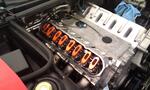






 Compressor location not optimal