When you click on links to various merchants on this site and make a purchase, this can result in this site earning a commission. Affiliate programs and affiliations include, but are not limited to, the eBay Partner Network.
I am preparing to do the clutch on my 03Z. The clutch isn't old but the pilot bearing is bad. The clutch currently engages very high. All of the friction zone is in the first third of travel and the rest is just extra. This makes it pretty hard to drive smoothly. It's such a that I've taken to just putting the clutch half way down when shifting to keep it smoother.
Looking at instructions for shimming the slave cylinder it appears that the adjustment is intended to give the clutch the maximum amount of throw possible. In my current situation it seems that the clutch has too much throw if anything. Can anyone shed some light on this matter? The master cylinder currently on the car is not adjustable so there's no chance of fixing it there.
Supposing that maybe the clutch currently in the car or the slave cylinder is maybe wrong somehow, how can I ensure the engagement will be at a reasonable height off the floor when putting the new clutch in? I got a gm ls7 clutch and Ram aluminum flywheel from tick performance to replace what's in there.
Does the clutch pedal not have an adjustment thread behind it?
There has to be some way to adjust somewhere.
What you generally want is a bit of free play at the top of the pedal, to keep the throwout bearing from riding the pressure plate which will wear it out quickly.
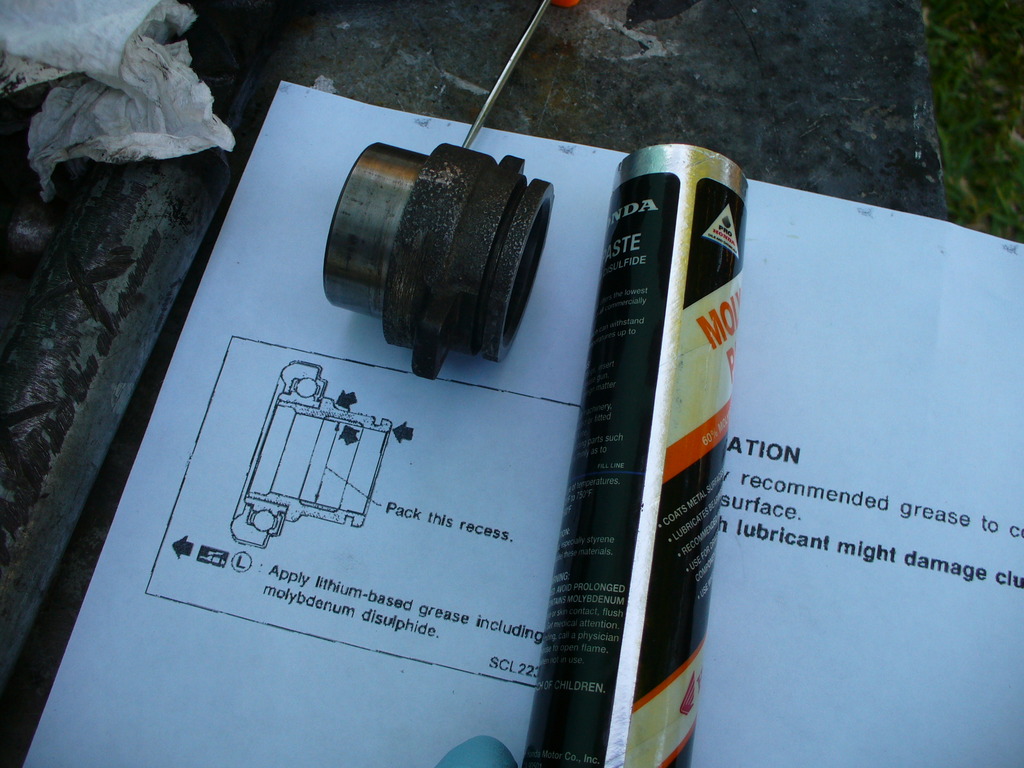
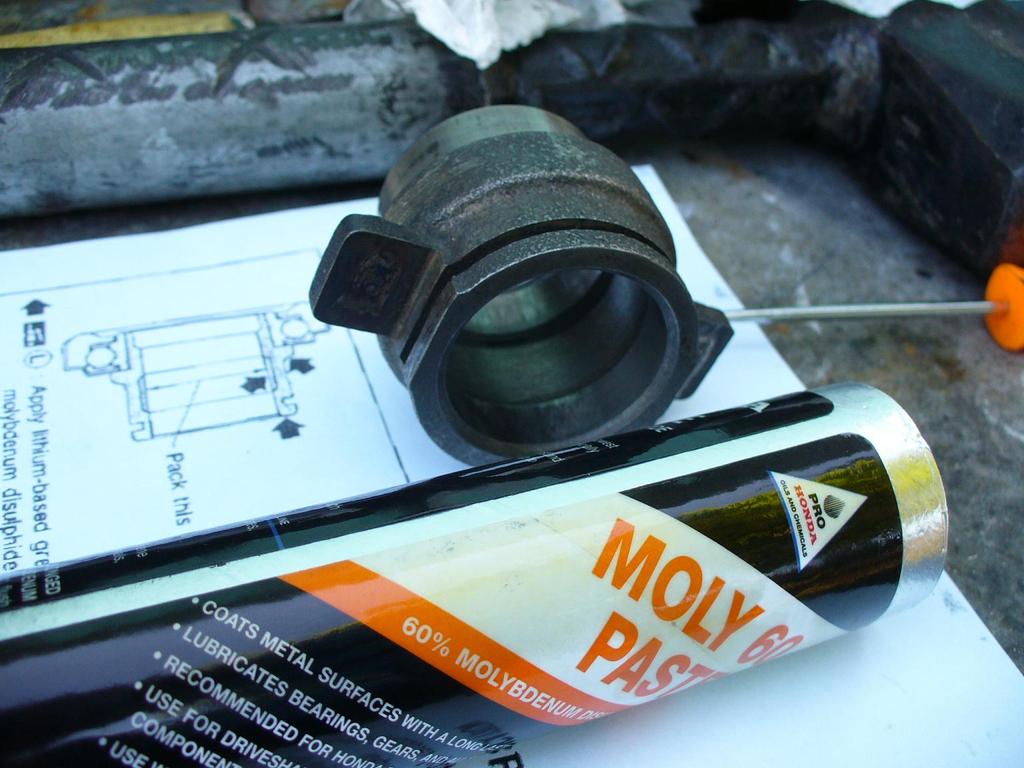
Make sure you acquire the correct molybdenum disulfide grease for the splines, throwout bearing, pivot points, etc...
Do not use regular grease like for an axle or something it will not last.
Does the clutch pedal not have an adjustment thread behind it?
There has to be some way to adjust somewhere.
What you generally want is a bit of free play at the top of the pedal, to keep the throwout bearing from riding the pressure plate which will wear it out quickly.
Make sure you acquire the correct molybdenum disulfide grease for the splines, throwout bearing, pivot points, etc...
Do not use regular grease like for an axle or something it will not last.
I actually am not sure. I was under the impression that the stock master cylinder is not adjustable and this one appears to be stock. Are the splines and throw out bearing supposed to get greased? I've never heard that.
Last edited by CoolhandMoss; May 17, 2025 at 08:32 PM.
Quite the opposite....here is one note from the service manual....
Every throwout bearing in every car requires some form of grease, it is common sense, metal on metal always needs grease/oil.
The reason it says this in some modern manuals
Is because people always use the wrong grease. It has to be molybdenum disulfide grease.
This is a case where reading the instructions but not using your head will get you into trouble.
They apply the grease on the *new* parts. "Pre-Lubed" like it says, And tell you don't fck with it.
So you can just make sure its got lube on it that its supposed to, according to the manual. But I always add extra.
Back then they told you specifically to use this type of grease and pack the throwout bearing, splines, diaphragm, etc...
Also too much grease traps dirt and debris, it has to be the *correct* amount of grease.
It is common sense. Over time, because people don't understand the difference in the grease, or put too much grease, some manufacturers just say "don't do anything - we'll do it for you"
and you may notice this trend happening with more and more parts over time. Don't even change the oil anymore. Its "lifetime" yeah sure
Back then they told you specifically to use this type of grease and pack the throwout bearing, splines, diaphragm, etc...
Also too much grease traps dirt and debris, it has to be the *correct* amount of grease.
It is common sense. Over time, because people don't understand the difference in the grease, or put too much grease, some manufacturers just say "don't do anything - we'll do it for you"
and you may notice this trend happening with more and more parts over time. Don't even change the oil anymore. Its "lifetime" yeah sure
The part that your manual specifies does come pre-greased in the c5 slave cylinders. I had to redo this when adding the monster clutch bearing support. Still not sure about greasing the pressure plate splines though. That grease isn't staying around no matter what kind it is.
The part that your manual specifies does come pre-greased in the c5 slave cylinders. I had to redo this when adding the monster clutch bearing support. Still not sure about greasing the pressure plate splines though. That grease isn't staying around no matter what kind it is.
It depends on the year make model, generally the older you go the more lubricating points there are in my experience
The molybdenum grease will sort of stick around, thats kind of its thing. After say 50k miles of course its missing from the deep grooved metal worn spot in the pressure plate from use - the grease prevents wear for the first 10k maybe 25k miles though in that spot. I've seen the difference it makes in performance daily driver apps, 2L 2.5L 3L engines I mainly work on at 250hp/liter. And around that area, just outside of the small shiny contact circle 'ring' around the fingers, It can be found on high mileage pressure plates still, where the stress/pressure is lower just outside the primary contact regions.
You have to keep in mind the service manual intention isn't always aligned with ours. For example, the low oil pressure of 6psi or 11psi at idle or whatever it is, for engines that normally have 38psi at hot idle, is considered 'fine' by your service manual, even though in most cases, it really isn't. It depends on why the oil pressure is low, right? I think the claim the service manual makes is sometimes to keep from liability, In this case, as too much grease, causing a failure due to service by a technician. It might be a dealership doing the work, they'd rather have your throwout bearing squeal and squeak after 40k miles than have it come back after 5 miles with a slipping clutch because a tech applied too much grease that slung around.
From my Silvia manual
Sometimes a bearing is plastic liner, and sometimes its got a coating, and no grease is required. The manual would generally specify any 'special coatings' and if I do not see evidence of any, it gets the moly grease or at least some kind of dry/lithium based.
Some randoms , not using this as evidence definitively only pointing out that it is sometimes acceptable practice to many https://www.3si.org/posts/7784730/
When the clutch pedal is not being touched, it should move the throwout bearing away from the pressure plate fingers. That said, some contact is still likely, or traditional, and there isn't enough friction between the two parts (spinning fingers and release bearing) to keep the release bearing moving at the same speed as the fingers, it begins to wear a groove and ruins the bearing with heat/friction even while not in use, then it starts to squeal or squeak I guess.
By applying a thin lube, the lube acts the same way it does in an engine bearing system- when the force (stress) is low enough, the thin film can keep the two metal parts from contact, instead of constant friction. Most if not all release bearings are not going to have flat contact area with fingers, they have some curvature, the highest point or initial contact point gets the most friction, grease quickly may wear off there, but as the two ductile components move closer together when you begin to step on the clutch, the metals deform slightly, and the grease can take up some of that additional friction by being between the fingers and curved portions of the release bearing as they move closer together and begin to match speed.
It is controversial I think only because people use the wrong grease and do not understand why their setup squeals after short time. If you used axle grease or wheel bearing grease it will dry and squeak after 5k miles. A throwout bearing is likely manufactured to work well without grease - at least for some time - but some correct grease never seems to hurt and may extend its lifespan in my experience. Many FS manuals are quite vague in this matter as well, presumably due to liability I will guess.
Common sense and experience has me always adding some molybdenum grease to basically everything in there, the fork, pivot, retainer, fingers, bearing, etc... if its metal/metal contact it gets a grease film.
From my 1995-02 Toyota Supra Twin Turbo service manual
This is the famous Getrag, 6-speed V160
"release bearing front surface" gets Molybdenum disulfide grease
Remember these cars go 250,000 miles+ 25 to 30 years old people still driving them. I would say this is era-correct for the corvette comparison here
I've seen hundreds - not joking, I would inspect 80 engines at a time coming from Japan in high cube containers each month over a decade - hundreds of these engines/transmissions coming from Japan. They all get greased like that during service.
Thanks kindly for the information about grease locations and types.
Does anyone have any helpful information about making sure the engagement point is reasonable besides the official measuring procedure for selecting a slave cylinder shim? I am pretty concerned about doing this whole job and finding that my clutch is still releasing at the very top of the pedal travel.
The factory master is NON ADJUSTABLE! However, I've been told that there are now aftermarket replaceable adjustment rods. Check your pressure plate adjustment folkurm point!! I
The factory master is NON ADJUSTABLE! However, I've been told that there are now aftermarket replaceable adjustment rods. Check your pressure plate adjustment folkurm point!! I
Pressure plate fulcrum adjustment? Where is this? How does one check this?
I see now. I have never heard of that. You would think a clutch that has that adjustment system would come with instructions on that process. My luk clutch from tick performance came with nothing like that! Perhaps that wasn't done on my current clutch and that's causing my high release problem.
Edit: Tick has confirmed that my pressure plate came pre-loaded.
Last edited by CoolhandMoss; May 21, 2025 at 09:12 PM.







 Clutch adjustment question