






Tire Pressure sensor accuracy
Pro

Joined: Mar 2006
Posts: 595
Likes: 1
From: Columbus Ohio

My tire sensors are very accurate. Leave the garage and sensors read 28 psi. in a few miles they will be 30-32 psi each. I run at 30 psi. In the summer they should be under a little under 30 psi, as summer temps will add 2-4 psi, after a couple of miles. 1 would not set at 34 psi or higher, as summer temps can go up to almost 40 psi +, which can make blow-outs more likely.
Be careful of after-market chrome valve stem caps, as the small black o-ring, on some can drop-down from the top of the cap and wedge against the valve. This can deflate the tire rapidly!!!! This happened one rainy Friday night, when I went out for dinner, in a small town 11 miles from home. I just happened to bring-up the tire sensor in the DIC. Good thing because it read: 26.... 25.... 23..., in VERY short order!! Directly across the street was a convenience mart with gas and air. I zoomed over, to find a local parked next to the tire air hose (20psi)!! I go up the main drag to two other gas stations. No tire air hoses at all (18 psi w/ amber warning lights) !!!! Lucky for me Birney Fife (who has had his beady eyes on me twice: always the C6, never the 300C) was not in sight. Back to the first station, and the pick-up has left. Zoom right up to air hose w/ 14 psi left. Dug out the little black o-ring with ballpoint pen and pump-up the right-front to 30 psi (October night). I put the valve stem cap in my pocket and never fooled with it again. Put stock valve stem caps back on. WHEWWW...
I now carry a portable air compressor (power take-off powered) just in case.
Gburg
Be careful of after-market chrome valve stem caps, as the small black o-ring, on some can drop-down from the top of the cap and wedge against the valve. This can deflate the tire rapidly!!!! This happened one rainy Friday night, when I went out for dinner, in a small town 11 miles from home. I just happened to bring-up the tire sensor in the DIC. Good thing because it read: 26.... 25.... 23..., in VERY short order!! Directly across the street was a convenience mart with gas and air. I zoomed over, to find a local parked next to the tire air hose (20psi)!!
I go up the main drag to two other gas stations. No tire air hoses at all (18 psi w/ amber warning lights) !!!! Lucky for me Birney Fife (who has had his beady eyes on me twice: always the C6, never the 300C) was not in sight. Back to the first station, and the pick-up has left. Zoom right up to air hose w/ 14 psi left. Dug out the little black o-ring with ballpoint pen and pump-up the right-front to 30 psi (October night). I put the valve stem cap in my pocket and never fooled with it again. Put stock valve stem caps back on. WHEWWW... I now carry a portable air compressor (power take-off powered) just in case.
Gburg

Melting Slicks


Joined: Nov 2000
Posts: 2,333
Likes: 32
From: USA
I have 3 tire gauges at home that read the same. The tire pressure sensors in the wheels read 2 psi less than the gauges.
30 psi in the summer is the same as 30 psi in the winter. Keep the pressures close to that for normal driving.
30 psi in the summer is the same as 30 psi in the winter. Keep the pressures close to that for normal driving.

CF Senior Member


Joined: Feb 2006
Posts: 23,313
Likes: 25
From: Tucson Arizona
Some people report variances but I find my TPS's are quite accurate. Mine detect a difference depending which side of the car is in the sun. I would also compare the TPS readout with a quality, digital gauge just to make sure. I suggest you run the recommended tire pressure...30lb cold. Check your tire pressure regularly, especially as the seasons and temperatures change.
I run 1 additional pound of pressure in my front tires but that is merely my personal preference.
I run 1 additional pound of pressure in my front tires but that is merely my personal preference.
Melting Slicks

Joined: Oct 2005
Posts: 2,617
Likes: 13
From: Pasadena, CA
Some people report variances but I find my TPS's are quite accurate. Mine detect a difference depending which side of the car is in the sun. I would also compare the TPS readout with a quality, digital gauge just to make sure. I suggest you run the recommended tire pressure...30lb cold. Check your tire pressure regularly, especially as the seasons and temperatures change.
I run 1 additional pound of pressure in my front tires but that is merely my personal preference.
I run 1 additional pound of pressure in my front tires but that is merely my personal preference.


Le Mans Master


Joined: Dec 2004
Posts: 5,493
Likes: 808
From: West coast CA
All four of my tire pressure sensors report the same readings that my fancy Longacre Racing tire gauge does.
Keep in mind that the display resolution is only 1psi, so there's going to be some error there. I don't know what the resolution of the actual TPS units is.
Keep in mind that the display resolution is only 1psi, so there's going to be some error there. I don't know what the resolution of the actual TPS units is.
Burning Brakes

Joined: Oct 2006
Posts: 1,199
Likes: 0
From: Evans Georgia
Had the same problem so kept on buying tire gagues. Sensors are 2lbs lower than the gauges in my C6 too.
30lbs year round is the way I keep them.

Corvette Stories
The Best of Corvette for Corvette Enthusiasts

Top 10 Most Expensive Corvettes Ever Sold on Bring A Trailer
Brett Foote
10 Things Every Corvette Owner Needs (2026 Edition)
Michael S. Palmer
8 Most "Only Corvette Owners Understand" Quirks and Problems
Pouria Savadkouei
10 Reasons the C6 Z06 is Still A Performance Benchmark After 20 Years
Joe Kucinski
How Much Horsepower Every Corvette Engine "LOST" in 1972
Joe Kucinski
Top 10 DOs and DON'Ts for Protecting Your Convertible Top!
Michael S. Palmer
Top 10 Most Explosive Corvettes Ever Made: Power-to-Weight Ratio Ranked!
Joe Kucinski
150 hp to 1,250 hp: Every Corvette Generation Compared by the Specs That Matter
Joe Kucinski
8 Coolest Corvette Pace Cars (and Replicas) of All Time
Verdad Gallardo

Drifting

Joined: Jun 2005
Posts: 1,837
Likes: 4
Its been claimed that the BCM is supposed to compensate for this, by reading local atmospheric pressure via the MAP (Manifold Absolute Pressure) sensor before startup, but that feature doesn't seem to work.

Instructor

Joined: May 2001
Posts: 163
Likes: 2
From: Green Valley AZ
I have had tire pressure sensors sense 1990 with out any problems. Our new STS is at the Cadillac dealer for the 3rd time for service tire pressure monitors. I told the service writer that I had no problem with this on the Corvettes. He said that they replace about 20 a week. Because it is always a problem with the front tires I think that the receiver is the problem and not the sensors. What do you guys think??
Instructor

Joined: Apr 2004
Posts: 175
Likes: 19
From: North Carolina
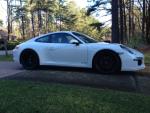
I continue to be amazed at the low pressures (30 psi cold) that Chevrolet recommends for the Corvette tires. Porsche recommends 39 psi in rear of my 911 for partial load and 44 for full load. Front is 33 for partial and 36 for full load. I have owned three previous e46 M3s, and the recommended pressures were 33 front and 38 rear for partial load, and 44 rear and 38 front for full load. The Corvette pressures are as low as I have ever seen for a performance car for street use.
I know you are going to say you will wear the tires out in the center with those pressures, but not so. My tires wear evenly across the tread with those pressures. In fact, too little air will cause ultra wide, low profile tires to wear in the middle because of the tire expanding out in the middle on acceleration. A tire with higher pressure will tend to maintain its shape better under acceleration and minimize that effect. Don't believe me? Check the tires on your cars. Most of you run 30 psi front and rear. I bet your rears tend to wear in the middle but not the fronts. Wonder why? It is because the rears tend to expand out in the middle under acceleration and the fronts of course do not. If it was not for that, don't you think your fronts would wear out in the middle also?
Instructor
Joined: Apr 2004
Posts: 175
Likes: 19
From: North Carolina
My tire sensors are very accurate. Leave the garage and sensors read 28 psi. in a few miles they will be 30-32 psi each. I run at 30 psi. In the summer they should be under a little under 30 psi, as summer temps will add 2-4 psi, after a couple of miles. 1 would not set at 34 psi or higher, as summer temps can go up to almost 40 psi +, which can make blow-outs more likely.

Drifting

Joined: Jun 2002
Posts: 1,303
Likes: 151
From: Las Vegas Nevada
My TPS show about 1 psi low...
My TPS show about 1 psi below my accurate hand-held gage.
I've noticed that most people report that their TPS shows anywhere from dead-on to about 2 psi low. My thought is that there is some tolerance, but that Chevy manufactures them show a little low to correct but not high to keep people from running on the low side of 30 psi. That is, it is better to be one or two psi above 30 than to be low.
All four of mine are very well matched (all show the same 1 psi off from my hand-held gage). I run 30 to 31 all around (from my hand-held) and my TPS shows 29 to 30 cold. They quickly warm-up to about 32 all around.
Cheers - Jim
I've noticed that most people report that their TPS shows anywhere from dead-on to about 2 psi low. My thought is that there is some tolerance, but that Chevy manufactures them show a little low to correct but not high to keep people from running on the low side of 30 psi. That is, it is better to be one or two psi above 30 than to be low.
All four of mine are very well matched (all show the same 1 psi off from my hand-held gage). I run 30 to 31 all around (from my hand-held) and my TPS shows 29 to 30 cold. They quickly warm-up to about 32 all around.
Cheers - Jim

Instructor
Joined: May 2007
Posts: 148
Likes: 0
From: Franklinville New Jersey
There've been a couple of reports of this. The TPMS sensors are single-ported; they are absolute pressure sensors. Most gauges are relative pressure sensors - that is, they measure pressure relative to the ambient. As atmospheric pressure decreases with altitude (around 1 PSI per 1800 feet, as I recall) it makes sense that you'd read around 2 PSI lower if you moved from, say, 1000 feet in VA to, 4000 feet in C0.
Its been claimed that the BCM is supposed to compensate for this, by reading local atmospheric pressure via the MAP (Manifold Absolute Pressure) sensor before startup, but that feature doesn't seem to work.
Its been claimed that the BCM is supposed to compensate for this, by reading local atmospheric pressure via the MAP (Manifold Absolute Pressure) sensor before startup, but that feature doesn't seem to work.
However, and this is where we differ, 44.7 PSIA (absolute pressure) equals to 30 PSIG (gauge pressure - the difference between atmospheric pressure and pressure in the vessel, in this case the tire) at sea level where atmospheric pressure is 14.7 PSIA. As your altitude increases, youratmospheric pressure decreases, so the same 44.7 PSIA translates to 31 PSIG at 1800 feet (using your 1PSI/1800 feet of elevation).
Drifting
Joined: Jun 2005
Posts: 1,837
Likes: 4
If you are correct, and I am not disputing that the TPMS reads absolute pressure, then then one of the computers on board has to do some math to translate absolute pressure to gauge pressure to report tire inflation pressure as we understand it on the DIC.
However, and this is where we differ, 44.7 PSIA (absolute pressure) equals to 30 PSIG (gauge pressure - the difference between atmospheric pressure and pressure in the vessel, in this case the tire) at sea level where atmospheric pressure is 14.7 PSIA. As your altitude increases, youratmospheric pressure decreases, so the same 44.7 PSIA translates to 31 PSIG at 1800 feet (using your 1PSI/1800 feet of elevation).
However, and this is where we differ, 44.7 PSIA (absolute pressure) equals to 30 PSIG (gauge pressure - the difference between atmospheric pressure and pressure in the vessel, in this case the tire) at sea level where atmospheric pressure is 14.7 PSIA. As your altitude increases, youratmospheric pressure decreases, so the same 44.7 PSIA translates to 31 PSIG at 1800 feet (using your 1PSI/1800 feet of elevation).
The question is how accurate that is - there's no reason it shouldn't be right on, but .. it seems like the higher you take the car, the lower the TPMS reads. So ..
But what you say makes sense, it should read higher. So maybe they're subtracting the MAP offset twice? Could be.
I've seen similar differences between the specs and the actual product before

Last edited by Buffy; Aug 14, 2007 at 05:18 PM.
Drifting
Joined: Jun 2005
Posts: 1,837
Likes: 4
Okay, NJAg78, you got me thinking. Which I could have been doing in the first place, but, hey, this is a 'net forum, right? Posting before thinking it through is a tradition.
What you say makes sense; if you took an sealed, inelastic vessel and put 44.7 PSI absolute in it the inner / outer pressure differential would be 30 PSI at sea level (44.7 - 14.7) and 32 PSI at 3600 feet above sea level (44.7 - 12.7). I'm sure we could verify that experimentally, but I don't have a grant for the lab and travel time.
But the C6 TPMS does seem to read a little low at higher altitude, and the difference does seem to roughly correlate with the difference in atmospheric pressure. We have evidence for this from no less authoritative a source than this very forum - and if you can't believe what you read on the internet, what can you believe?
So now I must wonder if I just got it entirely backwards. After all, being exactly wrong is almost as good as being right, isn't it? All you have to do is reverse the answer.
I started with the assumption that most tire pressure gauges are two-port devices, measuring the difference between atmospheric and measured pressure. That would sort of make sense, as that's what we really care about. But that was an assumption. And I assume we all know the derivation of that word!
What if the C6 is right and the gauge is wrong?
Well, that's probably the case. Most of these gauges probably use Bourdon tubes (if mechanical) or piezo or MEMS sensors (if electronic) and are calibrated to read standard PSIG. So even if they're dead on in DC they're 3 PSI off in Denver.
But empirical proof is lacking. I guess I'm going to have to put a few tire pressure gauges in a vacuum chamber and see what happens - unless I can get a grant that allows travel expenses, in which case I could attach the gauges to sealed pressure vessels and fly them to Denver. Maybe during the winter so I could get in some skiing. Now that's research done properly!
What you say makes sense; if you took an sealed, inelastic vessel and put 44.7 PSI absolute in it the inner / outer pressure differential would be 30 PSI at sea level (44.7 - 14.7) and 32 PSI at 3600 feet above sea level (44.7 - 12.7). I'm sure we could verify that experimentally, but I don't have a grant for the lab and travel time.
But the C6 TPMS does seem to read a little low at higher altitude, and the difference does seem to roughly correlate with the difference in atmospheric pressure. We have evidence for this from no less authoritative a source than this very forum - and if you can't believe what you read on the internet, what can you believe?
So now I must wonder if I just got it entirely backwards. After all, being exactly wrong is almost as good as being right, isn't it? All you have to do is reverse the answer.
I started with the assumption that most tire pressure gauges are two-port devices, measuring the difference between atmospheric and measured pressure. That would sort of make sense, as that's what we really care about. But that was an assumption. And I assume we all know the derivation of that word!
What if the C6 is right and the gauge is wrong?
Well, that's probably the case. Most of these gauges probably use Bourdon tubes (if mechanical) or piezo or MEMS sensors (if electronic) and are calibrated to read standard PSIG. So even if they're dead on in DC they're 3 PSI off in Denver.
But empirical proof is lacking. I guess I'm going to have to put a few tire pressure gauges in a vacuum chamber and see what happens - unless I can get a grant that allows travel expenses, in which case I could attach the gauges to sealed pressure vessels and fly them to Denver. Maybe during the winter so I could get in some skiing. Now that's research done properly!
Pro
Joined: Mar 2006
Posts: 595
Likes: 1
From: Columbus Ohio
As long as you don't exceed the maximum allowed pressure listed on the side wall of the tire, you are not at an increased risk of blow-outs. You are much more likely to have a blow-out on an underinflated tire than one with more than recommnded pressure, as long as the maximum allowed pressure is not exceeded.
Gburg
Drifting
Joined: Jun 2005
Posts: 1,837
Likes: 4
The 44 PSI maximum is cold pressure, there's plenty of room there for normal increases due to warming. My tires stabilize at about 25-30 degrees F above ambient temp with normal driving, usually a 2 PSI pressure increase.
I normally run 36 PSI in front, adjusted to 10 degrees F above the normal seasonal low (75 for summer around here) and have only had the 42 PSI high pressure alert come on once - that being in 100 degree heat.
Still, the high pressure warning is sort of annoying, as (1) its only valid for the stock GY tires (my PS2s are rated 51 PSI max) and (2) it doesn't take heat into account. Anyone know how to change that?
I normally run 36 PSI in front, adjusted to 10 degrees F above the normal seasonal low (75 for summer around here) and have only had the 42 PSI high pressure alert come on once - that being in 100 degree heat.
Still, the high pressure warning is sort of annoying, as (1) its only valid for the stock GY tires (my PS2s are rated 51 PSI max) and (2) it doesn't take heat into account. Anyone know how to change that?

Drifting
Joined: Apr 2005
Posts: 1,757
Likes: 484
From: Portland Oregon
Some people report variances but I find my TPS's are quite accurate. Mine detect a difference depending which side of the car is in the sun. I would also compare the TPS readout with a quality, digital gauge just to make sure. I suggest you run the recommended tire pressure...30lb cold. Check your tire pressure regularly, especially as the seasons and temperatures change...