



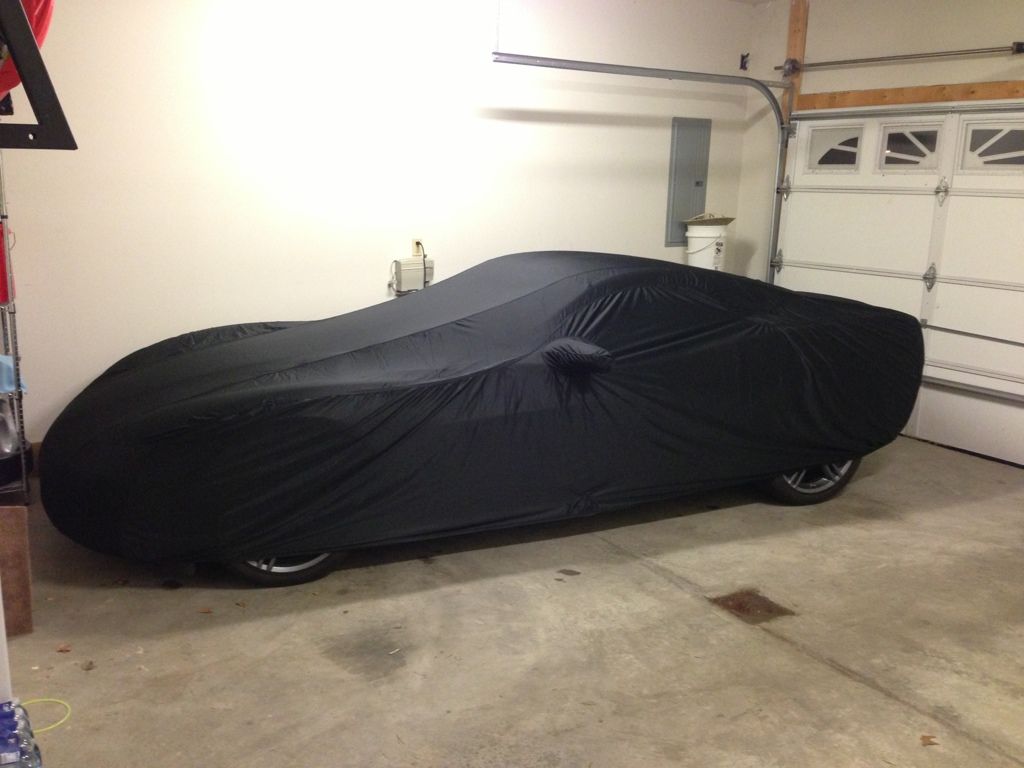
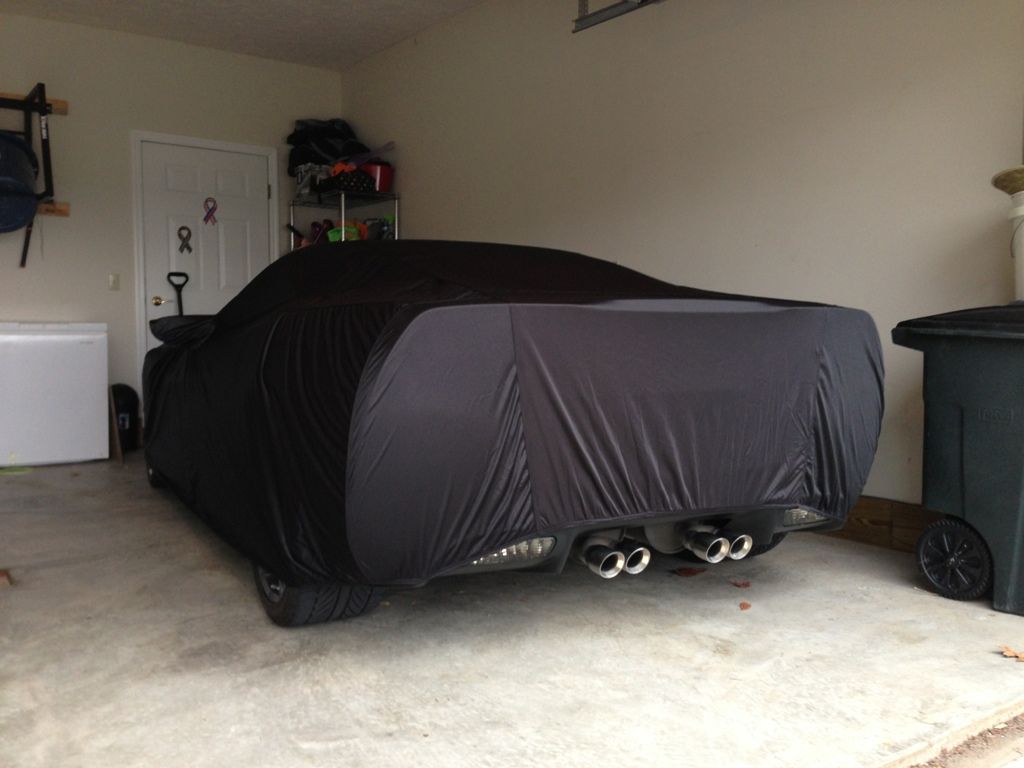
 those are the same folks still changing their oil every 3k miles...



Winterizing question???

Melting Slicks

Joined: Jan 2013
Posts: 2,576
Likes: 237
From: Murphy NC

The Corvette is such a great winter car.
The big engine and small cabin warm up nicely together.
The plastic car doesn't rust or corrode away in the salt, snow and rain.
With the Michelin A/S the car sticks well to the roadway.
It is just a shame to protect the car and keep it so nice for the next owner.
I will be driving mine.
The Corvette is just fine going for months without getting washed, also.
The thing that a lot of owners on here forget... It is just a car.
The big engine and small cabin warm up nicely together.
The plastic car doesn't rust or corrode away in the salt, snow and rain.
With the Michelin A/S the car sticks well to the roadway.
It is just a shame to protect the car and keep it so nice for the next owner.
I will be driving mine.
The Corvette is just fine going for months without getting washed, also.
The thing that a lot of owners on here forget... It is just a car.
Le Mans Master


Joined: Nov 2005
Posts: 8,214
Likes: 894

Team Owner

Joined: Oct 2007
Posts: 26,745
Likes: 694
From: PA
The Corvette is such a great winter car.
The big engine and small cabin warm up nicely together.
The plastic car doesn't rust or corrode away in the salt, snow and rain.
With the Michelin A/S the car sticks well to the roadway.
It is just a shame to protect the car and keep it so nice for the next owner.
I will be driving mine.
The Corvette is just fine going for months without getting washed, also.
The thing that a lot of owners on here forget... It is just a car.
The big engine and small cabin warm up nicely together.
The plastic car doesn't rust or corrode away in the salt, snow and rain.
With the Michelin A/S the car sticks well to the roadway.
It is just a shame to protect the car and keep it so nice for the next owner.
I will be driving mine.
The Corvette is just fine going for months without getting washed, also.
The thing that a lot of owners on here forget... It is just a car.

And there are metal parts on the frame that WILL rust. Those holes where the pucks go? Salt/snow trap and yup, it will rust.
All the bolts under the car will turn to rust. Rusty bolts and aluminum....yup, that sounds wonderful.
I mean salt doesnt hurt wheels or anything either, right?

Melting Slicks
Joined: Jan 2013
Posts: 2,576
Likes: 237
From: Murphy NC
Your car wouldnt make it out of my driveway in the winter.
And there are metal parts on the frame that WILL rust. Those holes where the pucks go? Salt/snow trap and yup, it will rust.
All the bolts under the car will turn to rust. Rusty bolts and aluminum....yup, that sounds wonderful.
I mean salt doesnt hurt wheels or anything either, right?
And there are metal parts on the frame that WILL rust. Those holes where the pucks go? Salt/snow trap and yup, it will rust.
All the bolts under the car will turn to rust. Rusty bolts and aluminum....yup, that sounds wonderful.
I mean salt doesnt hurt wheels or anything either, right?

I epoxied the lifting pucks to my car... No worries there.


Melting Slicks


Joined: Apr 2007
Posts: 2,168
Likes: 242
From: Pittsburgh PA
I've driven every other performance car I have owned straight through through the winter without issues. Biggest problem is when working under the car dealing with rusted and corroded bolts/nuts etc. I loved breaking exhaust bolts every time I needed to drop my catback on my GTO.
When I bought this car it had not seen salt and I have the luxury to not have to drive it through the winter so I don't. Things come apart so easy.
I haven't washed my car in months and the rear quarter panels are currently covered in rubber from the track. I beat the ***** off of the car April-November and put ~12,000 miles on it in that timeframe.
When I bought this car it had not seen salt and I have the luxury to not have to drive it through the winter so I don't. Things come apart so easy.
I haven't washed my car in months and the rear quarter panels are currently covered in rubber from the track. I beat the ***** off of the car April-November and put ~12,000 miles on it in that timeframe.

Racer


Joined: Jan 2012
Posts: 369
Likes: 0
From: Needham Massachusetts
Good point about the two tanks taking some time to mix in. I always dump the stabil in first, then fill up the tank, so it should get mixed in somewhat at the filler neck. Also, consider putting some stabil in a tankful or two prior to storage.
I just did that with mine. Had put some stabil in on the last fill, but was a beatiful day here so I ditched work, washed my truck and vette, then took it out for a nice long ride. Filled up again on way home with some stabil. Might be my last ride, will be travelling next few weekends and again at Christmas time. Hopefully I get a nice weekend mid December. January and February are just lousy here.

Instructor
Joined: Apr 2013
Posts: 123
Likes: 1
From: Kinderhook NY
if you have no power outlet, do you at least have a window in the garage? if so you can put a solar cell in the window and hook that to the battery. I've done this for years with my cars. works pretty well. I use battery tenders on the ones not parked close enough to the window.
Corvette Stories
The Best of Corvette for Corvette Enthusiasts

Top 10 Most Expensive Corvettes Ever Sold on Bring A Trailer
Brett Foote
10 Things Every Corvette Owner Needs (2026 Edition)
Michael S. Palmer
8 Most "Only Corvette Owners Understand" Quirks and Problems
Pouria Savadkouei
10 Reasons the C6 Z06 is Still A Performance Benchmark After 20 Years
Joe Kucinski
How Much Horsepower Every Corvette Engine "LOST" in 1972
Joe Kucinski
Top 10 DOs and DON'Ts for Protecting Your Convertible Top!
Michael S. Palmer
Top 10 Most Explosive Corvettes Ever Made: Power-to-Weight Ratio Ranked!
Joe Kucinski
150 hp to 1,250 hp: Every Corvette Generation Compared by the Specs That Matter
Joe Kucinski
8 Coolest Corvette Pace Cars (and Replicas) of All Time
Verdad Gallardo
Instructor
Joined: Apr 2013
Posts: 175
Likes: 1
From: Caledonia MI
if you have no power outlet, do you at least have a window in the garage? if so you can put a solar cell in the window and hook that to the battery. I've done this for years with my cars. works pretty well. I use battery tenders on the ones not parked close enough to the window.

Race Director

Joined: Oct 2005
Posts: 14,555
Likes: 1,255
From: Saint Albans, WV
So I have not ever seen a direct answer, can you not just simply disconnect the battery as you would with any other car, truck or boat that is not used for an extended period of time. Everyone seems to be suggesting battery tenders, is there anything in a vette that would be impacted if you just simply disconnect or remove the battery when storing it?

Racer
Joined: Apr 2012
Posts: 314
Likes: 4
From: Ontario
I've been storing our old cars away since the fall of 1972. One thing I can tell you, mothballs do not keep the mice out and just stink everything up. I've found dead mice in the cars and evidence that they were in our cottage as well. For the best part of a decade now, we've been putting down lots of Bounce dryer sheets in the cottage and our cars for the winter and have had zero mouse problems. I don't know if other brands of dryer sheets work but Bounce certainly seems to be doing the job. I do pretty well everything mentioned in earlier posts. The last thing I do in the fall is top up the gas tank, change the oil and filter, add fuel stabilizer then go for a 10+ mile run. When I get home, I park the car and don't start it again until spring. A C-Tek charger keeps the battery charged. It's good to have the battery on a charger/maintainer anyway so why take it out of the car. I've never had an engine problem related to storage. I do keep the garage heated in the damp part of the fall before freeze up and again when the spring thaw comes. In our area the air can be quite moist and some times moisture can be wiped off cold metal. This is when brake rotors and bare metal rusts, even on cars that never see salt. Works for me. It may be over kill but I am retired and have the time to putter around. It gets me out of the house where I would just be getting under foot and in the way.
Last edited by Keith Tedford; Nov 16, 2013 at 05:36 AM.
Instructor
Joined: Apr 2013
Posts: 123
Likes: 1
From: Kinderhook NY
Good question- if there isn't any rechargeable batteries hidden anywhere in the electronics, then there would be no reason why the battery could not be disconnected and left that way. The only car i ever had that had small nicads hidden in the electronics was my 1988 BMW 325- it had a pair of batteries in the instrument cluster that would go dead if you disconnected the main battery. I wouldn't think that these cars have such a battery. I'm sure someone will correct me if i'm wrong.

Instructor
Joined: Jun 2013
Posts: 180
Likes: 0
Here is an article I just saw. It was written by CarCapsule so it does reference their product a few times. Info is pretty thorough though.
How to Properly Store Your Car or Truck for the Winter
Before your car or truck goes into storage for the winter, you need to prepare it, and this involves more than just apologizing that you won’t be spending any time together for the next few months. Steps need to be taken to be sure it stays safe and sound during its hibernation. The CarCapsule does its part by protecting from dirt, dust, dings, condensation, musty odors, rodents and the weather. However, things such as changing out the motor oil before storage are important as well. The following is a list of the items that should be addressed when storing a vehicle for the winter.
Change the Oil and Filter
Dirty engine oil collects acids, water and other corrosives that damage the inside of an engine as it sits for a long period of time. Change the oil and filter just before tucking your baby in.
Fill the Tank and Use Fuel Stabilizer
Stored fuel can start to deteriorate over the winter causing gum, varnish and corrosion to build up. So, fill up the tank with fresh fuel and add a fuel stabilizer like STA-BIL.
Check the Coolant/Antifreeze
Make sure the coolant is up to the full level and test the degree of the antifreeze protection – to be sure it won’t freeze. This can be done with an antifreeze hydrometer. Keep in mind that regardless of the type of antifreeze used, the corrosion protection additive package will eventually break down and cease to provide adequate protection. The antifreeze will also pick up contaminants from the engine cooling system. In other words, antifreeze wears out and gets dirty. The service life for conventional green antifreeze is 2 years or 24,000 miles. So, this might be a good time to replace it.
Top Off Fluids
Check and top off power steering and brake fluids. Once again, this might be a good time to replace them. Brake fluid absorbs water from the atmosphere causing corrosion to the brake lines, calipers, etc. The rule of thumb is to replace it every two years or 24,000 miles. Power steering fluid should typically be replaced every three years or 50,000 miles. Consult your service manual for change interval recommendations.
Fogging oil in the cylinders
Rust on the cylinder walls of your engine can do really nasty things to the piston rings when you start it. To prevent rust people often spray fogging oil into the cylinders. Some prefer a teaspoon of motor oil in each cylinder. Spin the engine over a few times by hand to make sure the oil gets everywhere.
Wheels and Tires
Inflate the tires to the recommended pressure. Remove corrosive brake dust, dirt and grime by cleaning the tires with soap and water, and cleaning the wheels with a wheel brush and an approved cleaner.
Wash and Wax
Washing the car will remove contaminants that could otherwise cause damage to the paint. Waxing the vehicle is also recommended to protect against any corrosive fall out during storage. Of course if you are using the CarCapsule, which circulates filtered air, corrosive fall out isn’t an issue.
Vacuum
Vacuum out dirt and crumbs. So, when you hop in the car in the spring it will be neat and tidy. As well, leaving crumbs in the vehicle can attract rodents. Once again, this isn’t an issue if a CarCapsule is being used as critters don’t have a point of entry into the bubble.
Stuff Rags into Intake and Exhaust Outlet(s)
Rodents like to crawl into small spaces to build nests. So, it’s a good idea to stuff rags into the exhaust outlets and the beginning of the intake tract. Just don’t forget to remove them before the car is driven. If you are using a CarCapsule don’t concern yourself as rodents can’t get in.
Dryer Sheets
To repel rodents from making a nest in your interior put some fabric softener dryer sheets on the floor. Rodents hate them. They’ll probably just poop and leave. Mothballs will do the same thing, but dryer sheets smell a heck of a lot better. This doesn’t have to be done if you have a CarCapsule. You might be starting to notice a pattern here…
Maintain Battery Charge
Batteries will discharge as they are left sitting and often won’t have enough power to start the car in the spring. A “smart” battery charger will allow you to avoid this by providing just enough charge to maintain proper power levels without overcharging. Basically plug it in and forget it for the winter.
Release Parking Brake
When the parking brake is set during storage the brake pads can rust/bond to the brake rotor. So, be sure the brake is released and use wheel chucks or wood blocks to keep the car from rolling.
Exercise Brakes and Clutch
Once a month while in storage, hop in the car and give the clutch and brake pedals several pumps. This will help these components from freezing up.
Periodically Roll the Vehicle Forward and Backward
When a vehicle sits for long periods of time without being moved flat spots can develop on the tires. This is usually a problem with bias belted tires, while radials are not nearly as susceptible. Every few weeks roll the car a little bit to change the spot where the tire makes contact with the ground.
Keep it Covered
We may be a little biased here. OK, we are totally biased. Your vehicle should be stored in a CarCapsule to completely seal and protect it from dings, dirt, dust, corrosion, mildew, musty odors, rust and rodents. If the vehicle is stored outdoors be sure to use our Outdoor CarCapsule which is designed for weatherability and blockage of vehicle damaging UV rays. If the vehicle can’t be placed in a CarCapsule it needs to at least have a good breathable car cover. Never use a tarp. Tarps can trap condensation causing damage to the paint, and often creating problems with mildew and musty interior odors. If the vehicle is stored outdoors be sure the car cover is designed for outdoor use and fits properly so it will stay on in the wind, and not abrade the paint. Better yet, avoid problems and put it in a CarCapsule.
Write a Note
Write yourself a note and leave it inside the vehicle where you’ll see it in the spring. Remind yourself what will need to be undone before driving the car. Like pulling the rags out of the intake and exhaust. You’ll thank yourself later.
Say Goodnight Gracie
After you have prepared your vehicle for its long winter’s nap give yourself a big round of applause for being so diligent. Then hang loose until spring.
How to Properly Store Your Car or Truck for the Winter
Before your car or truck goes into storage for the winter, you need to prepare it, and this involves more than just apologizing that you won’t be spending any time together for the next few months. Steps need to be taken to be sure it stays safe and sound during its hibernation. The CarCapsule does its part by protecting from dirt, dust, dings, condensation, musty odors, rodents and the weather. However, things such as changing out the motor oil before storage are important as well. The following is a list of the items that should be addressed when storing a vehicle for the winter.
Change the Oil and Filter
Dirty engine oil collects acids, water and other corrosives that damage the inside of an engine as it sits for a long period of time. Change the oil and filter just before tucking your baby in.
Fill the Tank and Use Fuel Stabilizer
Stored fuel can start to deteriorate over the winter causing gum, varnish and corrosion to build up. So, fill up the tank with fresh fuel and add a fuel stabilizer like STA-BIL.
Check the Coolant/Antifreeze
Make sure the coolant is up to the full level and test the degree of the antifreeze protection – to be sure it won’t freeze. This can be done with an antifreeze hydrometer. Keep in mind that regardless of the type of antifreeze used, the corrosion protection additive package will eventually break down and cease to provide adequate protection. The antifreeze will also pick up contaminants from the engine cooling system. In other words, antifreeze wears out and gets dirty. The service life for conventional green antifreeze is 2 years or 24,000 miles. So, this might be a good time to replace it.
Top Off Fluids
Check and top off power steering and brake fluids. Once again, this might be a good time to replace them. Brake fluid absorbs water from the atmosphere causing corrosion to the brake lines, calipers, etc. The rule of thumb is to replace it every two years or 24,000 miles. Power steering fluid should typically be replaced every three years or 50,000 miles. Consult your service manual for change interval recommendations.
Fogging oil in the cylinders
Rust on the cylinder walls of your engine can do really nasty things to the piston rings when you start it. To prevent rust people often spray fogging oil into the cylinders. Some prefer a teaspoon of motor oil in each cylinder. Spin the engine over a few times by hand to make sure the oil gets everywhere.
Wheels and Tires
Inflate the tires to the recommended pressure. Remove corrosive brake dust, dirt and grime by cleaning the tires with soap and water, and cleaning the wheels with a wheel brush and an approved cleaner.
Wash and Wax
Washing the car will remove contaminants that could otherwise cause damage to the paint. Waxing the vehicle is also recommended to protect against any corrosive fall out during storage. Of course if you are using the CarCapsule, which circulates filtered air, corrosive fall out isn’t an issue.
Vacuum
Vacuum out dirt and crumbs. So, when you hop in the car in the spring it will be neat and tidy. As well, leaving crumbs in the vehicle can attract rodents. Once again, this isn’t an issue if a CarCapsule is being used as critters don’t have a point of entry into the bubble.
Stuff Rags into Intake and Exhaust Outlet(s)
Rodents like to crawl into small spaces to build nests. So, it’s a good idea to stuff rags into the exhaust outlets and the beginning of the intake tract. Just don’t forget to remove them before the car is driven. If you are using a CarCapsule don’t concern yourself as rodents can’t get in.
Dryer Sheets
To repel rodents from making a nest in your interior put some fabric softener dryer sheets on the floor. Rodents hate them. They’ll probably just poop and leave. Mothballs will do the same thing, but dryer sheets smell a heck of a lot better. This doesn’t have to be done if you have a CarCapsule. You might be starting to notice a pattern here…
Maintain Battery Charge
Batteries will discharge as they are left sitting and often won’t have enough power to start the car in the spring. A “smart” battery charger will allow you to avoid this by providing just enough charge to maintain proper power levels without overcharging. Basically plug it in and forget it for the winter.
Release Parking Brake
When the parking brake is set during storage the brake pads can rust/bond to the brake rotor. So, be sure the brake is released and use wheel chucks or wood blocks to keep the car from rolling.
Exercise Brakes and Clutch
Once a month while in storage, hop in the car and give the clutch and brake pedals several pumps. This will help these components from freezing up.
Periodically Roll the Vehicle Forward and Backward
When a vehicle sits for long periods of time without being moved flat spots can develop on the tires. This is usually a problem with bias belted tires, while radials are not nearly as susceptible. Every few weeks roll the car a little bit to change the spot where the tire makes contact with the ground.
Keep it Covered
We may be a little biased here. OK, we are totally biased. Your vehicle should be stored in a CarCapsule to completely seal and protect it from dings, dirt, dust, corrosion, mildew, musty odors, rust and rodents. If the vehicle is stored outdoors be sure to use our Outdoor CarCapsule which is designed for weatherability and blockage of vehicle damaging UV rays. If the vehicle can’t be placed in a CarCapsule it needs to at least have a good breathable car cover. Never use a tarp. Tarps can trap condensation causing damage to the paint, and often creating problems with mildew and musty interior odors. If the vehicle is stored outdoors be sure the car cover is designed for outdoor use and fits properly so it will stay on in the wind, and not abrade the paint. Better yet, avoid problems and put it in a CarCapsule.
Write a Note
Write yourself a note and leave it inside the vehicle where you’ll see it in the spring. Remind yourself what will need to be undone before driving the car. Like pulling the rags out of the intake and exhaust. You’ll thank yourself later.
Say Goodnight Gracie
After you have prepared your vehicle for its long winter’s nap give yourself a big round of applause for being so diligent. Then hang loose until spring.