


Brake rotor/pad temps...

Thread Starter
Team Owner


Joined: Aug 2004
Posts: 21,543
Likes: 3,216
From: Park City Utah
 Brake rotor/pad temps...
Obviously, the hotter the rotors and pads get, the less life they will exhibit, and I think this is on an exponential scale.
My question for those who've measured rotor temps, at what temp does wear/fatigue start to show? In otherwords, what temp would be considered "maximum" for brakes which you want to last on the street?
Worded another way; if I drive down a hill every day for my commute and at the bottom of this hill, my rotors are 1500*, I think we can agree that we have an stong indicator of short brake life. If I go down the same hill every day and at the bottom of the hill my rotors measure 250*, it wouln't seem to be a problem....to me. What are your thoughts as to what point, temp wise, you're looking at accelerated wear/warping etc.?
My question for those who've measured rotor temps, at what temp does wear/fatigue start to show? In otherwords, what temp would be considered "maximum" for brakes which you want to last on the street?
Worded another way; if I drive down a hill every day for my commute and at the bottom of this hill, my rotors are 1500*, I think we can agree that we have an stong indicator of short brake life. If I go down the same hill every day and at the bottom of the hill my rotors measure 250*, it wouln't seem to be a problem....to me. What are your thoughts as to what point, temp wise, you're looking at accelerated wear/warping etc.?

Team Owner

Joined: Sep 2003
Posts: 43,084
Likes: 33
From: Raleigh / Rolesville NC

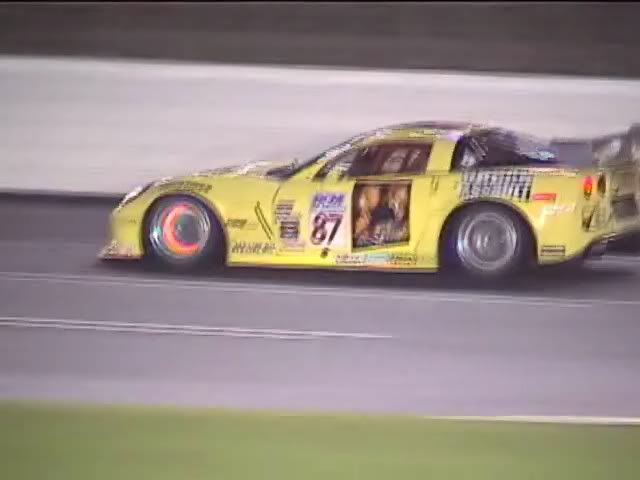
That is 1500* bright ORANGE iron rotor glowing red/orange hot.
Stock brake pads MELT at 700* Ceramic brake pads melt at 500*
Race brake pads can take 1600* but do not stop well at gentle street braking
Dont forget brake fluid. Stock brake fluid can only take a few hundred degrees OCCASIONALLY when it is fresh. Not two months old.
Safety Car

Joined: Jan 2004
Posts: 4,974
Likes: 14
From: Pinellas Park Fl
St. Jude Donor '08-'09 & '12, '14
Working maximum brake temps are dependant on the rotor material and pad configuration.
There are paints and strips that can be applied to your rotors and calipers to give you an indication of the temps you are running.
With your factory parts, heat will show up as a blueing of the rotors, surface cracks, and chunking of the pads.
When your brake pedal goes away, you went to far
Call Porterfield, they can help you. They are listed to the left.
<---------
There are paints and strips that can be applied to your rotors and calipers to give you an indication of the temps you are running.
With your factory parts, heat will show up as a blueing of the rotors, surface cracks, and chunking of the pads.
When your brake pedal goes away, you went to far
Call Porterfield, they can help you. They are listed to the left.
<---------
Thread Starter
Team Owner
Joined: Aug 2004
Posts: 21,543
Likes: 3,216
From: Park City Utah
Thanks for the posts. I know everything that was posted above, I was hoping for some real world, "When I saw temps above xxx* my pad/rotor life went to chit".
Here's what's going on, and I'll admit, that it's a little off topic. We have a '99 Chevy Tahoe at work. Work is a ski resort. I buy all the vehicles (used, in order to save $$) and I just bought this '99 Tahoe, and it's in excellent condition. Anyway, the Ski Patrol Director complained that it is unsafe, decending a certain work road (2000 vertical feet over about 5 miles), because he "smoked the brakes and got a soft pedal in first gear" decending this road a couple days ago. He claimed that it is "way more dangerous" than the previous vehicle we had; a '99 Ford Explorer, and that the problem was that the Tahoe had poor gearing for the mountain, and even in 1st gear, couldn't maintain it's speed. Funny thing is, both vehicles have a 3.73 rear gear.
Being head of Vehicle Maintenance, and the buyer of the Tahoe, it is my duty to check on any vehicle related safety issues, so I did. I drove the vehicle up this same road, and decended in 1st gear, 2wd, hi range. The truck would not go above 25 mph, unless I stepped on the gas, and if I did, when I released the gas, it would slow to 20-25 mph. In short, you could decend w/o ever even touching the brake. So to test again, I climbed the grade a second time, and decended in 2nd gear, 2wd, hi range. The truck would reach a maximum speed of about 40 mph if "let go" completely. From the top to the very bottom, I used the brakes 7 times ("normally"), and timed each application w/a stop watch. At the end, all the times added up equalled 27 seconds. That's 27 seconds of brake application over 5 miles, and about 8 or 9 minutes, never topping 35 mph. Clearly, it's SAFE.
I reported my findings to the director of Ski Patrol, and to "save face" he maintains that it is still not safe, regardless of the results of my test. I want to take him and the VP of mountian ops up this road, and back down, in 2nd gear (proving how easy it is to do w/o any brake smoking/pedal squashing), then shoot the rotor at the bottom w/a laser temp gun, to get rotor temps. I'm hoping to get a temp out of this post where clearly rotor temps are too high for any longevity. Then prove the Tahoe is safe by showing temps far lower than the rough "threshold".
I guess that if I can't get rotor temp data, I could always shoot the caliper, and if it's way under the boiling point of DOT 3 brake fluid, then I've got some pretty objective data...
Here's what's going on, and I'll admit, that it's a little off topic. We have a '99 Chevy Tahoe at work. Work is a ski resort. I buy all the vehicles (used, in order to save $$) and I just bought this '99 Tahoe, and it's in excellent condition. Anyway, the Ski Patrol Director complained that it is unsafe, decending a certain work road (2000 vertical feet over about 5 miles), because he "smoked the brakes and got a soft pedal in first gear" decending this road a couple days ago. He claimed that it is "way more dangerous" than the previous vehicle we had; a '99 Ford Explorer, and that the problem was that the Tahoe had poor gearing for the mountain, and even in 1st gear, couldn't maintain it's speed. Funny thing is, both vehicles have a 3.73 rear gear.
Being head of Vehicle Maintenance, and the buyer of the Tahoe, it is my duty to check on any vehicle related safety issues, so I did. I drove the vehicle up this same road, and decended in 1st gear, 2wd, hi range. The truck would not go above 25 mph, unless I stepped on the gas, and if I did, when I released the gas, it would slow to 20-25 mph. In short, you could decend w/o ever even touching the brake. So to test again, I climbed the grade a second time, and decended in 2nd gear, 2wd, hi range. The truck would reach a maximum speed of about 40 mph if "let go" completely. From the top to the very bottom, I used the brakes 7 times ("normally"), and timed each application w/a stop watch. At the end, all the times added up equalled 27 seconds. That's 27 seconds of brake application over 5 miles, and about 8 or 9 minutes, never topping 35 mph. Clearly, it's SAFE.
I reported my findings to the director of Ski Patrol, and to "save face" he maintains that it is still not safe, regardless of the results of my test. I want to take him and the VP of mountian ops up this road, and back down, in 2nd gear (proving how easy it is to do w/o any brake smoking/pedal squashing), then shoot the rotor at the bottom w/a laser temp gun, to get rotor temps. I'm hoping to get a temp out of this post where clearly rotor temps are too high for any longevity. Then prove the Tahoe is safe by showing temps far lower than the rough "threshold".
I guess that if I can't get rotor temp data, I could always shoot the caliper, and if it's way under the boiling point of DOT 3 brake fluid, then I've got some pretty objective data...
Last edited by Tom400CFI; Sep 22, 2007 at 11:08 PM.









