






cams for the LS3

Drifting


Joined: Nov 2002
Posts: 1,651
Likes: 125
From: laguna niguel ca

any of the LS type cams work, and there are a bunch of them out there. What works in the LS1,LS2,LS6,LS7, works in the LS3. I have a stroked 427 made from an LS3 block using a standard COMP LS type cam. It works fine. As for selection it all depends on how much power you want and at what cost to driveability you can live with. I selected a cam that works well for the street, because that's where it's going to spend it's entire life with me. Still it made 525rwhp/500rwtq and gets 26mpg highway.

Former Vendor
Joined: Aug 2005
Posts: 16,897
Likes: 412
From: Lewisville TX
St. Jude Donor '03-'04-'05-'06-'07-'08-'09-'10-'11-'12-'13
Actually the LS3's are using a slightly different cam profile. While it is true the old cams work as far as bearing size, base circle...the lobe designs for the new heads are different.
Depending on what you want to go with we have packages that range from tame to extreme.
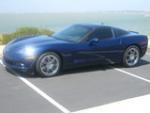
This is a 2008 M6 with LG Pro Long Tube headers, K&N cold air intake, and G7X4 cam package.

We can put any kind of package together that meets your needs. Let me know how I can help!
Depending on what you want to go with we have packages that range from tame to extreme.
This is a 2008 M6 with LG Pro Long Tube headers, K&N cold air intake, and G7X4 cam package.
We can put any kind of package together that meets your needs. Let me know how I can help!

Advanced


Joined: Oct 2005
Posts: 93
Likes: 0
-sorry for the slight, LS3 based hi-jack!-
Anthony,
Are we going to be seeing any more LS3 testing info from you Guys anytime soon?
Is the car that posted the 506 above ever going to be taken to a dragstrip? I would love to see what kind of trap speed that it is capable of.
Thanks...
Anthony,
Are we going to be seeing any more LS3 testing info from you Guys anytime soon?
Is the car that posted the 506 above ever going to be taken to a dragstrip? I would love to see what kind of trap speed that it is capable of.
Thanks...
Former Vendor
Joined: Aug 2005
Posts: 16,897
Likes: 412
From: Lewisville TX
St. Jude Donor '03-'04-'05-'06-'07-'08-'09-'10-'11-'12-'13
-sorry for the slight, LS3 based hi-jack!-
Anthony,
Are we going to be seeing any more LS3 testing info from you Guys anytime soon?
Is the car that posted the 506 above ever going to be taken to a dragstrip? I would love to see what kind of trap speed that it is capable of.
Thanks...
Anthony,
Are we going to be seeing any more LS3 testing info from you Guys anytime soon?
Is the car that posted the 506 above ever going to be taken to a dragstrip? I would love to see what kind of trap speed that it is capable of.
Thanks...

We are working on some drag runs now, the 36 degree weather and rain are not helping us out any though.


Safety Car


Joined: Nov 2007
Posts: 4,537
Likes: 1,403
From: Bethesda MD
Can you elaborate more on the difference in lobe design? Are you saying that the Comp XFI and Xer lobes will not work?
Corvette Stories
The Best of Corvette for Corvette Enthusiasts

Top 10 Most Explosive Corvettes Ever Made: Power-to-Weight Ratio Ranked!
Joe Kucinski
150 hp to 1,250 hp: Every Corvette Generation Compared by the Specs That Matter
Joe Kucinski
8 Coolest Corvette Pace Cars (and Replicas) of All Time
Verdad Gallardo
Top 10 Corvette Engines RANKED by Peak Torque (70+ Years of Muscle!)
Joe Kucinski
Corvette ZR1X Will Be Pacing the Indy 500, And Could Probably Race, Too!
Verdad Gallardo
Top 10 Corvettes Coming to Mecum Indy 2026!
Brett Foote
Top 10 C9 Corvette MUST-HAVES to Fix These C8 Generation Flaws!
Michael S. Palmer
10 Revolutionary 'Corvette Firsts' Most People Don't Know
Joe Kucinski
5 Reasons to Upgrade to an LS6-Powered Corvette; 5 Reasons to Stay LT2
Michael S. Palmer
Former Vendor
Joined: May 2003
Posts: 2,173
Likes: 2
From: Dallas Texas
The lobes will fit, physically. The envelope in which they are in is not. A cathedral port 346 is not the same as a LS3 port 378, and you do not have the older 411 boxes controlling them, so tuning is different as well.
Safety Car

Joined: Jan 2004
Posts: 4,974
Likes: 14
From: Pinellas Park Fl
St. Jude Donor '08-'09 & '12, '14
Whats with the dip in the torque curve between 3-3500 ? The last few dyno's that have been posted have shown this same drop in more or less the same RPM.

Tech Contributor
Joined: Mar 2003
Posts: 12,094
Likes: 197
From: Colorado Springs, CO
St. Jude Donor '08-'09-'10-'11
I dont know if you should look at it as a dip as much as a peak in the other areas. When I put the L92's on at first with relatively flat broad lines on the dyno printout, I noted as I did other mods those lines simply had peaks that became more pronounced. When I added the LG headers it made 3500-5500rpms really have a pronounced peak. I imagine the cam peaking high like that would like more compression if you could add it. The limit of course is that the L92/LS3 heads dont have much room. The solution is to mill more after flycutting to bring up the low end.
I have been trying to get ahold of Lou from LG for cam install ideas such as the compression issue. I would like to know what the DCR is of the cam as it is installed here and what it could be if it were bumped 1/2 a point or so. I would imagine aside from a 7hp/10rwtq at peak, the 3k area would jump more like 20rwtq.
What static compression can be run with this cam Anthony? I know you rent the fly-cutting tools/head and will do that if it would make for a bigger jump.
A big cam with 10.7:1 static compression should make a curve like that.
I have been trying to get ahold of Lou from LG for cam install ideas such as the compression issue. I would like to know what the DCR is of the cam as it is installed here and what it could be if it were bumped 1/2 a point or so. I would imagine aside from a 7hp/10rwtq at peak, the 3k area would jump more like 20rwtq.
What static compression can be run with this cam Anthony? I know you rent the fly-cutting tools/head and will do that if it would make for a bigger jump.
A big cam with 10.7:1 static compression should make a curve like that.
Last edited by SpinMonster; Dec 16, 2007 at 12:34 AM.
Safety Car
Joined: Jan 2004
Posts: 4,974
Likes: 14
From: Pinellas Park Fl
St. Jude Donor '08-'09 & '12, '14
I dont know if you should look at it as a dip as much as a peak in the other areas. When I put the L92's on at first with relatively flat broad lines on the dyno printout, I noted as I did other mods those lines simply had peaks that became more pronounced. When I added the LG headers it made 3500-5500rpms really have a pronounced peak. I imagine the cam peaking high like that would like more compression if you could add it. The limit of course is that the L92/LS3 heads dont have much room. The solution is to mill more after flycutting to bring up the low end.
I have been trying to get ahold of Lou from LG for cam install ideas such as the compression issue. I would like to know what the DCR is of the cam as it is installed here and what it could be if it were bumped 1/2 a point or so. I would imagine aside from a 7hp/10rwtq at peak, the 3k area would jump more like 20rwtq.
What static compression can be run with this cam Anthony? I know you rent the fly-cutting tools/head and will do that if it would make for a bigger jump.
A big cam with 10.7:1 static compression should make a curve like that.
I have been trying to get ahold of Lou from LG for cam install ideas such as the compression issue. I would like to know what the DCR is of the cam as it is installed here and what it could be if it were bumped 1/2 a point or so. I would imagine aside from a 7hp/10rwtq at peak, the 3k area would jump more like 20rwtq.
What static compression can be run with this cam Anthony? I know you rent the fly-cutting tools/head and will do that if it would make for a bigger jump.
A big cam with 10.7:1 static compression should make a curve like that.
I'm with you in thinking that maybe a bump in compression could help or an adjustment in timing at this RPM range relative to the rest of the timing curve. But myself, I'm thinking cam design, ramp speed Vs duration Vs lift and moving the intake centerline around.
Not having imperial flow data to observe the velocity plotted against the lift curve I can only make assumptions which, as you know, is like throwing darts.
To keep this relative to the chart posted I would be interested to know if the heads were cut to reduce chamber size or installed as is with the resulting drop in compression.
If the heads are surfaced to reduce chamber size what does it do to the flow and what restriction does the smaller bore have on the flow as it exists the valve relative to the larger bore of the LS3. History tells us that the smaller bore should reduce flow sightly, but what effect would it have if the heads are angle milled and the subsequent slight change in valve angle relative to bore centerline. Of course, the deck thickness of the L92 head isn't the thickess.
Also,
Due to the relative size of the port is it more advantageous to use a more aggressive ramp speed to initiate cylinder filling sooner relative to what is used in a cathedral port or perhaps a narrower lobe center w/shorter duration @ .050 with more lift.
Questions, Questions, Questions.......

Tech Contributor
Joined: Mar 2003
Posts: 12,094
Likes: 197
From: Colorado Springs, CO
St. Jude Donor '08-'09-'10-'11
I have seen a 228 with 240 exhaust duration, 228 single pattern, and a 228/232 xer (aggressive lobes). All were within 10hp of each other with the same bolt ons. The lack of decent exhaust flow doesnt keep stock LS7s from hitting 550rwhp+ with a cam swap and this head doesnt need any silly duration, LSA, or large splits. I have the same cam as I had with my 243 ported heads and it has no issue anywhere in the powerband. I have no dip in the 3-4k range. The questin you ask yourself is do I want to add from 4k up disproportionately to the low end. I have seen no cam with wide slpits or wide LSA do any better. The only downside to big cams is the need to fly-cut to get the compression up. Charlie from RPM motors did a 238 duration cam with ported L92's and flycutting for compression and cam up with 508rwhp. He had no dip in power. I thought it was the heads too when I first put them on my car. DTE did several H/C jobs with them and they had no dip in the 3-4k range. The LG headers cause a big rise in low-mid TQ. it becomes mor peaky. My first L92 cam was the 228/232 xer 114lsa. It had no dip in the 3-4k range. It did take up to seven additonal degrees timing there. The dyno had a rising TQ curve through that range. I was at 11:1 compression at that time.
It took some time but the L92's proved me wrong. What I was right about was that the tune and fly-cutting were needed to get it all to work right. These steps make it more expensive and the huge savings everyone yaps about dont exist for a max effort H/C install. Some porting to the exhaust runner is easy for the DIY'er to do on his own. I have seen 230cfm acheived. A better valve job, fly cut and compression costs, and millingget you better than cathedrla head power when you factor in that the forthcomming L92/LS3 FAST manifold is on the dyno now at Comp. So ported L92's with real springs = 2k. The new FAST will be 800-850. AD in flycutter tools or the cost of a shop doing it and you have the same costs in the end. Dont expect the L92 tune to come in a few hours. Mine took 15 before I said, OK they are better than my old heads.
Milling costs you flow especially on the 4" bore since the head combustion chamber is bigger than the cylinder bore and you minimize that. Once ported as with the porting from WCCH, the heads intake to exhaust ratio is pretty much the same as AFR, ETP, TF's, and ported 243's. WCCH gets 355cfm/235cfm. Check what the ETP's do on the 225.
It took some time but the L92's proved me wrong. What I was right about was that the tune and fly-cutting were needed to get it all to work right. These steps make it more expensive and the huge savings everyone yaps about dont exist for a max effort H/C install. Some porting to the exhaust runner is easy for the DIY'er to do on his own. I have seen 230cfm acheived. A better valve job, fly cut and compression costs, and millingget you better than cathedrla head power when you factor in that the forthcomming L92/LS3 FAST manifold is on the dyno now at Comp. So ported L92's with real springs = 2k. The new FAST will be 800-850. AD in flycutter tools or the cost of a shop doing it and you have the same costs in the end. Dont expect the L92 tune to come in a few hours. Mine took 15 before I said, OK they are better than my old heads.
Milling costs you flow especially on the 4" bore since the head combustion chamber is bigger than the cylinder bore and you minimize that. Once ported as with the porting from WCCH, the heads intake to exhaust ratio is pretty much the same as AFR, ETP, TF's, and ported 243's. WCCH gets 355cfm/235cfm. Check what the ETP's do on the 225.
Last edited by SpinMonster; Dec 16, 2007 at 05:39 PM.
Tech Contributor
Joined: Mar 2003
Posts: 12,094
Likes: 197
From: Colorado Springs, CO
St. Jude Donor '08-'09-'10-'11
This actually does hold true on stroker motors. LSK lobes though initially start out with a ramp rate of 50 are mor aggressive in the midlift than XER lobes. 500/500 has been seen with stock heads and a 4.03 bore with a 232/236 LSK cam. I dont recall the LSA but I do remember the 425-450rwtq below 3k rpms.
The low TQ does seem to be superior. RPM's max effort H/C LS2 with that 238 cam had 480rwtq at peak. Compression is important with big cams.
Last edited by SpinMonster; Dec 16, 2007 at 05:49 PM.

Burning Brakes

Joined: Sep 2007
Posts: 1,236
Likes: 0
From: St. Louis MO
Actually the LS3's are using a slightly different cam profile. While it is true the old cams work as far as bearing size, base circle...the lobe designs for the new heads are different.
Depending on what you want to go with we have packages that range from tame to extreme.
This is a 2008 M6 with LG Pro Long Tube headers, K&N cold air intake, and G7X4 cam package.
We can put any kind of package together that meets your needs. Let me know how I can help!
Depending on what you want to go with we have packages that range from tame to extreme.
This is a 2008 M6 with LG Pro Long Tube headers, K&N cold air intake, and G7X4 cam package.
We can put any kind of package together that meets your needs. Let me know how I can help!