






What Octane for LS2 or LS3

Thread Starter
Melting Slicks


Joined: Sep 1999
Posts: 2,305
Likes: 87
From: Richmond, BC, Canada
 What Octane for LS2 or LS3
I have an "unmolested" LS2 in my 2007.
(Well, it has an AirAid air cleaner, and some Corsa Extreme mufflers)
My friend has an unmolested LS3 in his 2008.
We have 94 Octane available here (Chevron 94... no Ethanol).
We used to have 92 Octane available (Chevron 92).
It is now 91, because they had to add some Ehtanol to comply with new govt regs.
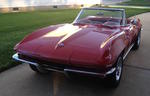
I use 94 in my wife's '67.
I used to use 92 in my LS2; now I use 91 (with up to 10% ethanol).
I don't seem to detect any problems with it.
My friend has been running 94 in his LS3.
I advised (?) him that it really cannot use all that octane, without some sort of "tune".
But he is reluctant to go to 91.
Does anyone have any "good" info about the effects of 91 on an Ls3 ?
(and on an LS2 for that matter)
Thanks y'all.
(Well, it has an AirAid air cleaner, and some Corsa Extreme mufflers)
My friend has an unmolested LS3 in his 2008.
We have 94 Octane available here (Chevron 94... no Ethanol).
We used to have 92 Octane available (Chevron 92).
It is now 91, because they had to add some Ehtanol to comply with new govt regs.
I use 94 in my wife's '67.
I used to use 92 in my LS2; now I use 91 (with up to 10% ethanol).
I don't seem to detect any problems with it.
My friend has been running 94 in his LS3.
I advised (?) him that it really cannot use all that octane, without some sort of "tune".
But he is reluctant to go to 91.
Does anyone have any "good" info about the effects of 91 on an Ls3 ?
(and on an LS2 for that matter)
Thanks y'all.

Le Mans Master


Joined: Jul 2005
Posts: 5,328
Likes: 405
Read the owners manual and you'll see 91 is the recommended octane for optimum performance. It also says you can run 87 octane if you want and the computer will pull timing to compensate if needed. Given the low temperatures in your area for the majority of the year, you could run 87 octane year round and likely see only a few tanks where the computer goes to the low octane tables. Why run 91 octane when you can get the same HP/MPG with 87 octane??? Even in Florida, my daughter can run 87 octane during the winter months in her '99 'Vette with zero timing pulled. Running 94 octane where you live is definitely a waste but it isn't hurting anything.

Racer


Joined: Apr 2010
Posts: 384
Likes: 9
Read the owners manual and you'll see 91 is the recommended octane for optimum performance. It also says you can run 87 octane if you want and the computer will pull timing to compensate if needed. Given the low temperatures in your area for the majority of the year, you could run 87 octane year round and likely see only a few tanks where the computer goes to the low octane tables. Why run 91 octane when you can get the same HP/MPG with 87 octane??? Even in Florida, my daughter can run 87 octane during the winter months in her '99 'Vette with zero timing pulled. Running 94 octane where you live is definitely a waste but it isn't hurting anything.
Dude, you're totally wrong. and LS3 will pull a **** ton of timing with 87 octane, I watched it happen on a dyno to several cars. My LS3 was pulling 6-7 degrees across the band.
You're car will absolutely pull timing with 87 octane, the engine is not designed for that crap fuel.
Team Owner


Joined: Apr 2008
Posts: 31,800
Likes: 2,396
From: Middle TN by way of KY, OH, VA, IL, CA, FL, NY, SC, HI
Pull timing with lower octane? Yes.
For daily driving does it matter? Not likely.
Remember that the only difference between 87 and 91/92 (excluding any ethanol) is the anti-knock compounds. All grades are the same quality and have the same cleaning compounds.
For daily driving does it matter? Not likely.
Remember that the only difference between 87 and 91/92 (excluding any ethanol) is the anti-knock compounds. All grades are the same quality and have the same cleaning compounds.

Race Director


Joined: Aug 2005
Posts: 13,592
Likes: 187
From: Hudson WI
NCM Sinkhole Donor
We all have opinions, so just read the owners manual and put in the fuel that is recommended. I use 92/93 in all my cars because the tune in my LS2 requires it and the owners manual says to use it in my other two cars.
Racer
Joined: Apr 2010
Posts: 384
Likes: 9
Yep, you'll see tons of knock retard with 87 octane all over the place. Also, the owners manual states that the motor was designed for premium fuel, so why wouldn't you put that in it?
Just because the ECM is smart and can pull timing to save the engine, why in the world would you try to pinch pennies and put 87 in? We're driving Corvette's, not honda civics
Thread Starter
Melting Slicks
Joined: Sep 1999
Posts: 2,305
Likes: 87
From: Richmond, BC, Canada
If you guys will note, I spoke about 91 (which was 92) and 94.
No mention was made about 87 (or even 89).
The owners manual says to use no less than 91 (as long as you can get it).
It also says to use 93 for the LS7 engine.
I was only trying to get a feel for any bad experience from anyone using 91.
But thanks for the info.
No mention was made about 87 (or even 89).
The owners manual says to use no less than 91 (as long as you can get it).
It also says to use 93 for the LS7 engine.
I was only trying to get a feel for any bad experience from anyone using 91.
But thanks for the info.
Corvette Stories
The Best of Corvette for Corvette Enthusiasts

Top 10 Most Expensive Corvettes Ever Sold on Bring A Trailer
Brett Foote
10 Things Every Corvette Owner Needs (2026 Edition)
Michael S. Palmer
8 Most "Only Corvette Owners Understand" Quirks and Problems
Pouria Savadkouei
10 Reasons the C6 Z06 is Still A Performance Benchmark After 20 Years
Joe Kucinski
How Much Horsepower Every Corvette Engine "LOST" in 1972
Joe Kucinski
Top 10 DOs and DON'Ts for Protecting Your Convertible Top!
Michael S. Palmer
Top 10 Most Explosive Corvettes Ever Made: Power-to-Weight Ratio Ranked!
Joe Kucinski
150 hp to 1,250 hp: Every Corvette Generation Compared by the Specs That Matter
Joe Kucinski
8 Coolest Corvette Pace Cars (and Replicas) of All Time
Verdad Gallardo
Le Mans Master
Joined: Jul 2005
Posts: 5,328
Likes: 405
Dude, you're totally wrong. and LS3 will pull a **** ton of timing with 87 octane, I watched it happen on a dyno to several cars. My LS3 was pulling 6-7 degrees across the band.
You're car will absolutely pull timing with 87 octane, the engine is not designed for that crap fuel.
You're car will absolutely pull timing with 87 octane, the engine is not designed for that crap fuel.
Yep, you'll see tons of knock retard with 87 octane all over the place. Also, the owners manual states that the motor was designed for premium fuel, so why wouldn't you put that in it?
Just because the ECM is smart and can pull timing to save the engine, why in the world would you try to pinch pennies and put 87 in? We're driving Corvette's, not honda civics
Just because the ECM is smart and can pull timing to save the engine, why in the world would you try to pinch pennies and put 87 in? We're driving Corvette's, not honda civics
http://www.c6registry.com/Technical/...upe_owners.pdf
On page 6-6:
"You can also use regular unleaded gasoline rated at 87 octane or higher, but the vehicle’s acceleration could be slightly reduced, and a slight audible knocking noise, commonly referred to as spark knock, might be heard."
It's also an EPA requirement that all vehicles sold in the USA has to be capable of running 87 octane fuel so the LS3 engine IS designed to run on 87. Maybe you should call the Corvette Engineers and tell them they are wrong.
Here's another link for you:
http://www.faqs.org/faqs/autos/gasoline-faq/part3/
Chapter 7 gives details on the effects of different conditions on the octane requirements of an engine. After reading the above link, you will realize an LS7 could run 85 octane in Denver in the middle of the winter and have zero timing pulled due to knock retard at full throttle. Elevation allows a reduction of one octane number per 1000 feet in the LS7 and every 10°F drop in temperature (from the 77°F standard) allows a reduction of ½ octane number. In Denver at 5000+ feet, we get a decrease of 5 octane numbers while a temperature of 17°F allows a decrease of 3 octane numbers for a total of 8 octane numbers...93-8= 85 octane. And that's for full throttle operation, part throttle operation requires less octane due to the reduced pressure ratio at which the engine operates at meaning the overwhelming majority of operation the OP will be using his LS3 at will see zero timing pulled due to knock retard and zero loss of HP/MPG. I bolded this part because I never said anything about full throttle operation on a dyno in the middle of summer in Florida...comprehension is everything, try to keep up. Even if knock retard is required, a 5° reduction of timing will reduce the octane requirement by ~3 octane numbers...easily within the 87 octane capability with minimal HP loss for the OP, maybe 10 HP at most at full throttle. I can tell by your post you have no idea of what you're talking about when it comes to engine knock and and the variables that affect the octane requirements of an engine...please educate yourself before declaring somebody to be "totally wrong".
PS Ever seen the movie "Dude, Where's My Car"? Just two stupid potheads with a limited vocabulary mainly consisting of the word "Dude"...just saying.
Le Mans Master
Joined: Jul 2005
Posts: 5,328
Likes: 405
If you guys will note, I spoke about 91 (which was 92) and 94.
No mention was made about 87 (or even 89).
The owners manual says to use no less than 91 (as long as you can get it).
It also says to use 93 for the LS7 engine.
I was only trying to get a feel for any bad experience from anyone using 91.
But thanks for the info.
No mention was made about 87 (or even 89).
The owners manual says to use no less than 91 (as long as you can get it).
It also says to use 93 for the LS7 engine.
I was only trying to get a feel for any bad experience from anyone using 91.
But thanks for the info.

Melting Slicks

Joined: Oct 2009
Posts: 2,259
Likes: 1
From: Las Vegas NV
St. Jude Donor '10
'08 LS3 here....and I use 93 exclusively. Then again, I'm at a shade under 600 rwhp and cheap gas could easily destroy my engine.
A higher octane gas helps keep the engine out of detonation as it's less combustible. You CAN put cheaper/lower octane gas in, and it will probably run fine for a long time.
But stock motors can detonate just as easily as any modified engine.
Is $80/year worth maybe losing your motor, maybe not? That's about all that's saved per year on cheaper gas.
Assuming the lower octane gas is .10/gallon cheaper, averaged on a 16 gal fill up, spread across 50 fill ups/year....that's $80/year.
That same $80 would be even less if the price difference was greater, you don't fill-up every time OR fill up every single week without fail...given two weeks for misc.
$80/year is worth the cheap insurance for me to use the best gas I can find. A new motor is vastly more expensive. A stock replacement LS3 is what? $7K? How many fill-ups, over how long is that?
(ps. - that's 87.5 years of fill-ups, assuming gas prices stay static. )
)
A higher octane gas helps keep the engine out of detonation as it's less combustible. You CAN put cheaper/lower octane gas in, and it will probably run fine for a long time.
But stock motors can detonate just as easily as any modified engine.
Is $80/year worth maybe losing your motor, maybe not? That's about all that's saved per year on cheaper gas.
Assuming the lower octane gas is .10/gallon cheaper, averaged on a 16 gal fill up, spread across 50 fill ups/year....that's $80/year.
That same $80 would be even less if the price difference was greater, you don't fill-up every time OR fill up every single week without fail...given two weeks for misc.
$80/year is worth the cheap insurance for me to use the best gas I can find. A new motor is vastly more expensive. A stock replacement LS3 is what? $7K? How many fill-ups, over how long is that?
(ps. - that's 87.5 years of fill-ups, assuming gas prices stay static.
)
Last edited by filmjay; Jun 1, 2010 at 06:45 AM.
Le Mans Master
Joined: Jul 2005
Posts: 5,328
Likes: 405
'08 LS3 here....and I use 93 exclusively. Then again, I'm at a shade under 600 rwhp and cheap gas could easily destroy my engine.
A higher octane gas helps keep the engine out of detonation as it's less combustible. You CAN put cheaper/lower octane gas in, and it will probably run fine for a long time.
But stock motors can detonate just as easily as any modified engine.
Is $80/year worth maybe losing your motor, maybe not? That's about all that's saved per year on cheaper gas.
Assuming the lower octane gas is .10/gallon cheaper, averaged on a 16 gal fill up, spread across 50 fill ups/year....that's $80/year.
That same $80 would be even less if the price difference was greater, you don't fill-up every time OR fill up every single week without fail...given two weeks for misc.
$80/year is worth the cheap insurance for me to use the best gas I can find. A new motor is vastly more expensive. A stock replacement LS3 is what? $7K? How many fill-ups, over how long is that?
(ps. - that's 87.5 years of fill-ups, assuming gas prices stay static. )
A higher octane gas helps keep the engine out of detonation as it's less combustible. You CAN put cheaper/lower octane gas in, and it will probably run fine for a long time.
But stock motors can detonate just as easily as any modified engine.
Is $80/year worth maybe losing your motor, maybe not? That's about all that's saved per year on cheaper gas.
Assuming the lower octane gas is .10/gallon cheaper, averaged on a 16 gal fill up, spread across 50 fill ups/year....that's $80/year.
That same $80 would be even less if the price difference was greater, you don't fill-up every time OR fill up every single week without fail...given two weeks for misc.
$80/year is worth the cheap insurance for me to use the best gas I can find. A new motor is vastly more expensive. A stock replacement LS3 is what? $7K? How many fill-ups, over how long is that?
(ps. - that's 87.5 years of fill-ups, assuming gas prices stay static.
)I'm not a tree hugger by any stretch of the imagination but I do believe in the saying "waste not, want not". It takes more energy/oil to make a gallon of premium than a gallon of regular. If all the people in this country alone that are using premium when they should be using regular along with the people with engines optimized for premium that would use regular when conditions warranted, a lot of gas/oil would be saved which would drive down the cost of fuel (not just gasoline) for everybody. So while I can appreciate the small cost savings you showed between 87 and 91, that's not the whole picture. Also, to my daughter the college student seeing a $.20/gallon savings (not $.10), the small $$$ to you and me seems like big $$$ to her....just a matter of perspective.

Burning Brakes

Joined: Jun 2008
Posts: 1,214
Likes: 3
From: CA
For everyday driving, regular gas will do. If you drive your car hard, like me, then I'd recommend you sticking to 91 or higher.
It's kinda like which clutch to use. For everyday normal driving a regular clutch will do just fine. There is no point in getting a dual-disk setup that is recommended for racing if you're not going to be doing any type of performance driving.
It's kinda like which clutch to use. For everyday normal driving a regular clutch will do just fine. There is no point in getting a dual-disk setup that is recommended for racing if you're not going to be doing any type of performance driving.
Racer
Joined: Apr 2010
Posts: 384
Likes: 9
Here's the 2010 Corvette owners manual:
http://www.c6registry.com/Technical/...upe_owners.pdf
On page 6-6:
"You can also use regular unleaded gasoline rated at 87 octane or higher, but the vehicle’s acceleration could be slightly reduced, and a slight audible knocking noise, commonly referred to as spark knock, might be heard."
It's also an EPA requirement that all vehicles sold in the USA has to be capable of running 87 octane fuel so the LS3 engine IS designed to run on 87. Maybe you should call the Corvette Engineers and tell them they are wrong.
Here's another link for you:
http://www.faqs.org/faqs/autos/gasoline-faq/part3/
Chapter 7 gives details on the effects of different conditions on the octane requirements of an engine. After reading the above link, you will realize an LS7 could run 85 octane in Denver in the middle of the winter and have zero timing pulled due to knock retard at full throttle. Elevation allows a reduction of one octane number per 1000 feet in the LS7 and every 10°F drop in temperature (from the 77°F standard) allows a reduction of ½ octane number. In Denver at 5000+ feet, we get a decrease of 5 octane numbers while a temperature of 17°F allows a decrease of 3 octane numbers for a total of 8 octane numbers...93-8= 85 octane. And that's for full throttle operation, part throttle operation requires less octane due to the reduced pressure ratio at which the engine operates at meaning the overwhelming majority of operation the OP will be using his LS3 at will see zero timing pulled due to knock retard and zero loss of HP/MPG. I bolded this part because I never said anything about full throttle operation on a dyno in the middle of summer in Florida...comprehension is everything, try to keep up. Even if knock retard is required, a 5° reduction of timing will reduce the octane requirement by ~3 octane numbers...easily within the 87 octane capability with minimal HP loss for the OP, maybe 10 HP at most at full throttle. I can tell by your post you have no idea of what you're talking about when it comes to engine knock and and the variables that affect the octane requirements of an engine...please educate yourself before declaring somebody to be "totally wrong".
PS Ever seen the movie "Dude, Where's My Car"? Just two stupid potheads with a limited vocabulary mainly consisting of the word "Dude"...just saying.
http://www.c6registry.com/Technical/...upe_owners.pdf
On page 6-6:
"You can also use regular unleaded gasoline rated at 87 octane or higher, but the vehicle’s acceleration could be slightly reduced, and a slight audible knocking noise, commonly referred to as spark knock, might be heard."
It's also an EPA requirement that all vehicles sold in the USA has to be capable of running 87 octane fuel so the LS3 engine IS designed to run on 87. Maybe you should call the Corvette Engineers and tell them they are wrong.
Here's another link for you:
http://www.faqs.org/faqs/autos/gasoline-faq/part3/
Chapter 7 gives details on the effects of different conditions on the octane requirements of an engine. After reading the above link, you will realize an LS7 could run 85 octane in Denver in the middle of the winter and have zero timing pulled due to knock retard at full throttle. Elevation allows a reduction of one octane number per 1000 feet in the LS7 and every 10°F drop in temperature (from the 77°F standard) allows a reduction of ½ octane number. In Denver at 5000+ feet, we get a decrease of 5 octane numbers while a temperature of 17°F allows a decrease of 3 octane numbers for a total of 8 octane numbers...93-8= 85 octane. And that's for full throttle operation, part throttle operation requires less octane due to the reduced pressure ratio at which the engine operates at meaning the overwhelming majority of operation the OP will be using his LS3 at will see zero timing pulled due to knock retard and zero loss of HP/MPG. I bolded this part because I never said anything about full throttle operation on a dyno in the middle of summer in Florida...comprehension is everything, try to keep up. Even if knock retard is required, a 5° reduction of timing will reduce the octane requirement by ~3 octane numbers...easily within the 87 octane capability with minimal HP loss for the OP, maybe 10 HP at most at full throttle. I can tell by your post you have no idea of what you're talking about when it comes to engine knock and and the variables that affect the octane requirements of an engine...please educate yourself before declaring somebody to be "totally wrong".
PS Ever seen the movie "Dude, Where's My Car"? Just two stupid potheads with a limited vocabulary mainly consisting of the word "Dude"...just saying.
I know there is the EPA requirement for 87 octane. That doesn't mean the GM engineers designed the motor to be run with 87 octane, simply they allowed the ECM to account for the lower octane fuel.
You conveniently left out the parts where they say, "If your vehicle has the 6.2L V8 engine (VIN Code W), use premium unleaded gasoline with a posted octane rating of 91 or higher"
And go on to say, "If your vehicle has the 7.0L V8 engine (VIN Code E),
use premium unleaded gasoline with a posted octane rating of 91 or higher. For best performance, use premium unleaded gasoline with a posted octane rating of 93. In an emergency, you can use regular unleaded gasoline with an octane rating of 87 or higher."
Any sane person would say that means that the engineers designed the LS3/LS7 to run on higher octane (91+) fuel. Just because they can run on 87 and not blow up doesn't mean they were designed for that fuel.
I've seen the ECM pull up to 10 degrees with IAT's of about 100 on 87 octane gas.
Dude, why are you arguing just to argue? Plain and simple these motors are designed to run on "premium" fuel.
Racer
Joined: Apr 2010
Posts: 384
Likes: 9
Stock engines will not detonate as easy as modified engines...increased cylinder pressure gives you more HP and is what makes modified engines more susceptible to knock. I don't know what makes you think a stock engine will experience knock as easy as a 600 RWHP modified engine...supercharging increases the pressure ratio which increases an engine's chance of knocking. Centrifugal supercharging is the least likely to experience knock of all the different "power adders" available (turbocharging, nitrous, "roots" style supercharging, centrifugal supercharging, and cam/compression), but any of the above will increase the chances of knock over a stock engine...it's that simple. Look at any of the Pv diagrams for internal combustion engines and you'll see why.
I'm not a tree hugger by any stretch of the imagination but I do believe in the saying "waste not, want not". It takes more energy/oil to make a gallon of premium than a gallon of regular. If all the people in this country alone that are using premium when they should be using regular along with the people with engines optimized for premium that would use regular when conditions warranted, a lot of gas/oil would be saved which would drive down the cost of fuel (not just gasoline) for everybody. So while I can appreciate the small cost savings you showed between 87 and 91, that's not the whole picture. Also, to my daughter the college student seeing a $.20/gallon savings (not $.10), the small $$$ to you and me seems like big $$$ to her....just a matter of perspective.
I'm not a tree hugger by any stretch of the imagination but I do believe in the saying "waste not, want not". It takes more energy/oil to make a gallon of premium than a gallon of regular. If all the people in this country alone that are using premium when they should be using regular along with the people with engines optimized for premium that would use regular when conditions warranted, a lot of gas/oil would be saved which would drive down the cost of fuel (not just gasoline) for everybody. So while I can appreciate the small cost savings you showed between 87 and 91, that's not the whole picture. Also, to my daughter the college student seeing a $.20/gallon savings (not $.10), the small $$$ to you and me seems like big $$$ to her....just a matter of perspective.
You're correct that a stock engine won't experience as much KR as a highly modified one but I watched my own car with stock tune, unmodified pull 3-6 * on the dyno, and that was under pretty good conditions, about 70 degree IAT's here in the DFW area.

Instructor
Joined: Aug 2006
Posts: 159
Likes: 0
From: Tucson AZ
Yep, you'll see tons of knock retard with 87 octane all over the place. Also, the owners manual states that the motor was designed for premium fuel, so why wouldn't you put that in it?
Just because the ECM is smart and can pull timing to save the engine, why in the world would you try to pinch pennies and put 87 in? We're driving Corvette's, not honda civics
Just because the ECM is smart and can pull timing to save the engine, why in the world would you try to pinch pennies and put 87 in? We're driving Corvette's, not honda civics
Safety Car


Joined: Jan 2006
Posts: 3,940
Likes: 43
From: shavertown Pa.
If you use your car as a daily driver and power is not your main objective, use 87 on every other tank of fuel.
You should rarely run your car under a 1/4 tank of fuel for the fuel pumps sake, so the mix should put you in the usable range without hurting your engine.
You should rarely run your car under a 1/4 tank of fuel for the fuel pumps sake, so the mix should put you in the usable range without hurting your engine.

Drifting


Joined: Aug 2000
Posts: 1,969
Likes: 40
From: South Georgia
Gas
I am the friend NTMD8R is referring to. I have ALWAYS run premium fuel, since at the time the car was purchased until a few months ago, I was in the Rio Grande Valley, and the high heat (95+ degrees Fahrenheit) and high humidity (usually no less than 85% - usually closer to 100%) made me paranoid about maintaining the fuel system at optimum levels.
Living here in BC, the Corvette (otherwise known as the Sancha) gets driven rarely, but when she does, it is driven at an autocross and by two drivers (my wife and I). So, she is getting her legs stretched out a bit (the car, not the wife!!), so NTMD8R was curious since I am a bit **** retentive about the whole thing.
I guess since the Sancha sits most of the time, I'll just stick to the Premium fuel (with 94 octane top offs before an autocross event) and just leave it at that.
I know I can run 87 octane, but why run the risk, when the throttle is mashed a bit during an autocross event.
Y'all take care now, and have a nice day.
Ken

Living here in BC, the Corvette (otherwise known as the Sancha) gets driven rarely, but when she does, it is driven at an autocross and by two drivers (my wife and I). So, she is getting her legs stretched out a bit (the car, not the wife!!
), so NTMD8R was curious since I am a bit **** retentive about the whole thing.I guess since the Sancha sits most of the time, I'll just stick to the Premium fuel (with 94 octane top offs before an autocross event) and just leave it at that.
I know I can run 87 octane, but why run the risk, when the throttle is mashed a bit during an autocross event.
Y'all take care now, and have a nice day.
Ken

Drifting
Joined: Jan 2010
Posts: 1,305
Likes: 5
From: Schererville Indiana
...I guess since the Sancha sits most of the time, I'll just stick to the Premium fuel (with 94 octane top offs before an autocross event) and just leave it at that.
I know I can run 87 octane, but why run the risk, when the throttle is mashed a bit during an autocross event.
Y'all take care now, and have a nice day.
Ken
I know I can run 87 octane, but why run the risk, when the throttle is mashed a bit during an autocross event.
Y'all take care now, and have a nice day.
Ken
