




EradiSpeed+2 Stock Wheels?
Thread Starter
Instructor


Joined: May 2007
Posts: 234
Likes: 3
From: Wexford, PA
 EradiSpeed+2 Stock Wheels?
I am about to pull the trigger on the following:
- Corvette Baer EradiSpeed Plus 2 Front Brake Rotors (14")
- Corvette Baer EradiSpeed Plus 2 Rear Brake Rotors (14")
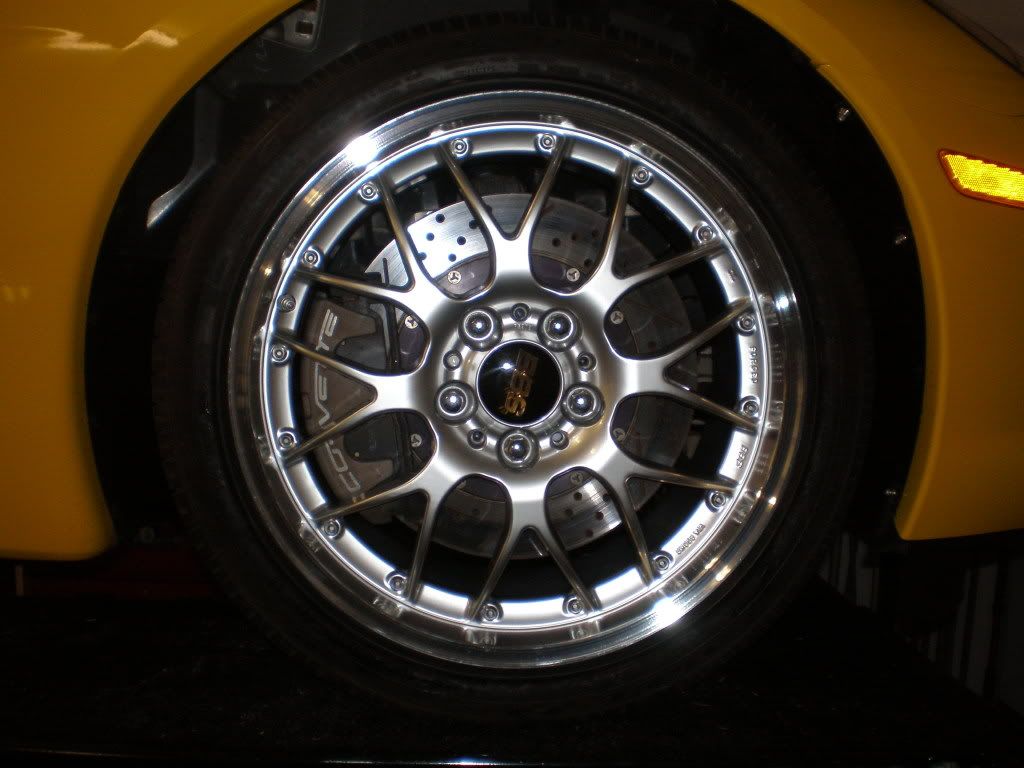
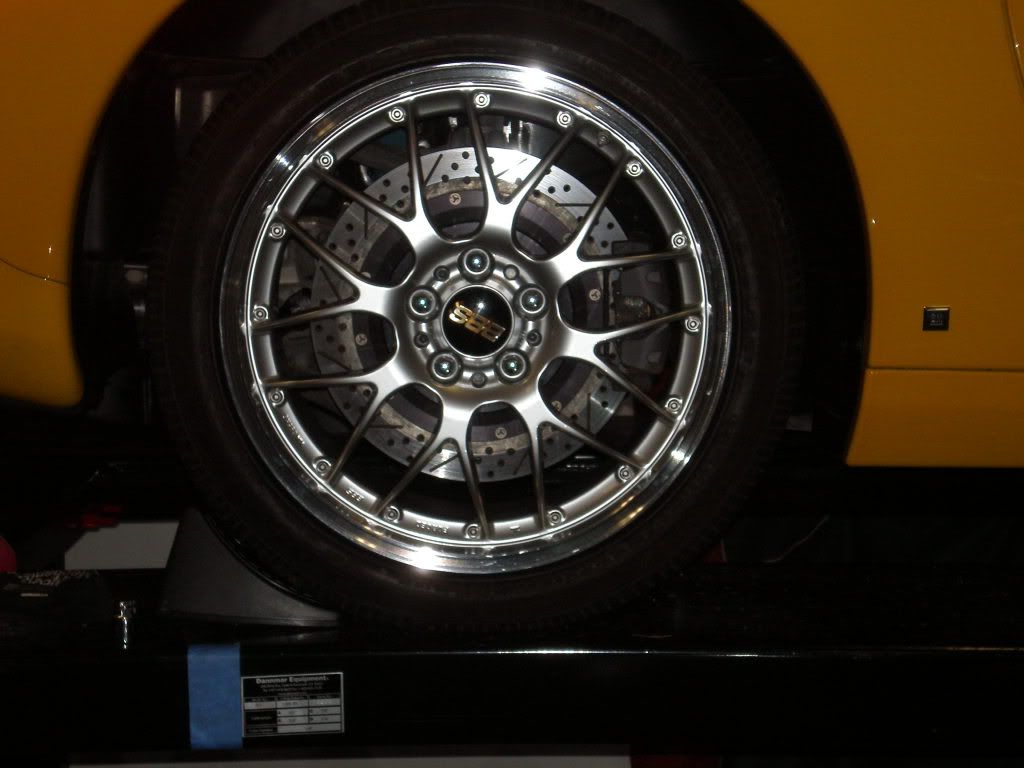
I am running 18/19 ZR1 Spyder Wheels in the stock sizes. I know the rears will fit....a lot of posts with this upgrade.
My question is, will the front '+2' fit the stock 18" rim? Most of the setups I see are only running the '+' near stock size. I would like this larger size.
Thanks, guys!!

- Corvette Baer EradiSpeed Plus 2 Front Brake Rotors (14")
- Corvette Baer EradiSpeed Plus 2 Rear Brake Rotors (14")
I am running 18/19 ZR1 Spyder Wheels in the stock sizes. I know the rears will fit....a lot of posts with this upgrade.
My question is, will the front '+2' fit the stock 18" rim? Most of the setups I see are only running the '+' near stock size. I would like this larger size.
Thanks, guys!!

Former Vendor
Joined: Apr 2006
Posts: 2,470
Likes: 2
From: Portland OR
St. Jude Donor '10-'11-'12
Use the template on their site to check your wheel first 
We also offer them at a great price, though not currently listed.
In run the 14" system under an 18" Corvette garage z07 wheel on my car.(99Camaro SS)
We also offer them at a great price, though not currently listed.
In run the 14" system under an 18" Corvette garage z07 wheel on my car.(99Camaro SS)
Last edited by 99blancoss; Jul 27, 2010 at 02:00 PM.

Le Mans Master

Joined: Jun 2007
Posts: 7,610
Likes: 12
I'm using the Baer Eradispeed+two (2 piece) rotors which are designed to replace stock rotors. I love them. They reduce unsprung weight and look great!


However I have 19/20, so I have a little more room to work with.
However I have 19/20, so I have a little more room to work with.
Safety Car

Joined: Sep 2007
Posts: 4,359
Likes: 6
From: Los Alamitos California
St. Jude Donor '09
I personally would look at the DBA rotors as you can get them slotted versus drilled. I'm not crazy about drilled rotors. There's a vendor here who can hook you up.
San
San
Former Vendor
Joined: Apr 2006
Posts: 2,470
Likes: 2
From: Portland OR
St. Jude Donor '10-'11-'12
Issues occur/occurred with cheap rotor/ebay specials. There have not been issue reported with premium companies.

Drifting

Joined: Sep 2007
Posts: 1,283
Likes: 7
From: Hurst (Fort Worth area) Texas
St. Jude Donor '09
You can hedge your bets against cracking by having the rotors "cryo'd" before installation...
Also, BAER will be happy to make you a set of slotted-only rotors on a special order basis (I think they are the same price)... order those and have BAER send them down to Cryogenics International (less than 50 miles down the road from BAER), CI can then ship them to you. Then your rotor "issues" are over!
Think it over...


Former Vendor
Joined: Apr 2006
Posts: 2,470
Likes: 2
From: Portland OR
St. Jude Donor '10-'11-'12
3 years on mine with no cracks and I've not heard nor seen a Baer rotor have an issue yet. Maybe you have? Honestly I need to see a Baer rotor with an issue before I believe they are prone to cracking like the el cheapos are.
I'll ask them tomorrow as well if they have had any issues as I am on the phone with them a lot.
Oldman it scares me that you are scared . I don't believe anything until I see it or know someone who I trust who has seen it.
I've been hammering on my rotors with 4000 pounds of weight and havent had an issue yet so until I see proof I will question it.
Again show me proof of a Baer rotor issue and I'll become a believer.
I'll ask them tomorrow as well if they have had any issues as I am on the phone with them a lot.
Oldman it scares me that you are scared
. I don't believe anything until I see it or know someone who I trust who has seen it.I've been hammering on my rotors with 4000 pounds of weight and havent had an issue yet so until I see proof I will question it.
Again show me proof of a Baer rotor issue and I'll become a believer.
Last edited by 99blancoss; Jul 28, 2010 at 09:08 PM.
Corvette Stories
The Best of Corvette for Corvette Enthusiasts

How Much Horsepower Every Corvette Engine "LOST" in 1972
Joe Kucinski
Top 10 DOs and DON'Ts for Protecting Your Convertible Top!
Michael S. Palmer
Top 10 Most Explosive Corvettes Ever Made: Power-to-Weight Ratio Ranked!
Joe Kucinski
150 hp to 1,250 hp: Every Corvette Generation Compared by the Specs That Matter
Joe Kucinski
8 Coolest Corvette Pace Cars (and Replicas) of All Time
Verdad Gallardo
Top 10 Corvette Engines RANKED by Peak Torque (70+ Years of Muscle!)
Joe Kucinski
Corvette ZR1X Will Be Pacing the Indy 500, And Could Probably Race, Too!
Verdad Gallardo
Top 10 Corvettes Coming to Mecum Indy 2026!
Brett Foote
Top 10 C9 Corvette MUST-HAVES to Fix These C8 Generation Flaws!
Michael S. Palmer
Race Director


Joined: Aug 2005
Posts: 13,592
Likes: 187
From: Hudson WI
NCM Sinkhole Donor
3 years on mine with no cracks and I've not heard nor seen a Baer rotor have an issue yet. Maybe you have? Honestly I need to see a Baer rotor with an issue before I believe they are prone to cracking like the el cheapos are.
I'll ask them tomorrow as well if they have had any issues as I am on the phone with them a lot.
I'll ask them tomorrow as well if they have had any issues as I am on the phone with them a lot.
Former Vendor
Joined: Apr 2006
Posts: 2,470
Likes: 2
From: Portland OR
St. Jude Donor '10-'11-'12
Race Director
Joined: Aug 2005
Posts: 13,592
Likes: 187
From: Hudson WI
NCM Sinkhole Donor
I did slotted the next time and no issues.

Moderator


Joined: Dec 2002
Posts: 40,888
Likes: 4,342
From: Lakewood Ranch, FL
Drifting
Joined: Sep 2007
Posts: 1,283
Likes: 7
From: Hurst (Fort Worth area) Texas
St. Jude Donor '09
Here's an interesting read (but you have to read the whole thing to get a clear picture)...------------------------------------
Cross drilled rotor myths dissolved
--------------------------------------------------------------------------------
I thought this was a nice read. If it's a repost someone please delete.
Cliffnotes: Slotted/drilled = for looks except for a few rare cases which shouldn't apply if you're on this forum.
QUOTE(Taken from a sticky at Celicatech)
===========
First, lets get some physics. Tell me how a heatsink with less mass will cool better? You do realize that a brake rotor acts as a large heatsink to transfer heat from the brake pads to the rotor. The heat generated from pads has to go somewhere and so it transfers to the rotor and caliper.
Porsche claims: "Discs are cross-drilled to enhance braking in the wet. The brakes respond faster because the water vapour pressure that builds up during braking can be released more easily."
They have said nothing about enhancing normal braking circumstances and the larger diameter rotors probably make up for the lack of material present in a smaller cross drilled rotor.
From Wilwood's website:
QUOTE
Q: Why are some rotors drilled or slotted?
A: Rotors are drilled to reduce rotating weight, an issue near and dear to racers searching for ways to minimize unsprung weight. Drilling diminishes a rotor's durability and cooling capacity.
Slots or grooves in rotor faces are partly a carryover from the days of asbestos pads. Asbestos and other organic pads were prone to "glazing" and the slots tended to help "scrape or de-glaze" them. Drilling and slotting rotors has become popular in street applications for their pure aesthetic value. Wilwood has a large selection of drilled and slotted rotors for a wide range of applications.
As for the porsche rotors, a few notes from a forum I frequent:
QUOTE
1) The holes are cast in giving a dense boundary layer-type crystalline grain structure around the hole at the microscopic level as opposed to drilling which cuts holes in the existing grain pattern leaving open endgrains, etc, just begging for cracks.
2) The holes are only 1/2 the diameter of the holes in most drilled rotors. This reduces the stress concentration factor due to hole interaction which is a function (not linear) of hole diameters and the distance between them.
3) Since the holes are only 1/2 as big they remove only 1/4 as much surface area and mass from the rotor faces as a larger hole. This does a couple of things:
It increases effective pad area compared with larger holes. The larger the pad area the cooler they will run, all else being equal. If the same amount of heat is generated over a larger surface area it will result in a lower temperature for both surfaces.
It increases the mass the rotor has to absorb heat with. If the same amount of heat is put into a rotor with a larger mass, it will result in a lower temperature.
3) The holes are placed along the vanes, actually cutting into them giving the vane a "half moon" cut along its width. You can see that here:
This does a couple of things:
First, it greatly increases the surface area of the vanes which allows the entire rotors to run cooler which helps prevent cracks by itself.
Second, it effectively stops cracking on that side of the hole which makes it very difficult to get "hole to hole" cracks that go all the way through the face rotor (you'll get tiny surface "spider cracks" on any rotor, blank included if you look hard enough).
That's why Porsche rotors are the only "crossdrilled" rotors I would ever consider putting on my car.
BTW, many of the above features are not present in older Porsche brakes. The above is for "Big Reds" and newer.
This is quite different from the standard drilled rotors you get from brembo/kvr/powerslot/"insert random ricer parts brand name here" brake rotors.
Further proof of the uselessness of cross drilled rotors are found here:
Those Poor Rotors
QUOTE
Crossdrilling your rotors might look neat, but what is it really doing for you? Well, unless your car is using brake pads from the 40’s and 50’s, not a whole lot. Rotors were first ‘drilled’ because early brake pad materials gave off gasses when heated to racing temperatures – a process known as ‘gassing out’. These gasses then formed a thin layer between the brake pad face and the rotor, acting as a lubricant and effectively lowering the coefficient of friction. The holes were implemented to give the gasses ‘somewhere to go’. It was an effective solution, but today’s friction materials do not exhibit the same gassing out phenomenon as the early pads.
For this reason, the holes have carried over more as a design feature than a performance feature. Contrary to popular belief they don’t lower temperatures (in fact, by removing weight from the rotor, the temperatures can actually increase a little), they create stress risers allowing the rotor to crack sooner, and make a mess of brake pads – sort of like a cheese grater rubbing against them at every stop. (Want more evidence? Look at NASCAR or F1. You would think that if drilling holes in the rotor was the hot ticket, these teams would be doing it.)
The one glaring exception here is in the rare situation where the rotors are so oversized (look at any performance motorcycle or lighter formula car) that the rotors are drilled like Swiss cheese. While the issues of stress risers and brake pad wear are still present, drilling is used to reduce the mass of the parts in spite of these concerns. Remember – nothing comes for free. If these teams switched to non-drilled rotors, they would see lower operating temperatures and longer brake pad life – at the expense of higher weight. It’s all about trade-offs.
From Stoptech:
QUOTE
Which is better, slotted or drilled rotors?
StopTech provides rotors slotted, drilled or plain. For most performance applications slotted is the preferred choice. Slotting helps wipe away debris from between the pad and rotor as well as increasing the "bite" characteristics of the pad. A drilled rotor provides the same type of benefit, but is more susceptible to cracking under severe usage. Many customers prefer the look of a drilled rotor and for street and occasional light duty track use they will work fine. For more severe applications, we recommend slotted rotors.
That almost sounds like an excuse to use cross drilled rotors, and for your street car which probably is never driven on the track, the drilled rotors are fine, but as Stoptech states, they will crack and are not good for severe applications.
From Baer:
QUOTE
"What are the benefits to Crossdrilling, Slotting, and Zinc-Washing my rotors?
In years past, crossdrilling and/or Slotting the rotor for racing purposes was beneficial by providing a way to expel the gasses created when the bonding agents employed to manufacture the pads...However, with today’s race pad technology, ‘outgassing’ is no longer much of a concern...Slotted surfaces are what Baer recommends for track only use. Slotted only rotors are offered as an option for any of Baer’s offerings."
Then from Grassroots Motorsports:
QUOTE
"Crossdrilling your rotors might look neat, but what is it really doing for you? Well, unless your car is using brake pads from the '40s and 50s, not a whole lot. Rotors were first drilled because early brake pad materials gave off gasses when heated to racing temperatures, a process known as "gassing out." ...It was an effective solution, but today's friction materials do not exhibit the some gassing out phenomenon as the early pads. Contrary to popular belief, they don't lower temperatures. (In fact, by removing weight from the rotor, they can actually cause temperatures to increase a little.) These holes create stress risers that allow the rotor to crack sooner, and make a mess of brake pads--sort of like a cheese grater rubbing against them at every stop. Want more evidence? Look at NASCAR or F1. You would think that if drilling holes in the rotor was the hot ticket, these teams would be doing it...Slotting rotors, on the other hand, might be a consideration if your sanctioning body allows for it. Cutting thin slots across the face of the rotor can actually help to clean the face of the brake pads over time, helping to reduce the glazing often found during high-speed use which can lower the coefficient of friction. While there may still be a small concern over creating stress risers in the face of the rotor, if the slots are shallow and cut properly, the trade-off appears to be worth the risk. (Have you looked at a NASCAR rotor lately?)
And then, let's check out what was said on the aforementioned Altima thread [[[ Long thread at altimas.net that was deleted by that server. it is hosted here ]]]:
QUOTE
Here is how it works. The friction between the pad and rotor is what causes you to stop. This friction converts your forward energy into heat (remember Einstein: Energy is neither created nor destroyed, it is converted). Now that heat is a bad thing. Yes it is bad for the rotors but it is a lot worse for the pads. A warped rotor will still stop the car - it will just feel like ****. Overheated pads however WILL NOT stop the car. It is here where the rotors secondary responsibility comes in. Its job now is to DISSIPATE the heat away from the pads and DISPERSE it through itself. Notice that DISSIPATE and DISPERSE are interchangeable? Once the heat is removed from the pad/surface area it is then removed. Notice where the removal falls on the list of duties? That's right - number 3. Here is the list again. Memorize it because I will be using it a lot in this post:
#1 Maintains a coefficient of friction with the pad to slow the forward inertia of the vehicle
#2 DISSIPATE the heat
#3 REMOVE the heat from the brake system
Let's look more in-depth at each step now shall we? No? Too bad assclown we are doing it anyway.
#1 Maintains a coefficient of friction with the pad to slow the forward inertia of the vehicle:
This one is pretty simple and self-explanatory. The rotor's surface is where the pads contact and generate friction to slow the vehicle down. Since it is this friction that causes the conversion of forward acceleration into deceleration (negative acceleration if you want) you ideally want as much as possible right? The more friction you have the better your stopping will be. This is reason #1 why BIGGER brakes are the best way to improve a vehicle's stopping ability. More surface area on the pad and the rotor = more friction = better stopping. Does that make sense Ace? Good. Let's move on.
#2 DISSIPATE The Heat:
Let's assume for a second that the vehicle in question is running with Hawk Blue pads on it. The brand doesn't really matter but that is what I am using as my example. They have an operating range of 400 degrees to 1100 degrees. Once they exceed that 1100 degree mark they fade from overheating. The pad material gets too soft to work effectively - glazing occurs. This means that a layer of crude glass forms on the surface of the pad. As we all know glass is very smooth and very hard. It doesn't have a very high coefficient of friction. This is bad - especially when I am coming down the back straight at VIR at 125MPH. Lucky for us the rotor has a job to do here as well. The rotor, by way of thermal tranfer DISSIPATES the heat throughout itself. This DISSIPATION lessens the amount of heat at the contact area because it is diluted throughout the whole rotor. The bigger the rotor the better here as well. The more metal it has the more metal the heat can be diluted into. Make sense? This isn't rocket science here d00d.
#3 REMOVE the heat from the brake system:
Now comes your favorite part of the process. This is what you thought DISSIPATION was. It is ok. I will allow you to be wrong. This is the step where the rotor takes the heat it DISSIPATED from the pads and gets rid of it for good. How does it do this? By radiating it to the surface - either the faces or inside the veins. It is here where cool air interacts with the hot metal to cool it off and remove the heat. Once again there is a reoccuring theme of "the bigger the better" here. The bigger the rotor, the more surface area it will have which means more contact with the cooling air surrounding it. Got it? Good.
Now let's look at why cross-drilling is a bad idea.
First - as we have already established, cross-drilling was never done to aid in cooling. Its purpose was to remove the worn away pad material so that the surfaces remained clean. As we all know this doesn't have much of a purpose nowadays.
Next - In terms of cooling: Yes - x-drilling does create more areas for air to go through but remember - this is step 3 on the list of tasks. Let's look at how this affects steps 1 and 2. The drilling of the rotor removes material from the unit. This removal means less surface area for generating surface friction as well as less material to accept the DISSIPATED heat that was generated by the friction. Now because of this I want to optimize step one and 2 since those are the immediate needs. If it takes longer for the rotor to get rid of the heat it is ok. You will have a straight at some point where you can rest the brakes and let your cooling ducts do their job. My PRIMARY concern is making sure that my car slows down at the end of the straight. This means that the rotor needs to have as much surface as possible to generate as much friction as possible and it needs to DISSIPATE the resulting heat AWAY from the pads as quick as possible so they continue to work. In both cases x-drilling does nothing to help the cause.
Now let's talk about strength - and how x-drilled rotors lack it. This one is simple. Explain again just how drilling away material/structure from a CAST product DOES NOT weaken it? Since you are obviously a man of great knowledge and experience surely you have seen what can happen to a x-drilled rotor on track right? Yes it can happen to a non-drilled rotor as well but the odds are in your favor when pimpin' bling-bling drilled y0! Since you are also an expert on thermodynamics why not explain to the group what happens to a cast iron molecule when it is overheated. I will give you a little hint - the covalence bonds weaken. These bonds are what hold the molecules together boys and girls. You do the math - it adds up to fractures.
So why don't race teams use them if they are so much better? Consistency? Hmmmm . . . no. I am gonna go with the real reason her chodeboy. It is because of several factors actually. They are as follows but in no particular order:
- Less usable surface area for generating friction
- Less material to DISSIPATE the heat away from the pads
- Less reliable and they are a safety risk because of fatigue and stress resulting from the reduced material
And what are the benefits? Removal of particulate matter and enhanced heat removal. I gotta tell ya - it is a tough choice but I think I am going to stick with the safe, reliable, effective-for-my-stopping needs solution Tex.
=====================
So basically, buy them if you think they look cool, but not if you think this will be an acceptable performance upgrade.
Safety Car
Joined: Sep 2007
Posts: 4,359
Likes: 6
From: Los Alamitos California
St. Jude Donor '09
You must have been scared as quickly as my post "disappeared".
johnodrake, post up in the Autocrossing & Roadracing forum like my last post that disappeared suggested. There are several options for Z06s that aren't drilled.
Like I said before, I'm not crazy about drilled rotors. I prefer slotted.

San
johnodrake, post up in the Autocrossing & Roadracing forum like my last post that disappeared suggested. There are several options for Z06s that aren't drilled.
Like I said before, I'm not crazy about drilled rotors. I prefer slotted.
San
Former Vendor
Joined: Apr 2006
Posts: 2,470
Likes: 2
From: Portland OR
St. Jude Donor '10-'11-'12
REP I did do research and as I have said I've had mine on for 3+ years now with no issues. Do you have a quote from Baer's site? I'll be on the phone with them in the AM to discuss this believe you me. I discussed this with them already a few times but maybe now there is more information for them to digest and pass along?
Maybe there are contributing factors, I don't know but again from my experience I have not had issue. Does that mean that is the final word ? Not in the slightest.
Replacement rotors for the Baer are not that expensive either and I can hypothesis that maybe that is part of what could be considered routine maintenance by Baer as it is a two piece system and the rotor is easily replaced. Don't know but I will speak to them about it and post what they have to say.
Maybe there are contributing factors, I don't know but again from my experience I have not had issue. Does that mean that is the final word ? Not in the slightest.
Replacement rotors for the Baer are not that expensive either and I can hypothesis that maybe that is part of what could be considered routine maintenance by Baer as it is a two piece system and the rotor is easily replaced. Don't know but I will speak to them about it and post what they have to say.
Former Vendor
Joined: Apr 2006
Posts: 2,470
Likes: 2
From: Portland OR
St. Jude Donor '10-'11-'12
OK, just got off the phone after drilling them about cracks ( pardon the pun )Are cracks normal ? Yes its an iron rotor it will develop hairline cracks. Baer puts extra meat in the shoulder area to protect against them developing into a severe crack that would be an issue.
Is this detrimental, is there a hazard due to this? NO hair line cracks are normal, if they open to fit a fingernail in then its an issue.
What causes the cracks and is there a way to avoid it?
Don't shoot the messenger here guys but the answer to this was 99% of the time guys at track events don't know how to properly brake, cool properly and cause most of the issues with a rotor. Improper pad bedding and lack of cool down, dragging the brakes going into the pit after a session account for a lot of issues. They have plenty of pro's they sponsor who dont have issues,. ( beyond hairline cracks which are normal)
Is there a way to avoid cracks ? Not hairline cracks they are nature of the beast but proper braking and respect for the brakes will not advance them beyond a hairline.
Why drilled rotors? Mostly for looks, people wanted that road race look to them.
why are they two piece? cooling/heat dissipation
Does Baer warranty vs cracking and whats the time limit? Yes they do but not hairline cracks, you need to send them in to be inspected. Its a 3yr warranty
