



Using two sets of brake pads?
Safety Car


Joined: Jul 2001
Posts: 4,871
Likes: 15
From: Detroit's West Side MI

Go here for Hawk:
http://www.andrew-racing.com/
Jay is a local racer and supports us well. If you're a NASA member you get a 10% discount.
http://www.andrew-racing.com/
Jay is a local racer and supports us well. If you're a NASA member you get a 10% discount.
Safety Car
Joined: Jul 2001
Posts: 4,871
Likes: 15
From: Detroit's West Side MI
Lots of beginners toast their brakes by using them this way. It's a comfort thing, having your foot over / on the brake pedal.
Now, you could argue that if you are braking later you will be stopping from a higher speed, which takes more energy (heat) to slow the car, but that's another topic altogether.

Pro


Joined: Sep 2005
Posts: 695
Likes: 19
Go here for Hawk:
http://www.andrew-racing.com/
Jay is a local racer and supports us well. If you're a NASA member you get a 10% discount.
http://www.andrew-racing.com/
Jay is a local racer and supports us well. If you're a NASA member you get a 10% discount.
They are good chunk cheaper than the Cobalts.

Instructor

Joined: Apr 2011
Posts: 212
Likes: 1
From: Dallas TX
(Excuse me while I pull on my ski mask to hijack this thread...there.)
I have a 2011 Grand Sport that's about to get the Edelbrock 499 hp blower, and I'm rumming Nitto Invo tires. For spirited street driving, are any of the aftermarket pads significantly better than the stock pads?
The stockers feel okay and aren't grabby, and maybe they exceed the tire's traction and ABS's ability anyway.
(Taking mask off now.)
I have a 2011 Grand Sport that's about to get the Edelbrock 499 hp blower, and I'm rumming Nitto Invo tires. For spirited street driving, are any of the aftermarket pads significantly better than the stock pads?
The stockers feel okay and aren't grabby, and maybe they exceed the tire's traction and ABS's ability anyway.
(Taking mask off now.)
Pro
Joined: Sep 2005
Posts: 695
Likes: 19
The first thing you are going to want after the blower is stickier tires.
Then you will want better brakes. There is another thread posted recently that was looking for a compromise pad. The Carbotech Bobcat's seemed to do the trick for him.
But in short, there is nothing that is really trackable and streetable. There is no happy medium, only a crappy medium. If you plan on tracking just get some track pads and swap.
Then you will want better brakes. There is another thread posted recently that was looking for a compromise pad. The Carbotech Bobcat's seemed to do the trick for him.
But in short, there is nothing that is really trackable and streetable. There is no happy medium, only a crappy medium. If you plan on tracking just get some track pads and swap.

Supporting Vendor


Joined: Oct 2002
Posts: 50,281
Likes: 518
From: Cleveland OH
St. Jude Donor '11,'13
(Excuse me while I pull on my ski mask to hijack this thread...there.)
I have a 2011 Grand Sport that's about to get the Edelbrock 499 hp blower, and I'm rumming Nitto Invo tires. For spirited street driving, are any of the aftermarket pads significantly better than the stock pads?
The stockers feel okay and aren't grabby, and maybe they exceed the tire's traction and ABS's ability anyway.
(Taking mask off now.)
I have a 2011 Grand Sport that's about to get the Edelbrock 499 hp blower, and I'm rumming Nitto Invo tires. For spirited street driving, are any of the aftermarket pads significantly better than the stock pads?
The stockers feel okay and aren't grabby, and maybe they exceed the tire's traction and ABS's ability anyway.
(Taking mask off now.)

Brief descriptions:
Carbotech™ Bobcat 1521™
The Carbotech Bobcat 1521™ is our high performance street compound that is our most successful compound. The Bobcat compound is known for its awesome release and modulation, along with unmatched rotor friendliness. Like our AX™ & XP™ line of compounds, Bobcat 1521™ is a Ceramic based friction material offering minimal rotor damage and non corrosive dust. Bobcat 1521™ offers outstanding performance, even when cold, low dusting and low noise with an excellent initial bite. This compound’s virtually perfect linear torque production provides incredible braking force without ABS intervention. Bobcat 1521™ operating range starts out at ambient and goes up to 900°F. Bobcat 1521™ is suitable for ALL street cars, perfect for your tow vehicle, police cruiser, and has won multiple SCCA Solo 2 and Prosolo National Championships. The Bobcat 1521™ compound has been found to last two-three times longer than OE pads you can purchase at a dealership or national retailer. Bobcat 1521™ compound has also been found to extend the life of your rotors 2-3 times. That’s one of the beauties of Carbotech Ceramic brake compounds. Bobcat 1521™ is NOT recommended for any track use.
Carbotech™ AX6™ (1106™)
The AX6™ takes the place of the Panther Plus™ compound that was so successful. AX6™ was specifically engineered for Autocross applications. A high torque brake compound delivering reliable and consistent performance over a very wide operating temperature range (50°F to 1150°F +). Advanced compound matrix provides an excellent initial “bite”, high coefficient of friction, and very progressive brake modulation and release characteristics. AX6™ offers high fade resistance, rotor friendliness at all temperatures, excellent cold stopping power, and non corrosive dust. As a result, AX6™ is an excellent choice for Autocross & AX6™ has gained tremendous popularity with SCCA Prosolo/Solo2 competitors for its fantastic bite, release & modulation. Many drivers use the AX6™ for street driving as well, even though Carbotech doesn’t recommend street driving with AX6™ due to possible elevated levels of dust and noise. AX6™ is NOT a race compound, and should not be used as such. AX6™ shouldn’t be used by any intermediate or advanced track day drivers, and should not be used with “R” compound tires (racing tires).

Melting Slicks


Joined: Jul 2010
Posts: 3,001
Likes: 243
From: Surprise, Az
Efficiancy. Go drag your brakes on the street - you won't slow the car much but you'll still heat up the rotors from the friction.
Lots of beginners toast their brakes by using them this way. It's a comfort thing, having your foot over / on the brake pedal.
Now, you could argue that if you are braking later you will be stopping from a higher speed, which takes more energy (heat) to slow the car, but that's another topic altogether.
Lots of beginners toast their brakes by using them this way. It's a comfort thing, having your foot over / on the brake pedal.
Now, you could argue that if you are braking later you will be stopping from a higher speed, which takes more energy (heat) to slow the car, but that's another topic altogether.
All ScaryFast said is true. The energy being absorbed by the braking system is there whether you drag the brakes or use them hard and get off. The big difference is when you brake hard and get off, the cooling phase starts sooner. If you drag the brakes through the corner, cooling never starts until you get off the brake which could be when tracking out (dependent upon how long you drag the brakes).

Former Vendor
Joined: Aug 2005
Posts: 16,897
Likes: 412
From: Lewisville TX
St. Jude Donor '03-'04-'05-'06-'07-'08-'09-'10-'11-'12-'13
That is why guys that are trying to break the pedal off in the car generally will have much longer life in rotors and pads than the guy just poking around the track.
Corvette Stories
The Best of Corvette for Corvette Enthusiasts

Every 2027 Corvette Engine Explained
Joe Kucinski
Designer Imagines A Corvette That Looks More Like a Corvette Than the Corvette
Verdad Gallardo
10 Ugly Corvettes That We Still Kinda Love
Joe Kucinski
Top 10 Most Expensive Corvettes Ever Sold on Bring A Trailer
Brett Foote
10 Things Every Corvette Owner Needs (2026 Edition)
Michael S. Palmer
8 Most "Only Corvette Owners Understand" Quirks and Problems
Pouria Savadkouei
10 Reasons the C6 Z06 is Still A Performance Benchmark After 20 Years
Joe Kucinski
How Much Horsepower Every Corvette Engine "LOST" in 1972
Joe Kucinski
Top 10 DOs and DON'Ts for Protecting Your Convertible Top!
Michael S. Palmer
Le Mans Master


Joined: Oct 2007
Posts: 8,396
Likes: 15
He is talking about total heat in the brakes over the course of time on track. We have seen this time and time again with our race cars and team drivers. Those that say they are 'easy on parts' and will start braking at say the 5 marker will have more heat, and more wear on the brakes than those that wait until they are about to die going into the corner. Why you ask? Because over the course of a lap the guy that is 'easier' on the brakes and starts his braking sooner will spend more total time on the brake pedal causing a higher average temp in the brake and causing more wear. They might not see as high of a peak number but the guy that hits them hard and only for a short amount of time will have more time pumping cool air through the brake then causing heat build up in the rotor and pad.
That is why guys that are trying to break the pedal off in the car generally will have much longer life in rotors and pads than the guy just poking around the track.
That is why guys that are trying to break the pedal off in the car generally will have much longer life in rotors and pads than the guy just poking around the track.
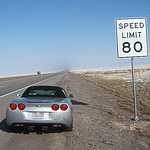
"But, honey! I'm saving money on brake pads driving this way!"

Team Owner

Joined: Mar 2008
Posts: 21,502
Likes: 462
From: Southern Utah
He is talking about total heat in the brakes over the course of time on track. We have seen this time and time again with our race cars and team drivers. Those that say they are 'easy on parts' and will start braking at say the 5 marker will have more heat, and more wear on the brakes than those that wait until they are about to die going into the corner. Why you ask? Because over the course of a lap the guy that is 'easier' on the brakes and starts his braking sooner will spend more total time on the brake pedal causing a higher average temp in the brake and causing more wear. They might not see as high of a peak number but the guy that hits them hard and only for a short amount of time will have more time pumping cool air through the brake then causing heat build up in the rotor and pad.
That is why guys that are trying to break the pedal off in the car generally will have much longer life in rotors and pads than the guy just poking around the track.
That is why guys that are trying to break the pedal off in the car generally will have much longer life in rotors and pads than the guy just poking around the track.

Former Vendor
Joined: Aug 2005
Posts: 16,897
Likes: 412
From: Lewisville TX
St. Jude Donor '03-'04-'05-'06-'07-'08-'09-'10-'11-'12-'13
Exactly...not only that but when you drag your feet on the brakes you can very easily over temp the pads causing glazing to the pad and warping rotors...
