



100 octane fuel?

Le Mans Master


Joined: Dec 2007
Posts: 8,375
Likes: 97
From: Somewhere in the Mid 9's TX

Platinum Supporting Vendor


Joined: Sep 2001
Posts: 3,665
Likes: 341

Glass,
You need to re-read what you sent to me in your link. Also the link I sent you, he is using flame speed as example of why you can just shop for your fuel based off BTU. You are taking all of what I said and using it out of context. Man I feel like I am on NBC and having sound bites played back to.
Let me make is simple. The original question was about putting in 100 octane fuel. My response:
The 100 octane fuel could cause a loss of power if that is all you are doing. Just because the octane is higher the BTU is lower. Now this is where it starts. Since we don't know the numbers of the exact fuel he is using, we are all speculating. So going forward, the benefit of the higher octane is that you have less detonation (knock) and you can run more timing. Running more timing is where you are going to gain power, whatever you could factor the loss of BTU which is not done easily, you will gain that loss back plus extra hp from the added timing. If you do nothing but change the fuel, then you are more than likely to lose power. Now with only 100 octane he may not lose anything, again hard to say until the car goes on the dyno and you confirm.
I realize that there are some who don't believe in using dyno's, why I don't know because they are a great tool for measuring the performance of your car. Also if you have load based dyno you can really dial in the calibration way better then trying to do it on the street. Steady state is the way every vehicle manufacture does it for a reason before they even get to the part where they test the vehicles on the street. You know there are also allot of people who think they don't need a torque wrench either but that does not make them right and there engine may not blow up.
Justin

Instructor

Joined: May 2010
Posts: 196
Likes: 0
From: FL
1) No, without tuning your engine for race gas it will make no difference (you may even lose power).
2) Don't use leaded race gas with catalytic converters (whether stock or aftermarket) as it can clog them up and cause premature failure (can also kill your O2 sensors). There is unleaded race gas available (up to 110 or so octane). I prefer VP109 in my streetcars, but it isn't available at every track and have used Sunoco at times with no complaints.

Team Owner

Joined: Sep 1999
Posts: 41,732
Likes: 1,718
From: Springfield MO
100 octane does not mean 100% gas no ethonal sorry. glass slipper is reading too much into this and trying to say what I mean when it is not.
Glass,
You need to re-read what you sent to me in your link. Also the link I sent you, he is using flame speed as example of why you can just shop for your fuel based off BTU. You are taking all of what I said and using it out of context. Man I feel like I am on NBC and having sound bites played back to.
Let me make is simple. The original question was about putting in 100 octane fuel. My response:
The 100 octane fuel could cause a loss of power if that is all you are doing. Just because the octane is higher the BTU is lower. Now this is where it starts. Since we don't know the numbers of the exact fuel he is using, we are all speculating. So going forward, the benefit of the higher octane is that you have less detonation (knock) and you can run more timing. Running more timing is where you are going to gain power, whatever you could factor the loss of BTU which is not done easily, you will gain that loss back plus extra hp from the added timing. If you do nothing but change the fuel, then you are more than likely to lose power. Now with only 100 octane he may not lose anything, again hard to say until the car goes on the dyno and you confirm.
I realize that there are some who don't believe in using dyno's, why I don't know because they are a great tool for measuring the performance of your car. Also if you have load based dyno you can really dial in the calibration way better then trying to do it on the street. Steady state is the way every vehicle manufacture does it for a reason before they even get to the part where they test the vehicles on the street. You know there are also allot of people who think they don't need a torque wrench either but that does not make them right and there engine may not blow up.
Justin
Glass,
You need to re-read what you sent to me in your link. Also the link I sent you, he is using flame speed as example of why you can just shop for your fuel based off BTU. You are taking all of what I said and using it out of context. Man I feel like I am on NBC and having sound bites played back to.
Let me make is simple. The original question was about putting in 100 octane fuel. My response:
The 100 octane fuel could cause a loss of power if that is all you are doing. Just because the octane is higher the BTU is lower. Now this is where it starts. Since we don't know the numbers of the exact fuel he is using, we are all speculating. So going forward, the benefit of the higher octane is that you have less detonation (knock) and you can run more timing. Running more timing is where you are going to gain power, whatever you could factor the loss of BTU which is not done easily, you will gain that loss back plus extra hp from the added timing. If you do nothing but change the fuel, then you are more than likely to lose power. Now with only 100 octane he may not lose anything, again hard to say until the car goes on the dyno and you confirm.
I realize that there are some who don't believe in using dyno's, why I don't know because they are a great tool for measuring the performance of your car. Also if you have load based dyno you can really dial in the calibration way better then trying to do it on the street. Steady state is the way every vehicle manufacture does it for a reason before they even get to the part where they test the vehicles on the street. You know there are also allot of people who think they don't need a torque wrench either but that does not make them right and there engine may not blow up.
Justin
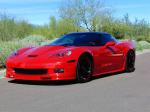
Even though it's not 100 octane, I can purchase 91,93 & 94 octane ethanol free pump gasoline from Phillips 66, Conoco and Signal food stores, here in Springfield, MO.
I run the 94 ethanol free Phillips 66 gasoline in my Z06 and it honks compared to the 91 ethanol free and it really honks compared to the 91 E10. I'm getting high octane along with high BTU. I pay 10 cents a gallon more for the ethanol free 94 octane then 91 E10. The improvement in gas mileage more then offsets the 10 cents.
The OP needs to find out if the 100 octane gas he's interested in has any ethanol in it.
Last edited by JoesC5; Jan 19, 2012 at 04:47 PM.
Le Mans Master
Joined: Jun 2009
Posts: 6,724
Likes: 652
Agree with JoesC5 and Glass Slipper......while octane with be a measurement of a particular fuel's resistance to pre-ignition, it's the chemical makeup (formulation) of the fuel which will dictate it's BTU content and flame propagation.
Depending on the formula, I know for a fact that a stock tuned LS7 CAN take advantage of high octane "race fuel" mixes.....I'm not so sure on the LS1/LS2/LS3 engines. But, I only use the mix when I'm at the track where running WOT is the norm. For regular street use and part throttle operation, unless you're experiencing a lot of KR (determined via data logging), high octane fuel will be a waste of money, IMHO.
Depending on the formula, I know for a fact that a stock tuned LS7 CAN take advantage of high octane "race fuel" mixes.....I'm not so sure on the LS1/LS2/LS3 engines. But, I only use the mix when I'm at the track where running WOT is the norm. For regular street use and part throttle operation, unless you're experiencing a lot of KR (determined via data logging), high octane fuel will be a waste of money, IMHO.
Last edited by FNBADAZ06; Jan 19, 2012 at 04:24 PM.

Le Mans Master

Joined: Jul 2005
Posts: 5,328
Likes: 405
Glass,
You need to re-read what you sent to me in your link. Also the link I sent you, he is using flame speed as example of why you can just shop for your fuel based off BTU. You are taking all of what I said and using it out of context. Man I feel like I am on NBC and having sound bites played back to.
You need to re-read what you sent to me in your link. Also the link I sent you, he is using flame speed as example of why you can just shop for your fuel based off BTU. You are taking all of what I said and using it out of context. Man I feel like I am on NBC and having sound bites played back to.
Let me make is simple. The original question was about putting in 100 octane fuel. My response:
The 100 octane fuel could cause a loss of power if that is all you are doing. Just because the octane is higher the BTU is lower. Now this is where it starts. Since we don't know the numbers of the exact fuel he is using, we are all speculating. So going forward, the benefit of the higher octane is that you have less detonation (knock) and you can run more timing. Running more timing is where you are going to gain power, whatever you could factor the loss of BTU which is not done easily, you will gain that loss back plus extra hp from the added timing. If you do nothing but change the fuel, then you are more than likely to lose power. Now with only 100 octane he may not lose anything, again hard to say until the car goes on the dyno and you confirm.
The 100 octane fuel could cause a loss of power if that is all you are doing. Just because the octane is higher the BTU is lower. Now this is where it starts. Since we don't know the numbers of the exact fuel he is using, we are all speculating. So going forward, the benefit of the higher octane is that you have less detonation (knock) and you can run more timing. Running more timing is where you are going to gain power, whatever you could factor the loss of BTU which is not done easily, you will gain that loss back plus extra hp from the added timing. If you do nothing but change the fuel, then you are more than likely to lose power. Now with only 100 octane he may not lose anything, again hard to say until the car goes on the dyno and you confirm.
I realize that there are some who don't believe in using dyno's, why I don't know because they are a great tool for measuring the performance of your car. Also if you have load based dyno you can really dial in the calibration way better then trying to do it on the street. Steady state is the way every vehicle manufacture does it for a reason before they even get to the part where they test the vehicles on the street. You know there are also allot of people who think they don't need a torque wrench either but that does not make them right and there engine may not blow up.
Justin
Justin

Want another sound bite? How about this one where you made the absurd claim that a C4 yoke and halfshaft will hit at full suspension travel when lifted off the ground:
http://forums.corvetteforum.com/c4-z...post1564657356
It's not so bad that you're wrong, it's the condescending attitude and absolute resistance to admitting you are wrong that makes you look so bad. Whenever somebody points out where I'm wrong or made a mistake, I apologize for the incorrect info and thank the person for the correction...you should try it sometime, I'm sure the sound bites would stop.

Le Mans Master
Joined: Dec 2007
Posts: 8,375
Likes: 97
From: Somewhere in the Mid 9's TX
Not to derail this thread anymore, but this is 75% of the reason I left a supporting tuner that everybody raves about here in Houston on corvette forum. Give them a 5 gallon bucket of MS109, and they are chit up a creek without a paddle and have no clue since they have never raced their car, or tuned one with it.
The internet and this forum is full of the so called "best" tuners and they are protected due to forum rules. In reality, the only ones that know what they are doing are the ones that have tuned these cars on octane higher than 93, logged cars and see what they are doing. This thread makes me sick thinking about the wasted money I spent at a forum vendor that is a tuner in Houston.
The internet and this forum is full of the so called "best" tuners and they are protected due to forum rules. In reality, the only ones that know what they are doing are the ones that have tuned these cars on octane higher than 93, logged cars and see what they are doing. This thread makes me sick thinking about the wasted money I spent at a forum vendor that is a tuner in Houston.
Corvette Stories
The Best of Corvette for Corvette Enthusiasts

Every 2027 Corvette Engine Explained
Joe Kucinski
Designer Imagines A Corvette That Looks More Like a Corvette Than the Corvette
Verdad Gallardo
10 Ugly Corvettes That We Still Kinda Love
Joe Kucinski
Top 10 Most Expensive Corvettes Ever Sold on Bring A Trailer
Brett Foote
10 Things Every Corvette Owner Needs (2026 Edition)
Michael S. Palmer
8 Most "Only Corvette Owners Understand" Quirks and Problems
Pouria Savadkouei
10 Reasons the C6 Z06 is Still A Performance Benchmark After 20 Years
Joe Kucinski
How Much Horsepower Every Corvette Engine "LOST" in 1972
Joe Kucinski
Top 10 DOs and DON'Ts for Protecting Your Convertible Top!
Michael S. Palmer
Platinum Supporting Vendor
Joined: Sep 2001
Posts: 3,665
Likes: 341
I'm not reading too much into this and am certainly not trying to say what you mean, you have done that all on your own.
Nothing you have said has been taken out of context and if you don't like having your sound bites played back, then you should make technically correct statements. I have read both links, I think the difference between us is I understand them.
I'm not going to get sucked into another one of your circular arguments so I'll make this even simpler...you don't have a clue about this topic.
There have been many cars tuned on a dyno that blew up on the track because the dyno run was too quick in comparison to the track. Yes, they're good for measuring HP...sometimes not so good for tuning. And just an FYI, all dynos are load based...that's how they measure HP, by loading the engine. I'm sure what you're trying to say is an absorption type dyno since they are the only one that can achieve steady state conditions but I don't want to put words in your mouth or take anything out of context.
Want another sound bite? How about this one where you made the absurd claim that a C4 yoke and halfshaft will hit at full suspension travel when lifted off the ground:
http://forums.corvetteforum.com/c4-z...post1564657356
It's not so bad that you're wrong, it's the condescending attitude and absolute resistance to admitting you are wrong that makes you look so bad. Whenever somebody points out where I'm wrong or made a mistake, I apologize for the incorrect info and thank the person for the correction...you should try it sometime, I'm sure the sound bites would stop.
Nothing you have said has been taken out of context and if you don't like having your sound bites played back, then you should make technically correct statements. I have read both links, I think the difference between us is I understand them.
I'm not going to get sucked into another one of your circular arguments so I'll make this even simpler...you don't have a clue about this topic.
There have been many cars tuned on a dyno that blew up on the track because the dyno run was too quick in comparison to the track. Yes, they're good for measuring HP...sometimes not so good for tuning. And just an FYI, all dynos are load based...that's how they measure HP, by loading the engine. I'm sure what you're trying to say is an absorption type dyno since they are the only one that can achieve steady state conditions but I don't want to put words in your mouth or take anything out of context.
Want another sound bite? How about this one where you made the absurd claim that a C4 yoke and halfshaft will hit at full suspension travel when lifted off the ground:
http://forums.corvetteforum.com/c4-z...post1564657356
It's not so bad that you're wrong, it's the condescending attitude and absolute resistance to admitting you are wrong that makes you look so bad. Whenever somebody points out where I'm wrong or made a mistake, I apologize for the incorrect info and thank the person for the correction...you should try it sometime, I'm sure the sound bites would stop.
The BTU rating of the fuels, you know exactly what I am talking about. You are making it very technical when I was trying to keep it simple. You made an example about the fuel that is custom blended to have a lower octane and lower the timing. Yes that would be ideal. In theory 0 timing would be the best so the engine does not have to work against itself. However time is time and the fuel cannot burn fast enough for this to be possible.
The C4 article you posted, you were the one that made a statement and accepted that there was no way you were wrong. So you are the hypocrite here. What I said was when the suspension is just hanging, depending on what spring is in the car the outer bearing support will hang down low enough for the yoke to make contact with the halfshaft. You should not put your car in drive when this happens because you will damage it. The only way you would see this condition on the street is if you are jumping your car and GM did not design it for that. So while I am sure you have been underneath allot of C4's, so has the guy at Jiffy Lube, but that does not mean he knows what he is talking about. Not saying that about you, but taking that statement to show that does not really mean anything. So follow my advice in that first thread and you will see what I am talking about. The earlier C3 cars are even worse about it with base suspensions. All I was saying to the guy was look, when you jack the car up load the suspension so it is not hanging down. You took it from there. There is obviously something between us, don't know why, and don't really care, but you are making issues out of statements that were meant to be simple. I can get technical also, but that only leads to confusion to someone else reading is that does not understand it. Do you really think I don't know the difference in dyno's, yes they all load a car, but not in the same way. When someone refers to a dyno as a load based dyno, it means it can hold a car at steady state. Yes I am sure many cars have blown up going from dyno to street, especially depending on what kind of dyno it is on. That does not take away from the dyno being a tool, like a torque wrench, but I am sure you have something against those also. It sounds like what you are accusing me of, is your problem and you are trying to make my simple general statement sound completely wrong by having a very technical example of a difference. Like I said I see where you attacked a statement from and earlier thread that I posted so this obviously goes to something else deeper. Glad you were able to completely confuse and make something that was simple very technical for someone.
Platinum Supporting Vendor
Joined: Sep 2001
Posts: 3,665
Likes: 341
Not to derail this thread anymore, but this is 75% of the reason I left a supporting tuner that everybody raves about here in Houston on corvette forum. Give them a 5 gallon bucket of MS109, and they are chit up a creek without a paddle and have no clue since they have never raced their car, or tuned one with it.
The internet and this forum is full of the so called "best" tuners and they are protected due to forum rules. In reality, the only ones that know what they are doing are the ones that have tuned these cars on octane higher than 93, logged cars and see what they are doing. This thread makes me sick thinking about the wasted money I spent at a forum vendor that is a tuner in Houston.
The internet and this forum is full of the so called "best" tuners and they are protected due to forum rules. In reality, the only ones that know what they are doing are the ones that have tuned these cars on octane higher than 93, logged cars and see what they are doing. This thread makes me sick thinking about the wasted money I spent at a forum vendor that is a tuner in Houston.
On a side note, I am pretty sure I know the "tuner" you are talking about. Is he still in business under another name now down there. We have a customer who bought a car from them that ended up costing thousands to get fixed and running because of some stuff that was done there.
Platinum Supporting Vendor
Joined: Sep 2001
Posts: 3,665
Likes: 341
Agree with JoesC5 and Glass Slipper......while octane with be a measurement of a particular fuel's resistance to pre-ignition, it's the chemical makeup (formulation) of the fuel which will dictate it's BTU content and flame propagation.
Depending on the formula, I know for a fact that a stock tuned LS7 CAN take advantage of high octane "race fuel" mixes.....I'm not so sure on the LS1/LS2/LS3 engines. But, I only use the mix when I'm at the track where running WOT is the norm. For regular street use and part throttle operation, unless you're experiencing a lot of KR (determined via data logging), high octane fuel will be a waste of money, IMHO.
Depending on the formula, I know for a fact that a stock tuned LS7 CAN take advantage of high octane "race fuel" mixes.....I'm not so sure on the LS1/LS2/LS3 engines. But, I only use the mix when I'm at the track where running WOT is the norm. For regular street use and part throttle operation, unless you're experiencing a lot of KR (determined via data logging), high octane fuel will be a waste of money, IMHO.
Tech Contributor

Joined: Jul 2002
Posts: 14,950
Likes: 266
From: St. Louis, MO
St. Jude Donor '08
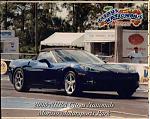
I scan all runs. I have found that when at the track, a gallon of 100 octane Sunoco unleaded added to my 1/4 tank or so will eliminate any knock if I happen to be getting any.
Knock kills power, you see it on dyno scans. When on the dyno the cars puff black smoke when they knock and timing gets pulled.
Low lead fuel will kill your 02 sensors in very short order. Do not run it or you will be buying front 02 sensors which you need for your car to run.
By the way, there is a restrictor in your fuel neck that won't allow you to put the larger leaded nozzle in the fuel neck. But that won't prevent you from putting the wrong fuel in a can and using it. And it seems to me I've seen leaded pumps at the track with the smaller unleaded nozzles so I'm doubly cautious to make sure I don't put in the wrong fuel.
Knock kills power, you see it on dyno scans. When on the dyno the cars puff black smoke when they knock and timing gets pulled.
Low lead fuel will kill your 02 sensors in very short order. Do not run it or you will be buying front 02 sensors which you need for your car to run.
By the way, there is a restrictor in your fuel neck that won't allow you to put the larger leaded nozzle in the fuel neck. But that won't prevent you from putting the wrong fuel in a can and using it. And it seems to me I've seen leaded pumps at the track with the smaller unleaded nozzles so I'm doubly cautious to make sure I don't put in the wrong fuel.
Le Mans Master
Joined: Jun 2009
Posts: 6,724
Likes: 652
I agree also, but it was a simple question that was being answered and not getting in to a technical debate about custom blended fuels. A LS7 and really all Corvettes will perform better on 100% gas over the normal E10 fuel because that is what GM build there calibrations on. The statement of will race fuel net me more power by just putting it in may take, that is not exactly the true in about 98% of the cases. Now if you hook up your laptop and remove your cats, then the answer would be Yes, you will gain power.
My contribution to this thread is based off experience and testing with my stock tuned LS7 car, which may or may not be relevent to the OP's situation. That being said, after learning and understanding the various details and measurements regarding "race fuels", I was able to prove (at least in AZ with our 91 octane E10 fuels) that using a specific formulation of "race gas" mixed with my pump gas not only removed all KR, but also gave me an additional 7+ RWHP and RWTQ...while still running on my factory tune and exhaust. The gains were verified on a dyno (during same day testing), and at the 1/4 mile race track
Again, I'll say that using "race fuel" for normal daily driving use is a waste of money, IMHO, for a stock tuned car...regardless if you pick up some power at WOT. But, for track use, some engine combinations can derive MORE power with a dose of properly formulated race gas

Platinum Supporting Vendor
Joined: Sep 2001
Posts: 3,665
Likes: 341
I scan all runs. I have found that when at the track, a gallon of 100 octane Sunoco unleaded added to my 1/4 tank or so will eliminate any knock if I happen to be getting any.
Knock kills power, you see it on dyno scans. When on the dyno the cars puff black smoke when they knock and timing gets pulled.
Low lead fuel will kill your 02 sensors in very short order. Do not run it or you will be buying front 02 sensors which you need for your car to run.
By the way, there is a restrictor in your fuel neck that won't allow you to put the larger leaded nozzle in the fuel neck. But that won't prevent you from putting the wrong fuel in a can and using it. And it seems to me I've seen leaded pumps at the track with the smaller unleaded nozzles so I'm doubly cautious to make sure I don't put in the wrong fuel.
Knock kills power, you see it on dyno scans. When on the dyno the cars puff black smoke when they knock and timing gets pulled.
Low lead fuel will kill your 02 sensors in very short order. Do not run it or you will be buying front 02 sensors which you need for your car to run.
By the way, there is a restrictor in your fuel neck that won't allow you to put the larger leaded nozzle in the fuel neck. But that won't prevent you from putting the wrong fuel in a can and using it. And it seems to me I've seen leaded pumps at the track with the smaller unleaded nozzles so I'm doubly cautious to make sure I don't put in the wrong fuel.
I agree.....it was a simple question. IMHO, it may have been the blanket answer's that were given and treated as absolutes. There are many different formulations of fuel when you get to talking of "race gas", and we also know there are many different OEM engine combinations and tuning calibrations. Unfortunetly, given all these various details, and what the OP's desired results and expectations are, the answers are not always so clear cut and dry.
My contribution to this thread is based off experience and testing with my stock tuned LS7 car, which may or may not be relevent to the OP's situation. That being said, after learning and understanding the various details and measurements regarding "race fuels", I was able to prove (at least in AZ with our 91 octane E10 fuels) that using a specific formulation of "race gas" mixed with my pump gas not only removed all KR, but also gave me an additional 7+ RWHP and RWTQ...while still running on my factory tune and exhaust. The gains were verified on a dyno (during same day testing), and at the 1/4 mile race track
Again, I'll say that using "race fuel" for normal daily driving use is a waste of money, IMHO, for a stock tuned car...regardless if you pick up some power at WOT. But, for track use, some engine combinations can derive MORE power with a dose of properly formulated race gas
My contribution to this thread is based off experience and testing with my stock tuned LS7 car, which may or may not be relevent to the OP's situation. That being said, after learning and understanding the various details and measurements regarding "race fuels", I was able to prove (at least in AZ with our 91 octane E10 fuels) that using a specific formulation of "race gas" mixed with my pump gas not only removed all KR, but also gave me an additional 7+ RWHP and RWTQ...while still running on my factory tune and exhaust. The gains were verified on a dyno (during same day testing), and at the 1/4 mile race track
Again, I'll say that using "race fuel" for normal daily driving use is a waste of money, IMHO, for a stock tuned car...regardless if you pick up some power at WOT. But, for track use, some engine combinations can derive MORE power with a dose of properly formulated race gas
Instructor
Joined: May 2010
Posts: 196
Likes: 0
From: FL
Actually knock retard (KR) kills power. The knock sensors sense knock, the computer retards timing. On a factory tune, the recovery time is very slow, too. Black smoke is usually rich (too much fuel). Ideally the best thing to do is to use ethanol-free gas with the factory tune, or have your car tuned for E10 (or more accurately E5-E12). Although I will say that most new LS cars I have seen have KR from the factory, at least on E10, I would find it hard to believe (though not impossible) that someone would pick up power just by dumping race gas into the tank with the stock tune.
Tech Contributor
Joined: Jul 2002
Posts: 14,950
Likes: 266
From: St. Louis, MO
St. Jude Donor '08
Actually knock retard (KR) kills power. The knock sensors sense knock, the computer retards timing. On a factory tune, the recovery time is very slow, too. Black smoke is usually rich (too much fuel). Ideally the best thing to do is to use ethanol-free gas with the factory tune, or have your car tuned for E10 (or more accurately E5-E12). Although I will say that most new LS cars I have seen have KR from the factory, at least on E10, I would find it hard to believe (though not impossible) that someone would pick up power just by dumping race gas into the tank with the stock tune.
Le Mans Master

Joined: May 2011
Posts: 5,022
Likes: 18
From: Tampa FL (formerly Justinjor)
Tech Contributor
St. Jude Donor '11-'12-'13-'14
Tech Contributor
Joined: Jul 2002
Posts: 14,950
Likes: 266
From: St. Louis, MO
St. Jude Donor '08
 I had 25 emails from misc threads that I subscribe to. I'll check it out now.
Le Mans Master
Joined: Dec 2007
Posts: 8,375
Likes: 97
From: Somewhere in the Mid 9's TX
Just out of curiousty, Marc, the OP, and others... What do the pumps that offer 100 octane gas charge per gallon? How many stations are there around you guys that you could go fill up at?
I'm just curious with the issues regarding E85 and Government subsidies. I honestly haven't kept up with it in about a month, but I'm wondering if this stuff will make its way down here. Since an E85 fuel system requires a lot more injector, and burns 30-40% more fuel, I would be completely willing to tune my car on 100, and run it on 93 everyday without any boost with meth. Then just fill it up with 100 octane when I want to race somebody or go to the track. Makes more sense to me if you can get similar gas milage during cruise at 70mph on the freeway(stock gears) and easy driving in the city while keeping 93 in the car.
I'm just curious with the issues regarding E85 and Government subsidies. I honestly haven't kept up with it in about a month, but I'm wondering if this stuff will make its way down here. Since an E85 fuel system requires a lot more injector, and burns 30-40% more fuel, I would be completely willing to tune my car on 100, and run it on 93 everyday without any boost with meth. Then just fill it up with 100 octane when I want to race somebody or go to the track. Makes more sense to me if you can get similar gas milage during cruise at 70mph on the freeway(stock gears) and easy driving in the city while keeping 93 in the car.