When you click on links to various merchants on this site and make a purchase, this can result in this site earning a commission. Affiliate programs and affiliations include, but are not limited to, the eBay Partner Network.
2020 Corvette of the Year Finalist (track prepared)
2019 C6 of Year Winner (track prepared)
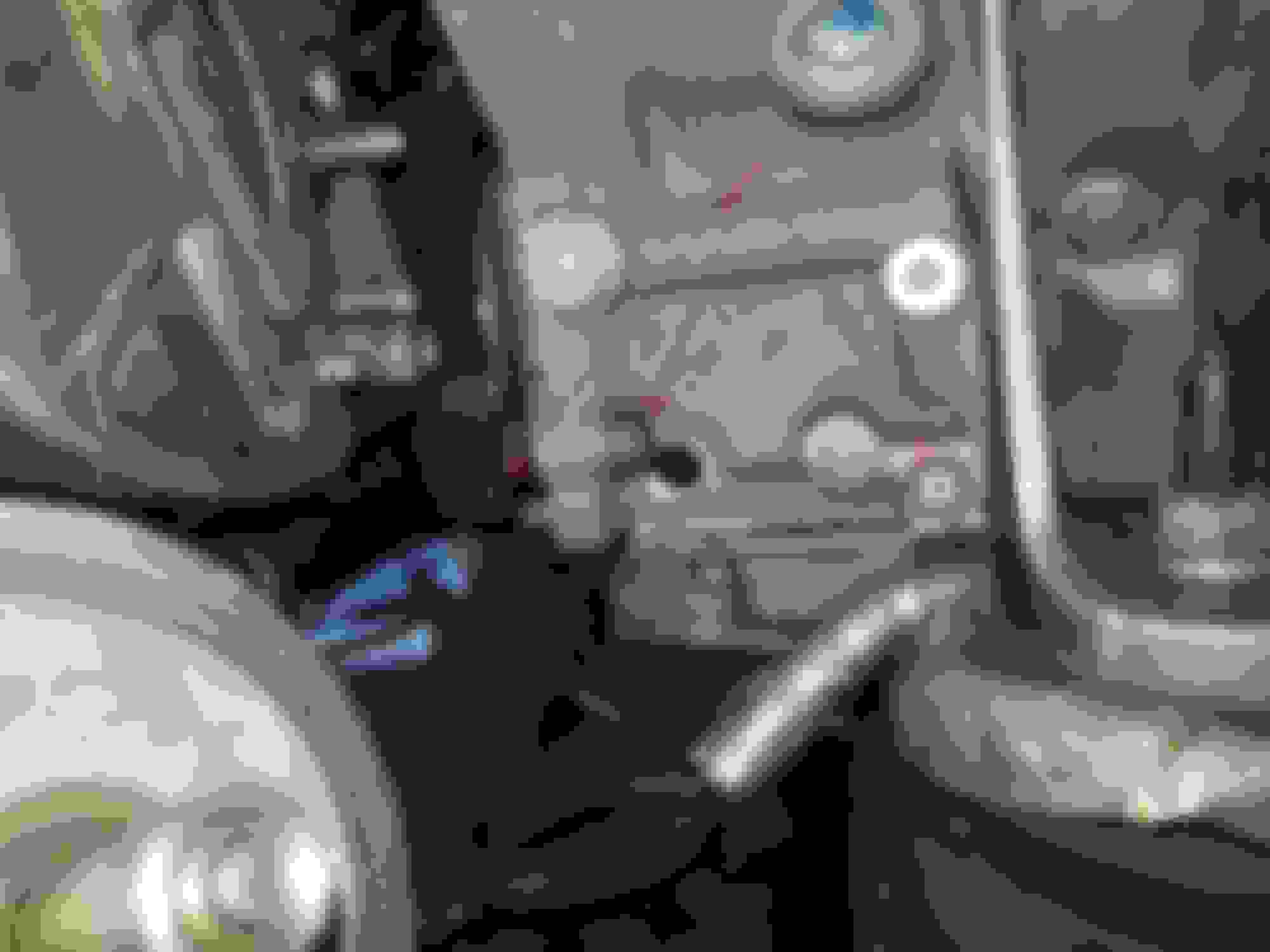
Step 40 – Install two support bolts in the torque tube (automatics only)
You’ll need two M10-1.5x55mm bolts for this step. The purpose is to stabilize the driveshaft in the torque tube after it’s been separated from the engine. If you’ve never had the motor out before you should see two little plastic plugs where the bolts end up needing to go. Remove them and then install the two bolts torqueing them to 26 ft/lbs.
Last edited by subfloor@centurytrans; Apr 25, 2018 at 12:13 PM.
2020 Corvette of the Year Finalist (track prepared)
2019 C6 of Year Winner (track prepared)
Step 41 – support the torque tube on a jackstand
I forgot to take a picture of the step but what it involves is placing a jackstand somewhere underneath the torque tube so that when you separate it from the motor it remains perpendicular to the ground. The exact placement will vary depending on how high you have the front of the car elevated.
Last edited by subfloor@centurytrans; Apr 25, 2018 at 12:13 PM.
2020 Corvette of the Year Finalist (track prepared)
2019 C6 of Year Winner (track prepared)
Step 42 – disconnect the cam sensor, driver side ground strap and wiring harness
This is a pretty simple step as you’ll need to remove the two bolts holding the ground strap and wiring harness clamp to the block as well as the cam sensor connector.
Last edited by subfloor@centurytrans; Apr 25, 2018 at 12:14 PM.
2020 Corvette of the Year Finalist (track prepared)
2019 C6 of Year Winner (track prepared)
Step 43 – unbolt and separate the torque tube from the engine
For this step there are five 13mm bolts that need to come out. As was the case with removing the wiring harness from the bellhousing, having the engine dropped down so it’s basically level to the ground gives you quite a bit of room to access all of the bolts.
Driver side:
Passenger side:
Another view of the lower bolt towards the passenger side:
Once all the bolts are out if you wiggle the torque tube a bit you should see it start to separate, after which you can get a large screwdriver in between to help fully separate them.
It is very important to watch what happens as the two components start to come apart. If it looks like the engine tilts dramatically up or down, it means that you haven’t got both the engine and torque tube equally supported. Where this comes into play is that it’s fairly easy to bend the driveshaft if you’re not careful (ask me how I know this).
If it doesn’t appear that the two are separating smoothly then I’d suggest sliding them back together and check the placement of the jackstand under the torque tube as well as using the leveler to make sure then engine is level in relation to the ground. Keep making whatever adjustments are necessary until they come apart smoothly.
Also, if it looks like something is binding and preventing the two from separating then it’s most likely because you’ve got part of the wiring harness either still connected to the motor or catching on something up towards the back of the block and/or heads. You should never need to force the two to separate.
It’s a little hard to tell in the picture, but it does show the parts separating smoothly:
Last edited by subfloor@centurytrans; Apr 25, 2018 at 12:17 PM.
2020 Corvette of the Year Finalist (track prepared)
2019 C6 of Year Winner (track prepared)
Step 44 – remove the AC compressor
As previously mentioned, I no longer have AC in the car so the picture shown below is where you’d normally find the compressor and bracket.
With the cradle dropped and the engine lowered it’s the easiest time to access all of the bolts to disconnect everything. The intent of doing it this way is so that you separate the compressor from the engine but not have to disconnect the lines and then deal with an AC recharge later. Some people like to disconnect all the lines but I can assure you it’s not necessary.
The bracket is connected to 4 15mm bolts and one stud with a nut on it. Removing the bolts is pretty straightforward but the nut and stud can be a pain as the clearance is a bit tight.
Once the compressor has been disconnected if you just move it out of the way it’ll give you enough room to start lifting the engine out the engine bay.
Last edited by subfloor@centurytrans; Apr 25, 2018 at 12:18 PM.
2020 Corvette of the Year Finalist (track prepared)
2019 C6 of Year Winner (track prepared)
Step 45 – pull the motor out!
If you’ve gotten this far then pat yourself on the back as you’re pretty much done.
If you haven’t already done so yet, you’ll need to walk the engine forward to completely clear the driveshaft in the torque tube. What I usually do is find that a good solid tug on the engine hoist will achieve that. If you’re having trouble then make sure it’s not hitting on the frame or possibly the alternator and PS bracket.
Actually getting it up and out of the car is where the load leveler more than pays for itself as I can’t imagine working without one. I almost bought one of those lift plates that bolts in place of the valley cover but it didn’t have any leveling capabilities so I ended up sticking with what I already knew worked well.
Almost completely out:
Make sure to check the clearance between the top of the hoist and your garage as it’s pretty easy to hit it as you need to get the engine up fairly high to clear the bumper.
Just about the clear the front bumper:
And completely out of the car:
Last edited by subfloor@centurytrans; Apr 25, 2018 at 12:20 PM.
Chris was a major help to me when I did my LS7 swap, although I did mine slightly different from Chris, the results were the same( but mine took longer)
2020 Corvette of the Year Finalist (track prepared)
2019 C6 of Year Winner (track prepared)
Originally Posted by Turbo6TA
Your pulling the engine out from the top.
Do you find that pulling it from the top is easier than dropping the front subframe (with engine attached) and out the bottom ?
Oh I'm sure that with a lift and all the other needed tools and equipment it probably is easier to take it out the bottom.
However, I (like most people) don't have the tools necessary to do that so this approach is doable for pretty much anybody who has access to an engine hoist and some other basic hand tools.
I'm not sure how long it takes to pull it from below but I can get it out this way in just under 5 hours by myself without rushing.





















 Step 40 – Install two support bolts in the torque tube (automatics only)