








Corvette's Rival
Le Mans Master


Joined: May 2010
Posts: 7,756
Likes: 173
From: Ventura CA

Are you maybe thinking of the plain Cobra which yes were made up to 2004? The Cobra R was a track use only model in 2000 in which 300 were made. A supercharged 5.4L (think SVT Lightning) making 385 horses and 385 lb/ft of torque, a hell of a car back in the day. The regular Cobras made only 320 bhp while the GT's made 260.

Team Owner

Joined: Jul 2006
Posts: 97,155
Likes: 1,471
From: Calgary, AB. There's a reason why white was the only color offered on every year Corvette. Proud Canadian German Jamaican!
St. Jude Donor '09, '12-'13-'14-'15-'16-'17
I'm pretty sure it was an SVT. It had the big *** wing and had the sticker claiming it had 390 ponies written on the windshield.
http://www.moddedmustangs.com/2003-2...erminator.html yeah here it is. supercharged 4.6.
http://en.wikipedia.org/wiki/Ford_Mustang_SVT_Cobra
I remember also reading about it in Mustang and Fast Fords, and they raced one against an SLP SS Camaro, where it only beat the Maro by 3 tenths. And one of the testers admitted they botched a shift on their best lap in the Maro, and then went on to gush about both cars almost pornographically for three pages.
http://www.moddedmustangs.com/2003-2...erminator.html yeah here it is. supercharged 4.6.
http://en.wikipedia.org/wiki/Ford_Mustang_SVT_Cobra
I remember also reading about it in Mustang and Fast Fords, and they raced one against an SLP SS Camaro, where it only beat the Maro by 3 tenths. And one of the testers admitted they botched a shift on their best lap in the Maro, and then went on to gush about both cars almost pornographically for three pages.

Melting Slicks


Joined: Dec 2007
Posts: 2,886
Likes: 1,255
From: Carmel CA
US market may be largest but not for long. But that doesn't really mean much. Any company that plans a model for only the current single largest market is doomed to lost marketshare in emerging markets (gee, why did GM use their international design centers for the C7 again?).
Focusing on thousandths of a second on a 13-mile track with conditions that vary from lap to lap is retarded. You can have the same driver in the same car record lap times 10s apart! It depends on the conditions and what the driver is willing to risk with regard to conditions. GM and Nissan didn't even have the same starting point, LOL.
The supertest is the most respected test of Nurburgring lap times there is. Part of this is because the NRing lap is only one set of tests. They test the acceleration, braking, and handling performances of all of the cars, to confirm that nothing is "funny" about power or tires. Unlike any of the manufacturers, or any other magazine, they've started publishing measured alignment specs in case any of the manufacturers send cars with pure racing alignments. The cars are also tested on a wet course. I don't say that any of the manufacturers are cheating, but based on only a watching a video, you'd never know.
You think 6s is a huge difference from Porsche's time (which came at the end of a few hours worth of lapping) vs HvS (who did his time in only one flying lap)? Then how do you explain the 12-15s differences between GM's claimed times for the base C6 and the ZR1? Why is it so impossible that a car that can do 0-150 in the 14's (where the ZR1 is normally in the 16's) would be that fast on one of the fastest tracks on the planet? One that's also 600-900m above sea level which favors turbocharged cars...
I noticed you did not address those other lap times. That suggests you agree they are legit.
Define for me "everybody". Thousands is not really anything when you consider there are 1 million cars sold in one year in the US alone.
Focusing on thousandths of a second on a 13-mile track with conditions that vary from lap to lap is retarded. You can have the same driver in the same car record lap times 10s apart! It depends on the conditions and what the driver is willing to risk with regard to conditions. GM and Nissan didn't even have the same starting point, LOL.
The supertest is the most respected test of Nurburgring lap times there is. Part of this is because the NRing lap is only one set of tests. They test the acceleration, braking, and handling performances of all of the cars, to confirm that nothing is "funny" about power or tires. Unlike any of the manufacturers, or any other magazine, they've started publishing measured alignment specs in case any of the manufacturers send cars with pure racing alignments. The cars are also tested on a wet course. I don't say that any of the manufacturers are cheating, but based on only a watching a video, you'd never know.
You think 6s is a huge difference from Porsche's time (which came at the end of a few hours worth of lapping) vs HvS (who did his time in only one flying lap)? Then how do you explain the 12-15s differences between GM's claimed times for the base C6 and the ZR1? Why is it so impossible that a car that can do 0-150 in the 14's (where the ZR1 is normally in the 16's) would be that fast on one of the fastest tracks on the planet? One that's also 600-900m above sea level which favors turbocharged cars...
I noticed you did not address those other lap times. That suggests you agree they are legit.
Define for me "everybody". Thousands is not really anything when you consider there are 1 million cars sold in one year in the US alone.

Le Mans Master
Joined: Jul 2002
Posts: 5,636
Likes: 6
I'm pretty sure it was an SVT. It had the big *** wing and had the sticker claiming it had 390 ponies written on the windshield.
http://www.moddedmustangs.com/2003-2...erminator.html yeah here it is. supercharged 4.6.
http://en.wikipedia.org/wiki/Ford_Mustang_SVT_Cobra
I remember also reading about it in Mustang and Fast Fords, and they raced one against an SLP SS Camaro, where it only beat the Maro by 3 tenths. And one of the testers admitted they botched a shift on their best lap in the Maro, and then went on to gush about both cars almost pornographically for three pages.
http://www.moddedmustangs.com/2003-2...erminator.html yeah here it is. supercharged 4.6.
http://en.wikipedia.org/wiki/Ford_Mustang_SVT_Cobra
I remember also reading about it in Mustang and Fast Fords, and they raced one against an SLP SS Camaro, where it only beat the Maro by 3 tenths. And one of the testers admitted they botched a shift on their best lap in the Maro, and then went on to gush about both cars almost pornographically for three pages.
But you never answered the question: Why, if a live axle is just fine, would Ford use IRS on their GT (non-Mustang) supercar?
In their infinite wisdom to cut costs, it appears it actually ended up costing Ford more to develop the live axle to hit their NVH targets (which were still some ways below that of most other IRS cars):
http://blogs.motortrend.com/2010-for...#axzz2Kv42RF4N
And unless your whole point of driving a car is to put it on a smooth, flat skidpad, what's the point of crowing about high g's with a live axle car? Introduce some bumps, uneven off-camber pavement, and ruts and you'll probably see a very different result between a live-axled car that pulls 1.0g vs an IRS car that pulls the same (or even slightly less).
C&D on the GT500 vs ZL1:
"the [Mustang's] suspension jostles up and down over highway-expansion joints. It’s tolerable, but the Camaro has better ride quality.
Admittedly, creature comforts are not the primary aim of these cars, but the ZL1’s unstressed vibe enhances the driving experience. It’s more relaxed and approachable, and ultimately more fun to drive. At Grattan, the Camaro’s front end seemed like it would never wash out, and a handy dose of trail braking quelled any understeer. The shocks and multilink rear suspension helped the ZL1 use more of its power around the track."
Motor Trend:
"The GT500, by contrast, suffers from a stiffer ride and too much vertical motion. Every bump gets your head bobbing up and down as the big Shelby bucks like an unbroken colt. Its two-mode Bilstein shocks are simply too stiff for everyday driving, even in Normal mode.The GT500 just isn't meant for everyday driving. It's built for performance, so we got off the freeways and surface streets and headed for the hills. One of two things happens on a canyon road: either a car comes into its element and digs in, delivering a fantastic driving experience, or all the problems you noticed on the way out of town are amplified. The GT500 does both. On the one hand, it handles better than any solid axle car -- save perhaps the Boss 302 -- has any right to, but on the other, that vertical motion grates on your confidence. Real-world roads aren't racetrack-smooth. They have bumps in inconvenient places, such as mid-corner overlooking a gorge.
To be clear, the Mustang never tried to get away from us, but there was always a ****ling suspicion it might. Hit a bump under any condition, be it acceleration, cornering, or braking, and that live rear axle begins dancing around, undermining driver confidence and slowing you down. We also noticed the brakes lose some of their initial bite as they heated up, a problem that later came back to haunt the Shelby.The ZL1, by virtue of its independent suspension and magnetic shocks, did not suffer this problem."
Edmunds on Mustang V6 vs Hyundai Genesis:
"Settle in, find a rhythm and it won't take long to discover that the Genesis is both the quicker and more dedicated tool for dissecting any road. Largely, this is down to its more sophisticated suspension, stronger power plant and lower stance.
The speed difference, however, isn't as substantial as the chasm that emerges in our confidence during aggressive driving. Drive both cars over the same road at the same pace and you'll come away from the Genesis far less aware of your own mortality. Its better damping and body control are a blessing. And if the going gets even remotely rough, the Mustang's axle begins to show itself for what it is: heavy and old.
If you're buying one of these cars for back roads, pick the Genesis."
So this same basic Mustang has been around since 2004. They've had more than half a decade to, as you put it, "fix" the shocks. So why haven't they? They didn't do it for the GT (see M3 comparo). They didn't do it for the Boss 302 (see UK test against the Germans). They didn't do it for the GT500 which has two suspension modes, neither of which seem to fix the underlying problem. You can only blame the shocks for so long...
Le Mans Master
Joined: Jul 2002
Posts: 5,636
Likes: 6
You are dodging my questions. Why are all of Porsche's Nurburgring lap times rounded to a even number ? I'll tell you !! It's because they segment their times(cheating). Look at the Panamera, Cayman, and Boxter as well. All even numbers. Low sea level elevation does not favor turbocharging. It's just the opposite. I think you better give up!!!
Where did I say turbocharging helps low sea level elevation?
Regarding the Panamera, the Turbo S did it in 7:52 in the Supertest. Not so far off from the 7:56 claimed for the non-S, which was only 0.3s slower than the Turbo S at the Sachsenring in same-day testing (AutoBild). Where is the independent test of the CTS-V on the Nordschleife?
And it is you who is dodging the questions:
You think 6s is a huge difference from Porsche's time (which came at the end of a few hours worth of lapping) vs HvS (who did his time in only one flying lap)? Then how do you explain the 12-15s differences between GM's claimed times for the base C6 and the ZR1? Why is it so impossible that a car that can do 0-150 in the 14's (where the ZR1 is normally in the 16's) would be that fast on one of the fastest tracks on the planet? Since when is "thousands" of views over many years == multiple millions of buyers?
Last edited by Guibo; Feb 14, 2013 at 07:24 PM.

4th Gear

Joined: Jan 2013
Posts: 4
Likes: 0
From: Geelong Victoria
You guys don't know how good you have it.GM will not produce Corvettes in right side drive so any imported into Australia have to have the conversion done at a cost of $30,000 to $35,000 and that's for C6,the C7 will probably be dearer.
Corvette Stories
The Best of Corvette for Corvette Enthusiasts

Top 10 Most Expensive Corvettes Ever Sold on Bring A Trailer
Brett Foote
10 Things Every Corvette Owner Needs (2026 Edition)
Michael S. Palmer
8 Most "Only Corvette Owners Understand" Quirks and Problems
Pouria Savadkouei
10 Reasons the C6 Z06 is Still A Performance Benchmark After 20 Years
Joe Kucinski
How Much Horsepower Every Corvette Engine "LOST" in 1972
Joe Kucinski
Top 10 DOs and DON'Ts for Protecting Your Convertible Top!
Michael S. Palmer
Top 10 Most Explosive Corvettes Ever Made: Power-to-Weight Ratio Ranked!
Joe Kucinski
150 hp to 1,250 hp: Every Corvette Generation Compared by the Specs That Matter
Joe Kucinski
8 Coolest Corvette Pace Cars (and Replicas) of All Time
Verdad Gallardo
Melting Slicks


Joined: Jan 2013
Posts: 2,828
Likes: 432
Even if they segment their times, they could still add thousandths of a second. Are you telling me that in grade school, you never added numbers to two decimal places? If so many tests and different sources have confirmed their lap times, then you have a poor case to claim they are cheating.
Where did I say turbocharging helps low sea level elevation?
Regarding the Panamera, the Turbo S did it in 7:52 in the Supertest. Not so far off from the 7:56 claimed for the non-S, which was only 0.3s slower than the Turbo S at the Sachsenring in same-day testing (AutoBild). Where is the independent test of the CTS-V on the Nordschleife?
And it is you who is dodging the questions:
You think 6s is a huge difference from Porsche's time (which came at the end of a few hours worth of lapping) vs HvS (who did his time in only one flying lap)? Then how do you explain the 12-15s differences between GM's claimed times for the base C6 and the ZR1? Why is it so impossible that a car that can do 0-150 in the 14's (where the ZR1 is normally in the 16's) would be that fast on one of the fastest tracks on the planet? Since when is "thousands" of views over many years == multiple millions of buyers?
Where did I say turbocharging helps low sea level elevation?
Regarding the Panamera, the Turbo S did it in 7:52 in the Supertest. Not so far off from the 7:56 claimed for the non-S, which was only 0.3s slower than the Turbo S at the Sachsenring in same-day testing (AutoBild). Where is the independent test of the CTS-V on the Nordschleife?
And it is you who is dodging the questions:
You think 6s is a huge difference from Porsche's time (which came at the end of a few hours worth of lapping) vs HvS (who did his time in only one flying lap)? Then how do you explain the 12-15s differences between GM's claimed times for the base C6 and the ZR1? Why is it so impossible that a car that can do 0-150 in the 14's (where the ZR1 is normally in the 16's) would be that fast on one of the fastest tracks on the planet? Since when is "thousands" of views over many years == multiple millions of buyers?
Notch...you are full of it.And that is a fact.

Safety Car

Joined: Feb 2002
Posts: 3,799
Likes: 0
From: GA (some days)
There is no "cheating" as there is no formal "manufacturer lap time" competition and no formal "manufacturer lap time" protocol. Additionally, Porsche uses the Ring as a test track and not a track used in an attempt to establish a lower lap time than some other manufacturer. The current crop of Porsche sports cars do not represent the best performance Porsche is currently capable of designing into each of the cars. Porsche isn't sitting around waiting for new technology to be invented that can then be used to lower lap times. Porsche not only has to pay attention to where they position each model 911 in terms of performance, they also have to manage the performance of the Boxster and Cayman lines relative to the 911.

Drifting

Joined: Nov 2012
Posts: 1,331
Likes: 2
I was specifically talking about about the SVT Cobra R, not the first one in that link. I don't know why you're talking about a tuned SLP Camaro. I'm talking about a bone stock production Ford Mustang. If you have to introduce a modded Camaro, then that's probably saying something. But I was never even talking about racetrack performance. I'm talking about overall road manners. And if you must know, C&D drove that Mustang to within 2.4 seconds of the C5 Z06's time at Willow Springs. Would the SS be as fast? I doubt it. The only time I've seen for an SS against the Z06 with that same power was at Thunderhill, where the Camaro trailed the Vette by 8 seconds.
But you never answered the question: Why, if a live axle is just fine, would Ford use IRS on their GT (non-Mustang) supercar?
In their infinite wisdom to cut costs, it appears it actually ended up costing Ford more to develop the live axle to hit their NVH targets (which were still some ways below that of most other IRS cars):
http://blogs.motortrend.com/2010-for...#axzz2Kv42RF4N
And unless your whole point of driving a car is to put it on a smooth, flat skidpad, what's the point of crowing about high g's with a live axle car? Introduce some bumps, uneven off-camber pavement, and ruts and you'll probably see a very different result between a live-axled car that pulls 1.0g vs an IRS car that pulls the same (or even slightly less).
C&D on the GT500 vs ZL1:
"the [Mustang's] suspension jostles up and down over highway-expansion joints. It’s tolerable, but the Camaro has better ride quality.
Admittedly, creature comforts are not the primary aim of these cars, but the ZL1’s unstressed vibe enhances the driving experience. It’s more relaxed and approachable, and ultimately more fun to drive. At Grattan, the Camaro’s front end seemed like it would never wash out, and a handy dose of trail braking quelled any understeer. The shocks and multilink rear suspension helped the ZL1 use more of its power around the track."
Motor Trend:
"The GT500, by contrast, suffers from a stiffer ride and too much vertical motion. Every bump gets your head bobbing up and down as the big Shelby bucks like an unbroken colt. Its two-mode Bilstein shocks are simply too stiff for everyday driving, even in Normal mode.The GT500 just isn't meant for everyday driving. It's built for performance, so we got off the freeways and surface streets and headed for the hills. One of two things happens on a canyon road: either a car comes into its element and digs in, delivering a fantastic driving experience, or all the problems you noticed on the way out of town are amplified. The GT500 does both. On the one hand, it handles better than any solid axle car -- save perhaps the Boss 302 -- has any right to, but on the other, that vertical motion grates on your confidence. Real-world roads aren't racetrack-smooth. They have bumps in inconvenient places, such as mid-corner overlooking a gorge.
To be clear, the Mustang never tried to get away from us, but there was always a ****ling suspicion it might. Hit a bump under any condition, be it acceleration, cornering, or braking, and that live rear axle begins dancing around, undermining driver confidence and slowing you down. We also noticed the brakes lose some of their initial bite as they heated up, a problem that later came back to haunt the Shelby.The ZL1, by virtue of its independent suspension and magnetic shocks, did not suffer this problem."
Edmunds on Mustang V6 vs Hyundai Genesis:
"Settle in, find a rhythm and it won't take long to discover that the Genesis is both the quicker and more dedicated tool for dissecting any road. Largely, this is down to its more sophisticated suspension, stronger power plant and lower stance.
The speed difference, however, isn't as substantial as the chasm that emerges in our confidence during aggressive driving. Drive both cars over the same road at the same pace and you'll come away from the Genesis far less aware of your own mortality. Its better damping and body control are a blessing. And if the going gets even remotely rough, the Mustang's axle begins to show itself for what it is: heavy and old.
If you're buying one of these cars for back roads, pick the Genesis."
So this same basic Mustang has been around since 2004. They've had more than half a decade to, as you put it, "fix" the shocks. So why haven't they? They didn't do it for the GT (see M3 comparo). They didn't do it for the Boss 302 (see UK test against the Germans). They didn't do it for the GT500 which has two suspension modes, neither of which seem to fix the underlying problem. You can only blame the shocks for so long...
But you never answered the question: Why, if a live axle is just fine, would Ford use IRS on their GT (non-Mustang) supercar?
In their infinite wisdom to cut costs, it appears it actually ended up costing Ford more to develop the live axle to hit their NVH targets (which were still some ways below that of most other IRS cars):
http://blogs.motortrend.com/2010-for...#axzz2Kv42RF4N
And unless your whole point of driving a car is to put it on a smooth, flat skidpad, what's the point of crowing about high g's with a live axle car? Introduce some bumps, uneven off-camber pavement, and ruts and you'll probably see a very different result between a live-axled car that pulls 1.0g vs an IRS car that pulls the same (or even slightly less).
C&D on the GT500 vs ZL1:
"the [Mustang's] suspension jostles up and down over highway-expansion joints. It’s tolerable, but the Camaro has better ride quality.
Admittedly, creature comforts are not the primary aim of these cars, but the ZL1’s unstressed vibe enhances the driving experience. It’s more relaxed and approachable, and ultimately more fun to drive. At Grattan, the Camaro’s front end seemed like it would never wash out, and a handy dose of trail braking quelled any understeer. The shocks and multilink rear suspension helped the ZL1 use more of its power around the track."
Motor Trend:
"The GT500, by contrast, suffers from a stiffer ride and too much vertical motion. Every bump gets your head bobbing up and down as the big Shelby bucks like an unbroken colt. Its two-mode Bilstein shocks are simply too stiff for everyday driving, even in Normal mode.The GT500 just isn't meant for everyday driving. It's built for performance, so we got off the freeways and surface streets and headed for the hills. One of two things happens on a canyon road: either a car comes into its element and digs in, delivering a fantastic driving experience, or all the problems you noticed on the way out of town are amplified. The GT500 does both. On the one hand, it handles better than any solid axle car -- save perhaps the Boss 302 -- has any right to, but on the other, that vertical motion grates on your confidence. Real-world roads aren't racetrack-smooth. They have bumps in inconvenient places, such as mid-corner overlooking a gorge.
To be clear, the Mustang never tried to get away from us, but there was always a ****ling suspicion it might. Hit a bump under any condition, be it acceleration, cornering, or braking, and that live rear axle begins dancing around, undermining driver confidence and slowing you down. We also noticed the brakes lose some of their initial bite as they heated up, a problem that later came back to haunt the Shelby.The ZL1, by virtue of its independent suspension and magnetic shocks, did not suffer this problem."
Edmunds on Mustang V6 vs Hyundai Genesis:
"Settle in, find a rhythm and it won't take long to discover that the Genesis is both the quicker and more dedicated tool for dissecting any road. Largely, this is down to its more sophisticated suspension, stronger power plant and lower stance.
The speed difference, however, isn't as substantial as the chasm that emerges in our confidence during aggressive driving. Drive both cars over the same road at the same pace and you'll come away from the Genesis far less aware of your own mortality. Its better damping and body control are a blessing. And if the going gets even remotely rough, the Mustang's axle begins to show itself for what it is: heavy and old.
If you're buying one of these cars for back roads, pick the Genesis."
So this same basic Mustang has been around since 2004. They've had more than half a decade to, as you put it, "fix" the shocks. So why haven't they? They didn't do it for the GT (see M3 comparo). They didn't do it for the Boss 302 (see UK test against the Germans). They didn't do it for the GT500 which has two suspension modes, neither of which seem to fix the underlying problem. You can only blame the shocks for so long...
It's funny you keep talking about how IRS is superior, and yet we keep coming back to the simple fact that Ford went right back to the solid axle on the mustang didn't they. The GT isn't around anymore. We also keep coming back to the fact that a solid axle car with Leaf Springs can still pull .94 Gs on a skid pad and handles every bit as well as a Current Maro, actually it's been described as Superior to the modern camaro repeatedly by testers seems like Hotchkis just maybe figured something out if they could make a 68 Camaro handle that damn well. Not only this but I wonder why Ford dropped the IRS... despite having both the SVT Cobras and the GT... couldn't have anything to do with Drivetrain durability, and lack of overall net gain for the costs of development involved could it? Having driven quite a few IRS and Live axle cars both stock and modded, there is alot more to it than simply if the rear diff is a single solid axle or not, over both smooth pavement, broken pavement, wet or dry conditions.
When it comes crunch time, the Maro and the Bird, and the current stang all handle extremely well. And it also keeps coming down to 2 things as to what really makes or break a suspension. Shock packaging and valving and Rubber Selection. Now on a solid axle car, there's a secondary very large factor to consider as well, the Panhard bar and Trailing arms. Cast jobs don't hold up to the tasks, and infact are a very large portion as to why a live axle rear end will want to deflect, shivver, and snap loose. Which if you were literate you'd have read already
 Seriously, go find a pair of trailing arms from a Gen 3 or 4 Camaro, put them in your hands and twist. You'll be amazed at how much the twist in your hands. Now again, imagine what a 300+ pony engine does to that on a 3200 lb car. The current stang also has cast trailing arms. The car's even heavier and puts down even more power. At least they are a solid piece of casting and not a stamp and bent job that the Maro had, but that's not enough to cover the heavier car, and higher ponies. You can still twist the factory trailing arms in your hands. The trailing arms are what handles X and Y axis twist and deflection on the axle and keeps it inline with the vehicle. The jittery snap loose condition is from the cast trailing arms. The panhard rod on either the Gen 4 Maro/Bird and current stangs are not much better either. Which is what helps limit axle hop and twist along the Z (and to a much lesser extent the Y) axises. This is what creates the up and down shivver over uneven pavement while under throttle.
 Some tires handle being upset alot easier than others. Case in point, Crap Year tires suck outside of the laboratory they were made in. Other factors like sway bars, coil springs play a role.
The Stang's shock package is never going to be fully optimal for several reasons not the least of which is Ford unlike say, myself or someone else does not have all the time in the world to test multiple shock variant, after variant after variant either. Hell for that matter, even the Corvette with it's mag shocks are not 100 percent optimal either, for every given driver. Not even your precious BMW is. I'd probably call your BMW a soft mushy mess of a shock and strut combo.
Ford has development costs to consider, which is something we as enthusiasts do not. Well those of us that buy cars that actually have an aftermarket anyway. You poor BMW clowns are just screwed.
TLDR: I know way way too much about solid axle suspension setups, and what causes 90 percent of their issues.
Oh and speaking of fixing rear end issues
http://www.caranddriver.com/reviews/...ed-test-review
Last edited by Aaron Keating; Feb 15, 2013 at 12:52 PM.
Melting Slicks
Joined: Dec 2007
Posts: 2,886
Likes: 1,255
From: Carmel CA
Guibo and Notch. Here is a video that the two of you should watch. It's long but will clarify all the Nurburgring Timing issues. During the video Jeff Mosher comments on how Porsche segments there times and does not deny it. Pay attention and the two of you will learn the real truth about Porsche's timing monkey business. Listen at 42.55 for the GT2 RS Comments and all of us at Corvette Forum will forgive you two for your errant ways.
http://www.corvetteblogger.com/2012/...e-nurburgring/
http://www.corvetteblogger.com/2012/...e-nurburgring/
Last edited by skank; Feb 15, 2013 at 02:13 AM.

Instructor
Joined: Oct 2012
Posts: 133
Likes: 2
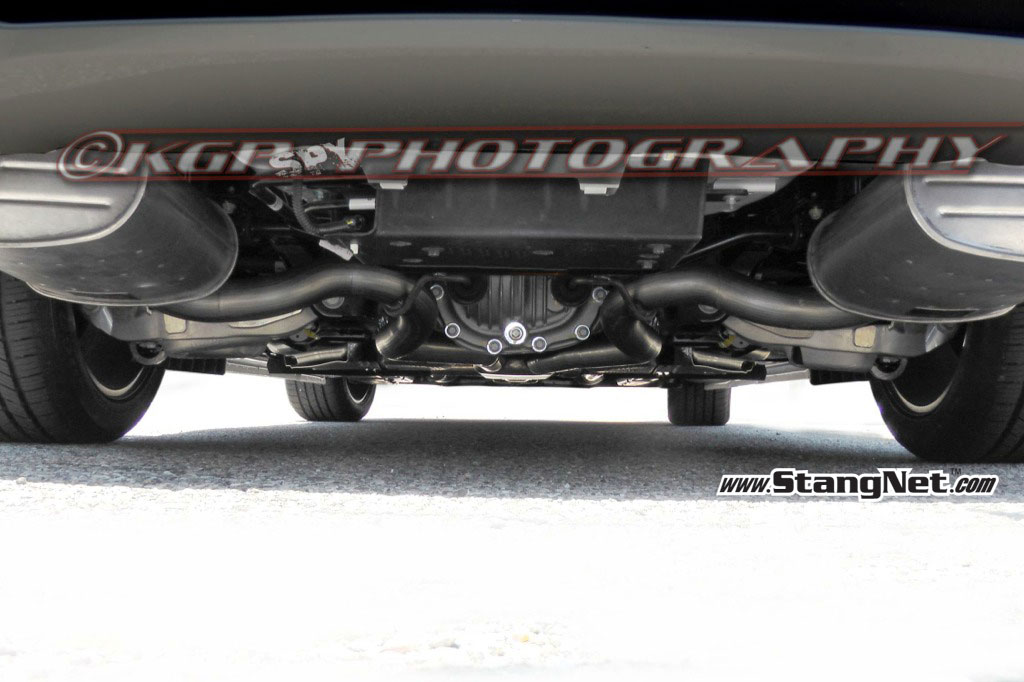
Looks like Ford disagrees with your assessment.
Last edited by glhs386; Feb 15, 2013 at 01:44 AM.




Race Director


Joined: Sep 2006
Posts: 11,206
Likes: 1,139
From: Santa Rosa Beach FL
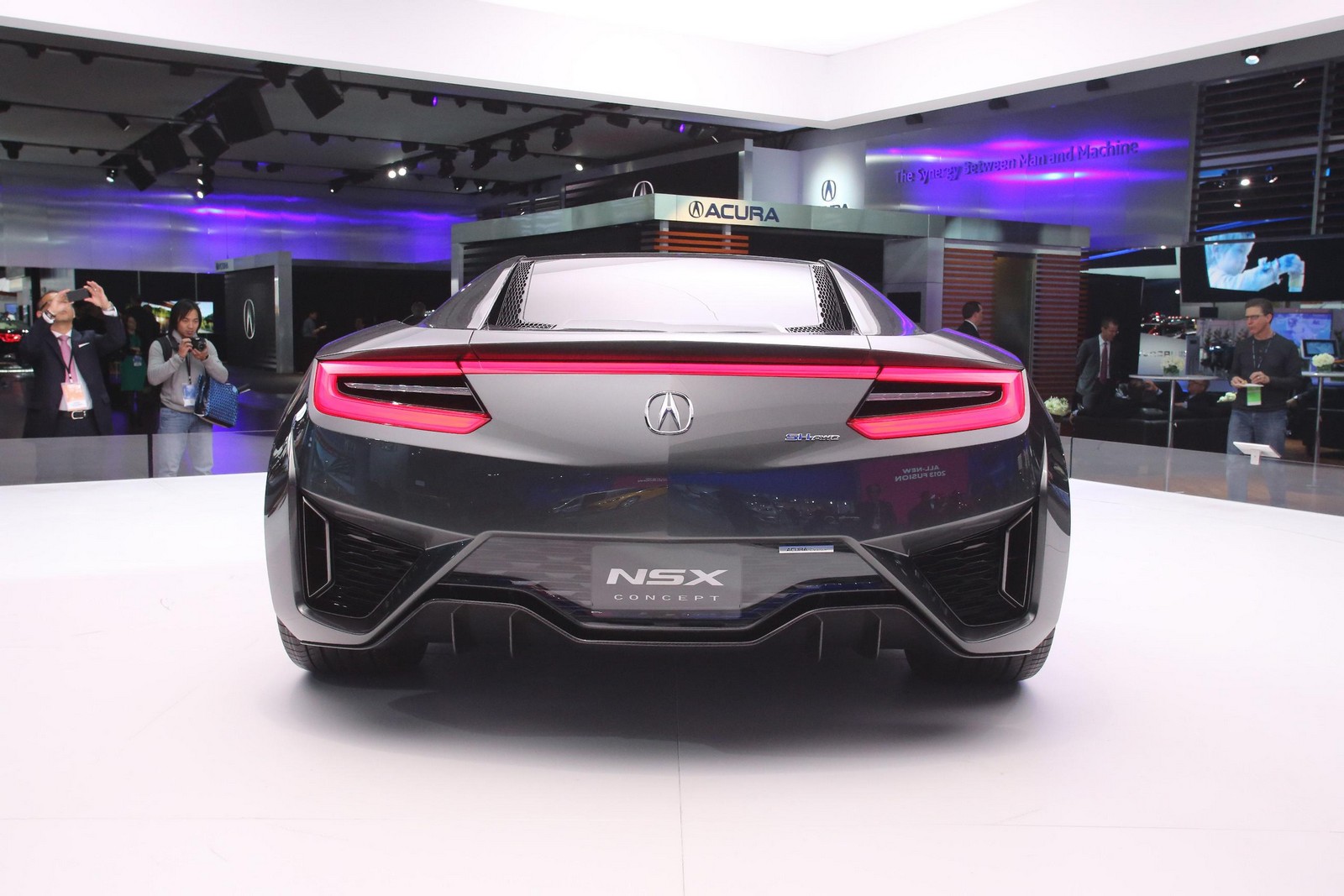
Looks like Acura NSX successfully pulled of the massive Corvette Concept scoops front & rear, and headlights.
And Infiniti E has those retro 59 Impala Cat-eye taillights which would have worked even better on the C7 with it's subtle V line on top.
And Infiniti E has those retro 59 Impala Cat-eye taillights which would have worked even better on the C7 with it's subtle V line on top.
Drifting
Joined: Nov 2012
Posts: 1,331
Likes: 2
I'm not sure if I love of hate the steering wheel in that Lexus.
The NSX.... It doesn't speak to me at all. It looks ugly compared to the original car. It's also a 3800 lb pig from what I've found out about it so far so it's a double Betrayal.
The Infinity holy damn. Nissan finally made a sexy car. Hot damn that's sexy. First car from Nissan I've liked since the 300 Z left us.
The NSX.... It doesn't speak to me at all. It looks ugly compared to the original car. It's also a 3800 lb pig from what I've found out about it so far so it's a double Betrayal.
The Infinity holy damn. Nissan finally made a sexy car. Hot damn that's sexy. First car from Nissan I've liked since the 300 Z left us.

Team Owner
Joined: Sep 1999
Posts: 41,732
Likes: 1,718
From: Springfield MO
The NSX is beautiful. At least the various designers were friends with each other, unlike the C7's designers, and were talking with each other.
No cheap "boy racer" looks as with the C7.
No cheap "boy racer" looks as with the C7.



Team Owner
Joined: Sep 1999
Posts: 41,732
Likes: 1,718
From: Springfield MO
Which is better? Buying a Honda that is made in Alabama, where thousands of American workers get up each morning and go to work in a Honda plant, or buying a Chevrolet that is made in Mexico, where thousands of Mexican workers get up each morning and go to work in a Chevrolet plant(while the displaced American worker stays at home each morning collecting welfare, that is taken from your paycheck)?
When you buy a GM, Chrysler, or Ford product that is not made in the US, just how loyal are you?
When you buy a GM, Chrysler, or Ford product that is not made in the US, just how loyal are you?
Last edited by JoesC5; Feb 15, 2013 at 08:12 AM.
AIR FORCE VETERAN

Joined: Nov 2009
Posts: 6,223
Likes: 441
From: Pennsylvania
I think Corvette is made in the USA. I know they are moving Camaro back to the states from Canada. Really if you took everything out of your house not made in he USA you probably would have a little furniture and be naked.