When you click on links to various merchants on this site and make a purchase, this can result in this site earning a commission. Affiliate programs and affiliations include, but are not limited to, the eBay Partner Network.
I just want the z06 rear any one no how much would something like that would be installed
Almost as much as front and rear, because you still have to do the aperture panels, the quarter panels and the rear bumper cover, and much of the labor cost is in the aperture remove and replace operation. Probably in the neighborhood of $8k if you had it done professionally.
Almost as much as front and rear, because you still have to do the aperture panels, the quarter panels and the rear bumper cover, and much of the labor cost is in the aperture remove and replace operation. Probably in the neighborhood of $8k if you had it done professionally.
JV
Wow that's crazy ur lucky you no what your doing .. I'm alittle jealous lol but soon I'll end up doin it
You are correct in using the facotry adhesive as a 'shim'.
And for what it is worth. I have worked on MANY Corvettes where the bolt-on fenders and quarter panels had thin black flat washers adhesive backed (sticky) that were placed between the inner panels and fender/quarter to shim the panel UP where needed.
I got quotes of around 6K for labor but that was a total repaint too.
The question is the aperture panels are just for cosmetic covering, they do need to line up properly but they are not structural in any way at all right?
Seems someone could do a jig/template for spacing. It is not done this way in the factory for a huge variety of reasons but one off who cares?
The template would have 4-5 pieces, plastic or something similar that fit over the body/frame portion, glue and stick.
Car weighs a few more ounces and all is done quite a bit easier.
You are correct in using the facotry adhesive as a 'shim'.
And for what it is worth. I have worked on MANY Corvettes where the bolt-on fenders and quarter panels had thin black flat washers adhesive backed (sticky) that were placed between the inner panels and fender/quarter to shim the panel UP where needed.
DUB
I stripped the rubberized urethane bead from the driver's side this evening, and it went much more smoothly this time. A razor is the key, in the form of a box cutter with a fresh blade. I made incisions at each end of a section I wanted to remove, then grabbed the bead at one end with pliers and pulled, slicing along the base where it meets the frame as it came away. I also learned that you don't want to completely remove the bead all the way down to the metal, but rather leave a thin layer for the new bead to adhere to. I've ordered all the material for setting the bond, and I'll just be marking time until it arrives. While I wait I'll practice fitting the new aperture in place again so I have it down pat for the real thing. Here's what I'll be using:
3M Solvent/Cleaner 08984 for surface prep and cleaning.
3M Urethane Windshield Adhesive 08693 for the rubberized bead.
3M Panel Bonding Adhesive 08115 for the 'hard' mating points.
I also bought a heavy duty pneumatic applicator (I already have a compressor) for the urethane because it has a short work time of 15 mins and there is a lot of area to cover with relatively thick amounts. I'll be back when I'm ready to bond.
I stripped the rubberized urethane bead from the driver's side this evening, and it went much more smoothly this time. A razor is the key, in the form of a box cutter with a fresh blade. I made incisions at each end of a section I wanted to remove, then grabbed the bead at one end and pulled, slicing along the base where it meets the frame as it came away. I also learned that you don't want to completely remove the bead all the way down to the metal, but rather leave a thin layer for the new bead to adhere to. I've ordered all the material for setting the bond, and I'll just be marking time until it arrives. While I wait I'll practice fitting the new aperture in place again so I have it down pat for the real thing. Here's what I'll be using:
3M Solvent/Cleaner 08984 for surface prep and cleaning.
3M Urethane Windshield Adhesive 08693 for the rubberized bead.
3M Panel Bonding Adhesive 08115 for the 'hard' mating points.
I also bought a heavy duty pneumatic applicator (I already have a compressor) for the urethane because it has a short work time of 15 mins and there is a lot of area to cover with relatively thick amounts. I'll be back when I'm ready to bond.
JV
This is such a big job makes u not even wanna do it only for a good price
I got quotes of around 6K for labor but that was a total repaint too.
The question is the aperture panels are just for cosmetic covering, they do need to line up properly but they are not structural in any way at all right?
Seems someone could do a jig/template for spacing. It is not done this way in the factory for a huge variety of reasons but one off who cares?
The template would have 4-5 pieces, plastic or something similar that fit over the body/frame portion, glue and stick.
Car weighs a few more ounces and all is done quite a bit easier.
I think your jig/template would be useful for body shops that had to replace the aperture due to an accident. I'm sure there is a procedure they use to do it but I'm also sure they wouldn't share their techniques. There's got to be a way unless they just total the car due to the high labor costs.
This is such a big job makes u not even wanna do it only for a good price
There are people who tackle huge projects like this for the pure joy and satisfaction of mastering something difficult. I admire such people, and it's not about what's cost-effective or practical.
You should do this for other people. You could make some serious cash helping others in your area. The fact that you have done it makes it much more appealing rather than having a bodyshop use your car as a guinea pig.
I literally thought to myself.. "That doesn't look bad, I could do that." Then i saw the rocker panels disassembly.... "Nope, not happening."
This is a very impressive project to take on. Good Job.
...I literally thought to myself "That doesn't look bad, I could do that." Then i saw the rocker panels disassembly.... "Nope, not happening."
Originally Posted by John6l6
You should do this for other people. You could make some serious cash helping others in your area... The fact that you have done it makes it much more appealing rather than having a bodyshop use your car as a guinea pig... This is a very impressive project to take on. Good Job.
I'll be glad to help out anyone in my area who plans to undertake this project, but only as a friend/advisor, and not for pay. Thanks for the compliment.
There are people who tackle huge projects like this for the pure joy and satisfaction of mastering something difficult. I admire such people, and it's not about what's cost-effective or practical.
To the OP here I will put you up for the time it take will have every thing in hand . Will let you help me do it and see if you can beat your old time that it take you on yours.
Just kidding man sound like a great job you are doing on the car. Really nice of you to post this up on your job on the car. To me this is what it is all about.... Robert
One other issue with the aperture installation I have been thinking about is how to clamp it in place while the adhesives cure. Looking at the panel it becomes obvious that it's shape does not lend itself to be easily clamped to the frame. There are, however, several areas at the top front, top rear, along the door sill area, and underneath which are not visible when the molding strips are back in place. I think I can drill a few small holes in those areas and screw the panel in place when it is temporarily in place for dry fitting. That would allow me to test fit the fenders, doors and quarter panels before I apply the adhesives, and then serve to hold it in place for curing afterwards.
I guess I am numb to seeing cars that look like what Jet Vet showed in some of the photos.
None of that even remotely scares me.....and it should NOT scare anyone....and make them feel that it is an undertaking that ONLY professionals can do.
Heck...if that was the case...then why do I try to advise many members who ask for help because they want to do it....but do not know what they need to know. And like I tell many of them when they call me at my shop. "ANYONE can do this IF they want to do it." Simple as that. Pay attention to the FINE DETAILS and take the time to THINK before you jump into something that you know nothing about. ASSUMING that just because many people do 'stuff'.. that is HAS TO BE easy....guess again!
What I HATE the most is someone jumping into a project thinking that just because this guy down the street can do it...They figure that they can do it....only to figure out that they should have ASKED for advice before jumping in blind.
It has NOTHING to do with the amount of money, equipment and TIME spent learning. It has everything to do IF the person wants to prove to themselves that they CAN DO IT!
Now...if a person is all 'caught up' in how much it costs to get started on a project like this...and how much it would cost to pay someone to do it....then that is up to them.
And for those who will NEVER attempt or even consider this....I UNDERSTAND...and I am NOT pushing you to do so. Because I get customers who come in and see their Corvette in a condition that may seem that there is NO WAY that it will EVER be the same....and I tell them that it will be BETTER than they can imagine. And when they pick it up their jaws drop...and they say "This can not be the MY Corvette". And I say: "YES it is."
SO...'Jet Vet'....Keep on doing what you are doing. You WILL get there...I am SURE OF IT!!!! The BEST part is you KNOW how it was done. And you doing this just might give that one person who is 'on the fence' that inspirational moment and nudge they need to TRY to do it themselves also.
I literally thought to myself.. "That doesn't look bad, I could do that." Then i saw the rocker panels disassembly.... "Nope, not happening."
This is a very impressive project to take on. Good Job.
LOL! Same here, I have had the front and rear apart, and wouldn't worry about fender/quarter panel removal (easy peasy), but the apertures just look like more work than I would want to tackle.
I actually thought about this when I put on my side skirts, since I had to screw into the rockers... At the time I thought to myself "How hard can it be to replace these if I had to? This whole car is modular!" Well... now I know! If I ever had to remove the side skirts, I would repair the panels, not replace them LOL!
One other issue with the aperture installation I have been thinking about is how to clamp it in place while the adhesives cure. Looking at the panel it becomes obvious that it's shape does not lend itself to be easily clamped to the frame. There are, however, several areas at the top front, top rear, along the door sill area, and underneath which are not visible when the molding strips are back in place. I think I can drill a few small holes in those areas and screw the panel in place when it is temporarily in place for dry fitting. That would allow me to test fit the fenders, doors and quarter panels before I apply the adhesives, and serve to hold it in place for curing afterwards.
JV
For what it is worth....and I am NOT judging what you do.
Drilling holes and using screws is up to you.
I (personally) make every attempt I can NOT to drill into the frame/structure if at all possible.
If you do...keep in mind rust and corrosion when you go and install the panel....so applying some sealant that will make sure there is not a possibility for a long time that these areas begin to rust.
I use duct tape, straps, 'bungy' cords..making wood wedges and height blocks that I can shim to hold a panel where I want it...even custom made metal 'C' thumb screw clamps of different depths and grip ranges.that can grip and edge of a panel or where ever I need it.....basically anything I can think of that will hold the panel for testing. I will also use a hot glue gun for testing if needed....depending on the part being installed.
Because when I bond on the front aprons..I KNOW I do not use screws to hold it in place and my clamps and unique other holding devices do the job. And yes..I do have a slight advantage due to doing this for so long I have numerous long reach Vise-Grips and wide jaw Vise-Grips and modified ones that are used.
SO...do what you need to do...just keep in mind about any possible rust beginning. Like I wrote..I am NOT judging how you do it.
For what it is worth....and I am NOT judging what you do.
Drilling holes and using screws is up to you.
I (personally) make every attempt I can NOT to drill into the frame/structure if at all possible.
If you do...keep in mind rust and corrosion when you go and install the panel....so applying some sealant that will make sure there is not a possibility for a long time that these areas begin to rust.
I use duct tape, straps, 'bungy' cords..making wood wedges and height blocks that I can shim to hold a panel where I want it...even custom made metal 'C' thumb screw clamps of different depths and grip ranges.that can grip and edge of a panel or where ever I need it.....basically anything I can think of that will hold the panel for testing. I will also use a hot glue gun for testing if needed....depending on the part being installed.
Because when I bond on the front aprons..I KNOW I do not use screws to hold it in place and my clamps and unique other holding devices do the job. And yes..I do have a slight advantage due to doing this for so long I have numerous long reach Vise-Grips and wide jaw Vise-Grips and modified ones that are used.
SO...do what you need to do...just keep in mind about any possible rust beginning. Like I wrote..I am NOT judging how you do it.
DUB
Excellent thoughts, thanks. I'll try all those things when dry fitting to see if I can get the right combination, and if I do drill anywhere I'll fill the hole with urethane before I set the screw in place.
I've done all the prep work, removing most of the urethane but leaving a thin base strip for the new bead to adhere to, and also leaving several small sections of both the old urethane and the old epoxy in place as 'shims' for the new aperture panel to sit on and up against. With all that completed I was ready for a final test fitting, and it went better than I could possibly have hoped for. The new panel slides easily and snugly into place, sitting perfectly on the 'shims' I described above. It also remains in place without any extra support due to the fact that it is resting on horizontal 'shims' as well as up against vertical ones. I discovered that after the initial bonding process, when the panel has been set in place with both adhesives, there are several areas where urethane can be applied after the fact by pumping it under open edges around the perimeter, from behind, and underneath.
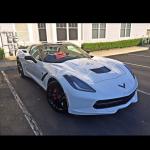
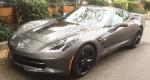
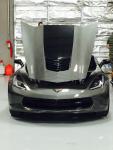
It test fit so well that I decided to temporarily put the front fender and rear quarter panel in place to check the fit of those as well. In the pictures below those panels are only held in place by two screws each, one at the front and one at the rear of each panel, and they appear to dovetail extremely well with the aperture. Again, I'm now very confident in my expected results, and FedEx just delivered the last of my supplies so I'll start work on the bonding tomorrow...
























 To the OP here I will put you up for the time it take will have every thing in hand . Will let you help me do it and see if you can beat your old time that it take you on yours.