When you click on links to various merchants on this site and make a purchase, this can result in this site earning a commission. Affiliate programs and affiliations include, but are not limited to, the eBay Partner Network.
^^^
Just to set the record straight, the Young Ladies post said she was going to fill with 93 Octane "every time" it reached 1/4 tank not until! Smart. (BTW, I suggested driving "slow" is not as important as not letting the engine lug at all. I suggested not letting it go into 7th or 8th gear or V4 by Driving in Manual Mode until probably 4 or more 1/4 fills with 93 octane.)
RE the 1500 miles, just to set the record starlight for other members viewing this thread as well, this is what the Owen's Manual states, for all but Tracking it's 500 NOT 1500 miles: New Vehicle Break-In
Follow these recommended guidelines during the first 2 414 km (1,500 mi) of driving this vehicle. (Yep states 1500 miles but in RED BELOW is the place the 1500 is suggested FOR MOST 500 miles!)
Parts have a break-in period and performance will be better in the long run. During the first 800 km (500 mi), engine torque will be limited in low gears. For the first 322 km (200 mi): . To break in new tires, drive at moderate speeds and avoid hard cornering. . New brake linings also need a break-in period. Avoid making hard stops. This is recommended every time brake linings are replaced.
For the first 800 km (500 mi): . Avoid full throttle starts and abrupt stops. . Do not exceed 4000 rpm. Avoid driving at any one constant speed, fast or slow, including the use of cruise control. . Avoid downshifting to brake or slow the vehicle when the engine speed will exceed 4000 rpm. . Do not let the engine labor.
Never lug the engine. (BTW that is for sure with the mistaken use of regular gas- driving slow can do that unless using Manual Mode and keeping rpm and using minimum throttle high as when going up hill etc.) This rule applies at all times, not just during the break-in period.
For the first 2 414 km (1,500 mi): . Do not participate in track events, sport driving schools, or similar activities.
Check engine oil with every refueling and add if necessary. Oil and fuel consumption may be higher than normal.
^^^
Just to set the record straight, the Young Ladies post said she was going to fill with 93 Octane "every time" it reached 1/4 tank not until! Smart. (BTW, I suggested driving "slow" is not as important as not letting the engine lug at all. I suggested not letting it go into 7th or 8th gear or V4 by Driving in Manual Mode until probably 4 or more 1/4 fills with 93 octane.) RE the 1500 miles, just to set the record starlight for other members viewing this thread as well, this is what the Owen's Manual states, for all but Tracking it's 500 NOT 1500 miles: New Vehicle Break-In
Follow these recommended guidelines during the first 2 414 km (1,500 mi) of driving this vehicle. (Yep states 1500 miles but in RED BELOW is the place the 1500 is suggested FOR MOST 500 miles!)
Parts have a break-in period and performance will be better in the long run. During the first 800 km (500 mi), engine torque will be limited in low gears. For the first 322 km (200 mi): . To break in new tires, drive at moderate speeds and avoid hard cornering. . New brake linings also need a break-in period. Avoid making hard stops. This is recommended every time brake linings are replaced.
For the first 800 km (500 mi): . Avoid full throttle starts and abrupt stops. . Do not exceed 4000 rpm. Avoid driving at any one constant speed, fast or slow, including the use of cruise control. . Avoid downshifting to brake or slow the vehicle when the engine speed will exceed 4000 rpm. . Do not let the engine labor.
Never lug the engine. (BTW that is for sure with the mistaken use of regular gas- driving slow can do that unless using Manual Mode and keeping rpm and using minimum throttle high as when going up hill etc.) This rule applies at all times, not just during the break-in period.
For the first 2 414 km (1,500 mi): . Do not participate in track events, sport driving schools, or similar activities.
Check engine oil with every refueling and add if necessary. Oil and fuel consumption may be higher than normal.
I would be pretty much doing what she said and what you said, and I would not add any octane booster or anything else for that matter to my tank. Ever.
As for the break-in period, that is mentioned in a few other places in the 2023 Manual. One of them is the source of endless debate,
There this, about launch control - does it mean only the 500 mile part of the break in period or the full 1500 mile break in period:
There is this about brake burnishing. It appears in the section on Competitive Driving and Track Events section between pages 172 and 183 in the 2023 Manual. To which period does it refer?
And finally there is this break-in period for the transmission. 7500 miles? Where did that come from?
I would be pretty much doing what she said and what you said, and I would not add any octane booster or anything else for that matter to my tank. Ever.
As for the break-in period, that is mentioned in a few other places in the 2023 Manual. One of them is the source of endless debate,
There this, about launch control - does it mean only the 500 mile part of the break in period or the full 1500 mile break in period:
There is this about brake burnishing. It appears in the section on Competitive Driving and Track Events section between pages 172 and 183 in the 2023 Manual. To which period does it refer?
And finally there is this break-in period for the transmission. 7500 miles? Where did that come from?
The last one says change at 7500 miles during the break-in period. That would imply the break-in period is at least 7500 miles, which we know not to be true. Maybe it is true for the transmission, as it relates to the filter change, as the normal filter change cycle is 15,000 miles. So if you have your transmission replaced, the filter should be changed 7,500 miles after that. None of the usages of "break-in" are capitalized, so they are not defined terms. Break-in periods are different for different components. Brakes appear to be 200 miles every time you change the linings.
^^^
Not sure why they confounded the engine oil change for the C8 with 7500 miles? For the C6 and C7 miles were never mentioned. As with the C8 the OLM governs NOT miles. Oh yea, IF you get to 7500 miles in the 12 months the OLM algorithm says change. Probably did that for my C6 and two C7s as well BUT it was just one of the many complex reasons the OLM algorithm considers.
The change DCT filter at 7500 miles is also a bit misleading as it requires a full DCT fluid change with time (minimum every 3 years.) So for many, like myself who drive half that # of miles/year, if I waited for this upcoming 2nd engine oil change (I'm getting next week with ~7000 miles) to get the DCT filter free, next August when I'll be having all DCT fluid changed I'd be stuck not changing the filter and leaving ~8 oz of dirty fluid in the filter housing!
Nope, I elected to have the DCT filter with flush done with the OLM required engine oil change at ~3500 miles last August. So next week I'll pay for having only the engine oil changed with ~3500 miles on last year's changed DCT filter! Next year I'll have in changed with ~7000 miles on the 1st year changed filter!
.........Maybe it is true for the transmission, as it relates to the filter change, as the normal filter change cycle is 15,000 miles. .......
You mean 22500, right? And there are some other conditions mentioned for changing it as well, scattered throughout the manual. And its slightly different between the 2023 manual and previous manuals, because the 2023 introduced a separate life monitor for the transmission fluid external canister filter. All include though the 22500 mile interval for changes after the first 7500.
You mean 22500, right? And there are some other conditions mentioned for changing it as well, scattered throughout the manual. And its slightly different between the 2023 manual and previous manuals, because the 2023 introduced a separate life monitor for the transmission fluid external canister filter. All include though the 22500 mile interval for changes after the first 7500.
It is complicated, in my 2020 owners manual it says 7,500 then 22,500, so I thought every 15k. But the 3rd change is at 45k. or 22.5k, then it is every 22.5k miles after that.
On my treadmill and had another thought. If it happened to me would drive as I suggested for 1/4 tank in Manual Mode, max 5th gear and the fill with 100+ octane racing gas! Several places around here sell it in 5 gallon jugs. If you have a civil aviation airport close, can get 100+ octane there or ask around.
😂🤣🤦🏻♂️
It's not that serious OMG. These are DI engines--you would be surprised how far they can be pushed on 87. Even the LS2 at 10.9 and LS3 at 10.7 would do fine on 87 as the ECM looks up the low octane/low timing tables when the knock sensor microphone detects a certain number of "noise" events. I wouldn't make a habit of running on 87 but I would be SHOCKED if the C8 ecm didn't have a low timing table in it to revert to. (they were 5 degrees lower on the LS3 from high ti low timing tables)
Also, modern turbo DI cars sometimes run up to 23-26 psi of boost pressure on 93 octane. The effective compression ratio on such an engine is OVER 20:1! And they all call for 91 octane--at least if they want sales in all 50 states they do.
100 octane for putting around in your "race engine? And your advice about 100LL as found at the airport? That is a HIGHLY leaded fuel. Not so great for the catalytic converter! In fact it is alot worse than a little MMT. This forum truly cracks me up.
^^^
You're WRONG! The only reason I am posting is for the ~1000 Silent Majority who viewed this Thread (and many will not post for fear of getting foolish responses) and those Silent Majority that will be viewing. Often don't post for the ~15 Vocal Minority (like you and I on this Thread.) Many have their mind made up and are "experts" versus what GM clearly says in the C8 Owen's Manual!
To help the young lady is why I suggested 100+ octane aviation or racing gas. To quickly dilute the 87 octane she added in error! Yep back in the day that is what Sunoco did with their pump that could provide 100+ octane AND many of us needed it!
GM is telling in the Owner's Manual they pushed the LT3 with 11.5: compression ratio, cam timing etc in a 6.2 Liter to 490 hp that is 35 more than the same cid engine with DI in the C7s. It did say for the C7, in a pinch you use 87 octane but you'lllose power and sacrifice gas milage.
Yep when the many knock sensors detect a knock in the C7 it switches to a lowest fuel/air map with a richer fuel/air mixture and less ignition timing. That cost hp and reduced mpg.
BUT GM SAYS FOR THE C8 THEY RUN OUT OF THAT ABILITY WITH THE HIGHER HP C8. Can only push that so far! It cannot continue ad infinitum!
You're telling folks DI makes a difference and GM can just keep doing more of the same! That is foolish!
BTW wonder why GM lowered the compression ratio to 10:1 for the supercharged C7 Z06 engine??? Perhaps they just didn't know better!?? You can't compare a high rpm, 4 valve/cylinder turbocharged engine with the high torque at low rpm, large piston diameter 6.2 Liter engine!
I thought I read from JerryU to go to your local airport and put in some 100 aviation octane. Aviation 100 octane contains lead.. yep just like the old regular gas of the 60's. That would not be good for the cats on you C8.
You can go to Sonoco and get the auto race 100 octane in 5 gal cans, it does not have Lead in it.. It is safe for your C8.
^^^
Thought our local airport also had lead free although lower octane but over 93. Good friend has a plane stored there. We have a large general aviation part of our Florence Commercial Airport. I’ll double check. There is a long WWII runway in our airport. Recall seeing the 747 Air Force 1 land when Clinton came to Darlington to start the NASCAR race when he was President!
Bottom Line was saying dilute the mistaken 87 octane versus the foolish statement that the car will be fine it will just retune itself!
Not what GM says for the C8. That was said for the C7 with a “if in a pinch use some 87 octane but replace ASAP.” For the C8 they state it will cause engine damage and void your Warranty! The foolish idea you can just “detune” to any octane is wrong. You reach a limit. Recall running a variable compression test engine to define knock with various octane fuel in a Lab in college.
Funny, found this old dude showing a test with equipment that was like that available back in the day when there were no didgital gauges! More like what we used as I recall!






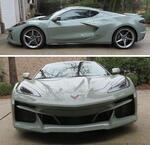
















 Perhaps they just didn't know better!?? You can't compare a high rpm, 4 valve/cylinder turbocharged engine with the high torque at low rpm, large piston diameter 6.2 Liter engine!