When you click on links to various merchants on this site and make a purchase, this can result in this site earning a commission. Affiliate programs and affiliations include, but are not limited to, the eBay Partner Network.
I raised by 1.5 inch the location height of my LS7 valley catchcan, Elite Engineering closed one, to get more ease in unscrewing the pot (no more fuel rail covers above so why bother lol).
Result seems to be 50% more oil trapped and quitter idling at 200F oil temp.
Coincidence ?
Last edited by Blackship; Apr 24, 2023 at 12:45 PM.
Reason: Adding pic
Yes total coincidence. Put it back. Test and record that data. Repeat the test. Change to your new setup repeat the test record the data and report back. Science man!
The very act of installing a longer hose adds friction which changes pressure and kinetic energy of the crankcase and PCV system. Internal air/oil separators depend on kinetic energy for separating oil from blow-by gas before it is sent out of the crankcase. Furthermore pressure controls oil droplet radius and oil droplet density. The act of adding a hose/catch device will always adjust pressure/kinetic energy and thus will always influence the amount of oil and blow-by that blows out of the engine. Crankcase pressure also controls piston ring seal and blowing by characteristics- more crankcase pressure at the end of power stroke will unseat and unseal the piston ring sooner allowing oil and blow-by to enter the ring pack and combustion chamber. Thus the very act of adding an external catching device may increase oil consumption directly into the ring pack and cylinder, causing rings to get stuck as light hydrocarbons leaving behind sticky tar-like carbon conglomerates and hard diamond-like carbon deposits on the rings which leads to eventual wear and failure.
All performance engine modifications require us to measure the crankcase pressure and set it correctly no matter what we are changing. Even the air filter changed can lead to dramatic oil blowing out of an engine if you do not measure the crankcase pressure and set it correctly. For wet sump the crankcase pressure needs to be at least 0.8"Hg to 2.5"Hg range. Dry sump engines can get away with much more.
its too bad those examples are completely unrelated to how the vent system on these cars works, but ill stretch to make tangents of this scare tactic
vid 1. do not install any sort of separator that is not rated for the flow of your system. the extreme restriction of this typical compressor separator operates at high psi and low flow, which is the complete opposite of the application it was installed on. if your catch can company cannot provide this information, find another company
vid 2. if your catch can has a filter that requires periodic replacement, you need to replace it! neglecting any part of your vehicle is a recipe for failure. one cannot expect a clogged crankcase vent to work properly.
if your catch can company cannot provide these intervals, find another company, preferably one that does not require filter cleaning / replacement
vid3. 3 for 3 on the diesel vids as support for a gasoline pcv system. i am shocked, anyways, this video is an examination of the egr system, which has nothing to do with the pcv system other than where they both terminate.
we build custom systems that are:
1. rated for the application
2. do not require any components to be replaced over the life of the system, although periodic inspection / maintenance is always appreciated
3. do not claim to filter an exhaust gas recirculation system, if applicable
its too bad those examples are completely unrelated to how the vent system on these cars works, but ill stretch to make tangents of this scare tactic
vid 1. do not install any sort of separator that is not rated for the flow of your system. the extreme restriction of this typical compressor separator operates at high psi and low flow, which is the complete opposite of the application it was installed on. if your catch can company cannot provide this information, find another company
Vid1
Actually the engine is a diesel, maybe you missed that. The point of the video is showing how any restriction in the PCV system can cause oil to blow out of the engine. It wasn't intended to show any particular hose length or catch can because that would be impossible. Instead he is merely showing that the things you do to the PCV system have far reaching consequences which normal people cannot imagine will happen.
vid 2. if your catch can has a filter that requires periodic replacement, you need to replace it! neglecting any part of your vehicle is a recipe for failure. one cannot expect a clogged crankcase vent to work properly.
if your catch can company cannot provide these intervals, find another company, preferably one that does not require filter cleaning / replacement
Again you completely miss the point. The point is: Why did you install a catch can in the first place, just to have some problems? Problems which could RUIN Your engine? If you simply had left it alone the way it comes from the factory none of that would have happened. This Video is a good example of how modifying the PCV system without knowing or understanding potential drawbacks and downfalls is a BAD IDEA. Yes the user is 'doing it wrong' but that is 99% of users installing catch devices.
vid3. 3 for 3 on the diesel vids as support for a gasoline pcv system. i am shocked, anyways, this video is an examination of the egr system, which has nothing to do with the pcv system other than where they both terminate.
Vid3 is an example of how people have no idea what they are doing. Adding catch cans and they don't even know which side of the PCV system the can is supposed to go or what to expect from using one. I think it perfectly exemplifies the mysterious aftermarket sales tactics of selling a 'general catch can' with 'instructions' that do not actually address any of the actual issues with using a can or how to measure its performance.
we build custom systems that are:
1. rated for the application
2. do not require any components to be replaced over the life of the system, although periodic inspection / maintenance is always appreciated
3. do not claim to filter an exhaust gas recirculation system, if applicable
And you lie right to people because you depend on their stupidity to sell products.
1. You have no idea what the rating is for the application because you are not an original engineer or you would KNOW the actual rating of a wet sump engine is 0.5"Hg to 1.5"Hg and your catch cans have a VENT which defeats those original rating for the application of daily driver engines using wet sump, breaking PCV and ruining the PCV system.
2. The catch device can hold oil and lead to engine failure without maintenance.
Directly from the engineers:
When I see those cans there i Just SMH. You have added a little percolator to the side of the engine and facilitated the solubility of partially reacted hydrocarbons in the presence of water. The OEM Manufacturer has acknowledged this and warns people it could lead to lost oil and low oil pressure on the corvette.
The Corvette's dry sump tank looks relatively simple on the outside but the internals are really quite complex. The top third of the tank contains a PCV air/oil separation system. On the Corvette, PCV lines route from the valve covers to the air/oil separator on top of our dry sump tank. Oil from PCV air is separated and returned to the lube system through the oil tank. "Catch-can" systems that do not have a drain back path for separated oil run the risk of poor oil pressure performance over time as oil is removed from the lube system.
Consider why they are worried about oil being removed from the lube system when using a catch can. Why is the oil being removed. What is it about adding a catch can that is removing oil. I mean, imagine we don't add a catch can right, the whole point of a catch can was to keep the engine from ingesting oil, which removes the oil. So why doesn't the OEM configuration remove oil 'due to ingestion' but adding a catch can does. Like, why would anybody install a can in the pathway of oil which was about to return to the oil pan in the first place? Is it... maybe... just maybe... that you can buy anything including cigarettes and drugs even if they aren't good for you or needed by your body? Vehicle.
You want to sell catch cans? You want my support? Just do two things:
1. Include in your instructions that users need to 'Measure the Crankcase Pressure before and after catch-can installation on an original engine with original paper air filter, and return the crankcase pressure to the original setting after the catch can has been installed' for Wet sump engines at wide open throttle target crankcase pressure is 0.5" to 1.5"Hg with around 2.5"Hg being an ideal maximum.
2. Delete the venting from the catch cans so they do not break the PCV evacuation cycle which results with blow-by dissolving into engine oil and creating engine deposits which lead to wear and eventual failure.
for 1: Crankcase pressure is causing oil to blow out of the engine because adding lines and volume will increase friction and pressure loss and slow transitions from idlecruise->wot.
for 2: Venting is ruining the engine by forcing blow-by gas to dissolve into engine oil and circulate through the oil system leaving carbon deposits in orifices.
The catch devices lead to ruin engines because of these two problems which have not been addressed by any catch can company.
The reasons I surmise: A. if the engineers write the kind of instructions necessary for people to set their own crankcase pressure it would be too difficult for the average user and they would avoid that catch can because of its apparent complexity. And go to a easier to install catch device which on papers looks like the same thing but has less instructions. And B. Anybody that actually sets their crankcase pressure properly will no longer need a catch can unless there is something physically wrong with the engine design for the application, like a Honda S2000 engine running a certain track I Know of, the valve cover fills with sloshing oil and it needs some holes drilled to make it drain properly. Still, no catch can, just a better design for the application to drain oil for hard corners.
Understand the catch can seller are just giving people what they want. Not what they need. I hold no malice. People want a cheap simple product that catches oil. They don't understand the mechanism behind catching the oil or what PCV was doing for protecting the engine that they are ruining. The problem is EDUCATION. Please, LEARN what crankcase pressure is. Learn what Blow-by is. Go to google scholar and start reading about crankcase pressure and blow-by.
Then, you can sell all the catch cans you want and I can't say anything because now its on the people to measure and set their own crankcase pressure.
Problem is, once people realize what the catch can does (nothing) when the crankcase pressure has been set properly, they won't want it anymore.
Up until now people install catch cans and catch oil, because the catch can destroys the PCV system with friction causing oil to blow out of the engine.
If they compensate for the friction of the catch can oil will no longer leave the engine like that and the catch can will be useless.
It is simple question of friction, ring behavior and energy. Not so simple if you cannot conceptualize every atom of a working combustion engine. However there are ways around that- such as data. Reading and interpreting data.
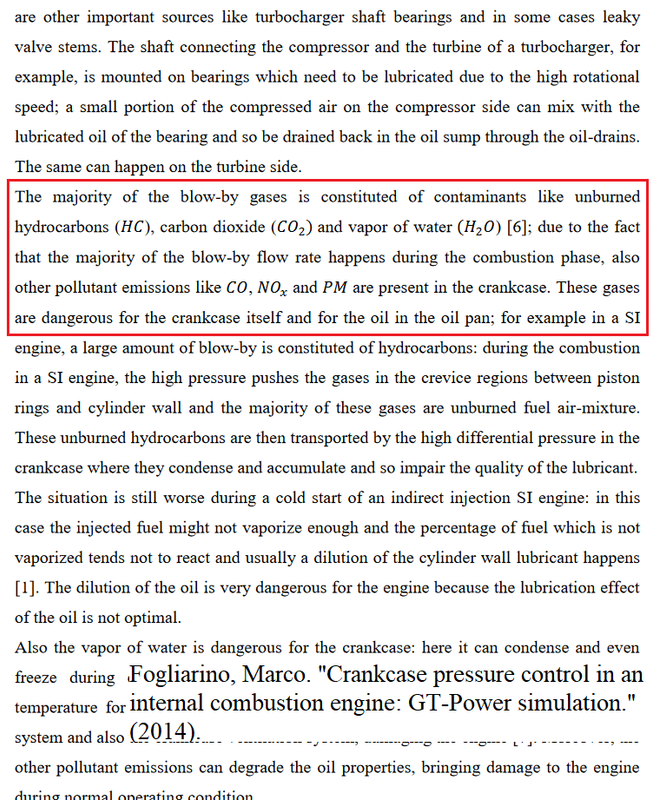
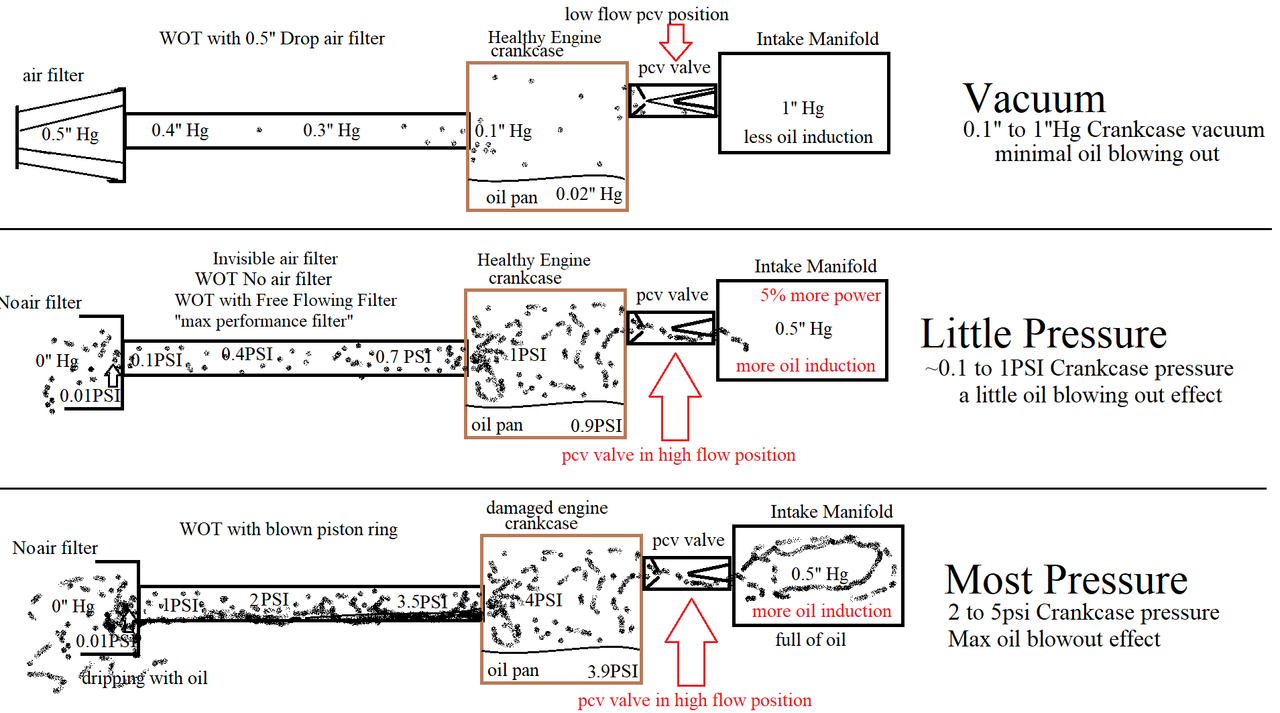
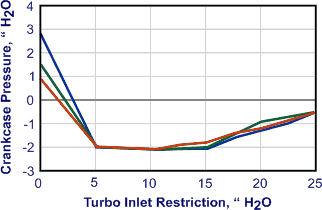
for example here is some data.
You may not understand much about PCV or air filtration but surely you can see the data and understand the data. If not there is nothing you can understand in this subject and you must rely on somebody else to tell you what to do. I prefer not to tell people what to do but rather supply the data and book knowledge for them to see how the engine works instead of telling them what to do.
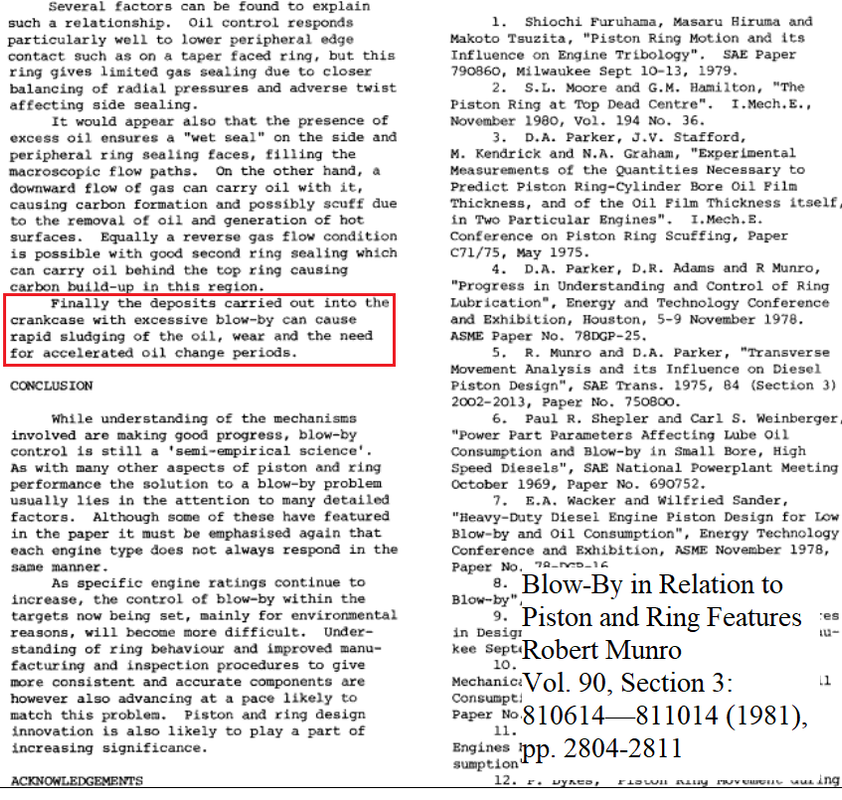
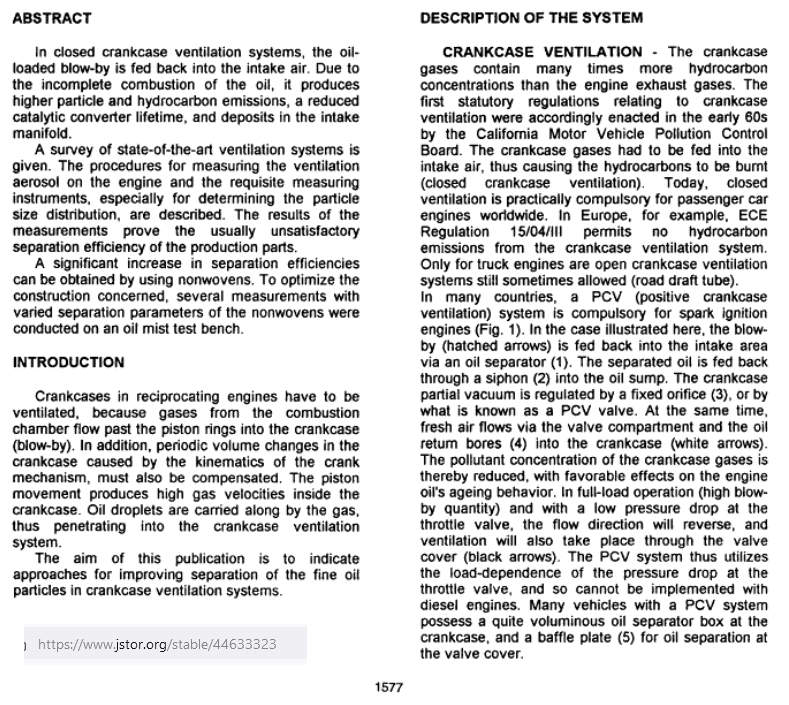
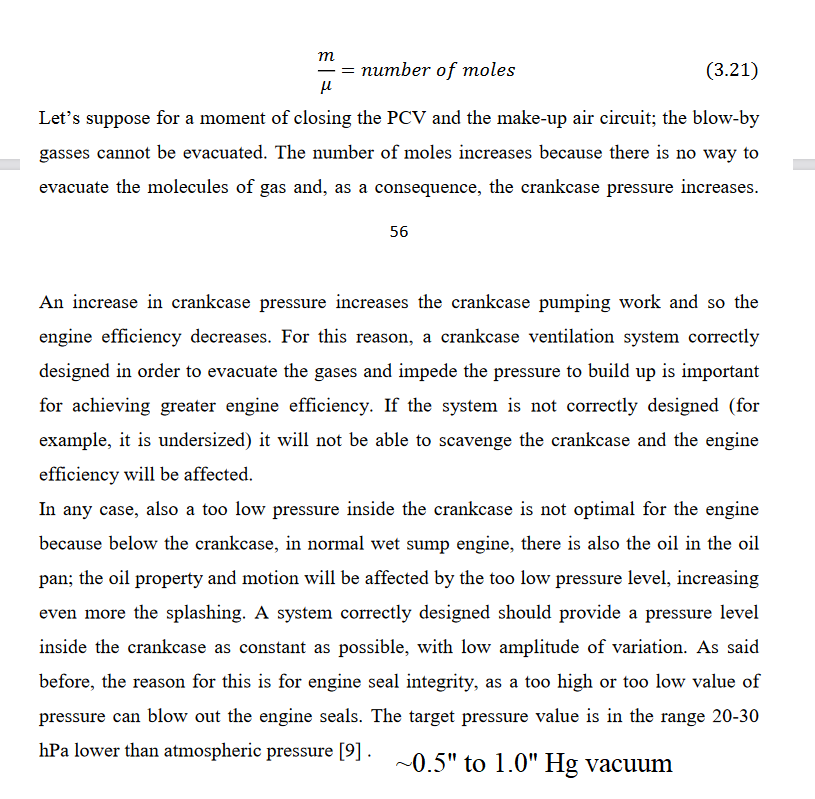
Here is a published document giving the desirable pressure range for crankcase in wet sump apps
It is a general target for all auto manufacturers. Some such as Nissan Skyline, Modern Toyota/BMW engines, run lower pressure than that and have a warning CEL for crankcase pressure.
Crankcase pressure directly predicts engine health and tells us about the piston ring seal.
This is an already well established procedure as one ventures into the 1k+ rwhp territory because crankcase pressure is a seal issue and ring issue. People discuss all the time how to measure and detect detonation via crankcase monitoring. But just because these people have 2000hp doesn't mean you can't use it on YOUR engine properly to control the oil system and manage ring behavior. The OEM does it for you with their filters and lines but people come along and screw it all up with aftermarket parts and have no idea what they are doing to the crankcase pressure because at level nobody is measuring it. https://www.yellowbullet.com/threads...33112/#replies
Pressure behind the air filter on all factory engines is supplied to the crankcase.
Blow-by exits piston rings depending on the ring behavior. Show WOT direction https://forums.holley.com/forum/holl...383#post387383
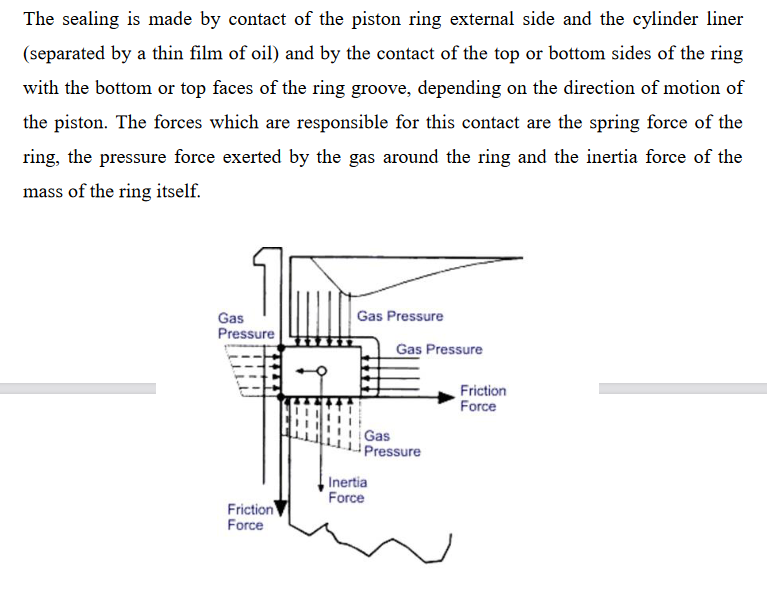
Blow-by tries to raise pressure because mass is entering the crankcase. To remove that mass will cost energy. Where does the energy come from? Lets say we place a vent on the crankcase. Positive pressure builds 0.0001psi then it vents. Energy is supplied by the blow-by gas entering the crankcase- or more precisely, by the act of the piston ring compressing the air in the crankcase as it blows by. Blow-by rate is determined by piston ring seal. Piston ring sealing is dependent on inertial forces, friction, and pressure. More pressure from the crankcase unseats the piston ring sooner causing it to blow-by more mass into the combustion chamber and ring pack at the end of power stroke. When this happens people start blaming the piston ring drain feature- go look up "LS1 piston ring drain problem" or whatever. People get crusty hard carbon deposits in the ring packs which seize up and destroy the cylinder wall because oil is blowing by into the piston ring seal because of high crankcase pressure due to venting. The venting also accumulates blow-by gas as a component of pressure scalar which enables a dissolved fraction of blow-by gas to accumulate inside engine oil, circulating around the engine and forming atherosclerosis deposits just like in the piston rings. It is killing the engine to have crankcase pressure scalar driven pressure release, As Opposed to PCV which is where we supply the energy to evacuate the crankcase using a PUMP or some form of ENERGY input e.g. Vacuum pump or Exhaust driven PCV. The engine IS a pump so this is how the OEM does PCV with a vacuum pump- they use the engine itself a vacuum pump.
There is so much more to point out but that is enough is enough. Do it right or whatever i have nothing to gain from explaining and nothing to sell.
It is simple question of friction, ring behavior and energy. Not so simple if you cannot conceptualize every atom of a working combustion engine. However there are ways around that- such as data. Reading and interpreting data.
for example here is some data.
You may not understand much about PCV or air filtration but surely you can see the data and understand the data. If not there is nothing you can understand in this subject and you must rely on somebody else to tell you what to do. I prefer not to tell people what to do but rather supply the data and book knowledge for them to see how the engine works instead of telling them what to do.
Here is a published document giving the desirable pressure range for crankcase in wet sump apps
It is a general target for all auto manufacturers. Some such as Nissan Skyline, Modern Toyota/BMW engines, run lower pressure than that and have a warning CEL for crankcase pressure.
Crankcase pressure directly predicts engine health and tells us about the piston ring seal.
This is an already well established procedure as one ventures into the 1k+ rwhp territory because crankcase pressure is a seal issue and ring issue. People discuss all the time how to measure and detect detonation via crankcase monitoring. But just because these people have 2000hp doesn't mean you can't use it on YOUR engine properly to control the oil system and manage ring behavior. The OEM does it for you with their filters and lines but people come along and screw it all up with aftermarket parts and have no idea what they are doing to the crankcase pressure because at level nobody is measuring it. https://www.yellowbullet.com/threads...33112/#replies
Pressure behind the air filter on all factory engines is supplied to the crankcase.
Blow-by exits piston rings depending on the ring behavior. Show WOT direction https://forums.holley.com/forum/holl...383#post387383
Blow-by tries to raise pressure because mass is entering the crankcase. To remove that mass will cost energy. Where does the energy come from? Lets say we place a vent on the crankcase. Positive pressure builds 0.0001psi then it vents. Energy is supplied by the blow-by gas entering the crankcase- or more precisely, by the act of the piston ring compressing the air in the crankcase as it blows by. Blow-by rate is determined by piston ring seal. Piston ring sealing is dependent on inertial forces, friction, and pressure. More pressure from the crankcase unseats the piston ring sooner causing it to blow-by more mass into the combustion chamber and ring pack at the end of power stroke. When this happens people start blaming the piston ring drain feature- go look up "LS1 piston ring drain problem" or whatever. People get crusty hard carbon deposits in the ring packs which seize up and destroy the cylinder wall because oil is blowing by into the piston ring seal because of high crankcase pressure due to venting. The venting also accumulates blow-by gas as a component of pressure scalar which enables a dissolved fraction of blow-by gas to accumulate inside engine oil, circulating around the engine and forming atherosclerosis deposits just like in the piston rings. It is killing the engine to have crankcase pressure scalar driven pressure release, As Opposed to PCV which is where we supply the energy to evacuate the crankcase using a PUMP or some form of ENERGY input e.g. Vacuum pump or Exhaust driven PCV. The engine IS a pump so this is how the OEM does PCV with a vacuum pump- they use the engine itself a vacuum pump.
There is so much more to point out but that is enough is enough. Do it right or whatever i have nothing to gain from explaining and nothing to sell.
Great thank's for all this quality corpus and for envisaging me to understand it. Which is the case even if a bit far from Nuclear plants operating. So i dig and think...
you lost credibility citing diesel applications somehow relating to a gas pcv system
our most popular catch cans do not break the pcv vac cycle, although we build for many different applications
we have pumping losses calculated in, duh
there are many things manufacturers do not employ as original equipment, don't be ridiculous
our customers like that we have the hard parts handled for them
our goal is for the process to be as painless as possible, with a priority to end int he customer returning to enjoying their vehicle the way they like
A diesel engine runs at wide open throttle- It is the perfect place to study wide open throttle PCV for gasoline applications as the conditions are entirely identical in terms of goals and hardware function.
I help you realize this. People can study the organs of women to learn about the organs in men, its the same thing a heart, kidney, liver, oil pump, valves, , gasoline and diesel is like male and female of the same combustion operation with a piston and force times distance. It has all the similar flaws with oil contamination and blow-by gas and waste head seeping into coolant systems and piston ring sealing in the presence of various length hydrocarbon chains. They are entirely alike to be considered within the same PCV operational guidelines for making use of blow-by gas immediately "as fast as possible" at wide open throttle.
I think it would help all of us dummies out if he just talked about a gas PCV system and not a diesel, (not a PCV system) or human organ compatibility, (not a PCV system); Or just be quiet.
I think it would help all of us dummies out if he just talked about a gas PCV system and not a diesel, (not a PCV system) or human organ compatibility, (not a PCV system); Or just be quiet.
I did talk about gasoline PCV. Everything I posted is applicable respect to gasoline even the 3 videos which are wide open throttle PCV arguments on a diesel engine- because it is impossible to find a video or make a video like that about PCV on a wide open throttle gasoline engine where they disconnect a oil separator or measure an oil separator while a gasoline engine is sitting at wide open throttle. So far I am the only one thats emphasized anything like that on a gasoline PCV system and its what this entire discussion is about.
Here my gasoline PCV taken at wide open throttle from inside the vehicle
This simple measurement must be taken on all gasoline engines and diesel engines. Its like tire pressure, fuel pressure, coolant pressure, oil pressure, transmission pressure, etc... you need to set the pressure properly yourself by measuring it. Any changes you make like lines, cans, filters, will change the crankcase pressure to an unknown number. If I give you a tire for your car you just change the tire and don't check the tire pressure? How sad selling tires and oil pumps and boost controllers without telling people they need to set the pressure
That happens all the time with tires, oil pumps, and boost controllers.
It would be sad if a catch can company prescribed products that were not flow tested and accurate for the application.
Mightymouse Solutions goes to great lengths to make sure our systems meet and exceed the application requirements we suggest them for.
There is no useful reason to put that unreasonable task on the customer.
That happens all the time with tires, oil pumps, and boost controllers.
It would be sad if a catch can company prescribed products that were not flow tested and accurate for the application.
Mightymouse Solutions goes to great lengths to make sure our systems meet and exceed the application requirements we suggest them for.
There is no useful reason to put that unreasonable task on the customer.
I do not understand that which you do me the honor to tell me.
Every engine is different. Every air filter is different. Therefore, it is impossible to sell any product such as fuel regulator or boost controller which is per-configured for any application. Impossible and ridiculous to suggest. These devices ALWAYS require adjustment on behalf of the end-user for each individual situation. If you think about the stark differences in engines- a Brand new engine with 20k miles vs a Old worn out engine with 220k miles. Or a built engine with excessive piston wall clearance. Or an engine running 3 atmospheres of boost. You cannot possible sell any type of boost controller or catch can which is per-conditioned to function perfectly without adjustment by the end user.
I am not blaming you or out to start war- I know you are just giving people what they want. Its not your fault that people don't know whats good for them. My job is education and by example when needed. I show how to do PCV in my videos. I explain the correct crankcase pressure setting and how to achieve it on any engine even a high output extremely worn out 20 year old engine in my video. It is possible to get a cleaner engine to high mileage successfully following my directions which do not include any kind of over-flow device even 20 years old worn out engine with 20psi of boost not a drippy drop of oil.
If you knew a magic trick.
A good one.
One that people paid to see.
One that puts food and toys in front of your children.
And the customers left happier and more fulfilled than when the arrived.
Do you go around showing everyone how to do the trick for free?
Its just a box. There is no copyright or patent on any plain empty box that you attached to the side of any engine which causes whatever to happen. Not in the sense that you as a hobby one-off performer of the arts couldn't implement in meaningful fashion of and on your own vehicle.
Only people who actually knew what the box is doing to the crankcase system would know how to build the correct box in theory. I can think of a time when I would prefer a little box, when the engine has broken piston or when I am too lazy to modify the internal baffle for a particular exotic type of situational competitive autosport.
No matter how hard I try as an engineer and practical scientist to come up with any box, any shape or form whatsoever made of any materials on Earth that I would willingly attach to the side of a healthy engine.
Instead, I will always sacrifice economy and power to increase air filtering to drive PCV and increase engine lifespan.
Filtering is to some extent, appears partly a statistical inference, there are some particles very tiny that we wouldn't think would normally be caught will still get caught sometimes that are measured. For example viruses in a HEPA filter which cannot filter 300nm easily (99.97% of the time?) , I would think a virus is probably embedded to some much larger bit of debris or has some electrostatic charge or it was in fluids etc... but HEPA claims it Most penetrating particle rating comes from objects exactly the 300nm size (not necessarily smaller!) and I am not sure how that happens I would love to know. Just remember that debris can ride in on objects a good example is activated charcoal which have high surface area to catching many tiny particulate.
To increase engine lifespan we add a second air filter enclosure to the original air filter to catch as much debris pre-filter and to adjust the pressure around the factory air filter slightly less than atmosphere. This in turn makes the air pressure after the factory filter even lower than it would be from the factory, engine hp is sacrificed because flow rate has been reduced by 2 to 4% a few percentage of CFM(ft^3/min) rate given up to drive filtering. The low pressure caused by the filtering acts as a vacuum cleaner suction on the crankcase to pull the blow-by gas out and leave behind a void (reduced pressure) where gas molecules have more mean free path before elastic collisions, pressure has been relieved from engine seals, oil is being pulled out of engine oil seals, pistons are draining properly by design, oil isn't being bombarded with blow-by gas because the blow-by is being swept out of the crankcase as faster than it is being produced (hence the vacuum signal). Lower pressure allows oil to wick more quickly returning to the oil pan and longer mean free paths between collisions of gas molecules means fewer oil droplet forming and smaller oil droplets (reduced density and radius of oil droplet size suspension) and rapid evacuation keep hot blow-by gas from interacting with engine oil for prolonged periods i.e. the less pressure in the crankcase, blow-by gas will contain less oil, cleaner the blow-by gas will be and the less engine oil will be affected or involved with blow-by gas.
The superior air filtering more effectively scavenges the crankcase preventing blow-by from dissolving into engine oil which prevents deposits from forming and maintains oil quality/longevity and engine lifespan.
Likewise the cleaner air ingested keeps the engine cleaner from debris, the piston crevice for example depends heavily on clean engine oil and objects coming in through the (Even through the factory quality) air filter are accumulating in the crevice, objects such as pollen and fungus which are found everywhere in the world for example are composed of myriad components such as Iron, Sulfur, Molybdenum, Potassium, Chlorine, etc... and of course carbon, tons of carbon. A single pollen or fungus has so much more carbon than a molecule of oil or fuel I can't even begin to imagine such a number, they are enormous compared to oil molecules and dramatically interrupt the connections between oil molecules when they settle and conglomerate due to heating and pressure. What does pollen and fungus turn into when you light it on fire in a layer of oil? A crispy blackened sticky glop of goo that is now attached to the piston materials and impeding the movement and purpose of oil molecules.
By superior cleaning the air and extracting the blow-by gas the engine lifespan and quality of parts is maintained while maintenance is decreased.
By keeping the crankcase pressure low the oil system is properly controlled and engine oil quality is maintained.
Emphasis: reduced crankcase pressure and air filtering give health and cleanliness benefits
Last edited by Kingtal0n; Jan 25, 2024 at 06:02 AM.
Its just a box. There is no copyright or patent on any plain empty box that you attached to the side of any engine which causes whatever to happen. Not in the sense that you as a hobby one-off performer of the arts couldn't implement in meaningful fashion of and on your own vehicle.
There are no instructions because it confuses normal buyers and drives them to other boxes with less instructions.
Only people who actually knew what the box is doing to the crankcase system would know how to build the correct box.
You claim to know how to build such a box for this set of particular engines. But there is a catch....
No matter how hard I try as an engineer and practical scientist to come up with any box, any shape or form whatsoever made of any materials on Earth that I would willingly attach to the side of a healthy engine. Not even if it prevented a tiny bit of aspiration under any but the hardest of conditions. A box is not exactly a daily normal driver desirability.
Which implies that anybody who understands what the box is doing will not use a box on their engine, not even one they designed because they would never want to do the things to their engines that the box would be doing.
Which is to say that, anytime i see a box attached to the side of the engine, I can be sure that person has no idea what they are doing.
But you always find oil in the box and no more oil in the intake.












 Catchcan installation height