


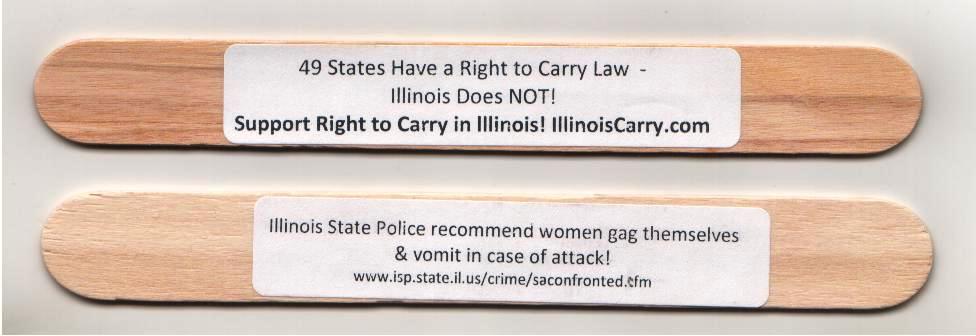


Please help our cause!

Thread Starter
Team Owner


Joined: Mar 2007
Posts: 35,194
Likes: 2,130
From: Right Corner Pocket of Illinois
No-IL Events Coordinator
2026 Corvette of the Year Finalist - Unmodified
2025 C6 of the Year Winner - Unmodified
2020 C6 of the Year Finalist - Unmodified
2020 Corvette of the Year Finalist (appearance mods)
2019 C6 of Year Winner (appearance mods)
2018 C6 of Year Finalist
St. Jude Donor '12 thru '26

Thread Starter
Team Owner
Joined: Mar 2007
Posts: 35,194
Likes: 2,130
From: Right Corner Pocket of Illinois
No-IL Events Coordinator
2026 Corvette of the Year Finalist - Unmodified
2025 C6 of the Year Winner - Unmodified
2020 C6 of the Year Finalist - Unmodified
2020 Corvette of the Year Finalist (appearance mods)
2019 C6 of Year Winner (appearance mods)
2018 C6 of Year Finalist
St. Jude Donor '12 thru '26
Defensive Strategies
By Lyn Bates,
Contributing Editor "womenshooters"
There are many, many people out there who carry concealed outside their homes, but there are many, many more people who have a gun only for defense at home. What are they trying to defend against? Let's take a look.
Possible burglary is at the top of many people's lists of reasons to have a gun in the house. How likely is this to occur, and what are the circumstances surrounding such a crime?
One of the best sources of statistics for these crimes is the report, Victimization During Household Burglary (VDHB), produced by the Bureau of Justice Statistics (part of the Office of Justice Programs, which is part of the US Department of Justice). This report was developed from the latest National Crime Victimization Survey (NCVS), which is one of the most reliable indicators of national crime. The NCVS is conducted by interviews with about 40,000 households and about 70,000 individual people nationwide, so it collects information about crimes that were never reported to the police as well as those that were. The NCVS has been going on since 1973, so there is lots of data to investigate changes in crime rates and other aspects of crimes.
The report, Victimization During Household Burglary (VDHB), has some interesting and enlightening information. For example, there are about 3.7 million household burglaries occurring each year. In 28% of those situations, someone was home when the burglary occurred. In 7% of all household burglaries, a household member experienced some form of violent victimization.
So, in a 10-year period, how likely are you to be the victim of a break-in for burglary? In 10 years, there would be about 37 million burglaries in the 110 million households in the country. To me, that seems like a lot.
How can we do a "sanity check" on those numbers? Have you had a break-in in the last 10 years? Do you know of any friends, neighbors, co-workers, or other acquaintances who have had a break-in? Have you heard any of those people talk about people they knew who had a burglary? Has your local news featured stories of such crimes in the last decade? The answer to some of those questions is undoubtedly yes. That should show you that home burglary is common enough that it is reasonable to protect yourself from it.
Of course, some burglaries occur when nobody is home, but the rate of household burglary when someone was home is about 8.5 per 1,000 households, and has not changed much in many years. For most of this article, we will be concerned only with those situations in which someone is home when the burglary occurs.
Now let's take a closer look at who is victimized, how those crimes happen, whether the burglars have weapons, and whether they use them.
Who is likely to be at home when victimized by this crime? Married couples without children experienced the lowest rate of this type of burglary. Single females with children experienced the highest rate of burglary while someone was present in the home. (Lesson: If you are a single woman with kids, realize that your risk really is a lot higher, so it is reasonable to take steps to protect yourself and children. If you have friends who are single moms, they might not realize their increased risk, and you could be doing them a great favor by educating them.)
Higher income households experienced lower rates of burglary, regardless of whether the residence was occupied or not. Single family units and higher density structures of 10 or more units generally experienced lower rates of burglary while someone was home. (Lesson: If you live in a rental structure of between 2 and 9 units, your risk is higher.)
Who is doing these crimes, and how?
Victims said they knew the offender in 65% of violent household burglaries, and in only 28% of such burglaries victims said the offender was a stranger. Residents in all of these homes were equally likely to be victimized by a current or former intimate partner as they were by a stranger. (Lesson: Friends and lovers can turn on you, and they are the people most likely to know what you have that would be worth stealing. Be wary of people you know, as well as people you don't.)
An open, or unlocked door or window let most burglars in. Damaging or removing a door was also a common type of entry in forcible burglaries. Occasionally someone inside opened the door and the offender pushed their way in, but much more often someone inside the home just let the offender in without any force being used. (Lesson: Lock your accessible windows, reinforce your door, use the locks and chain; look and listen before opening the door. Teach the people you live with, even children, not to invite people in who are not expected guests.)
We all think that such a crime would be most likely to occur when we are asleep, but only 38% of victims were sleeping; 44% were awake, possibly elsewhere in the house. Nighttime is the right time for two thirds of the home burglaries, but the remaining one third occurred between 6 AM and 6 PM. (Lesson: Don't assume that your bedroom is the only place you might need a gun.)
Do these burglars have weapons, and do they use them?
The VDHB showed that offenders were unarmed in about 60% of violent household burglaries. That means that 40% were armed. Those numbers haven't changed much for five years. In 12% of violent household burglaries, the offender possessed a firearm.
Of all burglaries that occurred when someone was home, 26% experienced some form of a violent victimization during the crime. That violence could be with or without a weapon. Residents present during a burglary were equally likely to be victimized by a friend, relative, or intimate partner (current or former) as they were by a stranger. (Lesson: Beware former friends and lovers who might hold a grudge against you.)
What kind of weapons did burglars have? 40% had no weapon, 23% had guns, 16% had knives or other sharp weapons, 6% had some other kind of weapon. That doesn't add to 100 because many people in the survey did not know whether there was a weapon or not.
Household members faced an offender with a firearm in only about 12% of all households burglarized while someone was home and violence occurred.
Of all burglaries, 56% resulted in no injury to the folks at home. Of the 44% that were injured, 33% were minor, 9% were serious, 2% were rapes, and essentially none were murders. That's very good news: household burglaries ending in homicide were only 0.004% of all burglaries during the last 5 years. (Lesson: Even with a weapon, most burglars are there to steal stuff and get out, not to harm you.)
OK, household burglaries are uncomfortably common, often occur when people are home, often involve armed offenders, but only occasionally result in serious injury for the people who were home at the time of the burglary.
Now it is time to ask yourself, seriously, why you have a gun for protection, and under what circumstances you would use it. It is never a good idea, legally, ethically, or morally, to shoot (or threaten with a gun) someone who is only after your property. No matter what the value is of the property they are after, it will be expensive, much more expensive to defend yourself in court against the criminal and/or civil charges that could be brought against you.
If you think every burglar in your home is there to also rape and murder you, you might well overreact in your defense.
If someone gets into your home to steal stuff while you are there, what should you do? Get into the "safe room" you had previously prepared. That's a room with an internal lock on the door, a phone and your gun inside. Call the police. Yell to the intruder, if he can hear you, that he can take anything and leave, but if he comes into your room, you will shoot him. Stay behind cover, with your gun handy and the police still on the phone.
Only if you or a member of your family is in immediate, personal danger from that guy are you entitled to defend yourself with lethal force. As the VDHB shows, most burglars, even if armed, intend only to steal property and then leave. If you stay away from them and don't give them any reason to hurt you, they probably won't try to hurt you. The gun in your hand will be a tremendous comfort, though, because you will know that, if things change from theft to personal assault, you will prevail. Imagine yourself in that situation without a gun. That vulnerability is pretty awful, isn't it, even if you get out unharmed.
So, have your home defense gun, and get the proper training in not just how to use it, but when and how not to use it. Then take comfort from the fact that you are prepared for the worst, even though most home burglaries are not "the worst."
If you would like to see the whole 13-page report on Victimization During Household Burglaries, go to bjs.ojp.usdoj.gov and search for "household burglary" publications to find publication number NCJ 227379.
By Lyn Bates,
Contributing Editor "womenshooters"
There are many, many people out there who carry concealed outside their homes, but there are many, many more people who have a gun only for defense at home. What are they trying to defend against? Let's take a look.
Possible burglary is at the top of many people's lists of reasons to have a gun in the house. How likely is this to occur, and what are the circumstances surrounding such a crime?
One of the best sources of statistics for these crimes is the report, Victimization During Household Burglary (VDHB), produced by the Bureau of Justice Statistics (part of the Office of Justice Programs, which is part of the US Department of Justice). This report was developed from the latest National Crime Victimization Survey (NCVS), which is one of the most reliable indicators of national crime. The NCVS is conducted by interviews with about 40,000 households and about 70,000 individual people nationwide, so it collects information about crimes that were never reported to the police as well as those that were. The NCVS has been going on since 1973, so there is lots of data to investigate changes in crime rates and other aspects of crimes.
The report, Victimization During Household Burglary (VDHB), has some interesting and enlightening information. For example, there are about 3.7 million household burglaries occurring each year. In 28% of those situations, someone was home when the burglary occurred. In 7% of all household burglaries, a household member experienced some form of violent victimization.
So, in a 10-year period, how likely are you to be the victim of a break-in for burglary? In 10 years, there would be about 37 million burglaries in the 110 million households in the country. To me, that seems like a lot.
How can we do a "sanity check" on those numbers? Have you had a break-in in the last 10 years? Do you know of any friends, neighbors, co-workers, or other acquaintances who have had a break-in? Have you heard any of those people talk about people they knew who had a burglary? Has your local news featured stories of such crimes in the last decade? The answer to some of those questions is undoubtedly yes. That should show you that home burglary is common enough that it is reasonable to protect yourself from it.
Of course, some burglaries occur when nobody is home, but the rate of household burglary when someone was home is about 8.5 per 1,000 households, and has not changed much in many years. For most of this article, we will be concerned only with those situations in which someone is home when the burglary occurs.
Now let's take a closer look at who is victimized, how those crimes happen, whether the burglars have weapons, and whether they use them.
Who is likely to be at home when victimized by this crime? Married couples without children experienced the lowest rate of this type of burglary. Single females with children experienced the highest rate of burglary while someone was present in the home. (Lesson: If you are a single woman with kids, realize that your risk really is a lot higher, so it is reasonable to take steps to protect yourself and children. If you have friends who are single moms, they might not realize their increased risk, and you could be doing them a great favor by educating them.)
Higher income households experienced lower rates of burglary, regardless of whether the residence was occupied or not. Single family units and higher density structures of 10 or more units generally experienced lower rates of burglary while someone was home. (Lesson: If you live in a rental structure of between 2 and 9 units, your risk is higher.)
Who is doing these crimes, and how?
Victims said they knew the offender in 65% of violent household burglaries, and in only 28% of such burglaries victims said the offender was a stranger. Residents in all of these homes were equally likely to be victimized by a current or former intimate partner as they were by a stranger. (Lesson: Friends and lovers can turn on you, and they are the people most likely to know what you have that would be worth stealing. Be wary of people you know, as well as people you don't.)
An open, or unlocked door or window let most burglars in. Damaging or removing a door was also a common type of entry in forcible burglaries. Occasionally someone inside opened the door and the offender pushed their way in, but much more often someone inside the home just let the offender in without any force being used. (Lesson: Lock your accessible windows, reinforce your door, use the locks and chain; look and listen before opening the door. Teach the people you live with, even children, not to invite people in who are not expected guests.)
We all think that such a crime would be most likely to occur when we are asleep, but only 38% of victims were sleeping; 44% were awake, possibly elsewhere in the house. Nighttime is the right time for two thirds of the home burglaries, but the remaining one third occurred between 6 AM and 6 PM. (Lesson: Don't assume that your bedroom is the only place you might need a gun.)
Do these burglars have weapons, and do they use them?
The VDHB showed that offenders were unarmed in about 60% of violent household burglaries. That means that 40% were armed. Those numbers haven't changed much for five years. In 12% of violent household burglaries, the offender possessed a firearm.
Of all burglaries that occurred when someone was home, 26% experienced some form of a violent victimization during the crime. That violence could be with or without a weapon. Residents present during a burglary were equally likely to be victimized by a friend, relative, or intimate partner (current or former) as they were by a stranger. (Lesson: Beware former friends and lovers who might hold a grudge against you.)
What kind of weapons did burglars have? 40% had no weapon, 23% had guns, 16% had knives or other sharp weapons, 6% had some other kind of weapon. That doesn't add to 100 because many people in the survey did not know whether there was a weapon or not.
Household members faced an offender with a firearm in only about 12% of all households burglarized while someone was home and violence occurred.
Of all burglaries, 56% resulted in no injury to the folks at home. Of the 44% that were injured, 33% were minor, 9% were serious, 2% were rapes, and essentially none were murders. That's very good news: household burglaries ending in homicide were only 0.004% of all burglaries during the last 5 years. (Lesson: Even with a weapon, most burglars are there to steal stuff and get out, not to harm you.)
OK, household burglaries are uncomfortably common, often occur when people are home, often involve armed offenders, but only occasionally result in serious injury for the people who were home at the time of the burglary.
Now it is time to ask yourself, seriously, why you have a gun for protection, and under what circumstances you would use it. It is never a good idea, legally, ethically, or morally, to shoot (or threaten with a gun) someone who is only after your property. No matter what the value is of the property they are after, it will be expensive, much more expensive to defend yourself in court against the criminal and/or civil charges that could be brought against you.
If you think every burglar in your home is there to also rape and murder you, you might well overreact in your defense.
If someone gets into your home to steal stuff while you are there, what should you do? Get into the "safe room" you had previously prepared. That's a room with an internal lock on the door, a phone and your gun inside. Call the police. Yell to the intruder, if he can hear you, that he can take anything and leave, but if he comes into your room, you will shoot him. Stay behind cover, with your gun handy and the police still on the phone.
Only if you or a member of your family is in immediate, personal danger from that guy are you entitled to defend yourself with lethal force. As the VDHB shows, most burglars, even if armed, intend only to steal property and then leave. If you stay away from them and don't give them any reason to hurt you, they probably won't try to hurt you. The gun in your hand will be a tremendous comfort, though, because you will know that, if things change from theft to personal assault, you will prevail. Imagine yourself in that situation without a gun. That vulnerability is pretty awful, isn't it, even if you get out unharmed.
So, have your home defense gun, and get the proper training in not just how to use it, but when and how not to use it. Then take comfort from the fact that you are prepared for the worst, even though most home burglaries are not "the worst."
If you would like to see the whole 13-page report on Victimization During Household Burglaries, go to bjs.ojp.usdoj.gov and search for "household burglary" publications to find publication number NCJ 227379.
Thread Starter
Team Owner
Joined: Mar 2007
Posts: 35,194
Likes: 2,130
From: Right Corner Pocket of Illinois
No-IL Events Coordinator
2026 Corvette of the Year Finalist - Unmodified
2025 C6 of the Year Winner - Unmodified
2020 C6 of the Year Finalist - Unmodified
2020 Corvette of the Year Finalist (appearance mods)
2019 C6 of Year Winner (appearance mods)
2018 C6 of Year Finalist
St. Jude Donor '12 thru '26
Crestwood police chief pleads innocent in water scandal
By Lauren FitzPatrick Sun-Times Media August 17, 2011
The police chief of Crestwood, under federal indictment in connection with a water scandal, has to surrender her weapons and gun permit, a federal judge told her Wednesday.
Theresa Neubauer, 53, appeared before Judge Joan B. Gottschall to plead innocent to 22 federal charges accusing her of lying to state and federal regulators for more than 20 years about the quality of Crestwood’s water while she worked as a water department clerk and supervisor.
She and the village’s former certified water operator, Frank Scaccia, were indicted Thursday, named in a scheme to cover up the use of tainted well water in the village of about 11,000.
The village told residents and the Illinois Environmental Protection Agency it was only using Lake Michigan water after 1985, when it discovered a village well had been tainted by vinyl chloride, a known carcinogen. But regulators later discovered the village continued to use the well for as much as 20 percent of its water from 1985 to 2007.
Federal prosecutors said Neubauer and Scaccia acted with Public Official A, who was confirmed to be retired mayor Chester Stranczek by his own attorney. Stranczek has not been charged with any crime. His attorney says his dementia makes him unfit to stand trial.
The village’s police chief must turn over any firearms, including guns she uses in her job, and her Firearm Owner’s Identification Card.
Her attorney, Thomas Breen, said she may ask on a future date to get them back.
Neubauer, who’s on administrative leave from the police department, was released on a personal recognizance bond and may await trial from her Crestwood home. She left the courthouse without commenting Wednesday.
Scaccia, now 59, was fired in March 2010. His own arraignment has not yet been scheduled.
The village denies any problems with its water.
“The government’s investigation — resulting in only these false statements charges — confirms that there is not now and never has been any concern with the safety or quality of the drinking water in Crestwood and the health of our citizens has never been compromised or threatened,” it said in a statement released Thursday. “Our citizens’ well-being has always been and will always continue to be our top priority.”
An arm of the U.S. Environmental Protection Agency determined there is no safe level of exposure to vinyl chloride, which also can cause damage to the liver and nervous system.
Dozens of lawsuits have been filed against the village over the use of the well water, including one by the Illinois attorney general’s office. Crestwood has footed the multimillion-dollar bill for various defense attorneys.
In December, the village settled one of those suits, which covered water bills paid by current and former residents and village business owners.
The settlement established a $500,000 fund to give residents partial refunds on their water bills from January 1985 to September 2007 — the years the village was found to have tapped the contaminated well. The village also agreed to a two-year freeze on the cost of vehicle stickers, business licenses and garbage collection fees, among other conditions.
Other lawsuits alleging wrongful death and personal injury still are pending.
By Lauren FitzPatrick Sun-Times Media August 17, 2011
The police chief of Crestwood, under federal indictment in connection with a water scandal, has to surrender her weapons and gun permit, a federal judge told her Wednesday.
Theresa Neubauer, 53, appeared before Judge Joan B. Gottschall to plead innocent to 22 federal charges accusing her of lying to state and federal regulators for more than 20 years about the quality of Crestwood’s water while she worked as a water department clerk and supervisor.
She and the village’s former certified water operator, Frank Scaccia, were indicted Thursday, named in a scheme to cover up the use of tainted well water in the village of about 11,000.
The village told residents and the Illinois Environmental Protection Agency it was only using Lake Michigan water after 1985, when it discovered a village well had been tainted by vinyl chloride, a known carcinogen. But regulators later discovered the village continued to use the well for as much as 20 percent of its water from 1985 to 2007.
Federal prosecutors said Neubauer and Scaccia acted with Public Official A, who was confirmed to be retired mayor Chester Stranczek by his own attorney. Stranczek has not been charged with any crime. His attorney says his dementia makes him unfit to stand trial.
The village’s police chief must turn over any firearms, including guns she uses in her job, and her Firearm Owner’s Identification Card.
Her attorney, Thomas Breen, said she may ask on a future date to get them back.
Neubauer, who’s on administrative leave from the police department, was released on a personal recognizance bond and may await trial from her Crestwood home. She left the courthouse without commenting Wednesday.
Scaccia, now 59, was fired in March 2010. His own arraignment has not yet been scheduled.
The village denies any problems with its water.
“The government’s investigation — resulting in only these false statements charges — confirms that there is not now and never has been any concern with the safety or quality of the drinking water in Crestwood and the health of our citizens has never been compromised or threatened,” it said in a statement released Thursday. “Our citizens’ well-being has always been and will always continue to be our top priority.”
An arm of the U.S. Environmental Protection Agency determined there is no safe level of exposure to vinyl chloride, which also can cause damage to the liver and nervous system.
Dozens of lawsuits have been filed against the village over the use of the well water, including one by the Illinois attorney general’s office. Crestwood has footed the multimillion-dollar bill for various defense attorneys.
In December, the village settled one of those suits, which covered water bills paid by current and former residents and village business owners.
The settlement established a $500,000 fund to give residents partial refunds on their water bills from January 1985 to September 2007 — the years the village was found to have tapped the contaminated well. The village also agreed to a two-year freeze on the cost of vehicle stickers, business licenses and garbage collection fees, among other conditions.
Other lawsuits alleging wrongful death and personal injury still are pending.
Thread Starter
Team Owner
Joined: Mar 2007
Posts: 35,194
Likes: 2,130
From: Right Corner Pocket of Illinois
No-IL Events Coordinator
2026 Corvette of the Year Finalist - Unmodified
2025 C6 of the Year Winner - Unmodified
2020 C6 of the Year Finalist - Unmodified
2020 Corvette of the Year Finalist (appearance mods)
2019 C6 of Year Winner (appearance mods)
2018 C6 of Year Finalist
St. Jude Donor '12 thru '26
Last edited by Quick Silver Z; Aug 18, 2011 at 08:20 AM.
Thread Starter
Team Owner
Joined: Mar 2007
Posts: 35,194
Likes: 2,130
From: Right Corner Pocket of Illinois
No-IL Events Coordinator
2026 Corvette of the Year Finalist - Unmodified
2025 C6 of the Year Winner - Unmodified
2020 C6 of the Year Finalist - Unmodified
2020 Corvette of the Year Finalist (appearance mods)
2019 C6 of Year Winner (appearance mods)
2018 C6 of Year Finalist
St. Jude Donor '12 thru '26
Pike man aims to pass weapons carry initiative
August 19, 2011 4:57 AM GREG OLSON Journal-Courier
If a Pittsfield chiropractor gets his way, his neighbors will be allowed to be armed in public.
Dan Mefford is spearheading a petition drive to have an initiative addressing the weapons issue placed on the March primary ballot.
“The initiative essentially bypasses the Chicago Machine that is currently ruling Illinois,” Mefford said. “I recommend that each county in Illinois get on board and pass the same gutsy version for the constitutional carry of arms.”
An initiative is a process that enables a specified number of voters by petition to propose a law and submit it to voters in a general election.
Still, there are hurdles to clear before carrying weapons in Pike County is legal.
If the initiative makes the ballot and passes, Mefford said the courts will decide if it is constitutional.
“The time has come to stand up and be counted instead of imploring and begging and pleading with our Chicago Machine rulers to pass a concealed carry law full of unconstitutional garbage just to get a toe in the door so we can carry a weapon for defense of ourselves, our families, our friends and property,” Mefford said.
He does not believe such things as Firearm Owner’s Identification Cards are needed to exercise the right to keep and bear arms.
“The Second Amendment states ‘shall not be infringed.’ How hard is that to comprehend? The Second Amendment does not say shall not be infringed very much,” Mefford said.
While there is no federal law specifically addressing the issuance of concealed-carry permits, 49 states have passed laws allowing citizens to carry certain concealed firearms in public, either without a permit or after obtaining a permit from state or local law enforcement. Illinois will be the only state without such a provision, once Wisconsin's new shall-issue law takes effect this fall.
“Our goal is to see that our constitutional rights are observed,” Mefford said. “People have rallied around this issue and are pitching in to get signatures for the petition.”
The petition, which requires 530 signatures before it can be placed on the ballot, will be submitted to the Pike County clerk late this year but is not guaranteed to be on the ballot.
“As long as there are no errors in the petitioning process, it should go on the ballot,” Mefford said. “We think it will be scrutinized by legal authorities within the state.”
The Illinois House on May 5 narrowly voted down a measure that would allow people to carry concealed weapons in public places. The vote was 65-52-1, but failed because it needed a supermajority to pass. Supermajorities are necessary for measures that would limit the regulatory powers of municipalities.
If approved, the plan would have allowed people to carry a gun after passing a background check and completing eight hours of training. Licensed gun holders would be prohibited from taking guns to certain public places, such as government buildings, airports and schools.
Critics of the concealed-carry plan often cite fears of increased violence and added stress to an already overloaded FOID card system. Illinois State Police estimates about 325,000 more people would sign up for concealed carry permits if the law were changed.
August 19, 2011 4:57 AM GREG OLSON Journal-Courier
If a Pittsfield chiropractor gets his way, his neighbors will be allowed to be armed in public.
Dan Mefford is spearheading a petition drive to have an initiative addressing the weapons issue placed on the March primary ballot.
“The initiative essentially bypasses the Chicago Machine that is currently ruling Illinois,” Mefford said. “I recommend that each county in Illinois get on board and pass the same gutsy version for the constitutional carry of arms.”
An initiative is a process that enables a specified number of voters by petition to propose a law and submit it to voters in a general election.
Still, there are hurdles to clear before carrying weapons in Pike County is legal.
If the initiative makes the ballot and passes, Mefford said the courts will decide if it is constitutional.
“The time has come to stand up and be counted instead of imploring and begging and pleading with our Chicago Machine rulers to pass a concealed carry law full of unconstitutional garbage just to get a toe in the door so we can carry a weapon for defense of ourselves, our families, our friends and property,” Mefford said.
He does not believe such things as Firearm Owner’s Identification Cards are needed to exercise the right to keep and bear arms.
“The Second Amendment states ‘shall not be infringed.’ How hard is that to comprehend? The Second Amendment does not say shall not be infringed very much,” Mefford said.
While there is no federal law specifically addressing the issuance of concealed-carry permits, 49 states have passed laws allowing citizens to carry certain concealed firearms in public, either without a permit or after obtaining a permit from state or local law enforcement. Illinois will be the only state without such a provision, once Wisconsin's new shall-issue law takes effect this fall.
“Our goal is to see that our constitutional rights are observed,” Mefford said. “People have rallied around this issue and are pitching in to get signatures for the petition.”
The petition, which requires 530 signatures before it can be placed on the ballot, will be submitted to the Pike County clerk late this year but is not guaranteed to be on the ballot.
“As long as there are no errors in the petitioning process, it should go on the ballot,” Mefford said. “We think it will be scrutinized by legal authorities within the state.”
The Illinois House on May 5 narrowly voted down a measure that would allow people to carry concealed weapons in public places. The vote was 65-52-1, but failed because it needed a supermajority to pass. Supermajorities are necessary for measures that would limit the regulatory powers of municipalities.
If approved, the plan would have allowed people to carry a gun after passing a background check and completing eight hours of training. Licensed gun holders would be prohibited from taking guns to certain public places, such as government buildings, airports and schools.
Critics of the concealed-carry plan often cite fears of increased violence and added stress to an already overloaded FOID card system. Illinois State Police estimates about 325,000 more people would sign up for concealed carry permits if the law were changed.
Thread Starter
Team Owner
Joined: Mar 2007
Posts: 35,194
Likes: 2,130
From: Right Corner Pocket of Illinois
No-IL Events Coordinator
2026 Corvette of the Year Finalist - Unmodified
2025 C6 of the Year Winner - Unmodified
2020 C6 of the Year Finalist - Unmodified
2020 Corvette of the Year Finalist (appearance mods)
2019 C6 of Year Winner (appearance mods)
2018 C6 of Year Finalist
St. Jude Donor '12 thru '26
Attention Wisconsinites!
http://www.wisconsinccw.org/index.php
Ohioans
http://www.usacarry.com/petition-to-...ification-law/
http://www.wisconsinccw.org/index.php
Ohioans
http://www.usacarry.com/petition-to-...ification-law/
Last edited by Quick Silver Z; Aug 22, 2011 at 10:32 AM.
Thread Starter
Team Owner
Joined: Mar 2007
Posts: 35,194
Likes: 2,130
From: Right Corner Pocket of Illinois
No-IL Events Coordinator
2026 Corvette of the Year Finalist - Unmodified
2025 C6 of the Year Winner - Unmodified
2020 C6 of the Year Finalist - Unmodified
2020 Corvette of the Year Finalist (appearance mods)
2019 C6 of Year Winner (appearance mods)
2018 C6 of Year Finalist
St. Jude Donor '12 thru '26
Where do GOP Presidential Candidates Stand on Guns?
By Mark Berman Opposing Views on Aug 22, 2011
Guns are often a major issue in presidential campaigns. Let's check in with the Republican candidates (listed alphabetically) and see where they stand:
Michele Bachman
Bachmann supports gun ownership. According to On the Issues in 2007 she co-sponsored a bill that would have banned gun registration and a trigger lock law in Washington, D.C. She wrote on her website in 2006:
Growing up in a home that valued hunting and fishing, the 2nd Amendment is of equal importance as the other nine Amendments in our Bill of Rights. Since the age of twelve, when I passed my first gun safety class, I’ve enjoyed the privilege afforded us by the right to bear arms. While serving in the Minnesota State Senate I supported and helped pass the Minnesota Personal Protection Act and legislation to protect local shooting ranges. I will fight to uphold our 2nd Amendment rights.
Herman Cain
Cain supports the 2nd Amendment, as well as the right to carry a concealed gun. When he was asked during a Q&A in New Hampshire in April 2011 if he would support a national concealed weapons bill, Cain responded, "Here's how I'd like that done: Let each state pass a concealed weapon bill. Empower the states -- some states already have it -- and not have a federal mandate. I believe in the Second Amendment."
Newt Gingrich
Gingrich believes everyone has the right to own guns, and is angered by courts which interpret the Constitution and rule otherwise. Regarding a 9th Circuit Court decision in 2002 that said there is no individual right to own guns, Gingrich wrote:
Over the last 50 years the Supreme Court has become a permanent constitutional convention in which the whims of five appointed lawyers have rewritten the meaning of the Constitution. Under this new, all-powerful model of the Court--and by extension the trail-breaking 9th Circuit Court--the Constitution and the law can be redefined, unchecked, by federal judges.
Jon Huntsman
Huntsman totes the conservative line on guns -- he is a strong supporter of the 2nd Amendment. In an email following a radio interview in June 2011 in which he inadvertently said he would not veto an assault weapons ban, he wrote to host Hugh Hewitt:
"Hugh, I clearly misunderstood your question regarding the assault weapons ban. I would absolutely veto the ban. I have always stood firmly for 2nd Amendment rights, and my record in Utah reflects it. With a name like 'Huntsman' it really goes without saying."
Ron Paul
Speaking in his weekly message for August 22, Paul said recent violence abroad has made it clear that we can't expect the government to protect us, that we must to it for ourselves. Therefore, "we must own and wisely use firearms to deter or prevent criminal assaults on our homes and persons."
Rick Perry
Perry is outspoken in his support for the 2nd Amendment. He famously admitted that he takes his gun with him while jogging because he is afraid of snakes. In 2010 he shot and killed a coyote who threatened his dog while out on a run.
Mitt Romney
GovWatch reports on a Romney flip-flop on guns:
Campaigning for the Senate in 1994, Romney said he favored strong gun laws and did not “line up with the NRA.” He signed up for “lifetime membership” of the NRA in August 2006 while pondering a presidential run, praising the group for “doing good things” and “supporting the right to bear arms.”
He said on "Meet the Press":
"I support the work of the NRA. I’m a member of the NRA. But do we line up on every issue? No, we don’t."
Rick Santorum
Santorum is a strong supporter of gun rights. He voted to protect gun manufacturers from lawsuits, as well as voting against background checks at gun shows.
By Mark Berman Opposing Views on Aug 22, 2011
Guns are often a major issue in presidential campaigns. Let's check in with the Republican candidates (listed alphabetically) and see where they stand:
Michele Bachman
Bachmann supports gun ownership. According to On the Issues in 2007 she co-sponsored a bill that would have banned gun registration and a trigger lock law in Washington, D.C. She wrote on her website in 2006:
Growing up in a home that valued hunting and fishing, the 2nd Amendment is of equal importance as the other nine Amendments in our Bill of Rights. Since the age of twelve, when I passed my first gun safety class, I’ve enjoyed the privilege afforded us by the right to bear arms. While serving in the Minnesota State Senate I supported and helped pass the Minnesota Personal Protection Act and legislation to protect local shooting ranges. I will fight to uphold our 2nd Amendment rights.
Herman Cain
Cain supports the 2nd Amendment, as well as the right to carry a concealed gun. When he was asked during a Q&A in New Hampshire in April 2011 if he would support a national concealed weapons bill, Cain responded, "Here's how I'd like that done: Let each state pass a concealed weapon bill. Empower the states -- some states already have it -- and not have a federal mandate. I believe in the Second Amendment."
Newt Gingrich
Gingrich believes everyone has the right to own guns, and is angered by courts which interpret the Constitution and rule otherwise. Regarding a 9th Circuit Court decision in 2002 that said there is no individual right to own guns, Gingrich wrote:
Over the last 50 years the Supreme Court has become a permanent constitutional convention in which the whims of five appointed lawyers have rewritten the meaning of the Constitution. Under this new, all-powerful model of the Court--and by extension the trail-breaking 9th Circuit Court--the Constitution and the law can be redefined, unchecked, by federal judges.
Jon Huntsman
Huntsman totes the conservative line on guns -- he is a strong supporter of the 2nd Amendment. In an email following a radio interview in June 2011 in which he inadvertently said he would not veto an assault weapons ban, he wrote to host Hugh Hewitt:
"Hugh, I clearly misunderstood your question regarding the assault weapons ban. I would absolutely veto the ban. I have always stood firmly for 2nd Amendment rights, and my record in Utah reflects it. With a name like 'Huntsman' it really goes without saying."
Ron Paul
Speaking in his weekly message for August 22, Paul said recent violence abroad has made it clear that we can't expect the government to protect us, that we must to it for ourselves. Therefore, "we must own and wisely use firearms to deter or prevent criminal assaults on our homes and persons."
Rick Perry
Perry is outspoken in his support for the 2nd Amendment. He famously admitted that he takes his gun with him while jogging because he is afraid of snakes. In 2010 he shot and killed a coyote who threatened his dog while out on a run.
Mitt Romney
GovWatch reports on a Romney flip-flop on guns:
Campaigning for the Senate in 1994, Romney said he favored strong gun laws and did not “line up with the NRA.” He signed up for “lifetime membership” of the NRA in August 2006 while pondering a presidential run, praising the group for “doing good things” and “supporting the right to bear arms.”
He said on "Meet the Press":
"I support the work of the NRA. I’m a member of the NRA. But do we line up on every issue? No, we don’t."
Rick Santorum
Santorum is a strong supporter of gun rights. He voted to protect gun manufacturers from lawsuits, as well as voting against background checks at gun shows.
Corvette Stories
The Best of Corvette for Corvette Enthusiasts

Top 10 Most Expensive Corvettes Ever Sold on Bring A Trailer
Brett Foote
10 Things Every Corvette Owner Needs (2026 Edition)
Michael S. Palmer
8 Most "Only Corvette Owners Understand" Quirks and Problems
Pouria Savadkouei
10 Reasons the C6 Z06 is Still A Performance Benchmark After 20 Years
Joe Kucinski
How Much Horsepower Every Corvette Engine "LOST" in 1972
Joe Kucinski
Top 10 DOs and DON'Ts for Protecting Your Convertible Top!
Michael S. Palmer
Top 10 Most Explosive Corvettes Ever Made: Power-to-Weight Ratio Ranked!
Joe Kucinski
150 hp to 1,250 hp: Every Corvette Generation Compared by the Specs That Matter
Joe Kucinski
8 Coolest Corvette Pace Cars (and Replicas) of All Time
Verdad Gallardo
Team Owner


Joined: Apr 2001
Posts: 26,794
Likes: 614
From: Elmhurst, IL (West Suburb of Chicago) & Home of MEGA Horsepower
St. Jude Donor '06

Thread Starter
Team Owner
Joined: Mar 2007
Posts: 35,194
Likes: 2,130
From: Right Corner Pocket of Illinois
No-IL Events Coordinator
2026 Corvette of the Year Finalist - Unmodified
2025 C6 of the Year Winner - Unmodified
2020 C6 of the Year Finalist - Unmodified
2020 Corvette of the Year Finalist (appearance mods)
2019 C6 of Year Winner (appearance mods)
2018 C6 of Year Finalist
St. Jude Donor '12 thru '26
 I would simply like permission from local politicians to be able to defend myself from them!

Cruise-In VIII Veteran


Joined: Sep 2005
Posts: 1,811
Likes: 21
From: Bloomingdale, IL
Cruise-In IX Veteran
St. Jude Donor '06-'07-'08-'09-'10-'11
I can assure you that will not be the case. Only a small percentage of folks vs the population at large in any given state, will go through the process to get licensed and actually will carry a concealed weapon. Those who do will be VERY RESPONSIBLE types (and not idiots).
 I believe it's about creating a perception for criminals. If they know there is a possibility that the person or persons they are about to rob or assult may have a gun, it should at the very least reduce the amount crime. A good friend of mine and his fiance were recently approached and robbed at knifepoint in downtown Chicago by a gang member. Fortunately it ended with losing a $20 bill and nothing more. If we had conceal carry active, I do believe it would affect this type of crime. Just my $.02.
Thread Starter
Team Owner
Joined: Mar 2007
Posts: 35,194
Likes: 2,130
From: Right Corner Pocket of Illinois
No-IL Events Coordinator
2026 Corvette of the Year Finalist - Unmodified
2025 C6 of the Year Winner - Unmodified
2020 C6 of the Year Finalist - Unmodified
2020 Corvette of the Year Finalist (appearance mods)
2019 C6 of Year Winner (appearance mods)
2018 C6 of Year Finalist
St. Jude Donor '12 thru '26
I do believe it would affect this type of crime. Just my $.02.

We need to set up a shoot-n-lunch!!!


Thread Starter
Team Owner
Joined: Mar 2007
Posts: 35,194
Likes: 2,130
From: Right Corner Pocket of Illinois
No-IL Events Coordinator
2026 Corvette of the Year Finalist - Unmodified
2025 C6 of the Year Winner - Unmodified
2020 C6 of the Year Finalist - Unmodified
2020 Corvette of the Year Finalist (appearance mods)
2019 C6 of Year Winner (appearance mods)
2018 C6 of Year Finalist
St. Jude Donor '12 thru '26
CHICAGO — A gun-advocacy group is pushing ahead with a lawsuit over firearm owner identification cards in Illinois even though a favorable new state law appeared to give them just what they sought: a prohibition on the public release of gun-holder names.
The Illinois State Rifle Association wants to continue the lawsuit in hopes a judge will eventually establish an unassailable constitutional right to keep the ID-card data secret, the group’s attorney, Stanley Tucker, said Wednesday
“Theoretically, a future legislature could reverse (the new law)’’ said Tucker, speaking after a Circuit Court hearing in Peoria on the matter. “We will be pushing for a ruling on constitutional grounds for that reason.’’
In response to a request from The Associated Press, Attorney General Lisa Madigan’s office ruled earlier this year the 1.3 million names of FOID card holders are public under the state’s open records law and should be released. That set off a storm of protests from gun owners, who said they feared criminals would use the information to steal guns or target those who weren’t armed.
At Wednesday’s hearing, Circuit Judge Michael Brandt dismissed the AP from the lawsuit. That leaves as the lone defendant the Illinois State Police, and it has largely agreed with the rifle association’s staunch opposition to releasing the names.
The AP had withdrawn its public records request for the information several months ago. The news organization’s attorney, Donald Craven, said the issue was moot and there was no reason for the case to go further.
“Litigation is an adversarial process, and there are no adversaries here,’’ AP attorney Donald Craven. “They are on the same team and have been from the beginning.’’
The attorney representing the state police in the case, former Illinois Gov. Jim Thompson, conceded the point, saying that, with the AP off the case, “you now have a plaintiff and a defendant who substantially agree.’’
“They want us to pay (court) costs and we don’t want to pay costs,’’ he added. “That’s the only disagreement.’’
Advocates of tighter restrictions on guns have said releasing cardholders’ names would allow better public scrutiny of state safeguards designed to prevent certain groups, including convicted felons, from obtaining weapons.
Thompson said he would not oppose the state judge offering a more sweeping ruling on constitutional grounds, saying it would offer “more clarity.’’ But judges, he continued, are often reluctant to ground their opinions in the constitution when a relevant law is in place.
Madigan’s office issued a decree early this year on the issue after the state police refused to release to the names to the AP. That’s when the rifle association file its lawsuit naming the AP and the state police, and the circuit court in Peoria entered a temporary restraining order stopping the release of the cardholder names.
Illinois lawmakers voted in May to pass the measure overturning the ruling by Madigan’s office. With the new law in place, the AP withdrew its request for the names, leading to its dismissal from the case on Wednesday.
Messages seeking comment from Madigan’s office on Wednesday evening weren’t immediately returned.
MICHAEL TARM, AP
The Illinois State Rifle Association wants to continue the lawsuit in hopes a judge will eventually establish an unassailable constitutional right to keep the ID-card data secret, the group’s attorney, Stanley Tucker, said Wednesday
“Theoretically, a future legislature could reverse (the new law)’’ said Tucker, speaking after a Circuit Court hearing in Peoria on the matter. “We will be pushing for a ruling on constitutional grounds for that reason.’’
In response to a request from The Associated Press, Attorney General Lisa Madigan’s office ruled earlier this year the 1.3 million names of FOID card holders are public under the state’s open records law and should be released. That set off a storm of protests from gun owners, who said they feared criminals would use the information to steal guns or target those who weren’t armed.
At Wednesday’s hearing, Circuit Judge Michael Brandt dismissed the AP from the lawsuit. That leaves as the lone defendant the Illinois State Police, and it has largely agreed with the rifle association’s staunch opposition to releasing the names.
The AP had withdrawn its public records request for the information several months ago. The news organization’s attorney, Donald Craven, said the issue was moot and there was no reason for the case to go further.
“Litigation is an adversarial process, and there are no adversaries here,’’ AP attorney Donald Craven. “They are on the same team and have been from the beginning.’’
The attorney representing the state police in the case, former Illinois Gov. Jim Thompson, conceded the point, saying that, with the AP off the case, “you now have a plaintiff and a defendant who substantially agree.’’
“They want us to pay (court) costs and we don’t want to pay costs,’’ he added. “That’s the only disagreement.’’
Advocates of tighter restrictions on guns have said releasing cardholders’ names would allow better public scrutiny of state safeguards designed to prevent certain groups, including convicted felons, from obtaining weapons.
Thompson said he would not oppose the state judge offering a more sweeping ruling on constitutional grounds, saying it would offer “more clarity.’’ But judges, he continued, are often reluctant to ground their opinions in the constitution when a relevant law is in place.
Madigan’s office issued a decree early this year on the issue after the state police refused to release to the names to the AP. That’s when the rifle association file its lawsuit naming the AP and the state police, and the circuit court in Peoria entered a temporary restraining order stopping the release of the cardholder names.
Illinois lawmakers voted in May to pass the measure overturning the ruling by Madigan’s office. With the new law in place, the AP withdrew its request for the names, leading to its dismissal from the case on Wednesday.
Messages seeking comment from Madigan’s office on Wednesday evening weren’t immediately returned.
MICHAEL TARM, AP



Thread Starter
Team Owner
Joined: Mar 2007
Posts: 35,194
Likes: 2,130
From: Right Corner Pocket of Illinois
No-IL Events Coordinator
2026 Corvette of the Year Finalist - Unmodified
2025 C6 of the Year Winner - Unmodified
2020 C6 of the Year Finalist - Unmodified
2020 Corvette of the Year Finalist (appearance mods)
2019 C6 of Year Winner (appearance mods)
2018 C6 of Year Finalist
St. Jude Donor '12 thru '26
Thread Starter
Team Owner
Joined: Mar 2007
Posts: 35,194
Likes: 2,130
From: Right Corner Pocket of Illinois
No-IL Events Coordinator
2026 Corvette of the Year Finalist - Unmodified
2025 C6 of the Year Winner - Unmodified
2020 C6 of the Year Finalist - Unmodified
2020 Corvette of the Year Finalist (appearance mods)
2019 C6 of Year Winner (appearance mods)
2018 C6 of Year Finalist
St. Jude Donor '12 thru '26
ISRA ALERT – 2nd Amendment Town Halls in Chicago on Wednesday Night
Venues on Chicago's South Side and West Side
South Side
The ISRA and associated organizations Chicago Firearms Safety Association, Second Amendment Sisters, and IllinoisCarry.com are hosting a Town Hall Meeting:
Guns, Violence, and the Right to Self-Defense
AM 1690 WVON Legacy Room
1000 E. 87th St., Chicago
7:00 pm to 10:00 pm
WVON's Cliff Kelly will MC the event, panelists will include:
Gerald Vernon, Chicago representative - IllinoisCarry.com
Shawn Gowder, Vice President - Chicago Firearms Safety Association
Rhonda Ezell - Co-Plaintiff with ISRA in Ezell v Chicago, the federal case that overthrew Chicago's ban on firing ranges in the city
Lori Meriweather - Second Amendment Sisters
Admission is free, you must be 21 years of age to attend or be accompanied by a parent or legal guardian.
West Side
Illinois State Representative La Shawn K. Ford (D-8) is holding a:
Town Hall Meeting on Conceal and Carry of Handguns
6:00 pm to 8:00 pm at 4630 W Augusta, Chicago.
"Whether you are for or against legalizing the carrying of concealed firearms, make sure your voice is heard. Join Rep. Ford, along with opponents and supporters of concealed carry, for a public discussion on this important issue."
Venues on Chicago's South Side and West Side
South Side
The ISRA and associated organizations Chicago Firearms Safety Association, Second Amendment Sisters, and IllinoisCarry.com are hosting a Town Hall Meeting:
Guns, Violence, and the Right to Self-Defense
AM 1690 WVON Legacy Room
1000 E. 87th St., Chicago
7:00 pm to 10:00 pm
WVON's Cliff Kelly will MC the event, panelists will include:
Gerald Vernon, Chicago representative - IllinoisCarry.com
Shawn Gowder, Vice President - Chicago Firearms Safety Association
Rhonda Ezell - Co-Plaintiff with ISRA in Ezell v Chicago, the federal case that overthrew Chicago's ban on firing ranges in the city
Lori Meriweather - Second Amendment Sisters
Admission is free, you must be 21 years of age to attend or be accompanied by a parent or legal guardian.
West Side
Illinois State Representative La Shawn K. Ford (D-8) is holding a:
Town Hall Meeting on Conceal and Carry of Handguns
6:00 pm to 8:00 pm at 4630 W Augusta, Chicago.
"Whether you are for or against legalizing the carrying of concealed firearms, make sure your voice is heard. Join Rep. Ford, along with opponents and supporters of concealed carry, for a public discussion on this important issue."
Thread Starter
Team Owner
Joined: Mar 2007
Posts: 35,194
Likes: 2,130
From: Right Corner Pocket of Illinois
No-IL Events Coordinator
2026 Corvette of the Year Finalist - Unmodified
2025 C6 of the Year Winner - Unmodified
2020 C6 of the Year Finalist - Unmodified
2020 Corvette of the Year Finalist (appearance mods)
2019 C6 of Year Winner (appearance mods)
2018 C6 of Year Finalist
St. Jude Donor '12 thru '26
Concealed carry issue may be reloaded soon in Springfield
Steve Stout, steves@mywebtimes.com, 815-431-4082
On July 13, in a speech on the floor of the House of Representatives, U.S. Rep. Adam Kinzinger lamented Illinois' status as the sole state that does not allow some form of concealed gun carry rights.
Later, in a media release, Kinzinger said, "In May, Gov. (Pat) Quinn took it upon himself to determine what's best for Illinois. Rather than listening to the voice of the Illinois constituency, Quinn made desperate 11th-hour phone calls to sway Illinois Democrats to get his way and block vital legislation to allow concealed carry here in Illinois."
The Manteno Republican blasted Quinn and wondered how the governor's opinion on the issue could be more knowledgeable than 49 other state Legislatures.
"(Does) he know better than top law enforcement organizations like the Illinois Association of Chiefs of Police, the Illinois Sheriffs Association, the Chicago Police Lieutenants Association and the Chicago Police Sergeants Association?" Kinzinger asked.
On July 8, Wisconsin Gov. Scott Walker signed a concealed carry bill. Kinzinger said the law left Illinois the last state "to prohibit and deny law-abiding citizens' rights to protect themselves or their family."
Illinois lawmakers have considered similar legislation several times, but it has always been defeated, largely due to opposition from a powerful Chicago metropolitan area anti-gun faction.
Supporters of concealed firearms point to statistics that, to them, prove such a change would decrease crime. Opponents see it as a return to a "the Wild West" attitude where people would pack pistols to Little League games or church services, increasing the chances for gun violence.
Two Republican lawmakers from Morris, state Sen. Sue Rezin and Rep. Pam Roth, both think there is a strong possibility of yet another concerted effort by the General Assembly to revisit the controversial issue this fall or in early 2012.
Rezin said one plan being considered is exempting the Chicago area, or perhaps Cook County, entirely from any concealed carry legislation.
"This might be our best shot as seeing such a bill passed," she said.
State Rep. Frank Mautino, D-Spring Valley, agreed.
"I also think the best thing we could do is not make the new law stronger than existing home rule city ordinances," he said. "Any concealed carry law would be easier to pass that way. I believe that might very well happen."
The lawmakers also agreed there might be additional costs to local municipalities and their police departments to ensure safety rules and regulations are strictly followed.
Such increases wouldn't bother Ottawa Police Chief Brian Zeilmann.
"I am a strong supporter of the Second Amendment and I realize that law enforcement administrators are divided on this issue," said Zeilmann. "I, myself, stand for it. Overwhelming statistic studies have shown that crime decreased in many states where (concealed carry) laws are in place. I'm in support of them."
Not content with waiting for approval from Springfield, some state and national organizations are turning to the courts for action.
The National Rifle Association, the Illinois State Rifle Association, and The Second Amendment Foundation have filed lawsuits in federal court in Illinois, challenging the state's prohibition on constitutional grounds.
"We have a very strong case," said Todd Vandermyde, an NRA lobbyist. "When you look at some of the briefs that have been filed by the state and attorney general and some of the arguments they are trying to make, I think it is clear they are very, very nervous."
Roth believes the Illinois courts may make the ultimate decision on the matter.
"If the courts don't get it done, then we legislators will address the issue again," she said.
Kinzinger concluded, "Quinn doesn't get it, but 49 other states do. We must follow the example set by every other state in this nation and allow law-abiding citizens to own and bear arms. We must restore, defend, and preserve this constitutional right at all levels."
Steve Stout, steves@mywebtimes.com, 815-431-4082
On July 13, in a speech on the floor of the House of Representatives, U.S. Rep. Adam Kinzinger lamented Illinois' status as the sole state that does not allow some form of concealed gun carry rights.
Later, in a media release, Kinzinger said, "In May, Gov. (Pat) Quinn took it upon himself to determine what's best for Illinois. Rather than listening to the voice of the Illinois constituency, Quinn made desperate 11th-hour phone calls to sway Illinois Democrats to get his way and block vital legislation to allow concealed carry here in Illinois."
The Manteno Republican blasted Quinn and wondered how the governor's opinion on the issue could be more knowledgeable than 49 other state Legislatures.
"(Does) he know better than top law enforcement organizations like the Illinois Association of Chiefs of Police, the Illinois Sheriffs Association, the Chicago Police Lieutenants Association and the Chicago Police Sergeants Association?" Kinzinger asked.
On July 8, Wisconsin Gov. Scott Walker signed a concealed carry bill. Kinzinger said the law left Illinois the last state "to prohibit and deny law-abiding citizens' rights to protect themselves or their family."
Illinois lawmakers have considered similar legislation several times, but it has always been defeated, largely due to opposition from a powerful Chicago metropolitan area anti-gun faction.
Supporters of concealed firearms point to statistics that, to them, prove such a change would decrease crime. Opponents see it as a return to a "the Wild West" attitude where people would pack pistols to Little League games or church services, increasing the chances for gun violence.
Two Republican lawmakers from Morris, state Sen. Sue Rezin and Rep. Pam Roth, both think there is a strong possibility of yet another concerted effort by the General Assembly to revisit the controversial issue this fall or in early 2012.
Rezin said one plan being considered is exempting the Chicago area, or perhaps Cook County, entirely from any concealed carry legislation.
"This might be our best shot as seeing such a bill passed," she said.
State Rep. Frank Mautino, D-Spring Valley, agreed.
"I also think the best thing we could do is not make the new law stronger than existing home rule city ordinances," he said. "Any concealed carry law would be easier to pass that way. I believe that might very well happen."
The lawmakers also agreed there might be additional costs to local municipalities and their police departments to ensure safety rules and regulations are strictly followed.
Such increases wouldn't bother Ottawa Police Chief Brian Zeilmann.
"I am a strong supporter of the Second Amendment and I realize that law enforcement administrators are divided on this issue," said Zeilmann. "I, myself, stand for it. Overwhelming statistic studies have shown that crime decreased in many states where (concealed carry) laws are in place. I'm in support of them."
Not content with waiting for approval from Springfield, some state and national organizations are turning to the courts for action.
The National Rifle Association, the Illinois State Rifle Association, and The Second Amendment Foundation have filed lawsuits in federal court in Illinois, challenging the state's prohibition on constitutional grounds.
"We have a very strong case," said Todd Vandermyde, an NRA lobbyist. "When you look at some of the briefs that have been filed by the state and attorney general and some of the arguments they are trying to make, I think it is clear they are very, very nervous."
Roth believes the Illinois courts may make the ultimate decision on the matter.
"If the courts don't get it done, then we legislators will address the issue again," she said.
Kinzinger concluded, "Quinn doesn't get it, but 49 other states do. We must follow the example set by every other state in this nation and allow law-abiding citizens to own and bear arms. We must restore, defend, and preserve this constitutional right at all levels."
Thread Starter
Team Owner
Joined: Mar 2007
Posts: 35,194
Likes: 2,130
From: Right Corner Pocket of Illinois
No-IL Events Coordinator
2026 Corvette of the Year Finalist - Unmodified
2025 C6 of the Year Winner - Unmodified
2020 C6 of the Year Finalist - Unmodified
2020 Corvette of the Year Finalist (appearance mods)
2019 C6 of Year Winner (appearance mods)
2018 C6 of Year Finalist
St. Jude Donor '12 thru '26
Divided on 'conceal and carry'
Town hall attendees mostly in favor of citizens carrying firearms
By LA RISA LYNCH
AustinTalks.org
Annette Nance-Holt was in the minority.
The mother of a slain 16-year-old teen, Nance-Holt was among a handful of people last week speaking out against carrying a concealed handgun during a West Side town hall meeting. She lost her son, Blair, to gun violence in May 2007 when a teen fired shots into a crowded CTA bus. Blair Holt was killed while four others were wounded. At an Aug. 31, town hall hosted by state Rep. LaShawn Ford (D-8), Nance-Holt said greater access to guns does not equal increased safety.
"Had everyone had a gun on the bus that day, there would have been a whole lot more people dead besides my son," she said. "So I understand that people are scared...but I lost everything, and I still don't want a gun."
The meeting drew more than 200 attendees to an Austin banquet facility at 4630 W. Augusta. The majority there supported carrying a concealed firearm for self-protection. While the discussions were heated, the event remained civil between panelists and the audience.
Panelists in favor of conceal and carry, including members from the National Rile Association (NRA) and the Illinois State Rifle Association (ISRA), centered their arguments on several Supreme Court cases. In one particular case-McDonald v. Chicago-the U.S. Supreme Court ruled that the Constitution's Second Amendment applied to states and local governments. That June 2010 ruling struck down Chicago's 1982 handgun ban and neighboring suburban Oak Park's 1984 ban.
The NRA's Todd Vandermyde explained that the "context" in many of these court cases guarantees "individuals' right to possess and carry weapons in case of confrontation."
That right goes beyond the "borders" of someone's home or place of business, Vandermyde insisted. He noted that Illinois is the only state that does not have a conceal-and-carry law while 49 others have some version of it.
"If this was such a bad public policy, why are 49 other states not repealing it?" he said.
The rationale that arming citizens with firearms would create more violence is flawed, added Colleen Lawson, a plaintiff in the McDonald v. Chicago case. Crime, she noted, is also committed by knives, fist and feet and those victims are just as injured or dead.
"We are the only state in the entire country where criminals are guaranteed a legally disarmed victim on the streets," she said, adding that city aldermen are allowed to carry handguns. "These are the same people telling you that it is not a good idea."
Garret Evans, a panelist, however, disagreed. Evans still has a mangled bullet in his leg that serves as a reminder of the 2007 Virginia Tech shooting where a semi-automatic handgun left 33 dead.
Evans maintained that nothing good comes from having more firearms on the streets. Instead he wishes for programs to curtail gun violence, which he said is no longer a West or South side phenomena tied to urban issues like drugs.
"We are having shootings all over the place and look at the reasons - spousal issues, no job, no money, no car," Evans said. "Now, they are shooting for less tangible things like how you raise a household."
Those opposing conceal and carry said gun violence stems from lax firearm laws that allow criminals to have easy access to guns. They urged stricter gun control laws that could title guns similar to how cars are registered to owners. They also want identification numbers etched on bullets to better track purchases.
But Tom Vander Berk, of the Illinois Brady Campaign, called conceal and carry a "slippery slope" without safeguards ensuring guns don't end up in the wrong peoples hands. Vander Berk lost his 15-year-old son to gun violence 19 years ago.
"We diverted a disaster and we need to continue to do that until a responsible system is in place," he said.
One former Chicago police and one who's still on the force were on opposite sides of the debate.
Ernest Brown of the Chicago Police Department argued officers' safety would be jeopardized if more guns were on the streets. Brown, chief of Bureau Patrol, noted that assaults against police officers tripled from just 700 in 2000 to more than 2,100 last year.
"Officers' safety translates into your safety," he said. "If officers aren't safe, then you aren't going to be safe," Brown said.
For that same reason, former police veteran David Lemieux believes residents should be armed. While Lemieux said there are police officers who abide by the 'serve and protect' creed, there's an equal number who are "indifferent" to minorities or "any white folks who are a little less than affluent."
"Why would you count on someone who doesn't like you to protect your home?" Lemieux, a 26-year CPD veteran, asked.
Austin resident Charles Thompson exemplified the view held by a majority of attendees.
Thompson said he has the right to protect his 8-year-old son, and he urged politicians to "stop tying us down" with laws to circumvent the public's right to bear arms.
"I have a right to defend myself. I have a right to defend my family," he said. "If something happens, I cannot depend on the police to show up instantaneously no matter how well-meaning they are. It is not fair to me."
State Rep. Ford said he hosted the town hall to hear residents' concerns about conceal-and-carry. The feedback, he said, will help him better understand the issue. A bill in the General Assembly that allowed individuals to carry concealed firearms was defeated in May, but more than likely will resurface in the fall session.
"Right now, all we hear is what the lobbyists want in Springfield," said Ford, who voted "present" on the bill. "We don't get the real consensus of the community. For the most part, I hear the community say they want conceal and carry."
Town hall attendees mostly in favor of citizens carrying firearms
By LA RISA LYNCH
AustinTalks.org
Annette Nance-Holt was in the minority.
The mother of a slain 16-year-old teen, Nance-Holt was among a handful of people last week speaking out against carrying a concealed handgun during a West Side town hall meeting. She lost her son, Blair, to gun violence in May 2007 when a teen fired shots into a crowded CTA bus. Blair Holt was killed while four others were wounded. At an Aug. 31, town hall hosted by state Rep. LaShawn Ford (D-8), Nance-Holt said greater access to guns does not equal increased safety.
"Had everyone had a gun on the bus that day, there would have been a whole lot more people dead besides my son," she said. "So I understand that people are scared...but I lost everything, and I still don't want a gun."
The meeting drew more than 200 attendees to an Austin banquet facility at 4630 W. Augusta. The majority there supported carrying a concealed firearm for self-protection. While the discussions were heated, the event remained civil between panelists and the audience.
Panelists in favor of conceal and carry, including members from the National Rile Association (NRA) and the Illinois State Rifle Association (ISRA), centered their arguments on several Supreme Court cases. In one particular case-McDonald v. Chicago-the U.S. Supreme Court ruled that the Constitution's Second Amendment applied to states and local governments. That June 2010 ruling struck down Chicago's 1982 handgun ban and neighboring suburban Oak Park's 1984 ban.
The NRA's Todd Vandermyde explained that the "context" in many of these court cases guarantees "individuals' right to possess and carry weapons in case of confrontation."
That right goes beyond the "borders" of someone's home or place of business, Vandermyde insisted. He noted that Illinois is the only state that does not have a conceal-and-carry law while 49 others have some version of it.
"If this was such a bad public policy, why are 49 other states not repealing it?" he said.
The rationale that arming citizens with firearms would create more violence is flawed, added Colleen Lawson, a plaintiff in the McDonald v. Chicago case. Crime, she noted, is also committed by knives, fist and feet and those victims are just as injured or dead.
"We are the only state in the entire country where criminals are guaranteed a legally disarmed victim on the streets," she said, adding that city aldermen are allowed to carry handguns. "These are the same people telling you that it is not a good idea."
Garret Evans, a panelist, however, disagreed. Evans still has a mangled bullet in his leg that serves as a reminder of the 2007 Virginia Tech shooting where a semi-automatic handgun left 33 dead.
Evans maintained that nothing good comes from having more firearms on the streets. Instead he wishes for programs to curtail gun violence, which he said is no longer a West or South side phenomena tied to urban issues like drugs.
"We are having shootings all over the place and look at the reasons - spousal issues, no job, no money, no car," Evans said. "Now, they are shooting for less tangible things like how you raise a household."
Those opposing conceal and carry said gun violence stems from lax firearm laws that allow criminals to have easy access to guns. They urged stricter gun control laws that could title guns similar to how cars are registered to owners. They also want identification numbers etched on bullets to better track purchases.
But Tom Vander Berk, of the Illinois Brady Campaign, called conceal and carry a "slippery slope" without safeguards ensuring guns don't end up in the wrong peoples hands. Vander Berk lost his 15-year-old son to gun violence 19 years ago.
"We diverted a disaster and we need to continue to do that until a responsible system is in place," he said.
One former Chicago police and one who's still on the force were on opposite sides of the debate.
Ernest Brown of the Chicago Police Department argued officers' safety would be jeopardized if more guns were on the streets. Brown, chief of Bureau Patrol, noted that assaults against police officers tripled from just 700 in 2000 to more than 2,100 last year.
"Officers' safety translates into your safety," he said. "If officers aren't safe, then you aren't going to be safe," Brown said.
For that same reason, former police veteran David Lemieux believes residents should be armed. While Lemieux said there are police officers who abide by the 'serve and protect' creed, there's an equal number who are "indifferent" to minorities or "any white folks who are a little less than affluent."
"Why would you count on someone who doesn't like you to protect your home?" Lemieux, a 26-year CPD veteran, asked.
Austin resident Charles Thompson exemplified the view held by a majority of attendees.
Thompson said he has the right to protect his 8-year-old son, and he urged politicians to "stop tying us down" with laws to circumvent the public's right to bear arms.
"I have a right to defend myself. I have a right to defend my family," he said. "If something happens, I cannot depend on the police to show up instantaneously no matter how well-meaning they are. It is not fair to me."
State Rep. Ford said he hosted the town hall to hear residents' concerns about conceal-and-carry. The feedback, he said, will help him better understand the issue. A bill in the General Assembly that allowed individuals to carry concealed firearms was defeated in May, but more than likely will resurface in the fall session.
"Right now, all we hear is what the lobbyists want in Springfield," said Ford, who voted "present" on the bill. "We don't get the real consensus of the community. For the most part, I hear the community say they want conceal and carry."
Thread Starter
Team Owner
Joined: Mar 2007
Posts: 35,194
Likes: 2,130
From: Right Corner Pocket of Illinois
No-IL Events Coordinator
2026 Corvette of the Year Finalist - Unmodified
2025 C6 of the Year Winner - Unmodified
2020 C6 of the Year Finalist - Unmodified
2020 Corvette of the Year Finalist (appearance mods)
2019 C6 of Year Winner (appearance mods)
2018 C6 of Year Finalist
St. Jude Donor '12 thru '26
Hearing Scheduled for H.R. 822, the National Right-to-Carry Reciprocity Act of 2011
For months we have been reporting on a critically important bill: H.R. 822—the National Right-to-Carry Reciprocity Act of 2011. This vital NRA-backed legislation, introduced earlier this year by Congressmen Cliff Stearns (R-Fla.) and Heath Shuler (D-N.C.) will enable millions of permit holders to exercise their right to self-defense while traveling outside their home states.
Thanks to much hard work and action taken by NRA and our members, H.R. 822 has now garnered 242 cosponsors in the U.S. House. On Tuesday, September 13, the House Judiciary Committee's Subcommittee on Crime, Terrorism, and Homeland Security will hold a hearing on the bill.
There is currently only one state (Illinois) that has no clear legal way for individuals to carry concealed firearms for self-defense. Forty states have permit systems that make it possible for any law-abiding person to obtain a permit, while most of the others have discretionary permit systems. (Vermont has never required a permit.)
H.R. 822 would make a major step forward for gun owners' rights by significantly expanding where those permits are recognized.
Dozens of states have passed Right-to-Carry laws over the past 25 years because the right to self-defense does not end when one leaves home. However, interstate recognition of those permits is not uniform and creates great confusion and potential problems for travelers. While many states have broad reciprocity, others have very restrictive reciprocity laws. Still others deny recognition completely.
H.R. 822 would solve this problem by requiring that lawfully issued carry permits be recognized, while protecting the ability of the various states to determine the areas where carrying is prohibited within their boundaries. The bill would not create a federal licensing system, nor would it establish a minimum federal standard for the carry permit; rather, it would require the states to recognize each others' carry permits, just as they recognize driver's licenses and carry permits held by armored car guards. Rep. Stearns has introduced similar legislation since 1995.
http://www.nraila.org/Issues/FactShe...=189&issue=003
For months we have been reporting on a critically important bill: H.R. 822—the National Right-to-Carry Reciprocity Act of 2011. This vital NRA-backed legislation, introduced earlier this year by Congressmen Cliff Stearns (R-Fla.) and Heath Shuler (D-N.C.) will enable millions of permit holders to exercise their right to self-defense while traveling outside their home states.
Thanks to much hard work and action taken by NRA and our members, H.R. 822 has now garnered 242 cosponsors in the U.S. House. On Tuesday, September 13, the House Judiciary Committee's Subcommittee on Crime, Terrorism, and Homeland Security will hold a hearing on the bill.
There is currently only one state (Illinois) that has no clear legal way for individuals to carry concealed firearms for self-defense. Forty states have permit systems that make it possible for any law-abiding person to obtain a permit, while most of the others have discretionary permit systems. (Vermont has never required a permit.)
H.R. 822 would make a major step forward for gun owners' rights by significantly expanding where those permits are recognized.
Dozens of states have passed Right-to-Carry laws over the past 25 years because the right to self-defense does not end when one leaves home. However, interstate recognition of those permits is not uniform and creates great confusion and potential problems for travelers. While many states have broad reciprocity, others have very restrictive reciprocity laws. Still others deny recognition completely.
H.R. 822 would solve this problem by requiring that lawfully issued carry permits be recognized, while protecting the ability of the various states to determine the areas where carrying is prohibited within their boundaries. The bill would not create a federal licensing system, nor would it establish a minimum federal standard for the carry permit; rather, it would require the states to recognize each others' carry permits, just as they recognize driver's licenses and carry permits held by armored car guards. Rep. Stearns has introduced similar legislation since 1995.
http://www.nraila.org/Issues/FactShe...=189&issue=003
Thread Starter
Team Owner
Joined: Mar 2007
Posts: 35,194
Likes: 2,130
From: Right Corner Pocket of Illinois
No-IL Events Coordinator
2026 Corvette of the Year Finalist - Unmodified
2025 C6 of the Year Winner - Unmodified
2020 C6 of the Year Finalist - Unmodified
2020 Corvette of the Year Finalist (appearance mods)
2019 C6 of Year Winner (appearance mods)
2018 C6 of Year Finalist
St. Jude Donor '12 thru '26
Show Your Support For Concealed Carry and Your Second Amendment Rights In Illinois!
Sign Up Today for the Gun Rights Policy Conference 2011 in Rosemont!
The 26th Annual Gun Rights Policy Conference is quickly approaching. If you need a hotel room, please reserve now!!! It's now down to the last few rooms at the special discounted rate of $112 per night. The cutoff date for this discounted rate is Thursday, September 15, 2011. Once these rooms are gone, the cost will be at the hotel’s normal rate. To get the special discounted rate, simply tell the phone agent that you are with the Gun Rights Policy Conference (GRPC) when you call 1-888-421-1442. OR register directly via the web by clicking here.
Parking will be validated. Please note this does NOT apply to valet parking. Hotel guests and attendees will receive a ticket or tickets as needed for free parking.
The Second Amendment Foundation (SAF) / Citizens Committee for the Right to Keep and Bear Arms (CCKBA) along with the Illinois State Rifle Association is taking the fight into the belly of the beast with this year's GRPC, and we need to see you there!
SAF will be giving away several copies of gun right books for you to keep! Most years, the authors are present for book signings at this event!
ALL FOR FREE!
Please, we need you there! Register today for the free 26th Annual Gun Rights Policy Conference (GRPC 2011) in Rosemont, IL, at the Hyatt Regency Chicago O'Hare hotel on September 23, 24, & 25, 2011. This is your once-a-year chance to network, get an insider's look and plan pro-gun rights strategies for the coming year, and become involved in the fight!
This year, the Illinois State Rifle Association is helping to sponsor this event. Topics to be discussed include: city gun bans, "smart" guns, concealed carry, federal legislation, BATFE policies, legal actions, gun show regulation, state and local activity. Also reviewed is the 2010 elections, and discuss the 2012 Presidential race and analyze Right to Keep and Bear Arms court cases.
http://www.saf.org/default.asp?p=GRPC
Sign Up Today for the Gun Rights Policy Conference 2011 in Rosemont!
The 26th Annual Gun Rights Policy Conference is quickly approaching. If you need a hotel room, please reserve now!!! It's now down to the last few rooms at the special discounted rate of $112 per night. The cutoff date for this discounted rate is Thursday, September 15, 2011. Once these rooms are gone, the cost will be at the hotel’s normal rate. To get the special discounted rate, simply tell the phone agent that you are with the Gun Rights Policy Conference (GRPC) when you call 1-888-421-1442. OR register directly via the web by clicking here.
Parking will be validated. Please note this does NOT apply to valet parking. Hotel guests and attendees will receive a ticket or tickets as needed for free parking.
The Second Amendment Foundation (SAF) / Citizens Committee for the Right to Keep and Bear Arms (CCKBA) along with the Illinois State Rifle Association is taking the fight into the belly of the beast with this year's GRPC, and we need to see you there!
SAF will be giving away several copies of gun right books for you to keep! Most years, the authors are present for book signings at this event!
ALL FOR FREE!
Please, we need you there! Register today for the free 26th Annual Gun Rights Policy Conference (GRPC 2011) in Rosemont, IL, at the Hyatt Regency Chicago O'Hare hotel on September 23, 24, & 25, 2011. This is your once-a-year chance to network, get an insider's look and plan pro-gun rights strategies for the coming year, and become involved in the fight!
This year, the Illinois State Rifle Association is helping to sponsor this event. Topics to be discussed include: city gun bans, "smart" guns, concealed carry, federal legislation, BATFE policies, legal actions, gun show regulation, state and local activity. Also reviewed is the 2010 elections, and discuss the 2012 Presidential race and analyze Right to Keep and Bear Arms court cases.
http://www.saf.org/default.asp?p=GRPC