


DUB panel gap question




Race Director


Joined: Apr 2009
Posts: 19,294
Likes: 2,754
From: Charlotte NC

Kevin,
I guess this is when doing countless Corvettes over the years I have a system that I use. This system...being a constant and rarely changes...allows me to know how wide to set my panel gaps. This is because I have TESTED and measured my panel gaps over the years and I know how wide to get my gaps....so....when I gelcoat, polyester primer, basecoat and clearcoat the car...I know 'basically' how much material I am applying to the panels....THUS...I know how far these gaps are going to close up.
Using the factory body checking measurements....I fall within them conformable and I try to keep them somewhat consistent as much as possible.
NOW...you have to understand that when I am gelcoating and priming etc. I MAKE a VERY conscience effort to apply these products to the edges of the panels. So..this is a part of my 'system'. It does get a bit 'tricky' when I encounter panels that do not have a solid wide edge of the panel like the sides of your hood...or the back edge of your door where it stays basically the same thickness.....thus....gelcoat and primer, etc will adhere and actually build. THEN when I am sanding it...I take care in how I prep these edges so I do not sand all what I applied OFF the edge. SO being aware of the edge of a panel and the panel adjacent to it can make a difference if you are going for super nice gaps.
I have a style of painting and you have your style...so it is hard to actually 'say' what to set them at BEFORE you apply anything and what you plan on applying over it and so on.
I will say this is that in most cases.....which depends on the thickness of the edges of a panel in question where I am setting the gaps...I take them at least to the maximum of what GM wanted....and sometimes a bit more....like I wrote...it depends on IF the panel will take and hold what you apply to it.
And I have mentioned this to many people on the Forum also...and AGREE with what 'porchdog' wrote. IT might be in your BEST interests that when you start shooting gelcoat and whatever....shoot a test panel....treat it just like you car...and take it all the way to the clearcoat. In doing so..I would mask off a section on your test panel that will allow you to remove the tape and re-apply it for each different product you apply on the car. This way....when you are done....You can peel off the tape and measure the thickness of the test panel and then measure the thickness of ALL of what you applied....OR you can measure the panel thickness first and forget about using tape. JUST MAKE SURE you treat this test panel the SAME. Meaning...do not apply the products that you are putting on your car DIFFERENTLY to this test panel...and ALSO the way you sand it like you do the car....because if you do....then the end result is pointless.
BECAUSE...if you try to go in and put in your door lock cylinder and NOT modify the landsof teh lick cylinder by filing on them and 'tweaking' teh clip that holds it in....WHEN you go to put in yoru un-modified lock cylinder...it will either NOT go in...or bust your door due to the increase tension due to added film thickness on the panel that GM did not have. AND...it would also be a GOOD IDEA that you bake or force dry the area around your lock cylinder for some time...because....depending on the type of clear you used....and the amount of tension you have in the lock cylinder when installed....and then number of coats of clear...IF the clear is NOT dry and hard enough...or the tensions is so extreme...it can actually allow the clear to moosh out from under eh bezel of the lock cylinder when it does get hot in time.....and this can take a few months to show up IF you do not help it out by force drying the clear around the lock cylinder when it is still sanded and waiting to be buffed.
ALSO....the same applies when you install emblems and tighten them....and bumper covers (depending on year model and design)..and outside mirrors and door handles. I know these are generally not effect by gelcoat thickness and other sprayed products...BUT....what does happen is if the clear that is used...is applied on very well for mil thickness for the ability to sand and buff the clear. The clear can come back and haunt you if you do not give it enough time to cure BEFORE you install those parts that actually touch the clear. So...do not be in such a hurry to re-assembly the car so you can drive the car...OR if you do...you were warned. AND....common sense dictates that your car in a garage for 5 months just sitting there when it is COLD out does NOT mean that it is curing out.
DUB
I guess this is when doing countless Corvettes over the years I have a system that I use. This system...being a constant and rarely changes...allows me to know how wide to set my panel gaps. This is because I have TESTED and measured my panel gaps over the years and I know how wide to get my gaps....so....when I gelcoat, polyester primer, basecoat and clearcoat the car...I know 'basically' how much material I am applying to the panels....THUS...I know how far these gaps are going to close up.
Using the factory body checking measurements....I fall within them conformable and I try to keep them somewhat consistent as much as possible.
NOW...you have to understand that when I am gelcoating and priming etc. I MAKE a VERY conscience effort to apply these products to the edges of the panels. So..this is a part of my 'system'. It does get a bit 'tricky' when I encounter panels that do not have a solid wide edge of the panel like the sides of your hood...or the back edge of your door where it stays basically the same thickness.....thus....gelcoat and primer, etc will adhere and actually build. THEN when I am sanding it...I take care in how I prep these edges so I do not sand all what I applied OFF the edge. SO being aware of the edge of a panel and the panel adjacent to it can make a difference if you are going for super nice gaps.
I have a style of painting and you have your style...so it is hard to actually 'say' what to set them at BEFORE you apply anything and what you plan on applying over it and so on.
I will say this is that in most cases.....which depends on the thickness of the edges of a panel in question where I am setting the gaps...I take them at least to the maximum of what GM wanted....and sometimes a bit more....like I wrote...it depends on IF the panel will take and hold what you apply to it.
And I have mentioned this to many people on the Forum also...and AGREE with what 'porchdog' wrote. IT might be in your BEST interests that when you start shooting gelcoat and whatever....shoot a test panel....treat it just like you car...and take it all the way to the clearcoat. In doing so..I would mask off a section on your test panel that will allow you to remove the tape and re-apply it for each different product you apply on the car. This way....when you are done....You can peel off the tape and measure the thickness of the test panel and then measure the thickness of ALL of what you applied....OR you can measure the panel thickness first and forget about using tape. JUST MAKE SURE you treat this test panel the SAME. Meaning...do not apply the products that you are putting on your car DIFFERENTLY to this test panel...and ALSO the way you sand it like you do the car....because if you do....then the end result is pointless.
BECAUSE...if you try to go in and put in your door lock cylinder and NOT modify the landsof teh lick cylinder by filing on them and 'tweaking' teh clip that holds it in....WHEN you go to put in yoru un-modified lock cylinder...it will either NOT go in...or bust your door due to the increase tension due to added film thickness on the panel that GM did not have. AND...it would also be a GOOD IDEA that you bake or force dry the area around your lock cylinder for some time...because....depending on the type of clear you used....and the amount of tension you have in the lock cylinder when installed....and then number of coats of clear...IF the clear is NOT dry and hard enough...or the tensions is so extreme...it can actually allow the clear to moosh out from under eh bezel of the lock cylinder when it does get hot in time.....and this can take a few months to show up IF you do not help it out by force drying the clear around the lock cylinder when it is still sanded and waiting to be buffed.
ALSO....the same applies when you install emblems and tighten them....and bumper covers (depending on year model and design)..and outside mirrors and door handles. I know these are generally not effect by gelcoat thickness and other sprayed products...BUT....what does happen is if the clear that is used...is applied on very well for mil thickness for the ability to sand and buff the clear. The clear can come back and haunt you if you do not give it enough time to cure BEFORE you install those parts that actually touch the clear. So...do not be in such a hurry to re-assembly the car so you can drive the car...OR if you do...you were warned. AND....common sense dictates that your car in a garage for 5 months just sitting there when it is COLD out does NOT mean that it is curing out.
DUB

Race Director


Joined: Sep 1999
Posts: 11,361
Likes: 383
From: Plano TX
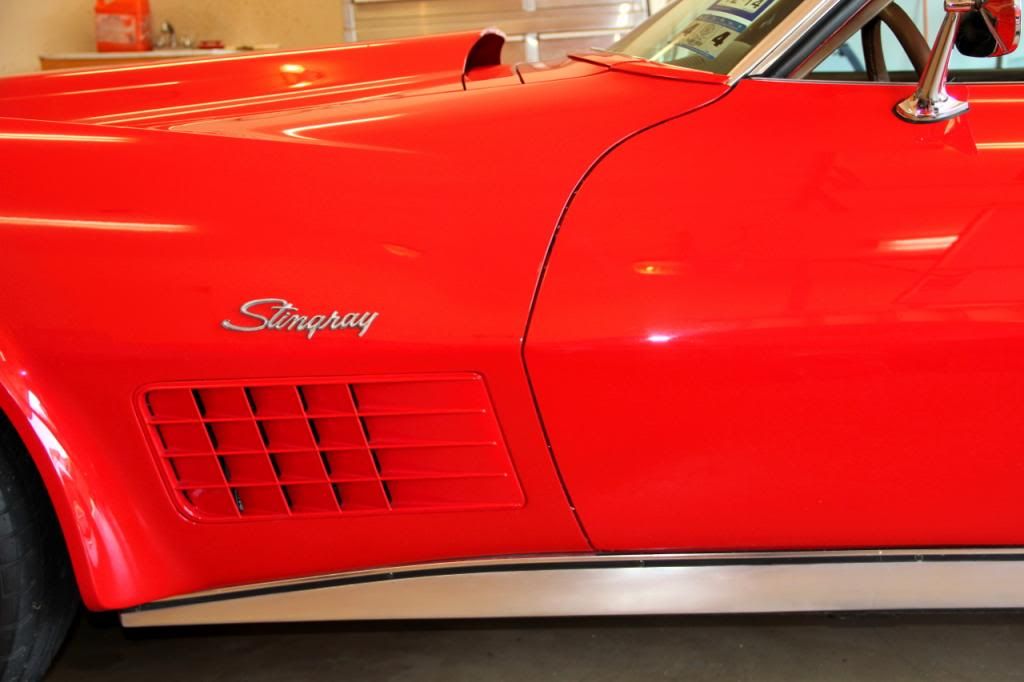
We never measured them, but these gaps were done by sticking a piece of 80-grit to a regular paint stirring stick and dragging it through the gaps until it slid easily. This was done before primer. The resulting gaps are a bit tighter than factory and, IMO, real nice.

Thread Starter
Burning Brakes


Joined: Jul 2013
Posts: 1,139
Likes: 82
Pictures can be misleading but these look a lot tighter and more accurate than the factory. I'm guessing this is to the far end of how tight you would want to go.
Thanks for the input, Great looking car, I can appreciate the time you have in the gaps!
Kevin
Thanks for the input, Great looking car, I can appreciate the time you have in the gaps!
Kevin
Race Director
Joined: Sep 1999
Posts: 11,361
Likes: 383
From: Plano TX
Yes, you're right. The gaps are at the absolute minimum without stuff starting to rub when opening the doors. We didn't use gelcoat, so if your plans include gelcoat you'd have to leave room for that. Or maybe you could re-cut the gaps after gelcoat (not sure?).
Found another picture. Same "paint stick with 80-grit" was used to cut the headlight gaps. It works amazingly well.

Found another picture. Same "paint stick with 80-grit" was used to cut the headlight gaps. It works amazingly well.
Last edited by zwede; Nov 2, 2015 at 04:13 PM.








