



Engine Bay
Thread Starter
Drifting


Joined: Mar 2009
Posts: 1,461
Likes: 361
From: Monson MA
 Engine Bay
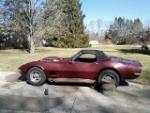
I've been restoring this 68 convertible for 7 years now. I'm in the engine bay at this point. I've sanded the complete bay. It was black as expected but umder the black was the original body color (Corvette Bronze). Anyway I need advice on the steps and materials to repaint. Do I need to use a polyester primer, sealer primer and than paint? All in put is appreciated. The engine bay again is sanded and scuffed up. I did manage to expose fiberglass in various spots. No way to avoid that.
Thanks,
Peter
Thanks,
Peter

Race Director


Joined: Apr 2009
Posts: 19,294
Likes: 2,753
From: Charlotte NC
A lot of it depends on how nice you want it to look.
YES...you can go in and apply a polyester primer and then sand it so you can seal it and then paint it.
OR...you can go in and apply PPG black epoxy primer and then paint on it. The possibility to very little to no sanding may be needed. The PPG epoxy primer DP90LV can be lightly sanded on and if the roughness in your exposed fiberglass areas. You can get it to fill those areas in.by applying more on it. AS you will see in the information below. The 'window' of time that the PPG epoxy primer can allow paint to be applied on it is quite long as how I read it but you can confirm this by calling them.
https://www.nedsautobodysupply.com/P...er_1_11_1_.pdf
The PPG DP90LF really does not like to be sanded on and it more of a 'wet-on-wet' type of primer so-to-speak.
At the bottom of the information I provided is the 1-800 phone number to PPG and if you have specific questions. I would call them so IF the information provided does not make sense or you have questions that are not being answered in that information. CALL THEM and ask.
What is odd about this information from PPG is that back in the day they used to put how many mils of product you were wanting to try to achieve. For some reason it is NOT in this information bulletin.
DUB
YES...you can go in and apply a polyester primer and then sand it so you can seal it and then paint it.
OR...you can go in and apply PPG black epoxy primer and then paint on it. The possibility to very little to no sanding may be needed. The PPG epoxy primer DP90LV can be lightly sanded on and if the roughness in your exposed fiberglass areas. You can get it to fill those areas in.by applying more on it. AS you will see in the information below. The 'window' of time that the PPG epoxy primer can allow paint to be applied on it is quite long as how I read it but you can confirm this by calling them.
https://www.nedsautobodysupply.com/P...er_1_11_1_.pdf
The PPG DP90LF really does not like to be sanded on and it more of a 'wet-on-wet' type of primer so-to-speak.
At the bottom of the information I provided is the 1-800 phone number to PPG and if you have specific questions. I would call them so IF the information provided does not make sense or you have questions that are not being answered in that information. CALL THEM and ask.
What is odd about this information from PPG is that back in the day they used to put how many mils of product you were wanting to try to achieve. For some reason it is NOT in this information bulletin.
DUB
Thread Starter
Drifting
Joined: Mar 2009
Posts: 1,461
Likes: 361
From: Monson MA
A lot of it depends on how nice you want it to look.
YES...you can go in and apply a polyester primer and then sand it so you can seal it and then paint it.
OR...you can go in and apply PPG black epoxy primer and then paint on it. The possibility to very little to no sanding may be needed. The PPG epoxy primer DP90LV can be lightly sanded on and if the roughness in your exposed fiberglass areas. You can get it to fill those areas in.by applying more on it. AS you will see in the information below. The 'window' of time that the PPG epoxy primer can allow paint to be applied on it is quite long as how I read it but you can confirm this by calling them.
https://www.nedsautobodysupply.com/P...er_1_11_1_.pdf
The PPG DP90LF really does not like to be sanded on and it more of a 'wet-on-wet' type of primer so-to-speak.
At the bottom of the information I provided is the 1-800 phone number to PPG and if you have specific questions. I would call them so IF the information provided does not make sense or you have questions that are not being answered in that information. CALL THEM and ask.
What is odd about this information from PPG is that back in the day they used to put how many mils of product you were wanting to try to achieve. For some reason it is NOT in this information bulletin.
DUB
YES...you can go in and apply a polyester primer and then sand it so you can seal it and then paint it.
OR...you can go in and apply PPG black epoxy primer and then paint on it. The possibility to very little to no sanding may be needed. The PPG epoxy primer DP90LV can be lightly sanded on and if the roughness in your exposed fiberglass areas. You can get it to fill those areas in.by applying more on it. AS you will see in the information below. The 'window' of time that the PPG epoxy primer can allow paint to be applied on it is quite long as how I read it but you can confirm this by calling them.
https://www.nedsautobodysupply.com/P...er_1_11_1_.pdf
The PPG DP90LF really does not like to be sanded on and it more of a 'wet-on-wet' type of primer so-to-speak.
At the bottom of the information I provided is the 1-800 phone number to PPG and if you have specific questions. I would call them so IF the information provided does not make sense or you have questions that are not being answered in that information. CALL THEM and ask.
What is odd about this information from PPG is that back in the day they used to put how many mils of product you were wanting to try to achieve. For some reason it is NOT in this information bulletin.
DUB
Race Director
Joined: Apr 2009
Posts: 19,294
Likes: 2,753
From: Charlotte NC
It is hard for me to actually tell you what way to do it. Simply because IF you shoot the polyester primer all wrong and mess it up and you have dry spray and bad texture...then sanding out all of your 'nooks and crannies' can be a ROYAL PAIN in the backside. Knowing you want it he BEST it can be...but making the right choice and using that product to the best it can be used can allow you to achieve the end result you want. Hopefully that made sense.
The same holds true to if you used gelcoat or even epoxy primer. It will depend on how you apply it and if you can figure out how to apply a specific product that you can adjust it to get it to lay down SLICK and make the next step EASIER on you.
I can do it any way we have mentioned BUT I also know that when I am prepping the firewall I will look at it carefully and over the years I know what to use or how to adjust a product to get it to work for me so I am saving time and aggravation.
Gelcoat, polyester primer and even the epoxy primer can work... and I bet if you did three different firewalls with these different products...the end result can come out looking darn near the same...but the time and effort invested may be totally different....due to how these products were applied.
DUB
The same holds true to if you used gelcoat or even epoxy primer. It will depend on how you apply it and if you can figure out how to apply a specific product that you can adjust it to get it to lay down SLICK and make the next step EASIER on you.
I can do it any way we have mentioned BUT I also know that when I am prepping the firewall I will look at it carefully and over the years I know what to use or how to adjust a product to get it to work for me so I am saving time and aggravation.
Gelcoat, polyester primer and even the epoxy primer can work... and I bet if you did three different firewalls with these different products...the end result can come out looking darn near the same...but the time and effort invested may be totally different....due to how these products were applied.
DUB
Thread Starter
Drifting
Joined: Mar 2009
Posts: 1,461
Likes: 361
From: Monson MA
Boy Dub, you keep my head spinning. I thank you for that. So on a 1968, bare fiberglass, are you saying that epoxy primer can be used? I was under the impression that FRP (1968) we use Polyester. Can you set me straight on this. As a note, any bare spots in the engine bay are smooth and not frayed. With a bit of test, I am confident I will be able to adjust the materials to work for me.
Thank you again for all you input.
Thank you again for all you input.
Race Director
Joined: Apr 2009
Posts: 19,294
Likes: 2,753
From: Charlotte NC
Sorry that I get your head spinning but there are variables that are unknown to me that makes this not just a simple one answer reply to the question you are asking about. I know I could say shoot polyester primer on it and know you are going to work your backside off to get it right and move on to the next thread that catches my eye. But I am not like that and there are options as like I previously stated.
Epoxy primer can be applied on any type of bare fiberglass body panel GM made. And some polyester primers can be applied on top of epoxy primer because I do it that way when needed.
We are talking about a firewall. Which I do not discount as being an important area of the car that a person wants to look good BUT it is not the same as that of the exterior which gets much more abuse from environmental things such as weather and the sun and rain and stuff like that. And if you have an issue on the firewall it is not as bad as that as a huge bubble in the center of your hood.
SO..I GENERALLY DO NOT use epoxy primer on the exterior of your car. I use gelcoat as my first layer. Keeping in mind I am referring ONLY to a polyester body panel and NOT an SMC body panel where I DO use epoxy primer. Because I DO NOT gelcoat on top of SMC.
So...if you wanted your firewall PERFECT where there is absolutely NO texture and your sand and buff it out to make it look like it was dipped in baby oil like you see on some the the cars at a SEMA show where they can spend hundreds of hours on the firewall. THEN I would take another route due to wanting the end result to be absolute perfection and NOT ONE glitch anywhere. BUT ONCE AGAIN...it all depends on how the fiberglass is on the firewall. Because I can still make it look like a car ready for SEMA and not have to take the most extreme method to get it to look that way. Keeping in mind also that this is not a trailer queen but the car is going to be enjoyed and driven...which DOES take it to another level due to it will possibly see some effects from the engine running and heat from it and so on so PREP is still PARAMOUNT for maximum adhesion.
Keep in mind that HOPEFULLY you are applying a semi gloss or satin black paint due to IF you go GLOSSY black paint...or clear over it.. It will show up EVERY imperfection you may have in it...including any small specs of lint that lay on the surface.
Hopefully your head has stopped spinning.....because you CAN do as you initially thought and that is to apply polyester primer...sand it and then seal it and paint it. If your concerns IF the epoxy method is worth the effort to try out.
KEEP IN MIND that ANY paint you still have on the firewall...can be an area where the chemicals or solvents in whatever you apply on it can cause it to wrinkle or lift up IF that initial coat being applied ON TOP OF IT is applied way too heavy or thick.. NOT saying that it WILL happen,...but it can happen. A slight lifting or wrinkling at the edges of any paint where it stops and then exposed bare fiberglass begins. The 'funny' thing here is you need to get it wet enough to allow whatever is in the product being applied to penetrate in and provide the possibly the chemical adhesion factor designed into that product ...so it does need to be slightly wet. But not soaking wet to the point where the solvents or chemicals in the product now are there and do to the volume of it. It can now penetrate more into whatever it is being applied on. USUALLY epoxy primer and polyester primers do not do this but it can happen if you go in and flood the panel with them.
DUB
Epoxy primer can be applied on any type of bare fiberglass body panel GM made. And some polyester primers can be applied on top of epoxy primer because I do it that way when needed.
We are talking about a firewall. Which I do not discount as being an important area of the car that a person wants to look good BUT it is not the same as that of the exterior which gets much more abuse from environmental things such as weather and the sun and rain and stuff like that. And if you have an issue on the firewall it is not as bad as that as a huge bubble in the center of your hood.
SO..I GENERALLY DO NOT use epoxy primer on the exterior of your car. I use gelcoat as my first layer. Keeping in mind I am referring ONLY to a polyester body panel and NOT an SMC body panel where I DO use epoxy primer. Because I DO NOT gelcoat on top of SMC.
So...if you wanted your firewall PERFECT where there is absolutely NO texture and your sand and buff it out to make it look like it was dipped in baby oil like you see on some the the cars at a SEMA show where they can spend hundreds of hours on the firewall. THEN I would take another route due to wanting the end result to be absolute perfection and NOT ONE glitch anywhere. BUT ONCE AGAIN...it all depends on how the fiberglass is on the firewall. Because I can still make it look like a car ready for SEMA and not have to take the most extreme method to get it to look that way. Keeping in mind also that this is not a trailer queen but the car is going to be enjoyed and driven...which DOES take it to another level due to it will possibly see some effects from the engine running and heat from it and so on so PREP is still PARAMOUNT for maximum adhesion.
Keep in mind that HOPEFULLY you are applying a semi gloss or satin black paint due to IF you go GLOSSY black paint...or clear over it.. It will show up EVERY imperfection you may have in it...including any small specs of lint that lay on the surface.
Hopefully your head has stopped spinning.....because you CAN do as you initially thought and that is to apply polyester primer...sand it and then seal it and paint it. If your concerns IF the epoxy method is worth the effort to try out.
KEEP IN MIND that ANY paint you still have on the firewall...can be an area where the chemicals or solvents in whatever you apply on it can cause it to wrinkle or lift up IF that initial coat being applied ON TOP OF IT is applied way too heavy or thick.. NOT saying that it WILL happen,...but it can happen. A slight lifting or wrinkling at the edges of any paint where it stops and then exposed bare fiberglass begins. The 'funny' thing here is you need to get it wet enough to allow whatever is in the product being applied to penetrate in and provide the possibly the chemical adhesion factor designed into that product ...so it does need to be slightly wet. But not soaking wet to the point where the solvents or chemicals in the product now are there and do to the volume of it. It can now penetrate more into whatever it is being applied on. USUALLY epoxy primer and polyester primers do not do this but it can happen if you go in and flood the panel with them.
DUB
Corvette Stories
The Best of Corvette for Corvette Enthusiasts

Top 10 Corvette Engines RANKED by Peak Torque (70+ Years of Muscle!)
Joe Kucinski
Corvette ZR1X Will Be Pacing the Indy 500, And Could Probably Race, Too!
Verdad Gallardo
Top 10 Corvettes Coming to Mecum Indy 2026!
Brett Foote
Top 10 C9 Corvette MUST-HAVES to Fix These C8 Generation Flaws!
Michael S. Palmer
10 Revolutionary 'Corvette Firsts' Most People Don't Know
Joe Kucinski
5 Reasons to Upgrade to an LS6-Powered Corvette; 5 Reasons to Stay LT2
Michael S. Palmer
2027 Corvette vs The World: Every C8 vs Its Closest Competitor
Joe Kucinski
10 Most Common Corvette Problems of the Last 20 Years!
Joe Kucinski
5 MOST and 5 LEAST Popular Corvette Model Years in History!
Joe Kucinski


Thread Starter
Drifting
Joined: Mar 2009
Posts: 1,461
Likes: 361
From: Monson MA
Firewall
Thank you rvzio, what you have done is what I would like to accomplish. Would you mind sharing your process and materials used. I have the entire area sanded. Did you apply a high build primer, sealer than paint. What is the final paint. Thank you again for chiming in. Between DUB and your information, I am confident in a great result.
Peter
Peter
Race Director
Joined: Apr 2009
Posts: 19,294
Likes: 2,753
From: Charlotte NC
Keep in mind that I know you wrote that you have the entire area sanded...but in 'rvzio's' first photo you can see that the paint and primer were removed.
Like I previously wrote. even though the area has been sanded on...if leaving paint and primer on areas can possibly cause for an issue when you go and apply a product to it.
I am not saying it all has to come off...but if it is not on the surface than it can not cause for an issue.
DUB
Like I previously wrote. even though the area has been sanded on...if leaving paint and primer on areas can possibly cause for an issue when you go and apply a product to it.
I am not saying it all has to come off...but if it is not on the surface than it can not cause for an issue.
DUB

Safety Car


Joined: Jun 2013
Posts: 4,399
Likes: 792
PPG k36 primer and Hot Rod Matte black. Didn't want it real shiny. When it's first applied it all most looks like a gloss. Once it cures it's perfect. I liked it because I could get a good touch up match with Krylon #1613 semi flat black just in case I needed to do that.................................... ...........
Sorry to jump in the middle !
Sorry to jump in the middle !

Drifting
Joined: Apr 2014
Posts: 1,766
Likes: 78
From: montague michigan
C2 of Year Finalist (stock) 2019

PPG k36 primer and Hot Rod Matte black. Didn't want it real shiny. When it's first applied it all most looks like a gloss. Once it cures it's perfect. I liked it because I could get a good touch up match with Krylon #1613 semi flat black just in case I needed to do that.................................... ...........
Sorry to jump in the middle !
Sorry to jump in the middle !
 that is exactly what i did on my 65 rvzio! it turned out great.and with out Dubs guidence it would not have turned out this nice!!.. i am going too do the same thing on my 68 im doing now.. the krylon 1613 does match perfect also! troy
Last edited by 20round; Dec 14, 2018 at 09:32 AM.


