










Spark Plug Gap

Thread Starter
Heel & Toe

Joined: Sep 2007
Posts: 24
Likes: 0
 Spark Plug Gap
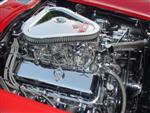
I have a '71 with a 420hp 383 stroker crate engine, with an MSD Digital 6AL ignition, MSD Billet Corvette ditributor, MSD Blaster 2 Coil and MSD wires. Anyone have a suggestion as to what gap I should be using on the plugs?
Thanks!
Thanks!
Last edited by everest29; Mar 20, 2008 at 08:39 PM. Reason: Left out the Blaster Coil...

Le Mans Master


Joined: Dec 2003
Posts: 5,727
Likes: 38
From: Fremont CA
GM originally recommened 0.060" gap on HEI ignitions in 1975-77 but soon found out those large spark gaps created multiple problems with ignition wiring/rotor buttons and other ignition parts. Large gaps are not commonly used today a gap of 0.032-0.035" with conventional ignitions and 0.040-0.045" running a MSD type ignition are generally used by most engine builders. If you like your plug wires, run 0.040" spark plug gaps

Burning Brakes

Joined: Dec 2007
Posts: 952
Likes: 0
GM originally recommened 0.060" gap on HEI ignitions in 1975-77 but soon found out those large spark gaps created multiple problems with ignition wiring/rotor buttons and other ignition parts. Large gaps are not commonly used today a gap of 0.032-0.035" with conventional ignitions and 0.040-0.045" running a MSD type ignition are generally used by most engine builders. If you like your plug wires, run 0.040" spark plug gaps
Corvette Stories
The Best of Corvette for Corvette Enthusiasts

Top 10 Most Expensive Corvettes Ever Sold on Bring A Trailer
Brett Foote
10 Things Every Corvette Owner Needs (2026 Edition)
Michael S. Palmer
8 Most "Only Corvette Owners Understand" Quirks and Problems
Pouria Savadkouei
10 Reasons the C6 Z06 is Still A Performance Benchmark After 20 Years
Joe Kucinski
How Much Horsepower Every Corvette Engine "LOST" in 1972
Joe Kucinski
Top 10 DOs and DON'Ts for Protecting Your Convertible Top!
Michael S. Palmer
Top 10 Most Explosive Corvettes Ever Made: Power-to-Weight Ratio Ranked!
Joe Kucinski
150 hp to 1,250 hp: Every Corvette Generation Compared by the Specs That Matter
Joe Kucinski
8 Coolest Corvette Pace Cars (and Replicas) of All Time
Verdad Gallardo
Burning Brakes
Joined: Jul 2006
Posts: 1,047
Likes: 12
From: SoCal
MSD recommends .050 - .060:
Here's a link to MSD's installation instructions (which also contains general info on their 6 series boxes): http://www.msdignition.com/pdf/6%20series/6series.pdf
These examples are just starting points to get you going in the right direction.Every application is different and should be tested and tuned.
Compression Spark Plug Gap
Up to 10.5:1: 0.050" - 0.060"
10.5:1 - 13.0:1: 0.040" - 0.050"
Above 13.0:1: 0.035" - 0.045"
Compression Spark Plug Gap
Up to 10.5:1: 0.050" - 0.060"
10.5:1 - 13.0:1: 0.040" - 0.050"
Above 13.0:1: 0.035" - 0.045"
Last edited by VCuomo; Mar 21, 2008 at 10:21 PM.

Tech Contributor


Joined: Aug 1999
Posts: 14,380
Likes: 6,390
From: At my Bar drinking and wrenching in Lafayette Colorado
GM originally recommened 0.060" gap on HEI ignitions in 1975-77 but soon found out those large spark gaps created multiple problems with ignition wiring/rotor buttons and other ignition parts. Large gaps are not commonly used today a gap of 0.032-0.035" with conventional ignitions and 0.040-0.045" running a MSD type ignition are generally used by most engine builders. If you like your plug wires, run 0.040" spark plug gaps
The HEI was developed and released as part of the emissions control package in 1975. The engines at that time were low compression engines, and they were set up to run very lean. A lean mixture is harder to "light off" than a "correct" mixture, so the HEI system was used so that a much wider plug gap could be used. This would ensure that the lean mixture would ignite and burn.
When a wider plug gap is used, there is more resistance across the gap, and more energy is required to jump the gap. Increased compression will also increase the resistance across the gap. The wide plug gap could be used on the smogger engines because the compression was low. If you use a wide gap with high compression, you can get the resistance across the plug gap so high that the plug simply won't fire: the HEI spark or MSD spark will jump at the point of lowest resistance. This can become the plug wire boots, the inside of the distributor cap, or right through the plug wires if plug gap resistance (from the combined effects of gap and compression) is high enough.
Keeping this in mind, it is important to note that you cannot run an "HEI Plug Gap" (some gaps in the mid-70's were in the .060" range) on a high compression engine, even though you have the HEI system or an MSD. You will, in fact, get plug misfires from the high energy spark jumping any point of lower resistance rather than across the plug. For this reason, most high performance applications with HEI or MSD use plug gaps in the .035 - .040" range. This assures that the spark stays at the plug and does not move to the inside of the cap or goes through the wire insulation... If you have a modest compression engine, you can run a wider gap, but you have little, if anything, to gain. If you want to assure that your high perfromance engine is firing at the spark plugs, run plug gaps in the .035" - .040" range.


Burning Brakes
Joined: Jul 2006
Posts: 1,047
Likes: 12
From: SoCal
Hmmm...I have pretty much the same setup as the OP (383 w/all MSD ignition system), about 10.5:1 compression, and no smog equipment. I've got the plugs gapped at .050", which is the shortest gap that MSD recommends for that compression ratio.
Are you saying that I should ignore MSD and regap my plugs to .035" - .040"?
Are you saying that I should ignore MSD and regap my plugs to .035" - .040"?

Tech Contributor
Joined: Aug 1999
Posts: 14,380
Likes: 6,390
From: At my Bar drinking and wrenching in Lafayette Colorado
At Westech Performance (they're the guys who do all the engine dyno testing for Hot Rod, Car Craft, and most of the other performance magazines), I have had the unique opportunity to play with some of their test equipment.
Amongst all the amazing test equipment they have, they have a really cool piece of equipment that they've built themselves: It's a SUN distributor machine that's been modified with a pressure chamber that you can install the spark plugs into. Each spark plug has a little viewing window so you can actually see the spark at the plug while the distributor is spinning and firing. The chamber has a pressure regulator on it, so you can adjust the pressure that the spark plug is exposed to (the spark plug is exposed to the dynamic compression ratio as the piston comes up on TDC on the compression stroke, and this varies by static compression ratio and the engine's volumetric efficiency - V/E). Their "normal" ignition configuration for this machine is an MSD system, so they have plenty of voltage potential to "light the fire" at the plug.
Here is what I have personally seen on this machine while playing with it - these are just the facts, and you can argue this with me all you want - I have personally seen the following:
As the spark plug chamber pressure gets into the 200 psi range (not an uncommon pressure to see on a high compression engine with good V/E), and rpm gets up into the usable power rpm range, spark plugs with gaps exceeding .045" will actually stop firing. Plain and simple: The plugs simply don't fire any more, and you can see the spark jumping across plug boots, wires, and off the distributor cap to engine ground. There is a big difference in the brand of plug used - some brands will fire with wider gaps than others, and some plugs will stop firing at shockingly low pressures and gaps. Some of the best plugs I tested on the machine were the plain ol' Autolite Resistor plugs, and some of the worst plugs were the "exotic metal" plugs. The "safe" plug gap range for an engine running cylinder pressures in the 200 psi range was .035 - .040". Any gap wider than .045" made the spark plug highly likely to misfire or not fire at all unless the cylinder pressure was reduced to mimic the pressure of a low-compression smogger engine. Increasing plug voltage made no difference at all - the spark simply jumped someplace other than at the plug gap.
So if you have a high compression performance engine, and you want to make sure your plugs are always firing, keep the gaps modest. The wider your gap, the greater the chances are that you're not always firing on all cylinders - I've seen it with my own eyes while testing on the Westech plug machine. If your engine runs great with .050" gaps, that's fine. But I'm running mine at .040", and I know my plugs are all firing every time. I also set up all the engines I build with .035" - .040" gaps so I know they're firing on all cylinders all the time as well.
If you are running at high altitude, or if you have a cam profile that does not produce high V/E at high rpm, you can run slightly larger gaps due to the lower cylinder pressure that the plug is exposed to. But I don't know that you really have anything to gain by doing so...
Last edited by lars; Feb 16, 2013 at 11:03 PM.




Tech Contributor


Joined: Jun 2004
Posts: 20,905
Likes: 962
From: I tend to be leery of any guy who doesn't own a chainsaw or a handgun.
Lars, I'm certainly not calling BS, but I guess I don't have the same confidence in spark plug pressure vessels that your dyno aquaintance does. I've used them for decades to put a bit of load and stress on the coils and ignition controller switching transistors, but it's an artificial environment for the plugs. The compressed air in the vessel is usually room temperature, and full of ozone unless continually purged. The plug electrodes aren't hot (or carboned) as they would be in an engine, and the level of swirl/turbulence is generally much less than in a cylinder. The turbulence in a cylinder frequently blows out the arc, causing the ignition to multistrike the plugs (inductive systems do this all the time, not just CD systems) to keep the arc going, and wil continue to do this until the coil energy is exhausted, or just too low to charge up all the plug wiring capacitance to a high enough voltage to arc the plug gap.
I do agree with your comments on plug gaps with regards to compression/cylinder pressure.
As we both know, there's no free lunch in the ignition world, and the result is a bigger gap causes a shorter arc duration. There's only so much energy in the coil, and it will be used up as high voltage (large gap) and short duration, or lower voltage (small gap) and longer plug arc duration.
Just my experience with bunches of test cars, dyno time, and lab bench seat time.
I do agree with your comments on plug gaps with regards to compression/cylinder pressure.
As we both know, there's no free lunch in the ignition world, and the result is a bigger gap causes a shorter arc duration. There's only so much energy in the coil, and it will be used up as high voltage (large gap) and short duration, or lower voltage (small gap) and longer plug arc duration.
Just my experience with bunches of test cars, dyno time, and lab bench seat time.
Tech Contributor
Joined: Aug 1999
Posts: 14,380
Likes: 6,390
From: At my Bar drinking and wrenching in Lafayette Colorado
Note that this is a 5-year-old thread that someone dug up out of the archives, so the Mods will probably shut this down pretty quick...
I agree: The static pressure tester for the plug spark test does not accurately represent a running cylinder, so the pressure data cannot be directly translated to operating cylinder conditions. It does, however, provide a comparative test of ignition system components, such as the plugs themselves, and it allows comparative testing of other system components. It also demonstrates my point that a big, wide gap may not be optimal for a high compression engine using a stock HEI or other near-stock components: Once resistance gets too high at the plug, the spark is going to go someplace else. And resistance at the plug increases with gap and pressure.
Lars
I agree: The static pressure tester for the plug spark test does not accurately represent a running cylinder, so the pressure data cannot be directly translated to operating cylinder conditions. It does, however, provide a comparative test of ignition system components, such as the plugs themselves, and it allows comparative testing of other system components. It also demonstrates my point that a big, wide gap may not be optimal for a high compression engine using a stock HEI or other near-stock components: Once resistance gets too high at the plug, the spark is going to go someplace else. And resistance at the plug increases with gap and pressure.
Lars