






High altitude carburation?
Thread Starter
Advanced

Joined: Feb 2013
Posts: 90
Likes: 1
 High altitude carburation?
Edit: I just realized I posted this in the wrong section. Moderators, if you'd like to move it, please do.
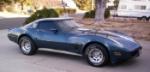
A little background: I just bought an 81 C3 that has a 383 with a Demon 650 cfm carb. The previous owner (John) bought it from a guy (Brian) in Kentucky and had the car shipped here. Brian built the 383 (in Kentucky...~1000 ft) and set it up with carb, big cam, ported alum. heads, headers, and dual exhaust. He then had the engine tuned on an engine dyno and it dynoed 407HP/439lb-ft (I have a hard copy of the dyno sheet...it's a beautiful smooth graph).
So, when John had it shipped here to northern NM (~5000 ft), he didn't adjust it for the altitude. Now, I've bought it and I live/work at 6500/7000 ft. It's powerful, but it doesn't feel anywhere near 407HP/439TQ. (For comparison, I've got a Trailblazer SS w/LS2 that has 410HP/420TQ at sea level and it MOOOVES...while weighing 1200 lbs more). There's always a gas smell after driving the car and it's only getting 10-11 mpg.
I've been reading that I need to have it rejetted for the higher altitude.
Can anyone give me some info on what size jets I'll need for this altitude? I've never done anything with a carbed engine before. I'm guessing that I'll need one of the biggest sizes, but I don't want to go too lean and blow up my engine.
thanks,
-Tim
A little background: I just bought an 81 C3 that has a 383 with a Demon 650 cfm carb. The previous owner (John) bought it from a guy (Brian) in Kentucky and had the car shipped here. Brian built the 383 (in Kentucky...~1000 ft) and set it up with carb, big cam, ported alum. heads, headers, and dual exhaust. He then had the engine tuned on an engine dyno and it dynoed 407HP/439lb-ft (I have a hard copy of the dyno sheet...it's a beautiful smooth graph).
So, when John had it shipped here to northern NM (~5000 ft), he didn't adjust it for the altitude. Now, I've bought it and I live/work at 6500/7000 ft. It's powerful, but it doesn't feel anywhere near 407HP/439TQ. (For comparison, I've got a Trailblazer SS w/LS2 that has 410HP/420TQ at sea level and it MOOOVES...while weighing 1200 lbs more). There's always a gas smell after driving the car and it's only getting 10-11 mpg.
I've been reading that I need to have it rejetted for the higher altitude.
Can anyone give me some info on what size jets I'll need for this altitude? I've never done anything with a carbed engine before. I'm guessing that I'll need one of the biggest sizes, but I don't want to go too lean and blow up my engine.
thanks,
-Tim
Last edited by TightFit; Mar 15, 2013 at 10:06 PM.

C3 Corvette Enthusiast


Joined: May 2008
Posts: 1,071
Likes: 3
The carb will have to be leaned at least. It's best to find somebody who is good with carb equipped cars to do the adjustments. Yes, you may have to have it rejetted.
I live @ 5000 feet elevation and had to rejet my Edelbrock 750 vacuum secondary carb to get optimal power and pass emissions. It was originally set for sea level operations.
I live @ 5000 feet elevation and had to rejet my Edelbrock 750 vacuum secondary carb to get optimal power and pass emissions. It was originally set for sea level operations.

Pro


Joined: May 2011
Posts: 722
Likes: 58
From: Karlsruhe (Germany)
Reduce transistion and main jet size by 2 numbers, and see what happens.
If your engine gets trouble running rich at this altitude, it was already very rich at sea level.
My engine was set at bit to rich at sea level, but head no problems at 7500ft. It was a bit weaker, but no gasoline smell.
If you want to make it perfect get a O² sensor.
If your engine gets trouble running rich at this altitude, it was already very rich at sea level.
My engine was set at bit to rich at sea level, but head no problems at 7500ft. It was a bit weaker, but no gasoline smell.
If you want to make it perfect get a O² sensor.
Thread Starter
Advanced
Joined: Feb 2013
Posts: 90
Likes: 1
Thanks for the replies, guys.
Correct me if I'm wrong, but doesn't high altitude make a carb tuned for sea level become too rich? (not as much air)
Good solution...If only I could afford it. 
Reduce transistion and main jet size by 2 numbers, and see what happens.
If your engine gets trouble running rich at this altitude, it was already very rich at sea level.
My engine was set at bit to rich at sea level, but head no problems at 7500ft. It was a bit weaker, but no gasoline smell.
If you want to make it perfect get a O² sensor.
If your engine gets trouble running rich at this altitude, it was already very rich at sea level.
My engine was set at bit to rich at sea level, but head no problems at 7500ft. It was a bit weaker, but no gasoline smell.
If you want to make it perfect get a O² sensor.
Last edited by TightFit; Mar 15, 2013 at 09:05 PM.

Team Owner


Joined: Jan 2006
Posts: 37,637
Likes: 3,118
From: Crossville TN
From 1000 ft to 6000ft altitude, your engine will lose about 15% of its power (roughly 3% per 1000 feet of altitude change). So, that 407 hp engine would be putting out about 347 hp at 6000 ft. That's still a pretty good 'kick in the pants'.
If you didn't get to test the car out at 1000 ft, the only things that provide evidence of that engine's power are the seller's "story" and that "chart". I hope the power loss is due to the altitude change.
If you didn't get to test the car out at 1000 ft, the only things that provide evidence of that engine's power are the seller's "story" and that "chart". I hope the power loss is due to the altitude change.
Thread Starter
Advanced
Joined: Feb 2013
Posts: 90
Likes: 1
If you didn't get to test the car out at 1000 ft, the only things that provide evidence of that engine's power are the seller's "story" and that "chart". I hope the power loss is due to the altitude change.


Race Director


Joined: Jan 2000
Posts: 12,399
Likes: 247
From: San Jose CA
From 1000 ft to 6000ft altitude, your engine will lose about 15% of its power (roughly 3% per 1000 feet of altitude change). So, that 407 hp engine would be putting out about 347 hp at 6000 ft. That's still a pretty good 'kick in the pants'.
If you didn't get to test the car out at 1000 ft, the only things that provide evidence of that engine's power are the seller's "story" and that "chart". I hope the power loss is due to the altitude change.
If you didn't get to test the car out at 1000 ft, the only things that provide evidence of that engine's power are the seller's "story" and that "chart". I hope the power loss is due to the altitude change.
Also, the number you got from the engine builder is likely on an engine dyno with shop headers, whereas your TB's numbers are going to be the actual installed power.
Good luck OP. Learn how to tune, it's worthwhile.
Lars has some good docs on tuning Holleys and QJets without a wideband.
Corvette Stories
The Best of Corvette for Corvette Enthusiasts

Every 2027 Corvette Engine Explained
Joe Kucinski
Designer Imagines A Corvette That Looks More Like a Corvette Than the Corvette
Verdad Gallardo
10 Ugly Corvettes That We Still Kinda Love
Joe Kucinski
Top 10 Most Expensive Corvettes Ever Sold on Bring A Trailer
Brett Foote
10 Things Every Corvette Owner Needs (2026 Edition)
Michael S. Palmer
8 Most "Only Corvette Owners Understand" Quirks and Problems
Pouria Savadkouei
10 Reasons the C6 Z06 is Still A Performance Benchmark After 20 Years
Joe Kucinski
How Much Horsepower Every Corvette Engine "LOST" in 1972
Joe Kucinski
Top 10 DOs and DON'Ts for Protecting Your Convertible Top!
Michael S. Palmer
Thread Starter
Advanced
Joined: Feb 2013
Posts: 90
Likes: 1
Also, the number you got from the engine builder is likely on an engine dyno with shop headers, whereas your TB's numbers are going to be the actual installed power.
Good luck OP. Learn how to tune, it's worthwhile.
Lars has some good docs on tuning Holleys and QJets without a wideband.
Lars has some good docs on tuning Holleys and QJets without a wideband.
I've thought about going with fuel injection, but the FAST systems are gawd-awful expensive (looks like a minimum of ~$2500). For that, I'll learn to tune a carb.
Race Director
Joined: Jan 2000
Posts: 12,399
Likes: 247
From: San Jose CA
Yup. I'd love to branch out from QJets and EFI and learn to tune Edelbrocks and Holleys, but there aren't many people in my local clubs running these things anymore...
A shop dyno will typically run an off-motor water pump, may not even run an alternator.
A shop dyno will typically run an off-motor water pump, may not even run an alternator.
Race Director
Joined: Jan 2000
Posts: 12,399
Likes: 247
From: San Jose CA
Take a look at this thread to see what a shop dyno setup looks like.
http://forums.corvetteforum.com/c3-g...run-today.html
http://forums.corvetteforum.com/c3-g...run-today.html
Thread Starter
Advanced
Joined: Feb 2013
Posts: 90
Likes: 1
Take a look at this thread to see what a shop dyno setup looks like.
http://forums.corvetteforum.com/c3-g...run-today.html
http://forums.corvetteforum.com/c3-g...run-today.html


Tech Contributor


Joined: Aug 1999
Posts: 14,382
Likes: 6,402
From: At my Bar drinking and wrenching in Lafayette Colorado
I do a lot of dyno tuning up here at 5,000 in Denver, and I ship a lot of the engines I build to sea level. We're down almost 20% on power compared to sea level at this altitude, so don't be surprised at the power loss.
If the engine was correctly set up on the dyno at 1000 ft., you can drop jet sizes 2 numbers on both primary and secondary sides of the carb for your current elevation. This will restore the dyno-tuned air/fuel ratio numbers. You will also need to re-set the idle mixtures. This may give you back a little bit of throttle response, but it's not going to make a huge difference in power. What will gain you more is to bump the timing up a couple of degrees: You can run more total timing at high altitude, and this will give you a bigger power gain than the re-jetting. I just ran an engine on the dyno yesterday, set to a sea-level optimized 34 degrees total. Bumping the timing to 38 total gained 10 horsepower. I also tried 40, but the power did not change from the 38 setting, so I dropped it back down to the 38 total spec. If you have the dyno sheets, they should indicate what they set the timing to - add a few degrees to that number, drop your jetting by 2, and re-set idle mixtures. That will get you as optimized as you're going to get.
Lars
If the engine was correctly set up on the dyno at 1000 ft., you can drop jet sizes 2 numbers on both primary and secondary sides of the carb for your current elevation. This will restore the dyno-tuned air/fuel ratio numbers. You will also need to re-set the idle mixtures. This may give you back a little bit of throttle response, but it's not going to make a huge difference in power. What will gain you more is to bump the timing up a couple of degrees: You can run more total timing at high altitude, and this will give you a bigger power gain than the re-jetting. I just ran an engine on the dyno yesterday, set to a sea-level optimized 34 degrees total. Bumping the timing to 38 total gained 10 horsepower. I also tried 40, but the power did not change from the 38 setting, so I dropped it back down to the 38 total spec. If you have the dyno sheets, they should indicate what they set the timing to - add a few degrees to that number, drop your jetting by 2, and re-set idle mixtures. That will get you as optimized as you're going to get.
Lars


Advanced
Joined: Dec 2003
Posts: 57
Likes: 0
From: San Jose CA
To echo Lars comments, I moved from Arlington, VA (sea level) to Santa Fe, NM (7000 feet) and felt a decent loss of power - approx 15 - 20 % on my 80 Vette with a Holley. Jetting helped a little, but bumping up the timing made the most discernible difference.
My neighbor has a 1971 camaro with a built 383 and his dyno is off significantly as well from previous lower altitude. He also bumped timing with no apparent ill effects. I am not an expert but it seems to help a bit and the altitude allows for more leeway absent detonation.
My neighbor has a 1971 camaro with a built 383 and his dyno is off significantly as well from previous lower altitude. He also bumped timing with no apparent ill effects. I am not an expert but it seems to help a bit and the altitude allows for more leeway absent detonation.
Le Mans Master

Joined: Apr 2011
Posts: 6,284
Likes: 1,171
From: Hermosa
You can run more total timing at high altitude, and this will give you a bigger power gain than the re-jetting.
One more mod that will help is if the accelerator pump squirt is adjustable to reduce the fuel supplied by the pump. I'm not familiar with the demon 650, but on the q-jet it can be reduced by changing the point at which the linkage is connected.
I found that at altitude the accelerator pump shot is too much fuel making it rich on initial actuation of the throttle. No real affect at cruise rpm but makes a big difference when you stomp the throttle.
Last edited by REELAV8R; Mar 16, 2013 at 12:05 PM.
Thread Starter
Advanced
Joined: Feb 2013
Posts: 90
Likes: 1
Some more info on my car: I measured the vacuum at idle and it's ~8.5 in. Hg.
I also measured the ignition timing at idle which is 16*. I noticed that the vacuum advance on the HEI is not hooked up (it's plugged). I'm thinking that may be robbing me of some part-throttle power (and some fuel economy).
I also measured the ignition timing at idle which is 16*. I noticed that the vacuum advance on the HEI is not hooked up (it's plugged). I'm thinking that may be robbing me of some part-throttle power (and some fuel economy).
Le Mans Master
Joined: Apr 2011
Posts: 6,284
Likes: 1,171
From: Hermosa
At 8.5 inmg it sounds like the cam used has a pretty decent amount of overlap, good for ultimate power not so good for low end torque, especially at your altitude it may be a bit low.
Does it have the RPM intake? That one I believe has the cut down center divider and is designed to make power at high rpms. This will have a negative effect on your low end torque as well.
Matt Gruber has what seems to be a good helper for doggy low ends by using a 4 hole carb to intake gasket instead of the open hole gasket.
16* of initial advance sounds pretty good. You can try loosening it up and advancing or retarding it to see where the idle is the highest. Have you looked at the springs being used on the mech advance. they may be too strong and you might need to re curve the ignition for it to advance sooner. This means using weaker spring(s) to accomplish this. I'm guessing you can hook up the vacuum advance. If it starts to detonate at cruise with light throttle then get an adjustable vacuum can and back it off till deto stops or you may need to back off the initial a little. If you run into detonation with heavy acceleration then you'll know that the initial of 16* is too much or the mech advance is advancing too soon or too far and need to go back to a stronger spring.
I'm kinda glossing over the details here, go to the top of this page click on other then select tech tips, c3 and look for info on timing to get full details.
Does it have the RPM intake? That one I believe has the cut down center divider and is designed to make power at high rpms. This will have a negative effect on your low end torque as well.
Matt Gruber has what seems to be a good helper for doggy low ends by using a 4 hole carb to intake gasket instead of the open hole gasket.
16* of initial advance sounds pretty good. You can try loosening it up and advancing or retarding it to see where the idle is the highest. Have you looked at the springs being used on the mech advance. they may be too strong and you might need to re curve the ignition for it to advance sooner. This means using weaker spring(s) to accomplish this. I'm guessing you can hook up the vacuum advance. If it starts to detonate at cruise with light throttle then get an adjustable vacuum can and back it off till deto stops or you may need to back off the initial a little. If you run into detonation with heavy acceleration then you'll know that the initial of 16* is too much or the mech advance is advancing too soon or too far and need to go back to a stronger spring.
I'm kinda glossing over the details here, go to the top of this page click on other then select tech tips, c3 and look for info on timing to get full details.
Last edited by REELAV8R; Mar 17, 2013 at 11:54 AM.